Summary
- This detailed strategic analysis presents an in-depth evaluation of the growing diplomatic and economic ties between India and Japan. This narrative completely refutes the stereotype that Japanese investment in India is merely driven by the allure of “cheap labor”; on the contrary, it establishes it as the greatest geopolitical and civilizational necessity of the 21st century.
- Drawing upon the last 35 years of automobile history (such as the highly successful Maruti-Suzuki model), this article analyzes the ongoing ‘China Plus One’ strategy in the current global landscape, alongside the deep integration of both nations in cutting-edge sectors like semiconductors, defense manufacturing, critical minerals, and green hydrogen.
- Furthermore, by highlighting the complementary relationship between Japan’s demographic crisis (an aging population) and India’s massive demographic dividend (the world’s youngest population), this piece illustrates how this partnership has become an unbreachable global paradigm of ‘Krishna Neeti’ (visionary and strategic diplomacy) to maintain the balance of power in the Indo-Pacific region and liberate global supply chains from Beijing-centric dependencies.
Beyond Mere Commerce: Engineering a New Global Order — The Deep Truth of the India-Japan Strategic Partnership
- Over the past few decades, relations between India and Japan on the global stage have transcended traditional import-export dynamics or standard trade agreements; instead, they mark the historic dawn of a new economic and strategic era.
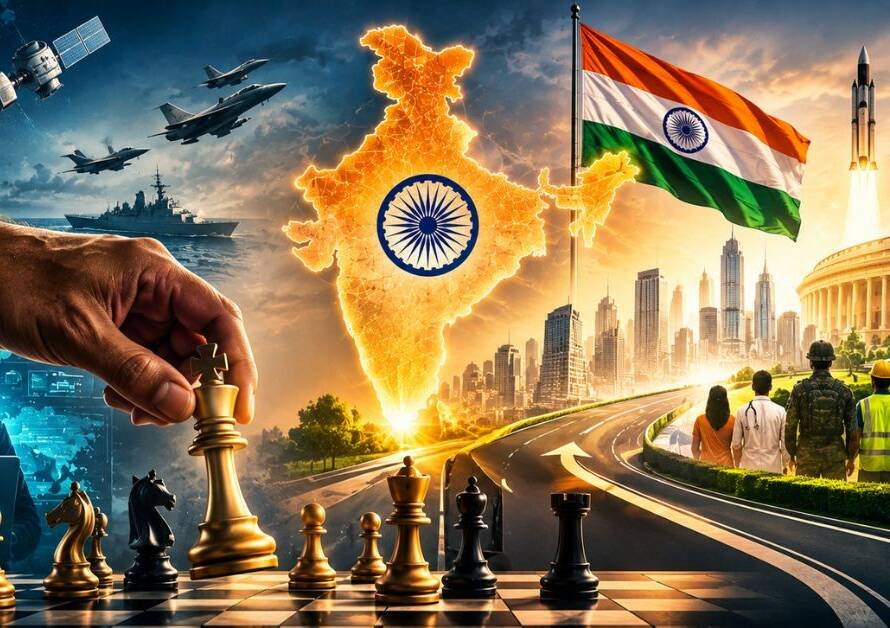
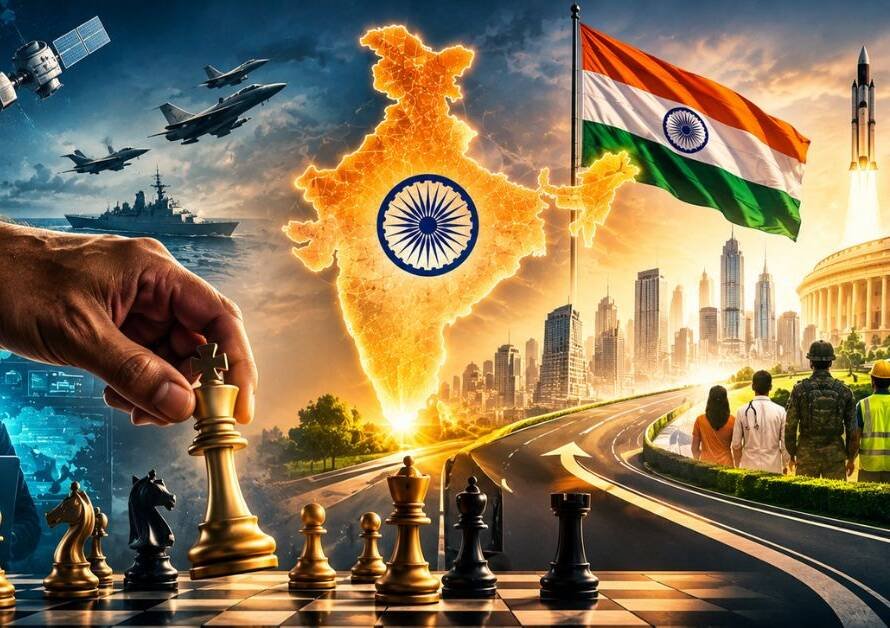
- When looking superficially at why Japan is pouring such massive investment into India, the simple answers often appear to be “cheap labor” or a “large consumer market.” However, looking beneath the surface at the hidden strategic and geopolitical layers reveals an exceptionally visionary and multi-dimensional global chessboard.
- This partnership does not merely protect the interests of two nations; it represents a concrete framework designed to reshape the global economy, technological sovereignty, and strategic balance over the coming decades.
A detailed, logical, and systematic analysis of the real, profound reasons driving this strategic partnership and investment is outlined below:
1. From Automobiles to Semiconductors: The Modern Expansion of Three Decades of Trust
Japan’s role in modernizing and globally shaping India’s industrial growth, particularly the Automobile Sector, has been foundational. This historic trust has now become a robust launchpad for today’s emerging high-tech industries:
- The Success Model of a Historic Partnership: Over the past 30 to 35 years, the arrival of Maruti Suzuki in India entirely transformed the domestic middle class’s transportation ecosystem and manufacturing culture. Following this success, Japanese giants like Honda, Yamaha, and Suzuki not only injected heavy capital into India but also successfully transferred their world-class Japanese work culture and methodologies—such as Kaizen (continuous improvement) and Just-in-Time manufacturing—to the Indian workforce.
- The Global Rise of Indian Manufacturing: Leveraging this Japanese technical cooperation and training, Indian companies like Hero and TVS initially solidified their domestic foundations. Eventually, these Indian enterprises grew so capable that they have now established a formidable, independent presence in global markets.
- Controlling 21st-Century Strategic Sectors: Japan’s focus has now advanced beyond traditional manufacturing toward sectors that form the backbone of the future global economy. Japan is heavily expanding its investments in India across Semiconductor fabrication, Critical Minerals processing, Defense Manufacturing, and next-generation green hydrogen ecosystems.
2. ‘China Plus One’ and the Imperative of a Secure Supply Chain
Shifting dynamics in global geopolitics and international trade regulations constitute one of the primary strategic drivers behind this massive investment. The world has come to realize the severe risks associated with a total reliance on a single, aggressive state:
- The Economic Risk of One-Sided Reliance: Recent global crises, escalating tensions in the Taiwan Strait, and the ongoing US-China Trade War have taught global corporations a vital lesson: concentrating entire production capacities within China is economically perilous. Any political or military crisis there completely paralyzes the Global Supply Chain.
- The Rise of India as a Reliable Alternative: Under the ‘China Plus One’ strategy, global powers are actively searching for a manufacturing hub that is not only immense in scale but also anchored by democratic values, the rule of law, and institutional transparency. India has emerged as the world’s most dependable partner due to its unique geographical positioning, transparent legal frameworks, robust protection of intellectual property (IP Rights), and solid political stability.
3. Demographic Complementarity: An Aging Nation and the World’s Youngest Republic
A fundamental rule of economics and industrial diplomacy dictates that production and manufacturing happen where a skilled Workforce is available, while consumption occurs where purchasing power and Demand exist. In this regard, India and Japan complement each other perfectly on a natural and geographical level:
- Japan’s Demographic Crisis (Mature Economy): Today, Japan is a mature, saturated economy facing a rapidly aging population. A shrinking youth demographic has constrained domestic demand, causing returns on domestic investment (ROI) to hover near minimal or zero levels. While Japan possesses vast surplus capital and highly advanced technology, it requires new, vibrant arenas to keep them active and profitable.
- India’s Unique Demographic Dividend: Conversely, India leads the world with one of the youngest populations. Not only are there hundreds of millions of skilled, technical hands ready to work, but the rapid expansion of the middle class is continuously driving up domestic consumption across all sectors. By merging its capital and technology with India’s youth energy, Japan is securing long-term stability and high returns for its own economy.
4. Strategic Infrastructure and Connectivity Integration
Japanese investment in India is not confined to the commercial profits of private enterprises. The Japanese government, through its state agencies like JICA, is actively developing infrastructure in regions of India that are geopolitically sensitive and vital:
- Development of North-East India: Japan is investing heavily in roads, bridges, hydroelectric projects, and digital connectivity across India’s northeastern states. This strategic investment strengthens connectivity near sensitive border regions, provides tangible momentum to India’s Act East Policy, and effectively opens India’s gateway to Southeast Asia (ASEAN).
- Industrial Corridors and High-Speed Rail: The Delhi-Mumbai Industrial Corridor (DMIC) and the country’s first high-speed Bullet Train project (Mumbai-Ahmedabad) stand as direct evidence of Japan’s intent to elevate India’s domestic transit, logistics, and freight speeds to global standards. This collaboration is playing a pivotal role in driving down India’s overall Logistics Cost within the manufacturing sector.
5. The Unbreachable Shield of Defense Diplomacy and the Execution of ‘Krishna Neeti’
In the face of emerging security challenges and unilateral expansionism in the Indo-Pacific region, the alignment of India and Japan is far more than just forging trade links; it is the construction of an indispensable regional security architecture:
- Defense Technology Transfer and Co-production: Diverging from its decades-old, restrictive military policies, Japan has initiated deep collaboration with India on sharing military technology and the Co-production of defense equipment. Growing cooperation in maritime security, radar systems, Unmanned Aerial Vehicles (UAVs), and anti-submarine technologies is forging a powerful new security paradigm in Asia.
- The Economic and Technological Backbone of the QUAD: The grouping of India, Japan, the United States, and Australia is not merely a military or diplomatic forum. India and Japan serve as the economic and technological engine of this alliance. Both nations are working together to ensure that critical and emerging technologies—such as 5G/6G telecommunications, Artificial Intelligence, and semiconductor supply chains—cannot be monopolized by any authoritarian regime.
- Co-Creators, Not Just Sellers: Japan’s current strategy avoids treating India merely as a ‘consumer market’ or a ‘dumping ground.’ Instead, it is engaging in a comprehensive Technology Transfer. This is the essence of diplomacy’s ‘Krishna Neeti’—where strategic, economic, and cultural interests are so seamlessly woven together that both nations build an unbreachable system that no global adversary can easily challenge.
The Historic Rise of the New Delhi-Tokyo Axis
- Japan’s escalating investment in India is not a short-term or opportunistic business plan aimed at exploiting cheap labor. It represents a long-term strategic, economic, and geopolitical imperative for two great and ancient civilizations.
- On one hand, India requires advanced Japanese technology and massive capital to provide high-value employment to its vast youth population, modernize its infrastructure, and ensure the global success of ‘Make in India.’ On the other hand, Japan looks to a reliable, powerful friend like India to maintain its economic relevance, grow its accumulated capital, and anchor a secure, democratic supply chain.
- Moving forward, this historic partnership will not only redraw the industrial geography of Asia but will also shift the centers of global dependence, laying down the solid foundation for a more balanced, secure, and multipolar global economy.
“This partnership is not merely about the development of two nations, but a global pillar for the security of a free and open Indo-Pacific.”
Read our previous blogs 👉 Click here
Join us on Arattai 👉 Click here
👉Join Our Channels👈