Summary
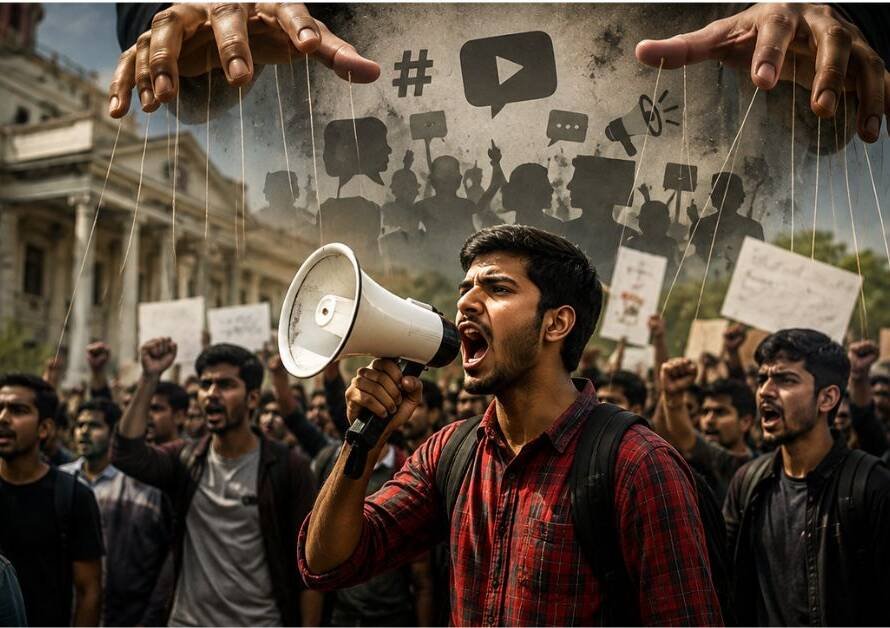
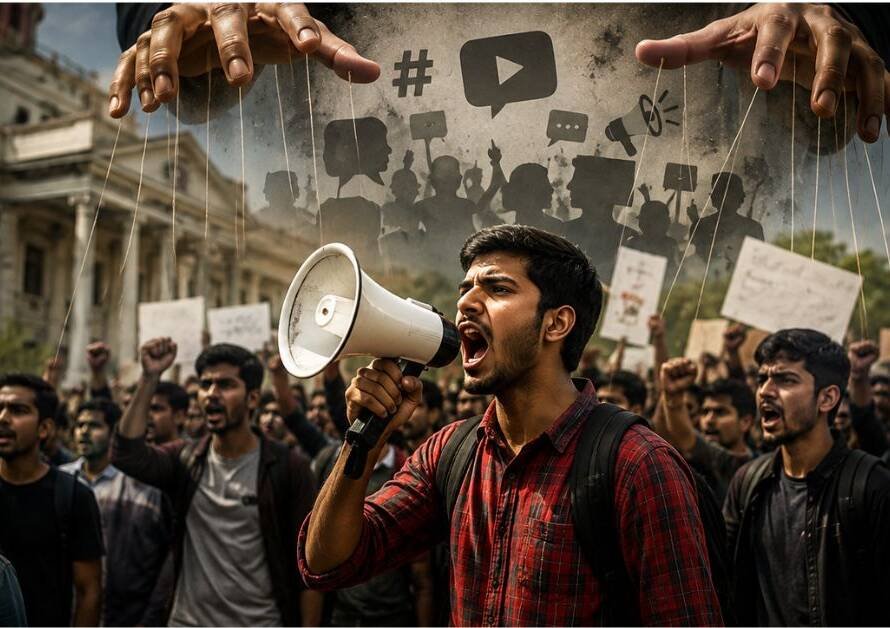
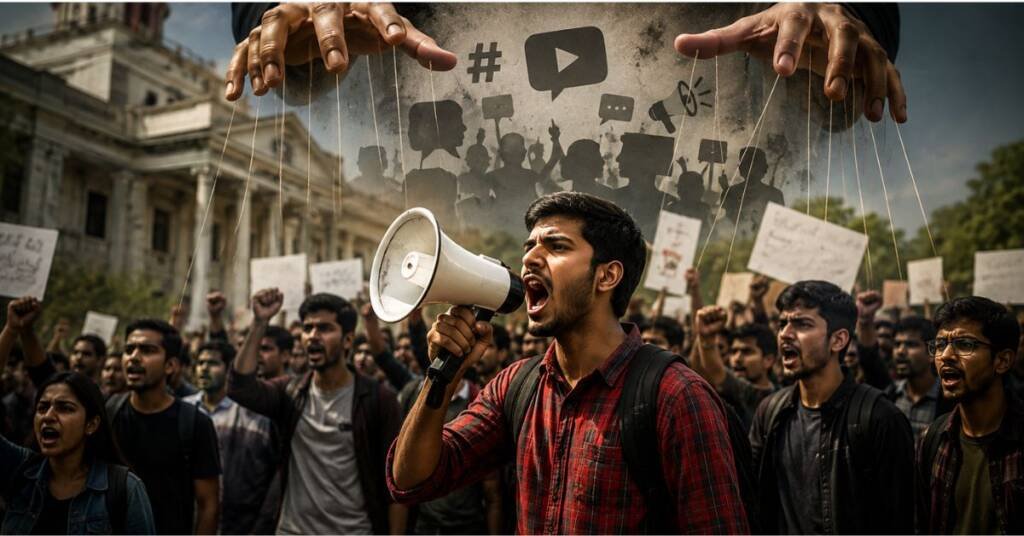
- This comprehensive analysis examines the strategic, political, and geopolitical dynamics behind the escalation of public demonstrations in modern India, specifically focusing on the hijacking of student-led agitations.
- Using the NEET examination controversy and unresolved systemic issues (such as reservations and paper leaks) as key examples, this study highlights how an anti-national ecosystem and opposition parties—often collaborating with foreign vested interests—weaponize youth grievances for political gain.
- By drawing parallels to recent regime changes and political instability in neighboring countries like Nepal and Bangladesh, this analysis exposes deliberate attempts to destabilize the nation through false narratives.
- However, it demonstrates that such subversive agendas are bound to fail against India’s discerning Gen Z and the leadership of Prime Minister Narendra Modi, whose authority rests not merely on governance, but on a deep connection with the hearts and minds of the Indian public and the global community.
Unpacking the Subversion of Student Movements
1. The Escalation Pipeline: From Administrative Grievances to Institutional Friction
- Modern public agitations often follow a predictable trajectory. What begins as a specific, operational demand rapidly transforms into a broad-spectrum confrontation with the state.
- The initial phase of any legitimate movement centers on actionable administrative remedies—such as investigating paper leaks, enforcing law enforcement measures against bad actors, or securing fair re-examinations. However, once the administrative apparatus responds through investigative arrests, policy corrections, and retake schedules, a structural shift occurs within the protest ecosystem.
- Instead of de-escalating, the physical and media space created by the original protest is absorbed by external interest groups. These factions capitalize on the momentum generated by real student anxieties to introduce radicalized agendas.
- The core operational questions surrounding examination logistics are pushed to the background, replaced by sweeping critiques of state authority, governance models, and social structures. Consequently, the original beneficiaries—the students—are sidelined, while their platform is converted into a battleground for broader ideological warfare.
2. The Anti-National Ecosystem and Foreign Collusion
A deliberate, multi-layered strategy operates behind hijacked student agitations, wherein domestic subversive elements and foreign vested interests align to target India’s internal stability.
- Weaponizing Long-Standing Issues: Decades-old systemic challenges—such as reservations, exam paper leaks, and administrative lapses—are intentionally kept politically inflamed rather than constructively resolved, serving as perpetual levers to incite youth discontent.
- Engineering Regime Change (The Nepal & Bangladesh Model): Citing recent political upheavals and forced regime changes in neighboring nations like Nepal and Bangladesh, opposition factions and hostile ecosystems attempt to replicate artificial chaos in India to undermine a democratically elected government.
- Exploiting Youth Energy for Political Gain: Rather than channeling the energy, innocence, and digital reach of the youth toward constructive nation-building, these agendas seek to turn young citizens into foot soldiers against state institutions.
3. Strategic Human Shielding: The Vulnerability of Youth Agitations
Student movements possess a unique moral standing within civil society. Because young aspirants represent the nation’s future, public sentiment naturally leans toward protecting them during disputes with state authorities. Unscrupulous political actors systematically exploit this protective sentiment through a strategy known as human shielding.
- Exploitation of Moral Immunity: External agitators embed themselves within gatherings of young students, using the crowd’s high moral standing as a defensive barrier against law enforcement interventions.
- Tactical Provocation: By introducing violent tactics—such as stone-pelting and direct confrontations with civil police or paramilitary units like the CRPF—agitators attempt to force a defensive response from the state.
- Manufactured Victimhood: Any defensive measure taken by law enforcement is immediately documented, framed out of context, and broadcasted globally to project a narrative of state aggression against innocent aspirants.
- Platforming Discredited Factions: Fringe political figures and ideological provocateurs leverage the existing media presence at student rallies to gain public visibility and air radical grievances that would otherwise fail to mobilize a crowd independently.
4. Ideological Substitution: The Insertion of Unrelated Anti-State Rhetoric
A defining feature of a hijacked agitation is narrative substitution—the deliberate replacement of institutional, policy-driven demands with divisive, abstract political slogans. In the context of national examinations, this tactic manifests through the introduction of socio-political, religious, and anti-constitutional rhetoric that has no logical connection to medical education or testing integrity.
- Delegitimization of National Integrity: Slogans aimed at disrupting national unity or demanding the territorial fragmentation of the nation (“Bharat tere tukde honge”) are introduced to test the boundaries of public discourse and normalize anti-constitutional positions.
- Religious and Social Friction: Rhetoric targeting specific religious traditions, caste identities, or socio-cultural structures (“Brahmanwad”) is introduced to fragment the student community along identity lines, weakening unified demands for institutional reform.
- Polarizing Political Alliances: Platforming individuals associated with historical political controversies shifts the character of the movement from a non-partisan demand for fairness into an explicit alignment with anti-establishment campaigns.
- Erosion of Institutional Trust: By continuously shifting the goalposts, organizers ensure that no administrative resolution is accepted as sufficient, thereby systematically eroding public trust in state machinery.
5. Performative Activism and Digital Echo Chambers
The modern digital landscape accelerates narrative hijacking through algorithmic amplification and social conditioning. Urban youth and students are increasingly targeted by digital campaigns designed to convert passive social media users into active amplifiers of hostile narratives.
- Algorithmic Outrage: Social media platforms prioritize high-emotion, conflict-driven content, ensuring that radical slogans and outrage-inducing posts outpace factual updates regarding official investigations, arrests, or re-test schedules.
- Manufactured Consensus: Coordinated campaigns using specific hashtags and graphic stories create an illusion of universal agreement, pressuring individuals to conform out of fear of social isolation or missing out on current trends.
- Virtue Signaling vs. Civic Understanding: Digital participation often degrades into performative activism, where resharing content functions merely as a tool for personal branding and social validation, completely detached from an understanding of policy, law, or ground realities.
6. Economic Literacy vs. Wealth Resentment: The Anti-Enterprise Agenda
Beyond political and religious subversion, hijacked agitations frequently incorporate rhetoric hostile to national economic growth and enterprise. Unrelated critiques concerning regional economic development and corporate success are routinely injected into youth demonstrations to cultivate systemic economic resentment.
- Misunderstanding Capital Formation: Protests against enterprise growth in major economic centers demonstrate a fundamental misunderstanding of how national wealth, infrastructure development, and industrial expansion function.
- Targeting Job Creators: Rebranding successful enterprise hubs and industrial achievements as inherently exploitative undermines the spirit of innovation and enterprise essential for national development.
- Diverting Focus from Meritocracy: Standardized examinations like NEET serve as vehicles for merit-based social mobility. Replacing a focus on meritocratic access with ideological attacks on wealth creation harms the long-term prospects of aspirants who rely on stable economic growth for employment.
7. India’s Gen Z and the Unshakable Foundation of Leadership
Despite concerted efforts by internal and external hostile ecosystems, destabilizing India along the lines of Nepal or Bangladesh remains practically impossible due to the unique resilience of India’s socio-political fabric.
- An Aware, Nation-First Gen Z: India’s youth are digitally empowered, analytical, and increasingly capable of distinguishing between genuine facts and manufactured narratives. Beyond momentary provocations, India’s Gen Z prioritizes national sovereignty, stability, and global prestige.
- Leadership Rooted in People’s Hearts: Prime Minister Narendra Modi’s leadership extends far beyond administrative governance or electoral arithmetic. By elevating India’s global stature and laying a strong foundation of development and governance, he commands deep trust across the nation’s populace.
- Global Trust and Strategic Resilience: Backed by economic strength, strategic autonomy in foreign policy, and a vast demographic dividend, India stands as an immovable pillar of stability that external campaigns cannot easily shake.
Preserving Meritocracy and Cultivating Civic Discernment
To protect the integrity of student movements and national institutions, a clear boundary must be maintained between genuine administrative accountability and subversive political exploitation. National stability and student welfare depend on cultivating critical civic awareness among the youth.
Aspirants and young citizens must evaluate public demonstrations through a framework of analytical rigor. When an agitation strays from specific, actionable solutions into general ideological hostility, anti-national rhetoric, and foreign-inspired agendas, its primary purpose is no longer student welfare. Safeguarding the nation’s democratic processes, meritocratic testing systems, and economic trajectory requires the youth to resist performative digital trends, reject ideological exploitation, and demand that student platforms remain focused solely on educational excellence, administrative fairness, and national interest.
🇮🇳 Jai Bharat, Vandematram 🇮🇳
Read our previous blogs 👉 Click here
Join us on Arattai 👉 Click here
👉Join Our Channels👈