Executive Summary
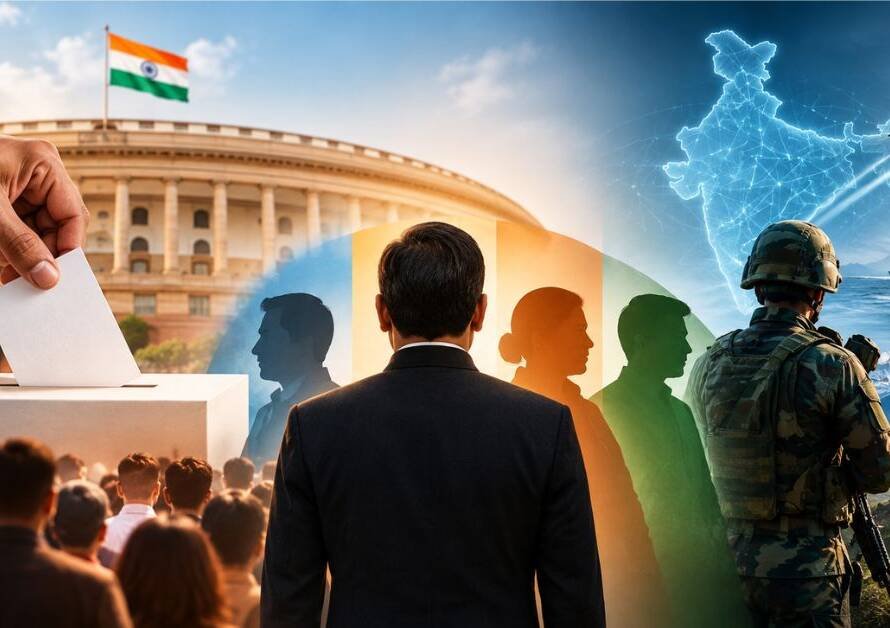
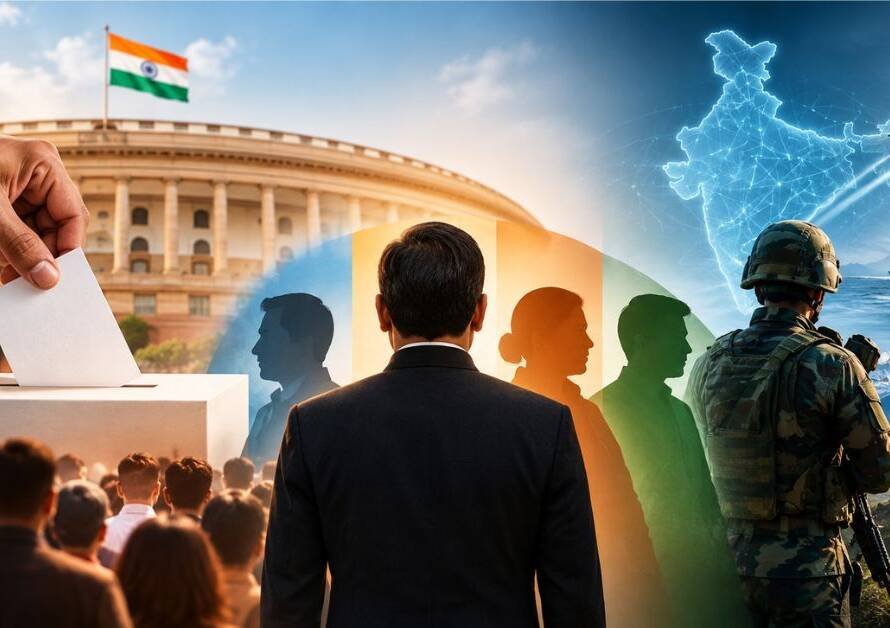
This extensive analysis explores the “cultural and national apathy” systematically cultivated within the majority Hindu society by the policy-making and governance frameworks established after India’s independence. It exposes the bitter reality of how colonial education policies (the Macaulay system) and the promotion of Western consumerist culture were used to preoccupy Hindus with personal economic advancement, rendering them passive toward societal, national, and demographic concerns. Conversely, under the direct and indirect patronage of previous Congress regimes and their political alliances (the Thugbandhan), other communities organized to expand their religious, social, and political influence—a dynamic that persists in states currently ruled by these alliances.
The Ideological Inertia of the ‘Congressi Hindu’:
1. Macaulay’s Education and Consumerism: Tools of Passive Neutralization
Post-independence India adopted an ideological trajectory that left the majority Hindu society mentally disconnected from its own roots.
- The Perpetuation of Colonial Education: Instead of reviving India’s traditional knowledge systems or Gurukul methods, the colonial education policy was maintained. Its sole objective was to produce individuals who were Indian in appearance but entirely Western in thought, culture, and loyalty.
- De Facto Sanctions on Sanatan Knowledge: Under the guise of a “secular” framework, a perverse system was established where the teaching of Sanatan Dharma, the Vedas, the Upanishads, and original Indian philosophical texts was effectively barred from government and academic institutions. Studying one’s own culture on one’s own land was branded as “communal,” ensuring generations remained severed from their heritage.
- The Trap of Consumerism: Hindus were molded into a consumerist culture where the sole purpose of life became earning money, building careers, accumulating assets, and pursuing personal pleasures. This profound apathy rendered society “apolitical,” blind to the threats looming over the nation’s cultural and demographic fabric. As long as personal comfort was maintained, the state of the nation remained a secondary concern.
2. The Systematic Erasure of Dark Historical Chapters
Governance frameworks spent decades maintaining silence over historical events that broke the morale of the society:
- Partition and Genocide: Even after the creation of two nations based on religion, India was not permitted to establish its original cultural identity (Hindu Rashtra). The brutal genocide and displacement of millions of Hindus during the 1947 partition were permanently scrubbed from the national discourse.
- The Suppression of Chitpavan Brahmins: In the aftermath of Mahatma Gandhi’s assassination, thousands of innocent Chitpavan Brahmin homes in Maharashtra were burned, and they were subjected to public persecution. This historical brutality is entirely absent from textbooks.
- The “Secular” Mirage of the Emergency: During the 1975 Emergency, while the opposition was imprisoned, the word “Secular” was surreptitiously inserted into the Preamble of the Constitution. Forced sterilizations of the poor took place, yet society remained a silent spectator, paralyzed by the fear of the state.
- The 1966 Anti-Cow Slaughter Movement: When thousands of peaceful Naga Sadhus and saints protested for cow protection in front of Parliament, the government opened fire. Hundreds of saints were martyred on the threshold of democracy, yet this sin was buried under the rug of history.
3. Pseudo-Secularism and the Oppression of the Majority
State policies have consistently displayed deep-seated discrimination and appeasement, which continue to hollow out India’s social fabric:
- Constitution vs. Muslim Personal Law Board: While the rhetoric of a “modern, progressive constitution” was pushed, the state simultaneously recognized the Muslim Personal Law Board, creating a parallel legal system for the sake of appeasement.
- Tax on Temples, Grants for Madrassas: Government control was established over Hindu temple offerings and properties, extracting billions in taxes, while churches and madrassas were allowed to thrive without state interference, often receiving massive grants from the public exchequer. The ‘Congressi Hindu’ remained willfully blind to these discriminatory laws.
- Mockery of Faith: In judicial affidavits, the existence of Bhagwan Shri Ram was labeled “fictional.” The state employed an army of the country’s most expensive lawyers to block the path of the Ram Mandir. Those who opposed the Ram Janmabhoomi movement remain silently complicit as the archaeological truths of Gyanvapi and Mathura are brought to light.
4. The Truth of National Security and Demographic Expansion
While the Hindu society was distracted by personal economic growth, a coordinated effort was underway to alter the nation’s social and demographic landscape:
- Resistance to Citizenship: The Citizenship Amendment Act (CAA), meant for Hindu refugees fleeing religious persecution in neighboring countries, was protested from the streets to Parliament. Meanwhile, millions of illegal infiltrators were systematically settled and granted voting rights to serve as a secure vote bank.
- Patronage of Anti-National Elements: From visiting JNU to stand with groups calling for the country’s disintegration, to playing the “victim card” whenever actions were taken against dangerous organizations like the PFI, political patronage has been a constant feature of this policy.
- Silence on Love Jihad and Conversion: Whenever efforts were made to introduce strict laws against ‘Love Jihad’ or illegal conversions in tribal regions—often funded by foreign money—they were opposed as attacks on “religious freedom.”
5. The Current Scenario: The Game Continues in Non-BJP States
This ideological crisis is not just a chapter of the past; it is vividly active in states still governed by the Congress or their allies:
- State-Sponsored Appeasement: Government machinery is openly misused to appease specific communities. Restrictions on Hindu festivals and processions are common, while attacks on the majority community are ignored.
- Disdain for Cultural Symbols: Intellectual and political protection is granted to Western or leftist thinkers who ridicule Yoga, Sanskrit, or traditional attire. Forming electoral alliances with those who compare Sanatan Dharma to “diseases” or advocate for the burning of the Ramayana is the primary agenda of this politics.
The Final Time to Awaken
A political and administrative system was built that alienated Hindus from their national and social responsibilities, leaving them as mere “consumers.” History is witness to the fact that societies which lose their history, culture, and demographic integrity in pursuit of personal wealth are eventually erased from the map.
The era of “silent consent” must end. It is time to shatter this illusion, for the sovereignty of the nation and the Dharma is supreme—political parties and personal interests are secondary.
Read our previous blogs 👉 Click here
Join us on Arattai 👉 Click here
👉Join Our Channels👈