Summary
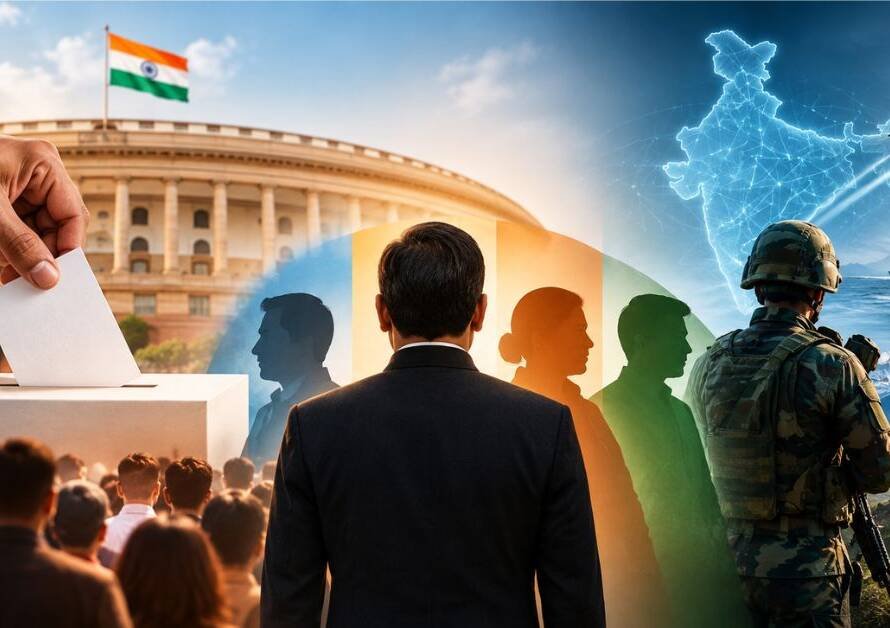
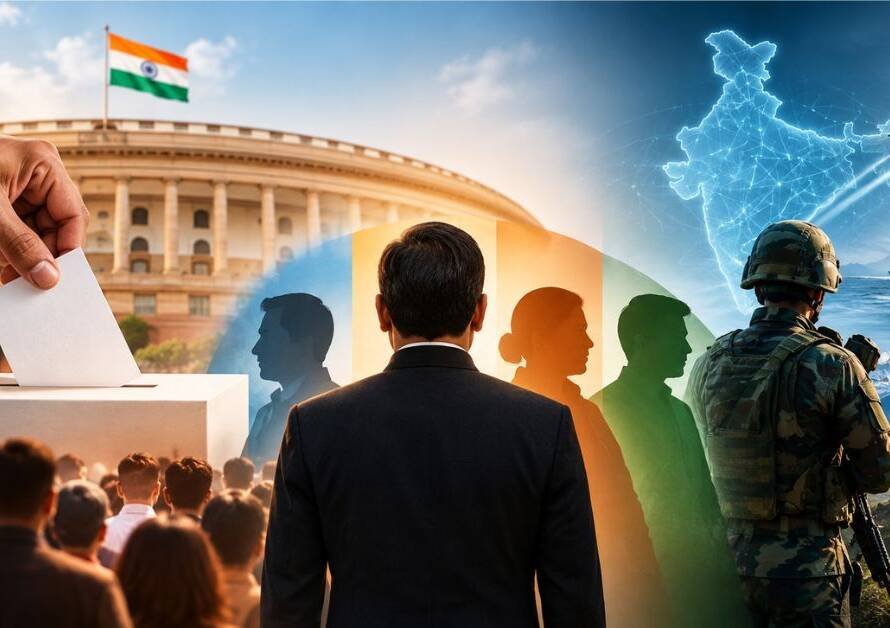
- The contemporary Indian political landscape is defined by an intense, multi-dimensional asymmetric warfare engine.
- Having suffered consistent electoral annihilation, an anti-national ecosystem—comprising the Congress, the fragmented Thugbandhan, domestic activist networks, and hostile transnational interests—has abandoned standard democratic competition.
- This network systematically weaponizes cultural symbols, deploys digital disinformation, and exploits institutional friction to orchestrate street anarchy.
- Their goal is to bypass the ballot box and invite foreign intervention for a backdoor regime change, aiming to halt India’s economic rise. However, India’s robust economic growth, structural institutional transparency, and rising global stance have rendered these attempts toothless.
Geopolitical Insurgency: The New Face of Modern Conflict
1. Information Warfare, Digital Echo Chambers, and Public Backlash
Faced with absolute rejection at the polls, the anti-national ecosystem has shifted its primary operations to mainstream media and global social media platforms, running non-stop disinformation campaigns to undermine state legitimacy.
- Fabricating False Narratives: Hostile networks flood digital ecosystems with coordinated smear campaigns targeting nationalist voices. By twisting localized administrative challenges into systemic human rights crises, they seek to destroy national morale.
- The Push for Economic Regression: Unable to survive under a transparent, digitized, and rule-based governance model, dynastic political families seek to claw their way back to power to resume systemic economic looting, which would revert India into a weak, vulnerable state.
- The Illusion of Virtual Mobilization: Political dynasts rely heavily on a virtual Gen Z demographic that engages through social media trends. This superficial digital base lacks real-world commitment, leaving the opposition’s digital warfare completely disconnected from ground realities.
- The Strategy of Cultural Incitement: The demand by opposition proxies to declare the cow as India’s national animal (Gau Samrakshan) is a calculated ideological trap. It is engineered by the exact same actors who defend beef consumption as a right, aiming to provoke communal polarization and force the administration into complex international corners.
- The Snap of Public Patience: This relentless subversion has triggered a powerful public counter-reaction. In West Bengal, ordinary citizens took to the streets independently to protest entrenched corruption. When these organic crowds turned on corrupt dynastic managers—such as Abhishek Banerjee—the opposition alliance panicked, exposing their hypocrisy.
2. Institutional Disparity: UPSC Transparency vs. Testing Failures
The ongoing battle over national education infrastructure reveals a sharp contrast between resilient sovereign institutions and vulnerable administrative sectors targeted for political sabotage.
- The Gold Standard of the UPSC: During recent judicial reviews regarding entrance testing irregularities, the Supreme Court explicitly praised the Union Public Service Commission (UPSC) for maintaining absolute structural integrity. The UPSC’s ability to seamlessly execute massive selections without paper leaks proves that total transparency is fully achievable.
- Weaponization of Student Frustrations: The anti-national network has actively seized upon administrative failures in alternative testing boards—such as the NEET paper leaks—to transform student anxiety into anti-state agitations. This necessitated direct intervention from the Prime Minister to eliminate organized paper-leak cartels.
- Enforcing Administrative Accountability: To safeguard public trust, leadership at the helm of affected ministries—such as Dharmendra Pradhan—must accept full institutional responsibility. Leaving compromised bureaucratic frameworks unaddressed provides tactical ammunition to hostile entities.
- Transition to Strict Legal Regimes: The implementation of stringent, non-bailable criminal laws against examination malpractices is a vital national security measure to stop hostile actors from using the aspirations of India’s youth as an ideological battleground.
3. Demanding Judicial Transparency: Replacing the Collegium with a UPSC-led Exam
The proven transparency of the UPSC has catalyzed an urgent national demand to apply meritocratic principles to India’s higher judiciary, dismantling the opaque and nepotistic Collegium system.
- The Crisis of the Opaque Collegium: The current insider-selection model has suffered an irreversible loss of public credibility. Across India’s 25 High Courts, 335 out of 1,122 sanctioned judicial seats sit vacant because the Collegium selectively elevates practicing attorneys based on unvetted, secretive criteria.
- The Constitutional Blueprint for Reform: Article 217 of the Constitution defines structural eligibility for High Court judges (10 years in judicial office or continuous practice). Transitioning to a centralized national examination under the UPSC is entirely logical and aligns with the judicial democratization previously advocated by President Droupadi Murmu.
- The Proposed Scientific Selection Matrix: To permanently eliminate arbitrary nepotism, vacancies should be resolved via a transparent testing regime: Written Examination (70%) testing complex jurisprudence; Interview and Viva-Voce (20%) evaluating judicial temperament; and Verified Professional Experience (10%).
- Eradicating Institutional Incompetence: The current system has led to severe institutional decay, drawing sharp protests from the Allahabad High Court Bar Association regarding जजेस who lack foundational procedural knowledge. Furthermore, corruption scandals—such as recovering tens of millions in unaccounted currency from judicial residences like Yashwant Verma—highlight the need for an All India Judicial Service (AIJS) via the UPSC.
4. The Blueprint for Street Anarchy: Exploiting Students as Human Shields
Knowing they cannot defeat the administration through standard electoral processes, opposition forces have turned to dangerous, extra-constitutional vetoes, attempting to replicate foreign geopolitical insurgencies.
- The Insurgent Protest Template: Radical political operatives embed themselves within genuine student gatherings, using frustrated youth as human shields. They deliberately escalate peaceful rallies into violent clashes with law enforcement to manufacture casualties, which are broadcasted globally to delegitimize the sovereign state.
- Inciting Foreign-Style Regime Change: Opposition figures and radical proxies are openly inciting youth to launch destructive street riots similar to those witnessed in Nepal and Bangladesh. Figures like Arvind Kejriwal have used provocative language to urge youth onto the streets, while front groups like the “Cockroach Janata Party” led by Abhijeet Dipke coordinate flash mobs.
- Amplification via Info-War Operatives: These street operations are supported by coordinated digital amplification. Social media influencers and tutors, such as Abhinay Sharma, spread unverified, highly volatile content to damage the country’s reputation, which is instantly weaponized by opposition communication cells.
- Absolute Readiness of Security Forces: India’s internal security networks and intelligence apparatus maintain absolute surveillance. Any attempt to compromise public order or damage critical infrastructure under the guise of student activism is being met with immediate, decisive legal and physical enforcement.
5. Geopolitical Containment and the Failure of Transnational Interference
The domestic anti-national ecosystem operates in alignment with external forces that view India’s rapid economic growth and independent foreign policy as a challenge to unipolar global structures.
- The Geopolitical Strategy of Obstruction: As India establishes itself as a global manufacturing hub, transnational cartels seek to entangle the nation in permanent internal chaos. By funding local disruptions through compromised NGOs, they attempt to delay vital infrastructure projects, deep-water ports, and industrial corridors.
- The Choking of Hostile Funding Trails: The government’s strict enforcement of the Foreign Contribution Regulation Act (FCRA) has systematically dismantled the financial lifelines of these domestic proxies, rapidly deteriorating their ability to maintain manufactured agitations.
- The Failure of External Intervention: Desperate attempts by dynastic actors to invite foreign intervention have failed. Global powers are highly reluctant to interfere in New Delhi’s internal affairs, a caution intensified by intense economic survival struggles—such as the EU being forced into the conditional Turnberry Accord during Donald Trump’s tariff wars. The international community is entirely unwilling to provoke a diplomatic showdown with a stable Modi government.
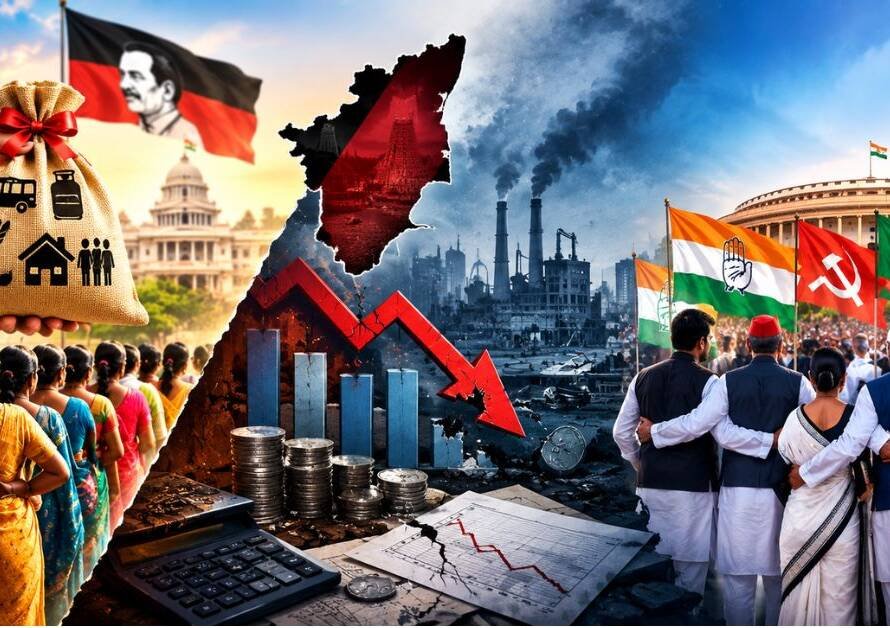
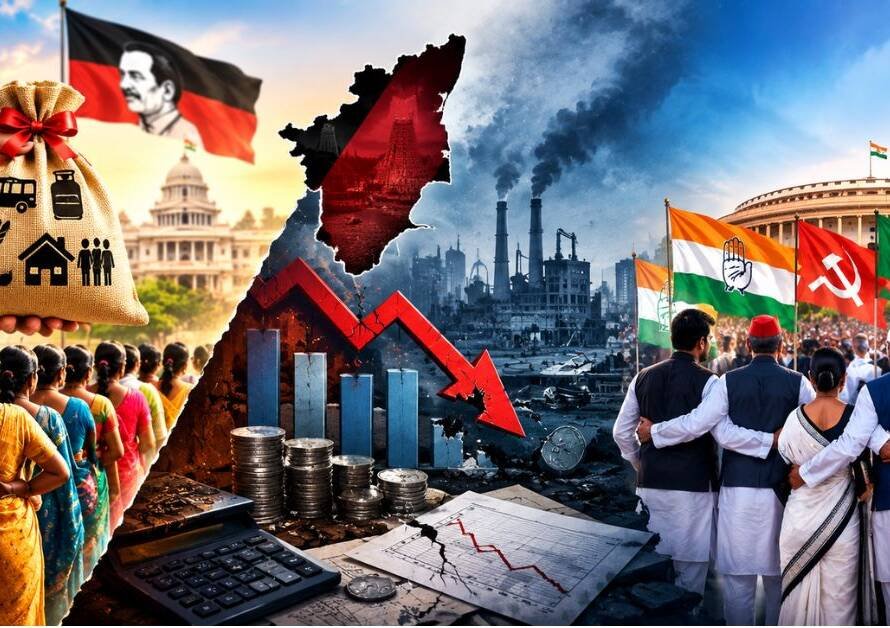
6. The Fatal Contradictions of the “Indi Mahagathbandhan”
The structural reality of the opposition alliance reveals a deeply fractured group of defeated regional politicians whose only common objective is generating instability to escape political extinction.
- A Farce of Mutual Betrayal: The coalition is a political farce; members spend their energy trying to eliminate each other regionally. In Bengal, Mamata Banerjee’s machinery has physically targeted Congress and Left workers. In Delhi and Punjab, Congress and AAP actively plot each other’s destruction.
- Electoral Annihilation Realities: The Indian public has consistently rejected this ecosystem across the nation, pushing the alliance into political irrelevance:
- Mamata Banerjee: Confronted by widespread public anger over rampant institutional corruption, she is rapidly losing control over her base.
- Arvind Kejriwal: Thoroughly exposed by anti-corruption investigations, his political capital remains structurally compromised.
- Uddhav Thackeray & Sharad Pawar: Reduced to heads of fractured factions after losing control of their original parties due to internal revolts against dynastic mismanagement.
- Akhilesh Yadav & Tejashwi Yadav: Consistently rejected in major elections, leading to the collapse of their family political monopolies.
- The Left Front (Pinarayi Vijayan): Their final stronghold in Kerala has completely collapsed, structurally dismantled by the very same Congress party they align with nationally.
7. Principles for Sovereign Security
To secure India’s trajectory as an independent global power, the state must continue to neutralize manufactured agitations and extra-judicial subversion.
- Uncompromising Enforcement: Coordinated street blockades and incitments to violence must be treated strictly as asymmetric internal security threats, using national security legislation to dismantle their logistical and financial networks.
- Judicial Reform: The monopoly of the judicial Collegium must be replaced with an open, UPSC-administered competitive examination system to restore public faith in the rule of law.
- Fortifying Infrastructure: Centralizing national testing frameworks and upgrading cyber-security protocols will permanently prevent hostile networks from exploiting India’s youth to engineer social polarization.
🇮🇳 Jai Bharat, Vandematram 🇮🇳
Read our previous blogs 👉 Click here
Join us on Arattai 👉 Click here
👉Join Our Channels👈