Executive Summary
- This message focuses on a deeply sensitive and critical question concerning Indian society, social governance, and national policy—The Honor of Meritocracy vs. Caste-Based Reservation.
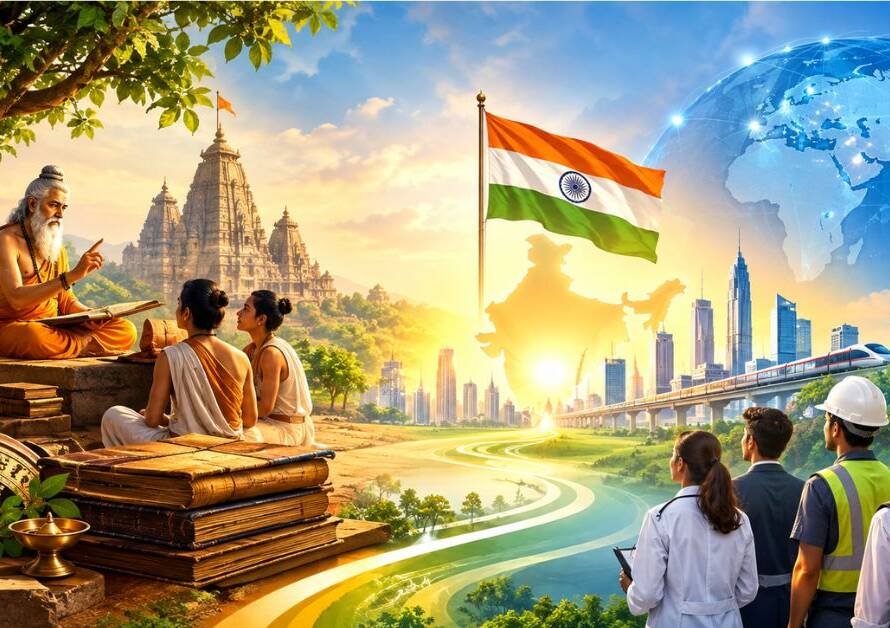
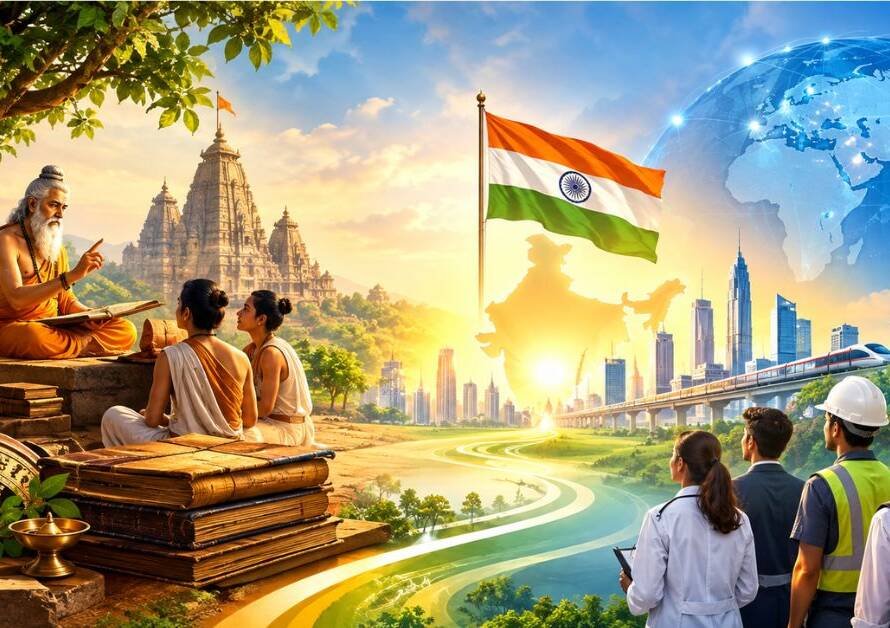
- Historically, India has been a hub of immense intellectual and technological acumen. However, due to colonial ‘divide and rule’ strategies and post-independence caste-based policies, the nation has lost a significant portion of its finest talent in the form of ‘Brain Drain’.
- Indian-origin leaders who successfully guide the world’s largest technology and corporate giants—such as Google, Microsoft, IBM, YouTube, Adobe, Motorola, and Albertsons—are clear proof that if Indian intellect receives the right platform, it can generate millions of jobs and trillions of dollars in value on a global scale.
- The core objective of this message is to draw the attention of society and policymakers toward a fundamental principle: the true purpose of reservation should be the economic empowerment of the poorest individual standing at the last mile, rather than caste identity.
- As long as support and opportunity are not anchored in economic status and merit, the truly poor in society will remain deprived, and the nation’s talent will be compelled to migrate abroad.
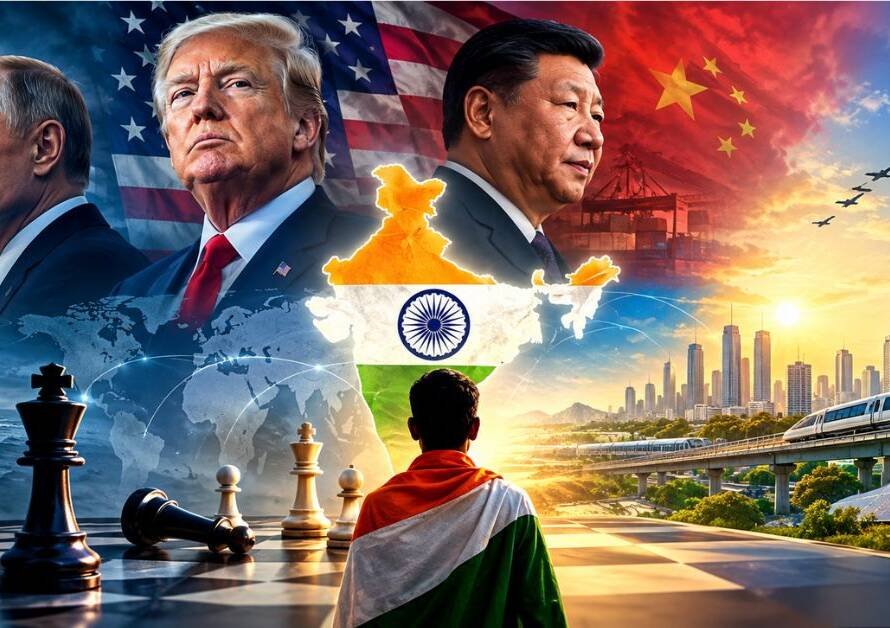
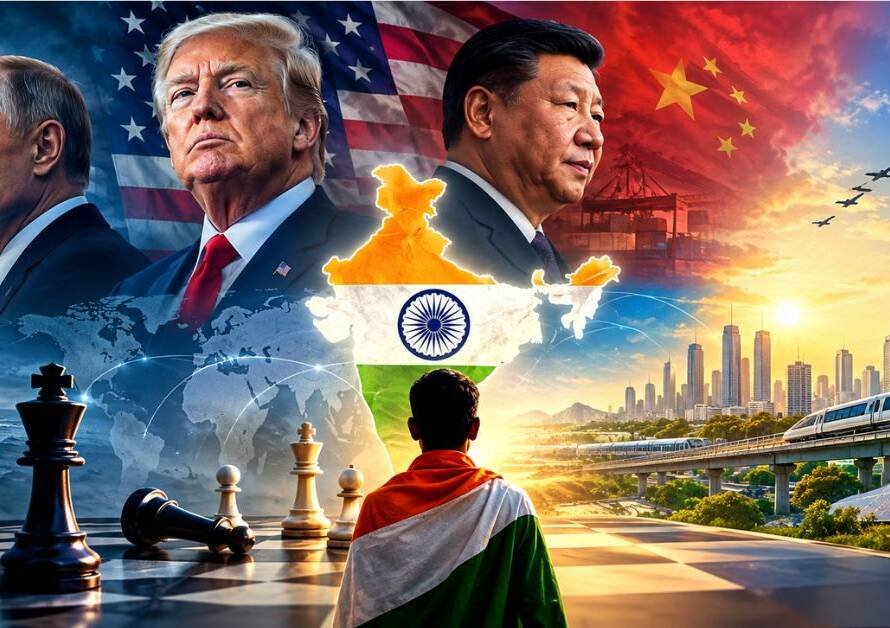
- Similar to developed nations such as the United States, China, Japan, and South Korea, India must make meritocracy and impartial economic justice the primary pillars of nation-building.
The Role of Education in Building a Fair and Prosperous Nation
1. Indian Intellect on the Global Stage and the Reality of Brain Drain
The land of India has always produced thinkers, scientists, and managers whose abilities have left an indelible mark worldwide. However, due to disparities in opportunity and systemic bottlenecks at home, a vast intellectual class was forced to look abroad.
Glowing Examples of Global Leadership
- Sundar Pichai (CEO, Google / Alphabet): Unprecedented contributions to technological innovation and the global dissemination of information.
- Satya Nadella (CEO, Microsoft): Transforming the global corporate landscape through cloud computing and the AI revolution.
- Neal Mohan (CEO, YouTube): Successfully steering the world’s largest digital video and content creator platform.
- Shantanu Narayen (CEO, Adobe): Driving innovation and market leadership in digital media, software, and creative tools.
- Arvind Krishna (CEO, IBM): Guiding the world through future technology domains like hybrid cloud and quantum computing.
- Sanjay Jha (Former CEO, Motorola Mobility): Leading technological breakthroughs in mobile telecommunications and semiconductors.
- Vivek Sankaran (CEO, Albertsons): Strategically managing one of North America’s largest retail and supply chain networks.
Severe National Consequences of Brain Drain
- Economic and Revenue Losses: The market value and millions of jobs created abroad by these talents would have built domestic economic value had they found a conducive environment in India.
- Deficit in Innovation and Patents: India could not advance in Research & Development (R&D) at its true potential because pioneering researchers and innovative minds moved overseas.
- Global Dependency: India often has to purchase technologies and intellectual properties at premium costs from foreign firms—technologies that were originally built by Indian minds.
2. Historical Perspective: Colonial Policies and Present Discrepancies
The roots of present caste and social divisions link back to colonial strategies designed to dismantle social harmony.
The British Legacy of ‘Divide and Rule’
- Foundations of Social Division: The early reservation policy introduced in 1902 in the Princely State of Kolhapur under British rule aimed primarily to divide the majority population into mutually opposing groups.
- Sustaining Colonial Power: The primary motive of the British was not to deliver social justice, but to fragment Indian society so deeply that it could never unite as a cohesive nation-state against colonial rule.
Post-Independence Policies and Political Distortions
- Vote-Bank Politics: At independence, reservation was envisioned as a temporary social reform. Over time, however, it degraded into an easy tool for political parties to secure electoral power.
- Structural Inequality: In the absence of comprehensive policy reviews, this framework deepened caste consciousness instead of uniting society.
3. Caste-Based Reservation vs. Economic-Based Justice
Social justice is meaningful only when assistance reaches the individual who needs it the most.
Key Limitations of Current Caste-Based Reservation
- The Creamy Layer and Intergenerational Privilege: Under the current framework, multiple generations of prosperous families continuously absorb reservation benefits, while the impoverished individual within the same category remains deprived.
- Neglect of the Truly Poor: Regardless of caste—the poorest individuals still struggle for basic education, healthcare, and opportunities because benefit distribution is inherently skewed.
- Social Disharmony: Distributing opportunities based on caste breeds resentment, feelings of inadequacy, and mutual mistrust among young citizens.
Direct Benefits of Reservation Based on Economic Status
- All-Inclusive Social Justice: Implementing reservation on an economic basis ensures that the poorest and most underprivileged individuals across every section of society (General, Backward, or others) get primary access to assistance.
- Transparency and Equity: Income and financial hardship are practical metrics to assess, ensuring that state protection reaches only those who genuinely require it.
- Balancing Merit and Assistance: This model ensures that poverty does not hinder a talented student’s progress, while also ensuring a meritocratic candidate is not sidelined solely due to birth identity.
4. Global Economic Models and Lessons for Nation-Building
Nations that achieved unprecedented economic and industrial growth over the past half-century maintained clear national priorities.
Core Success Principles of Developed Nations
- United States (Merit and Freedom of Opportunity): Prioritized merit, talent, and innovation above all else, attracting top global minds to build the world’s leading economy.
- China (Skill and State Efficiency): Focused strictly on results, productivity, and national output over identity or background.
- Japan and South Korea (Technological Excellence): Embedded discipline, quality, and merit into their national character, becoming global economic powerhouses despite limited natural resources.
The Strategic Path Forward for India
- Collective Growth Mindset: “Nation First, Individual Second”—when the entire nation prospers and becomes self-reliant, the benefits naturally cascade down to every citizen and community.
- Abandoning Narrow Thinking: As long as societal thinking remains restricted to personal or caste-based gains, no nation can lead in global competitiveness.
5. A Message of Consciousness for Society and Future Generations
To build a strong, modern, and equitable India, every segment of society, the youth, and policymakers must undergo a fundamental shift in perspective.
Our Collective Resolve
- Honor Genuine Talent: Every young citizen must receive complete freedom and environment to advance based on talent and capability.
- Prioritize Poverty Alleviation: State protection and affirmative action must be reserved strictly for financially underprivileged citizens.
- Stem Brain Drain: Build an ecosystem and infrastructure at home so that scientists, engineers, and entrepreneurs do not need to go abroad to fulfill their potential.
- Transcend Caste Boundaries: Build an India where identity is defined not by caste, but by a citizen’s knowledge, character, and contribution to the nation.
- If India is to become a top global economy and knowledge hub, we must restore merit to its rightful place and base social assistance solely on ‘economic status’.
- When talent finds opportunity and the poor find support, India will truly establish itself as a Vishwaguru and a self-reliant nation.
🇮🇳Jai Bharat, Vandematram 🇮🇳
Read our previous blogs 👉 Click here
Join us on Arattai 👉 Click here
👉Join Our Channels👈