Summary:
- This detailed analysis exposes the true nature of cheating and paper leaks associated with competitive examinations in India. It clarifies that question papers are never merely ‘leaked’; rather, they are openly sold by organized mafias and political brokers.
- This article provides an in-depth analysis of the history of the past seven decades, the mafia syndicates that flourished during previous governments, and the recently implemented stringent Public Examinations Act.
- Furthermore, it highlights the political hypocrisy of the opposition and underscores the intellectual maturity of Indian youth, who, instead of falling prey to any form of propaganda, now stand firmly with transparency and national progress.
- In the history of Indian democracy, constructive criticism and principled opposition have always been regarded as vital elements. However, in the current era, the level of political discourse has degraded into a ‘Negative Agenda’ where opposing the government has become synonymous with attacking the country’s achievements, institutional integrity, and the future of its youth.
Why Stronger Laws Alone Cannot End Paper Leak Scandals
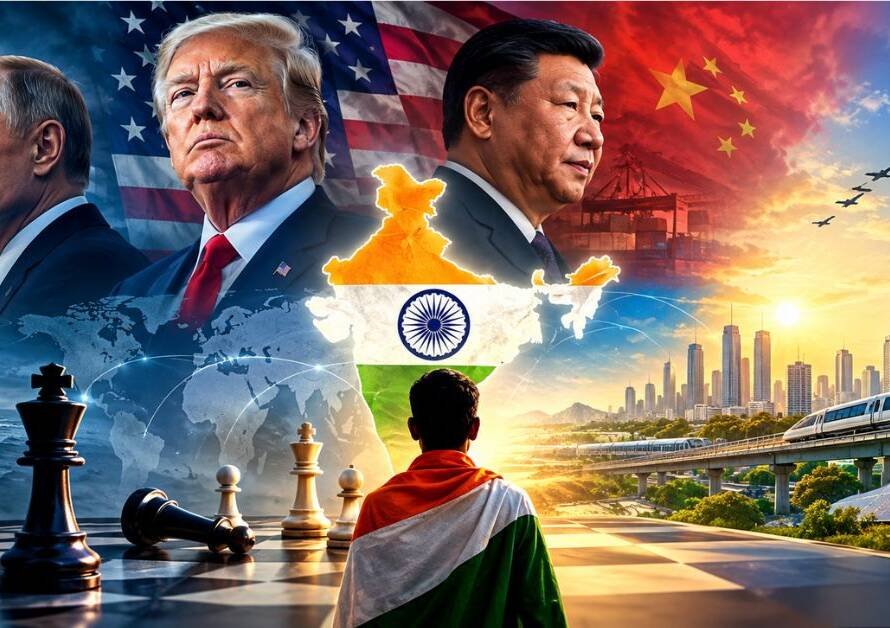
1. A Historical Paradox: Pre-2014 Compromise vs. Post-2014 Sovereign Resolve
A comparison of two distinct eras in Indian politics reveals a deep irony that highlights the health of our democracy:
- The Pre-2014 Era: Characterized as a period of a strong opposition and a compromised, fragile government, the central administration was often composed of coalition arrangements. These coalitions were forced to make severe compromises on various fronts due to alliance compulsions, policy paralysis, and selfish ends. However, the defining feature of that era’s opposition was its unwavering commitment to national interest, internal security, and exposure of corruption.
- The Post-2014 Era: Features a strong government operating with a full majority under the principle of ‘Nation First.’ India’s stature on the international stage has grown exponentially, along with the administrative capacity to take tough, long-term decisions. Today’s opposition, however, suffers from a strange irony. In its blind political rivalry, it has lost the ability to distinguish between national interest and party politics.
2. The Illusion of ‘Leaks’: The Anatomy of a Systemic Black Market
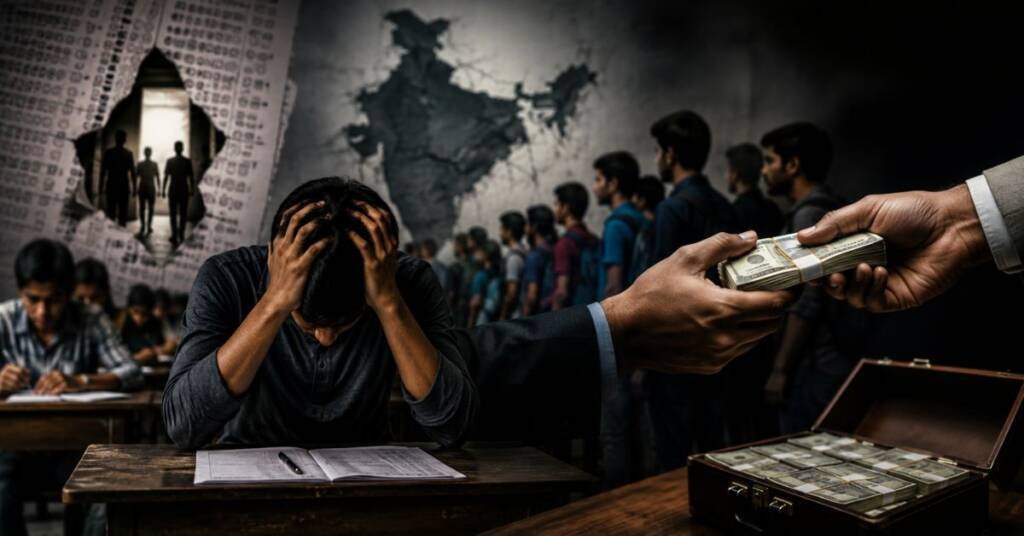
When examining the recurring turmoil surrounding national examinations—whether NEET, UGC-NET, UPSC, or state recruitment tests—a bitter truth emerges: examination papers are never merely ‘leaked’; they are systematically sold.
- The Misleading Term ‘Leak’: The word ‘leak’ creates an impression of an accidental breach, like water escaping an unsealed pipe. In reality, it is a multi-billion-rupee organized black market where access to printing presses, transport logistics, and strongrooms is systematically monetized.
- The Striking Inequality: On one side, the hardworking child of a poor or middle-class family studies through the night under a single light, while parents mortgage land or savings to pay for books and coaching fees. On the other side, privileged, underprepared candidates receive ‘answer packets’ hours before the exam in secret locations.
- The Trading of Merit: When corrupt candidates buy their way to the top of merit lists, the honest aspirant is left out in the cold. The seat was not lost due to a lack of effort; it was auctioned off long before the first roll number was called.
3. Seven Decades of Political Protection and the Mafia Nexus
This crisis did not emerge overnight; it is a cancer that metastasized over seven decades of flawed policies and political patronage.
- Institutional Protection: For decades, recruitment boards, university chairs, and testing bodies were stocked with political appointees. Education mafias operated with direct political immunity, funneling black money back into political campaigns.
- Silence on Systemic Scams: Under previous administrations, paper leaks and recruitment scams were routinely swept under the rug. Superficial arrests were staged to satisfy media cycles, while the main syndicate leaders and their political patrons remained untouched.
- Absence of Severe Laws: Because political elites directly benefited from the financial kickbacks of these paper-selling cartels, no comprehensive central legislation was ever drafted to penalize exam fraud or seize the assets of organized syndicates.
4. Weaponizing Student Grievances: The Strategy of Street Anarchy
Having failed to defeat the administration on macroeconomic indicators, infrastructure growth, or national security, the opposition ecosystem has pivoted toward a sinister tactic: engineering street anarchy by exploiting student distress.
- Amplifying Administrative Flaws: Whenever administrative or technical anomalies occur in national exams, this ecosystem immediately moves to convert student anxiety into full-blown public panic instead of seeking structural solutions.
- The Regime-Change Mindset: The underlying objective is not to secure justice for students, but to use them as human shields to trigger street violence. By creating an atmosphere of instability, they hope to paralyze 12 years of transparent, scam-free governance.
- Opposing Strict Laws: The hypocrisy of these political factions was fully exposed when they opposed strict new anti-leak legislation. Because their syndicate partners stand to lose their entire business model under severe criminal penalties, these parties fiercely resisted reform.
5. Historic Protection of Merit: The Public Examinations Act
For the first time in India’s post-independence history, decisive, uncompromising legislative action has been taken to dismantle the exam-mafia syndicate and safeguard the interests of honest candidates.
- Rigorous Criminal Penalties: The newly enacted Public Examinations (Prevention of Unfair Means) Act establishes strict criminal liability—including prison terms up to 10 years and fines up to ₹1 crore for organized exam crime.
- Asset Seizure and Recovery: The law allows the state to attach the properties of organized syndicates and recover the full cost of compromised examinations directly from guilty firms and institutions.
- Infuriating the Mafia Ecosystem: This severe legislative crackdown has rattled the opposition and their allied mafias. Unaccustomed to honesty and lacking integrity in their own political DNA, they cannot tolerate a system that removes corrupt middlemen and enforces transparent meritocracy.
6. The Intellectual Maturity of Indian Youth
The fundamental miscalculation of the anti-national ecosystem lies in its patronizing view of the Indian youth, assuming they can be easily manipulated through emotional engineering and inflammatory campaigns.
- A Discerning, Tech-Savvy Generation: Today’s youth have grown up in an aspirational, digitally connected India. They are mature enough to separate genuine administrative shortcomings from politically motivated agitprop.
- Rejection of Anarchy: Indian youth recognize that public disorder, rioting, and lawlessness destroy their own economic opportunities, investments, and employment prospects. They refuse to be used as pawns for corrupt political agendas.
- Demanding Accountability, Not Destabilization: While students rightly demand strict administrative precision, pristine exam security, and complete transparency from the government, they seek institutional accountability—not the overthrow of a democratically elected state.
Conclusion: Nation First, Politics Second
Today’s ‘anti-Modi’ political agenda has degenerated into an opposition against India’s growth, stability, and youth. A strong, constructive opposition is vital for a healthy democracy, but protecting criminal syndicates, spreading paranoia, and destabilizing national institutions is directly contrary to the national interest.
The youth and citizens of India fully understand this strategy. They stand firmly with transparent governance, strict anti-corruption laws, and the enduring principle of ‘Nation First.’
🇮🇳Jai Bharat, Vandematram 🇮🇳
Read our previous blogs 👉 Click here
Join us on Arattai 👉 Click here
👉Join Our Channels👈