Summary
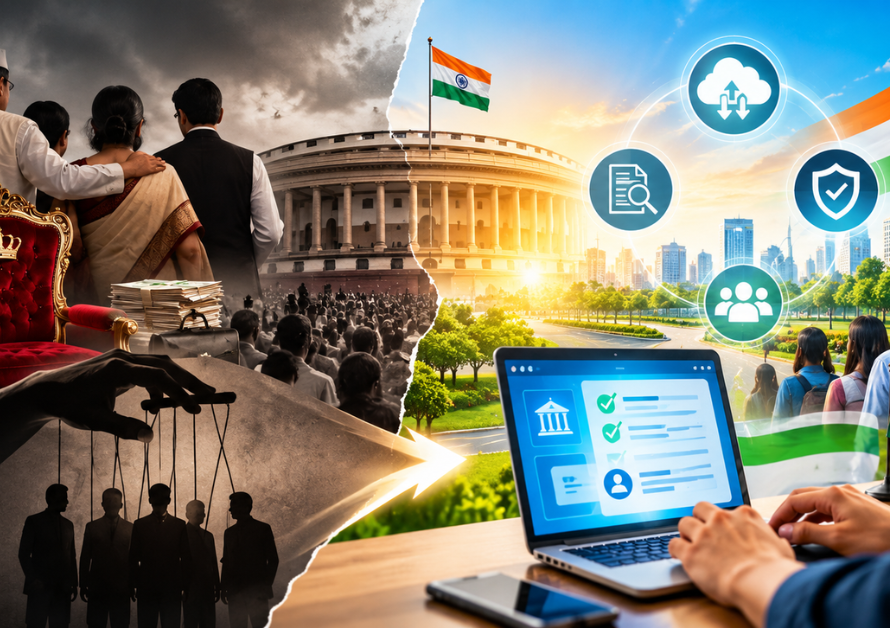
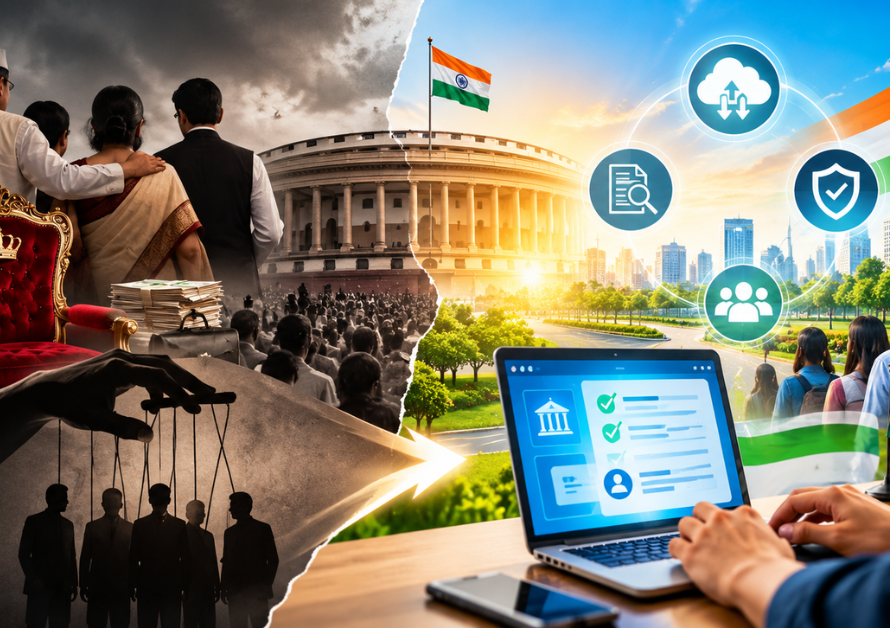
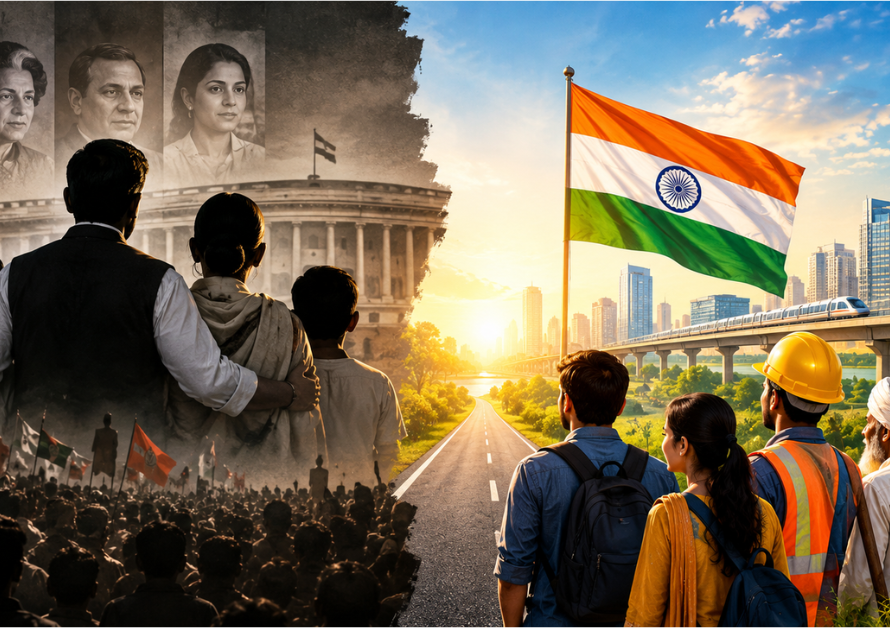
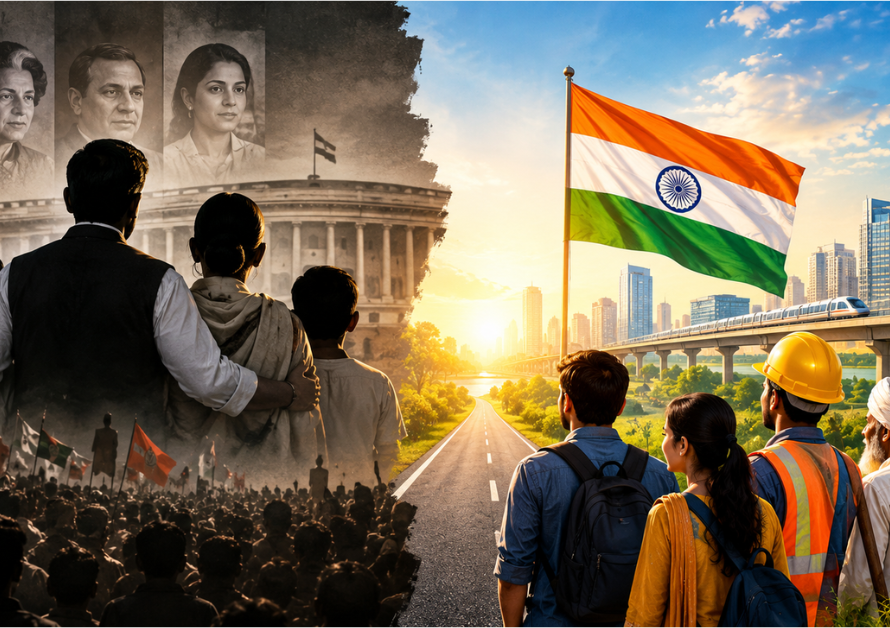
- This narrative examines the critical discourse surrounding six decades of post-independence governance, contrasting the legacy of missed opportunities with a modern vision for India under Prime Minister Narendra Modi.
- It analyzes the critique of political nepotism, the nature of dynastic alliances across the country, and the fundamental choice facing voters between development-driven leadership and status-quo politics.
Political Dynasties vs. New India: A Fight for Change
The Legacy of Lost Opportunities
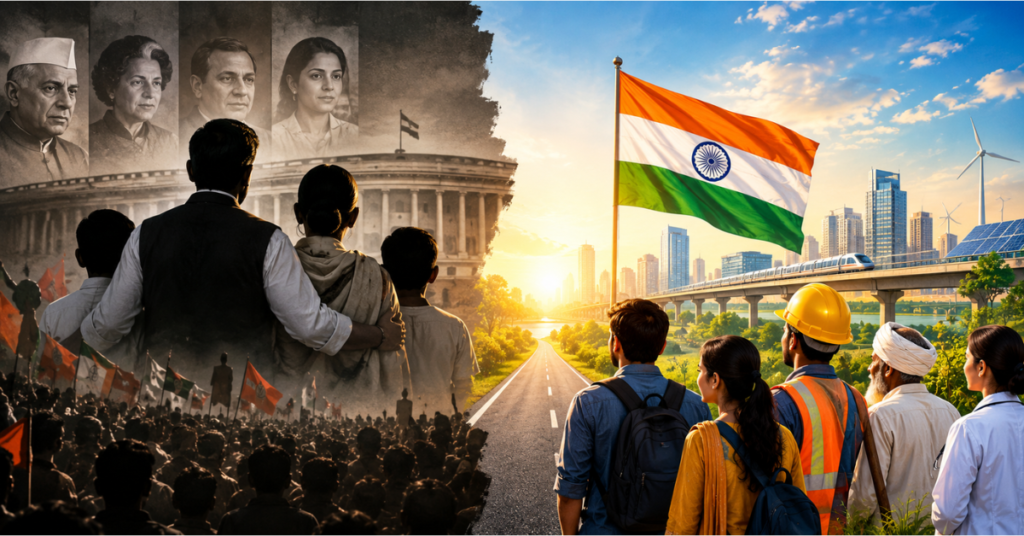
- Over the past sixty years, the broader historical trajectory of the nation has frequently been characterized by systemic missed opportunities for comprehensive growth.
- Examining these decades raises deep questions regarding the true intent and patriotism of the leadership that guided the country through those eras.
- True patriots do not deliberately keep citizens trapped in poverty, nor do they intentionally deprive the general population of economic mobility and progress.
- The political entities that maintained power during those periods cannot be genuine patriots, as their administrative choices repeatedly held back India’s immense potential.
- Instead of empowering ordinary people, governance models of the past often fostered dependency and structural economic stagnation.
The Nature of the Opposition
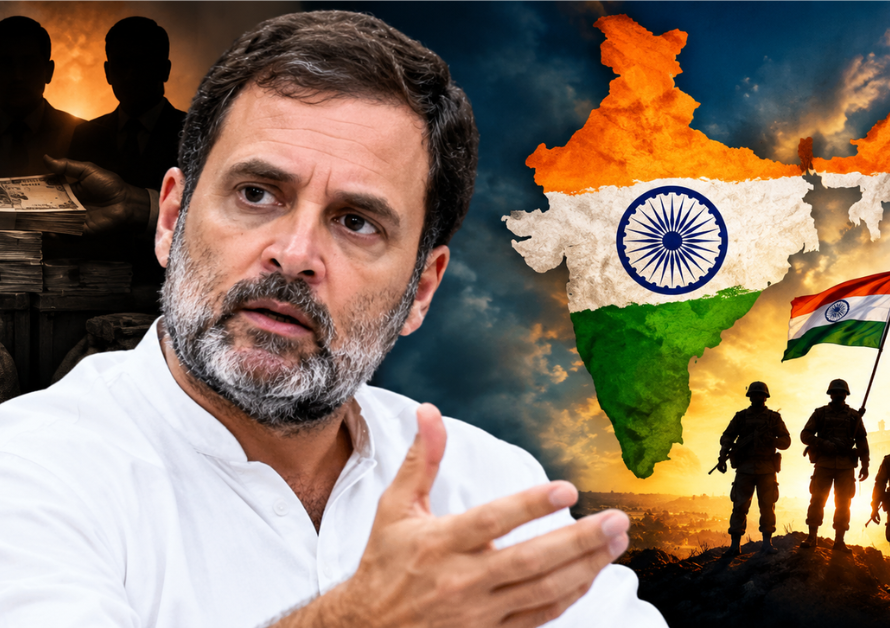
- The contemporary political opposition to Prime Minister Narendra Modi is defined not by an alternative developmental ideology, but as a consortium of private political parties.
- These groups are largely anchored by political families who have historically managed states and regional territories like private fiefdoms or jagirs.
- This network represents a coalition of dynasties—a collection of private political entities whose historical methods are facing an existential threat.
- These political actors recognize that if current governance trends continue and Modi is re-elected, the traditional ways of the past sixty years will permanently end.
- This collective realization has driven hereditary leaders to bridge regional divides to protect their long-standing political monopolies.
Dynastic Unity From Kashmir to Kanyakumari
- Personal political ambitions and generational expectations, such as those of leaders growing up within entrenched political households, are now colliding with a changing nation.
- Figures like Tejaswi Yadav now recognize that eras of systemic irregularities, such as past fodder scams, can no longer find tolerance in a reformed administrative framework.
- Consequently, an unprecedented alignment of dynastic forces has emerged, spanning the entire length of the country from Kashmir to Kanyakumari.
- Regional dynasts—ranging from Omar Abdullah in the north to MK Stalin in the south—have converged into a unified front.
- The primary catalyst uniting these diverse regional entities is the shared fear that their private political enterprises will be dismantled.
A Clash of Political Agendas
- The underlying agenda of this grand coalition has been openly articulated by senior political figures, stripping away layers of elaborate rhetoric.
- Former Prime Minister Deve Gowda publicly stated during a political rally that the single, unifying objective of their coalition is simply to stop Modi.
- This open admission highlights an obstructionist political strategy that places personal and familial survival above constructive nation-building.
- In sharp contrast, Prime Minister Modi’s agenda focuses on building a new India, scaling toward a five-trillion-dollar economy, and securing superpower status.
- This vision relies on structural reforms, digital expansion, and transparent governance rather than political theater and daily spectacles.
The Ultimate Test of Civic Duty
- While commentators and liberal factions on digital platforms may critique such framing, the modern electoral landscape is presented as a crucial test of patriotism.
- The choice at the ballot box transcends standard political preference, acting as a referendum on the nation’s future direction.
- Supporting a vision of strong, decisive leadership is framed as standing firmly with the progress and security of India itself.
- Ultimately, the narrative asserts that rejecting the old political playbook is essential for ensuring long-term national prosperity and development.
🇮🇳Jai Bharat, Vandematram 🇮🇳
Read our previous blogs 👉 Click here
Join us on Arattai 👉 Click here
👉Join Our Channels👈
Reads & Views: 64