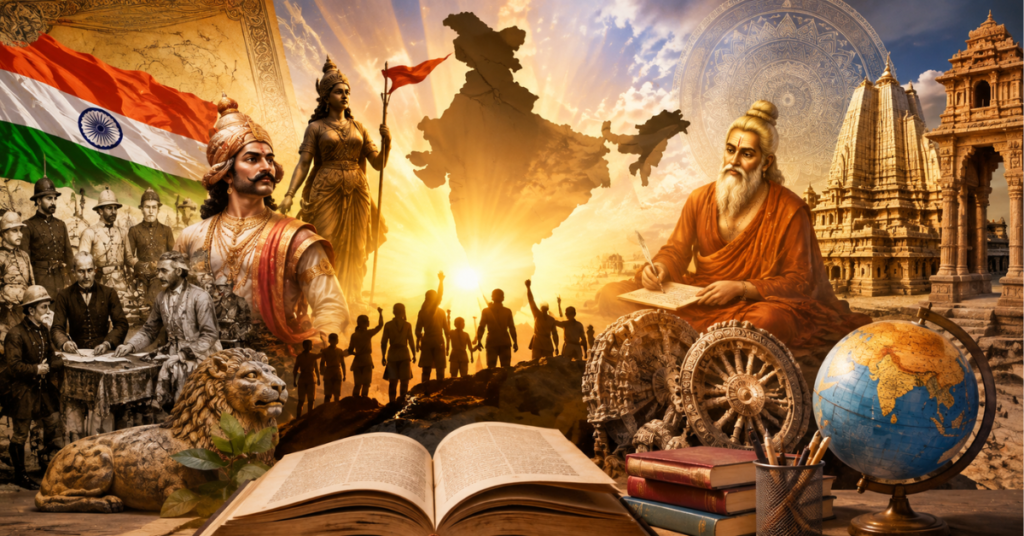
SUMMARY:
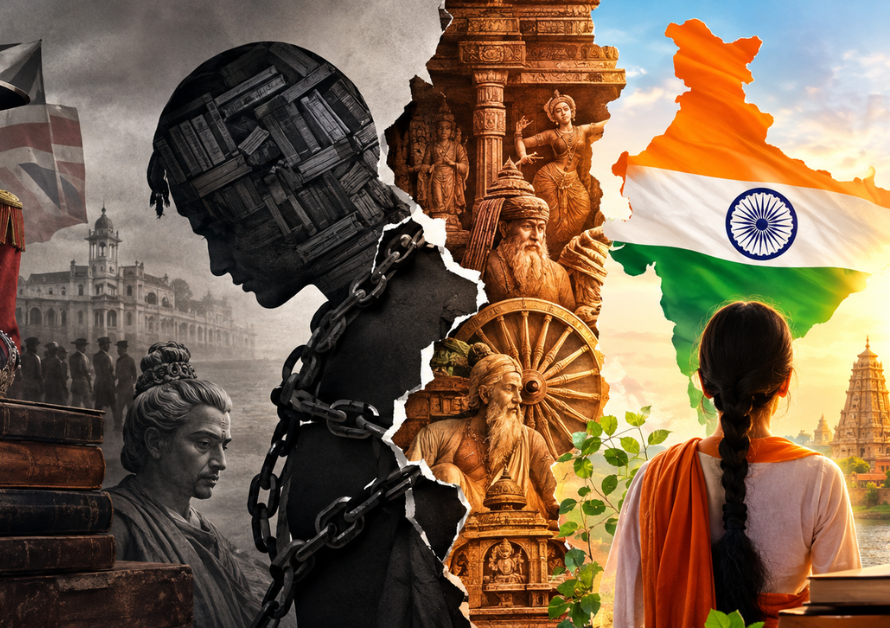
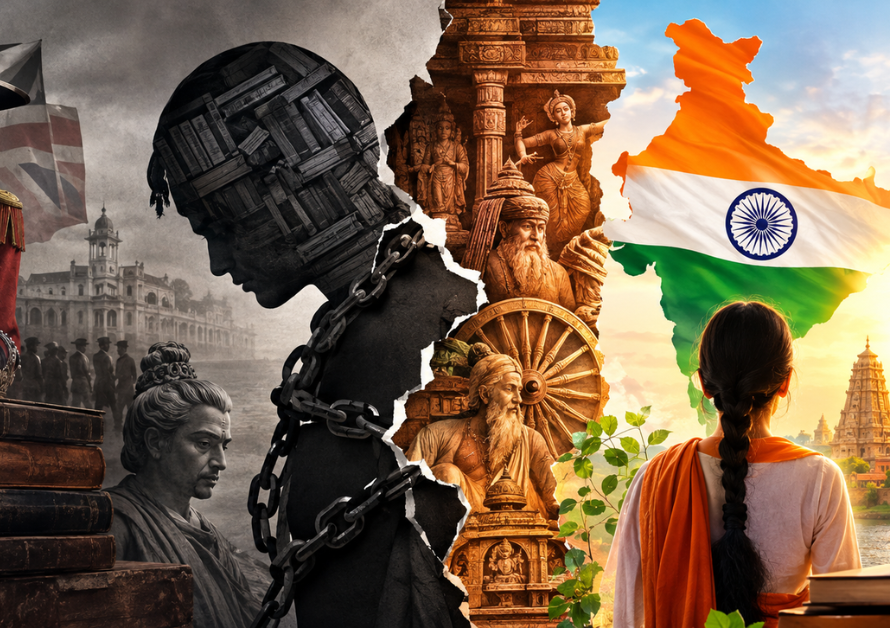
- For centuries, India’s historical consciousness was systematically altered through colonial policies and post-independence historiography. The imposition of Macaulay’s educational framework under British rule, followed by decades of skewed historical narratives, marginalized native Indian dynasties, suppressed the teachings of Sanatana Dharma, and fostered a mindset dependent on external validation.
- Under Union Education Minister Dharmendra Pradhan, the National Council of Educational Research and Training (NCERT) has undertaken comprehensive curriculum reforms to restore historical accuracy, highlight indigenous civilizational achievements, and reintroduce foundational cultural texts.
- This detailed narrative analyzes the structural distortion of Indian history, the specific curriculum updates, the political and international resistance to these changes, and the imperative of building national self-respect through accurate education.
DECOLONIZATION, CULTURAL RESURGENCE, AND THE BATTLE OVER NCERT REFORMS
I. THE COLONIAL BLUEPRINT: MACAULAYISM AND CULTURAL DISPLACEMENT
The structural distortion of India’s education system began as a deliberate administrative policy designed to undermine indigenous knowledge systems and establish ideological control.
- The Macaulayian Mandate: In 1835, Thomas Babington Macaulay introduced an educational framework explicitly designed to create a class of individuals “Indian in blood and colour, but English in taste, in opinions, in morals, and in intellect.”
- Systematic Destruction of Indigenous Education: Traditional institutions of learning, including Gurukuls, Pathshalas, and centers of classical scientific and philosophical study, were systematically starved of patronage and replaced by Western-style institutions.
- Cultivation of Intellectual Inferiority: The colonial curriculum was designed to instill a psychological sense of inadequacy among young Indians by portraying Western civilization as uniquely rational and scientific while depicting native traditions as backward or superstitious.
- Erasure of Civilizational Pride: By ignoring India’s profound contributions to mathematics, astronomy, metallurgy, architecture, and philosophy, the colonial system ensured that educated elites sought validation exclusively from foreign institutions.
- Creation of Administrative Servitude: The primary objective was not true intellectual enlightenment, but the mass production of clerks and subaltern administrators who would loyally serve the colonial state without questioning its authority or historical legitimacy.
II. POST-INDEPENDENCE HISTORIOGRAPHY AND THE SUPPRESSION OF NATIVE HERITAGE
Following independence in 1947, the opportunity to decolonize India’s history was largely bypassed in favor of ideological frameworks that continued to marginalize indigenous history.
- Institutional Persistence of Colonial Frameworks: Rather than executing a thorough overhaul, post-independence educational planners retained the core administrative and conceptual frameworks inherited from the British Raj.
- Disproportionate Focus on Foreign Conquests: For decades, school textbooks devoted extensive coverage to the Delhi Sultanate and the Mughal Empire, framing Indian history predominantly through the lens of external rulers and medieval conquests.
- Marginalization of Indigenous Empires: Major native dynasties that shaped the subcontinent’s geopolitical, maritime, and cultural landscape—such as the Gupta Empire, the Maurya Empire, the Chola Dynasty, the Vijayanagara Empire, and the Maratha Empire—were relegated to brief or secondary chapters.
- Asymmetry in Cultural and Religious Instruction: State-sponsored curricula strictly excluded foundational texts of Sanatana Dharma—including the Upanishads, the Vedas, and the Bhagavad Gita—under the guise of secularism, while permitting denominational religious instruction in minority-run institutions.
- Institutional Suppression of Native Historiography: A dominant school of historiography led by Marxist and Nehruvian scholars systematically downplayed the devastation of native heritage while eulogizing medieval rulers, creating an imbalanced historical memory.
- Erosion of National Confidence: A society deprived of an accurate understanding of its past struggles to develop genuine self-reliance (Atmanirbharata), remaining psychologically dependent on external cultural and political validation.
III. THE NCERT REFORMS: RESTORING BALANCE AND ACCURACY
Under the leadership of Union Education Minister Dharmendra Pradhan, the NCERT initiated a comprehensive structural revision of history and social science textbooks to correct historical imbalances.
- Pruning Overemphasized Medieval History: Inordinate and repetitive chapters on foreign invaders and medieval ruling dynasties were trimmed across Class 6 through Class 12 curricula to make space for comprehensive civilizational history.
- Centering Indigenous Dynasties and Leaders: Updated textbooks feature expanded modules on native rulers and empire builders, including Chhatrapati Shivaji Maharaj, Maharana Pratap, Emperor Chandragupta Maurya, Samudragupta, and the Sikh Gurus.
- Integration of Classical Scriptures and Values: Core philosophical and ethical concepts from ancient texts such as the Vedas, the Upanishads, and the Bhagavad Gita have been incorporated into the educational framework to foster cultural literacy.
- Recognition of Maritime and Scientific Contributions: Revised curricula highlight ancient India’s advanced achievements in astronomy, Vedic mathematics, medicine (Ayurveda), metallurgy, and ocean-faring trade routes managed by southern dynasties.
- Inclusion of Modern Historical Realities: Textbooks now include critical analyses of modern historical turning points, such as the imposition of the 1975 National Emergency, alongside contemporary security milestones like “Operation Sindoor”.
- Focus on Cultural Milestones: Major national cultural gatherings, such as the Mahakumbh, are integrated into social science texts to provide students with a holistic understanding of India’s living heritage.
IV. RESISTANCE, POLITICAL BACKLASH, AND GLOBAL TARGETING
The effort to dismantle decades of established historical narratives has encountered intense resistance from domestic political forces and international lobbies.
- Pushback from Entrenched Academic Circles: Scholars and institutions that long held a monopoly over curriculum design have aggressively criticized the reforms, framing the restoration of native history as an attempt to rewrite the past.
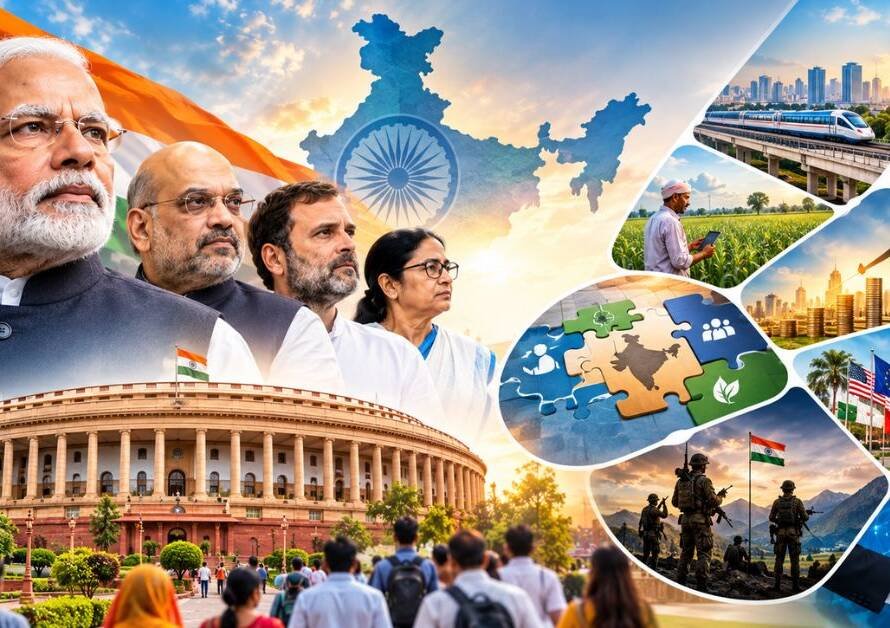
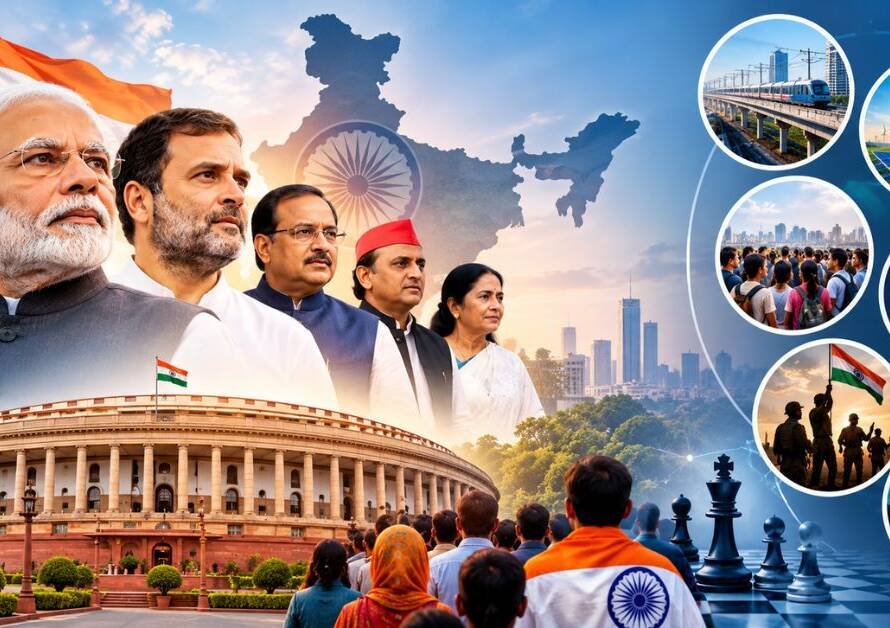
- Political Opposition and Rhetoric: Opposition political leaders have mobilized against the changes. Prominent politicians, including TMC MP Mahua Moitra, publicly attacked the revisions, claiming that efforts to reduce Mughal history would erase the government’s own political relevance.
- International Commentary and Media Campaigns: Foreign media outlets and Western academic lobbies have repeatedly attacked the NCERT updates, portraying the decolonization of Indian textbooks as ideological revisionism.
- Targeting of Leadership: As highlighted by international commentators such as American author Renee Lynn, Education Minister Dharmendra Pradhan has been directly targeted by a coordinated network of domestic and foreign interests seeking to stall the reform process.
- The Defense of Decolonization: Proponents argue that the panic among critics stems not from a concern for historical truth, but from the realization that their long-held control over India’s cultural and educational narrative is ending.
V. THE IMPERATIVE OF CULTURAL SELF-RESPECT AND THE WAY FORWARD
A sovereign nation’s long-term strength, innovation, and unity depend directly on its citizens having a confident, balanced, and truthful understanding of their history.
- Building Civilizational Self-Esteem: Replacing narratives of defeat and subjection with balanced accounts of native resistance, scientific innovation, and spiritual philosophy instills genuine pride in young minds.
- Eliminating the Need for External Validation: An education system rooted in authentic national history liberates future generations from colonial mentalities, enabling them to evaluate national achievements on their own merits.
- Strengthening Democratic Foundations: Teaching history accurately—including both ancient glory and modern struggles like the Emergency—ensures that future citizens remain vigilant in protecting democratic values and national sovereignty.
- Supporting Reform Leadership: Reclaiming history requires unwavering administrative and public support. Acknowledging the courage of leaders who execute necessary reforms despite fierce opposition is vital for sustained educational renewal.
- The ongoing overhaul of NCERT textbooks is not merely an administrative update; it is a vital act of civilizational decolonization.
- By removing colonial distortions, restoring the rightful place of Sanatana Dharma, and accurately presenting the achievements of native rulers, India is building an educational foundation worthy of its rich heritage.
- A nation that honours its past is uniquely equipped to shape its future.
🇮🇳 Jai Bharat, Vandematram 🇮🇳
Read our previous blogs 👉 Click here
Join us on Arattai 👉 Click here
👉Join Our Channels👈