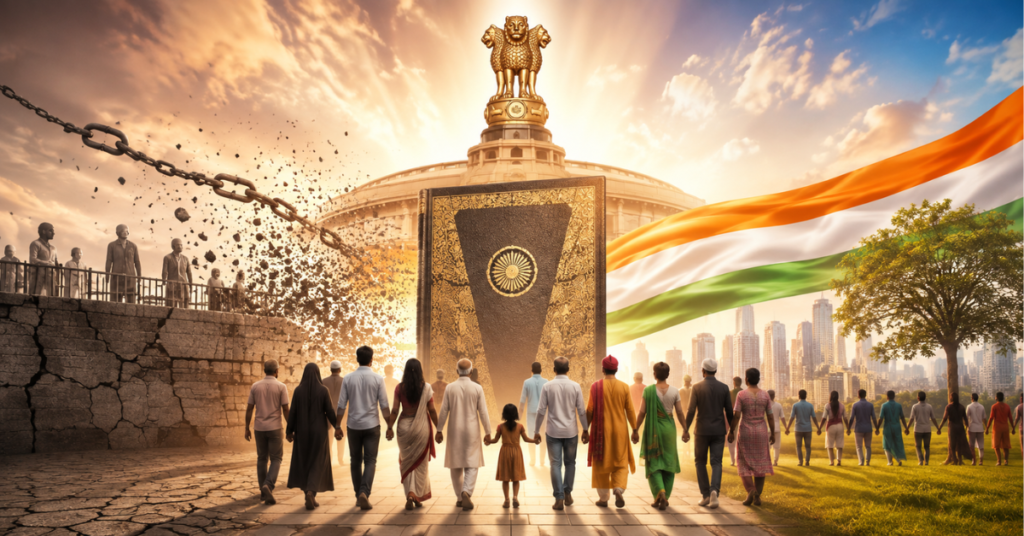
Summary
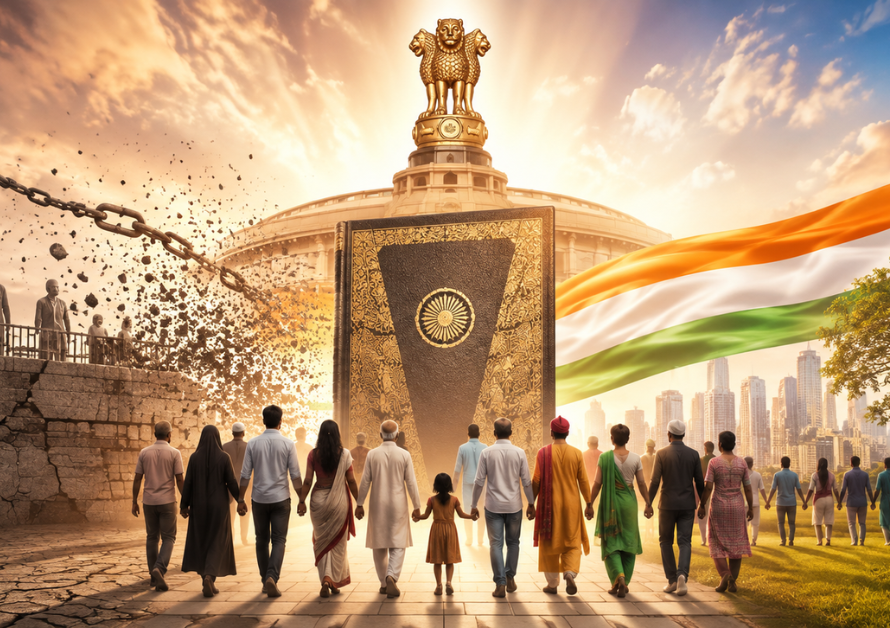
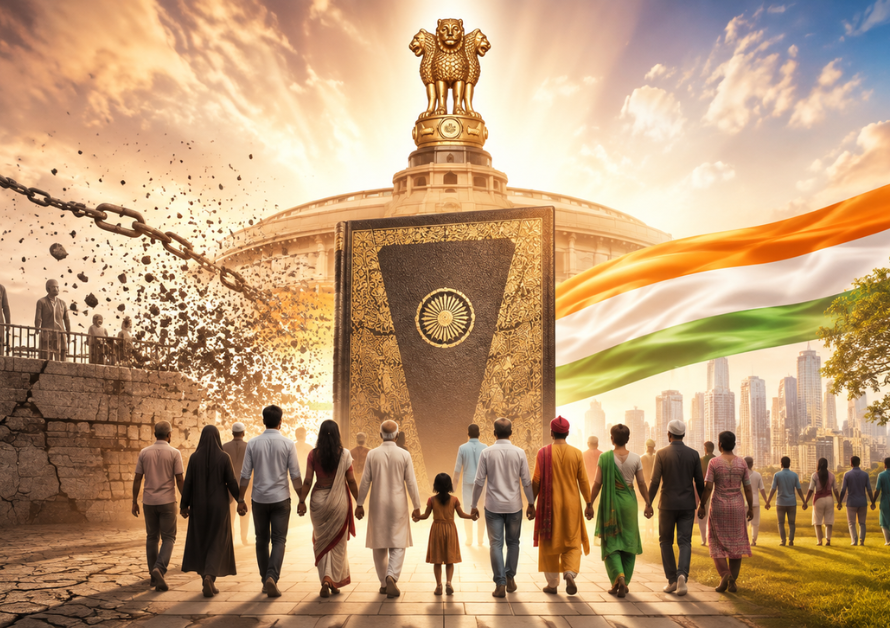
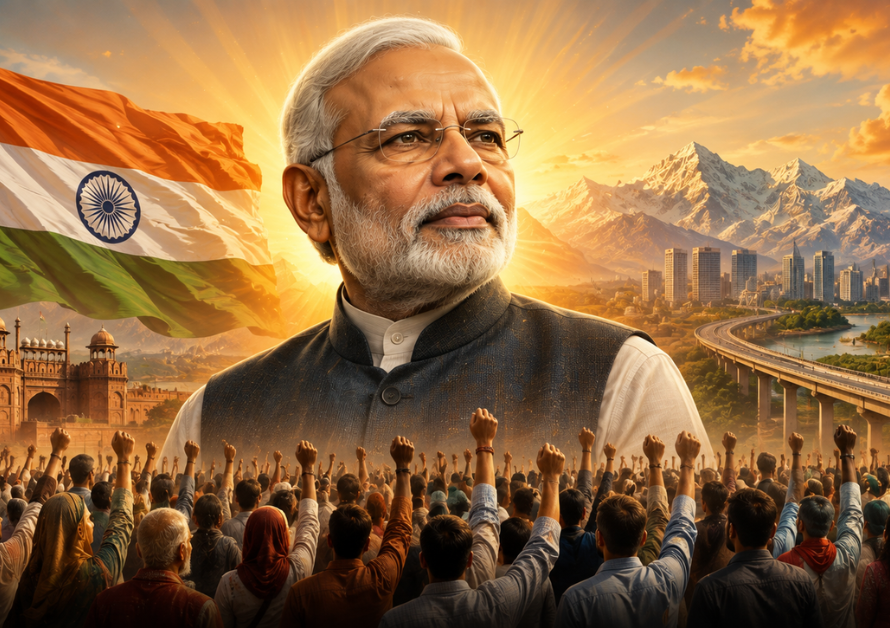
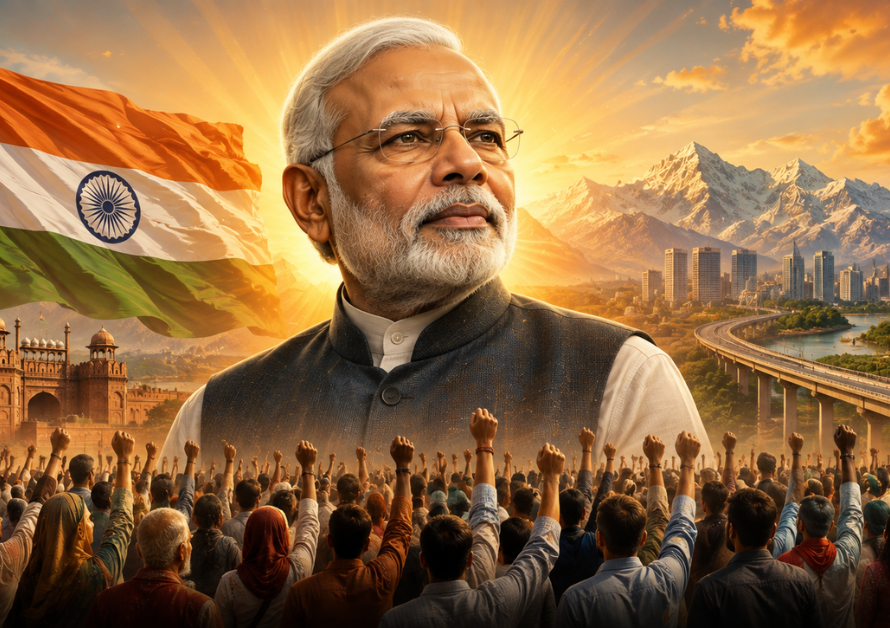
- The history of democratic governance in independent India is sharply divided into two distinct eras: the initial seven decades marked by institutional centralization, minority appeasement, and frequent constitutional distortions under Congress and coalition governments, and the subsequent era characterized by systemic reforms, institutional empowerment, and the revitalization of constitutional governance under Prime Minister Narendra Modi.
- This comprehensive narrative evaluates the major accomplishments of PM Modi’s administration, contrasts them with earlier governance practices—specifically addressing legal asymmetries created for votebank politics—and highlights why upholding the spirit of Dr. B.R. Ambedkar’s Constitution is essential for India’s sovereign, equal, and secular future.
From Asymmetric Governance to Universal Citizenship in Modern India
1. Deconstructing the Historical Distortion of the Constitution (1947–2014)
Dr. B.R. Ambedkar envisioned the Constitution of India as a dynamic, moral instrument designed to ensure equality before the law (Article 14), empower all citizens, and prevent any form of religious discrimination or special privilege. However, during the first seven decades of post-independence governance, constitutional principles were repeatedly distorted to create asymmetric privileges for votebank consolidation:
- Legislative Asymmetries and Unchecked Statutory Powers: Through enactments such as the original Waqf Act of 1995, unprecedented and unchecked statutory powers were granted to Waqf Boards. These included extraordinary jurisdiction to claim public and private properties with limited judicial oversight, procedural exemptions from general limitation laws, and special tribunal mechanics. This framework created severe legal inequities for non-minority landowners, local communities, and public municipal assets.
- Asymmetric Educational Regulation (The RTE Paradox): While majority-managed educational and cultural institutions were subjected to stringent state regulations, financial burdens, compliance mandates, and compulsory seat reservations under acts like the Right to Education (RTE) Act, minority-run institutions enjoyed blanket exemptions under Article 30. This created an uneven regulatory playing field that burdened majority-managed schools and incentivized institutional restructuring along religious lines.
- Selective Secularism and State Control of Religious Endowments: State governments routinely maintained direct administrative, legal, and financial control over Hindu temples and religious endowments through state board legislations. Revenues generated from these institutions were frequently audited, diverted, or subsumed into state-directed funds, whereas minority religious institutions operated with complete managerial autonomy alongside state-funded subsidies (such as state-sponsored pilgrimage schemes).
- Frequent Imposition of Emergency and State Rule: Article 356 was invoked over 100 times by previous central administrations—most notoriously during the 1975–1977 Internal Emergency—to arbitrarily dismiss democratically elected state governments. This political overreach degraded the fundamental principles of cooperative federalism, judicial independence, and fundamental civil liberties.
- Dynastic Centralization and Institutional Erosion: Executive authority was frequently centralized around political dynasties and alliance politics, leading to policy paralysis, discretionary patronage networks, and the subversion of constitutional checks and balances.
2. Structural Corrections and Major Accomplishments (2014–Present)
Since 2014, executive governance in India has systematically dismantled these legal and administrative distortions, replacing policy appeasement with rule of law, structural transparency, national security, and universal civil rights:
- Constitutional Integration and Equal Rights: The historic abrogation of Article 370 and Article 35A fully integrated Jammu, Kashmir, and Ladakh into the constitutional framework of India. This milestone extended equal constitutional protections, fundamental rights, reservation policies for marginalized communities, and progressive central legislation to all residents regardless of religion or gender.
- Overhauling Asymmetric Laws (Statutory Reforms): Through major legislative initiatives such as the Waqf (Amendment) Act (conceived under the UMEED framework), the government moved to remove arbitrary land-claiming powers (such as former Section 40), subject properties to standard limitation and registration laws, introduce mandatory digital auditing, and guarantee diverse representation, including women and non-minority stakeholders, on administrative boards.
- Universal Social Welfare (Sabka Saath, Sabka Vikas): By replacing selective, religion-based patronage with direct benefit transfers via the JAM Trinity (Jan Dhan, Aadhaar, Mobile), government welfare delivery achieved population-scale neutrality. Key national initiatives—including PM Awas Yojana (pucca housing), Jal Jeevan Mission (piped tap water), and Ayushman Bharat (universal health coverage)—reach 100% saturation based purely on socio-economic need without religious discrimination.
- Re-evaluating Educational and Cultural Equity: Judicial and legislative reviews are progressively addressing regulatory disparities, moving toward uniform standards of quality, administrative transparency, and inclusivity across all academic institutions while safeguarding legitimate constitutional rights under Articles 29 and 30.
- Digital Public Infrastructure and Anti-Corruption: Direct benefit transfers exceeding ₹34 lakh crore ($400+ billion) have completely eliminated middleman leakages and ghost beneficiaries, dismantling the patronage-based economy that previously fueled political corruption.
- Decolonization of Criminal Jurisprudence: Replacing Victorian-era colonial statutes with modern criminal codes—the Bharatiya Nyaya Sanhita (BNS), Bharatiya Nagarik Suraksha Sanhita (BNSS), and Bharatiya Sakshya Adhiniyam (BSA)—established a time-bound, citizen-centric legal framework focused on justice rather than state coercion.
3. Upholding Dr. B.R. Ambedkar’s Constitutional Vision
Dr. Ambedkar famously warned that “Constitutional morality is not a natural sentiment. It has to be cultivated.” The current paradigm of governance aligns directly with his foundational principles:
- True Equality Before the Law (Article 14): Dr. Ambedkar vehemently rejected separate electorates and permanent religious privileges in favor of a unified democratic republic. Modern governance restores Article 14 by establishing one uniform standard of citizenship, law, and fundamental duty.
- Rule of Law vs. Rule of Privilege: Eliminating VIP culture, repealing over 1,500 obsolete colonial-era laws, and modernizing statutory enforcement ensures that no individual, community, or religious institution operates above the law.
- Cooperative and Competitive Federalism: State governments are empowered through a significant increase in central tax devolution (elevated to 42%) and equal voting rights in constitutional consensus bodies like the GST Council, honoring the federal balance designed by the founding fathers.
- Gender Justice and Social Emancipation: Enacting the Nari Shakti Vandan Adhiniyam (reserving one-third of legislative seats for women) and outlawing practice like Triple Talaq translate Dr. Ambedkar’s radical vision of gender equality and social reform into living law.
- Preserving National Integrity and Sovereignty: Upholding the Constitution as a sacred document (Samvidhan) ensures that national sovereignty, secular equality, and individual dignity remain fully protected against divisive political agendas.
The Path Ahead
- Respecting the Constitution drafted by Dr. B.R. Ambedkar requires more than symbolic reverence. It demands an unyielding commitment to public service, equal rights, national self-reliance (Aatmanirbharta), and administrative integrity.
- By dismantling historical distortions, restoring institutional credibility, and prioritizing citizen welfare above political expediency, modern Indian statecraft honors the true spirit of the founding fathers and paves the way for a developed, self-reliant India (Viksit Bharat).
“सत्यमेव जयते”
Truth Alone Triumphs.
🇮🇳 Jai Bharat, Vandematram 🇮🇳
Read our previous blogs 👉 Click here
Join us on Arattai 👉 Click here
👉Join Our Channels👈