SUMMARY:
- This document presents a detailed and factual analysis of the calculated timeline (chronology), legal proceedings, media hit-jobs, and strategies used to incite social unrest in Indian politics.
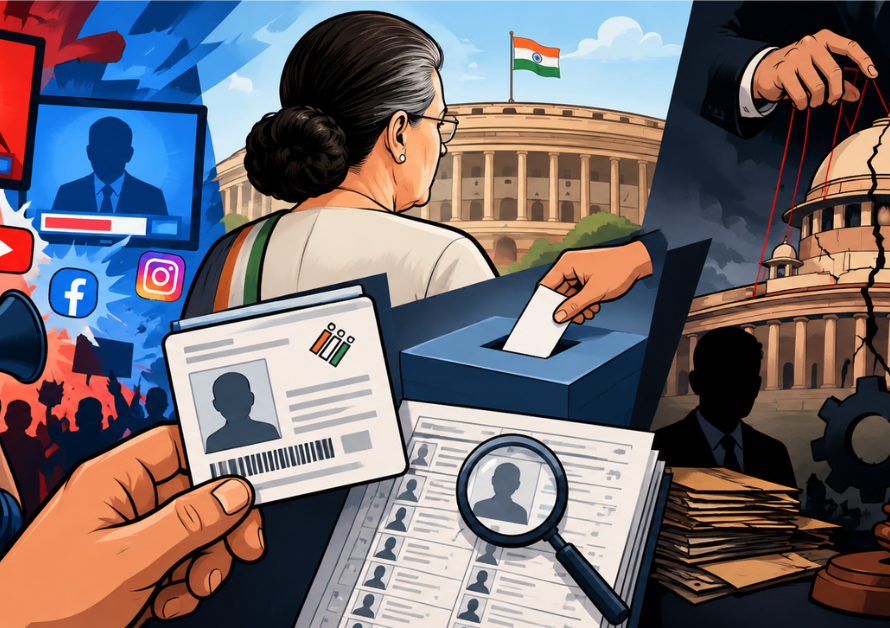
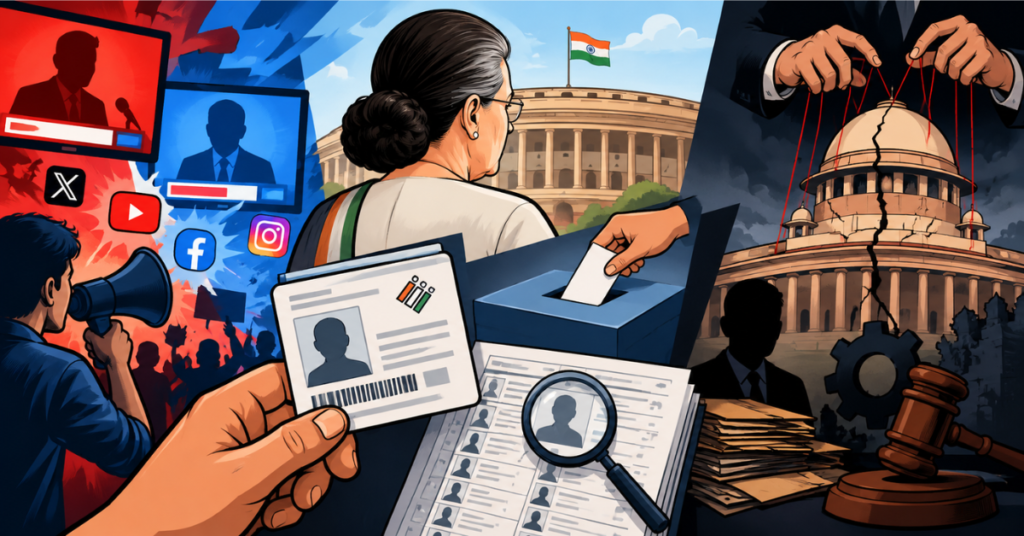
- It outlines the complete chronology of the legal dispute reviving the fake voter controversy involving Sonia Gandhi’s citizenship and the inclusion of her name in the electoral roll of the New Delhi parliamentary constituency from 1968 to 2026.
- Alongside this, the report exposes how, as soon as the Sessions Court ordered a fresh hearing in this case on September 21–22, 2026, a planned media campaign was launched the very next day (September 23, 2026) to tarnish the credibility of the Chief Election Commissioner (CEC) and the Election Commission of India (ECI).
- Furthermore, drawing upon cinematic references (such as the film Dhurandhar), this analysis explains how funds from foreign and anti-national forces are used not merely to gather crowds for rallies, but to forge anti-national narratives through media, influencers, and columnists.
- After economic and administrative issues like EVMs, Adani-Ambani, and ethanol failed to gain traction, attempts were made to spark social tension by exploiting caste-sensitive topics such as UGC regulations, reservations, and the Atrocities Act.
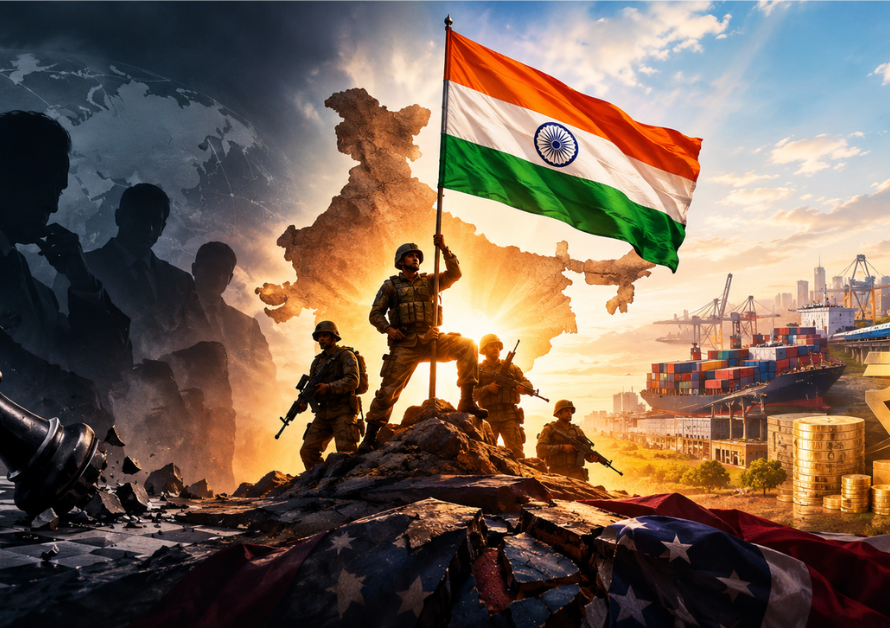
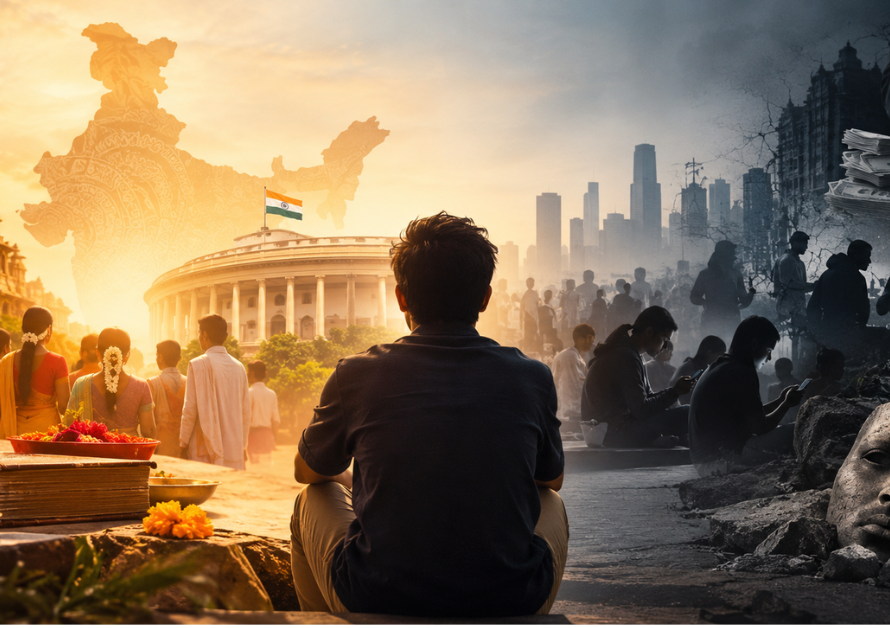
- Finally, the report connects the political atmosphere being created in 2026 directly to the upcoming Uttar Pradesh Assembly elections (2027) and outlines the imperative for legal strictness, societal boycott, and an intellectual counter-offensive to protect national interests and prevent the division of society for dynastic gains.
India’s Voter Controversy and Political Narrative War
SECTION 1: HISTORICAL AND LEGAL CHRONOLOGY OF SONIA GANDHI’S FAKE VOTER CONTROVERSY
1.1 Historical Timeline of Citizenship and Voting (1968–1983)
- 1968 (Marriage and Citizenship Status): Sonia Gandhi (Edvige Antonia Albina Maino) married Rajiv Gandhi. At the time of her marriage, she was an Italian citizen.
- 1970 and 1972 (Birth of Children): At the time of the births of Rahul Gandhi (1970) and Priyanka Vadra (1972), Sonia Gandhi retained her Italian citizenship.
- 1980 (Illegal Voter Registration): Without acquiring Indian citizenship under the Citizenship Act of 1955, her name was included in the official voter list of the New Delhi parliamentary constituency for the 1980 elections, and she exercised her voting rights.
- 1983 (Formal Citizenship): In 1983—15 years after her marriage—she formally acquired Indian citizenship, raising serious legal questions regarding her vote cast in 1980.
1.2 Resurgence of the Legal Dispute (2025–2026)
- August 2025 (Hearing in Rouse Avenue Court): A petition was filed in the Magistrate Court at Rouse Avenue, Delhi, seeking the registration of an FIR against Sonia Gandhi for registering on the voter list and voting without holding citizenship.
- September 2025 (Dismissal of Petition): The Magistrate Court dismissed the petition at the preliminary stage, citing technical grounds.
- December 2025 (Revision Petition): Challenging the Magistrate’s order, the petitioner filed a revision petition in the Delhi Sessions Court.
- September 22, 2026 (Historic Order by Sessions Court): The Sessions Court set aside the Magistrate’s earlier order and directed a fresh hearing on the matter based on new facts and evidence, thereby reviving the legal dispute.
SECTION 2: INSTITUTIONAL TARGETING: THE MEDIA ‘HIT-JOB’ ON THE ELECTION COMMISSION
2.1 Timing and Media Leaks (September 23, 2026)
- Action Within 24 Hours of Court Order: Immediately after legal proceedings were initiated against Sonia Gandhi on September 22, an investigative report against the Election Commission was published in The Indian Express on September 23.
- Nature of Allegations: The report attempted to portray Chief Election Commissioner (CEC) Gyanesh Kumar as acting arbitrarily and taking unilateral decisions within the Commission.
2.2 Constitutional Process vs. Misleading Narrative
- Three-Member Constitutional Structure: The Election Commission of India is a three-member body (the CEC and two ECs). No individual holds ‘veto power’; all decisions are taken by majority (2-1) or unanimity (3-0).
- Internal Notes vs. Final Decisions: Writing notes of dissent, raising questions, and expressing disagreement is a normal internal process in any administrative board. According to ECI sources, all final decisions—including the Special Summary Revision (SIR)—bore the unanimous signatures of all three members: CEC Gyanesh Kumar, EC Sandhu, and EC Joshi.
- Real Objective of the Hit-Job: By suppressing the final decisions and signatures and constructing headlines like “Autocratic” and “Illegal” based solely on dissent notes, the ecosystem sought to divert public attention from Sonia Gandhi’s fake voter issue and attack the credibility of the Election Commission.
SECTION 3: FOREIGN FUNDING, TOOLKITS, AND THE ‘NARRATIVE BUILDING’ MODEL
3.1 Economics of Narrative Building
- Reference to the Film ‘Dhurandhar’: Parallel to the scene in the blockbuster film Dhurandhar—where opposing forces set aside a 60,000 crore fund to influence an election—a massive game of foreign and hostile funding exists in real politics as well.
- Actual Distribution of Funds: Such funds are not used merely to gather crowds for rallies or distribute cash directly. Half of it goes into organizing political rallies, while the rest is distributed among social media influencers, mainstream media, journalists, and columnists.
- Objective: To gauge the pulse of the public and forge a narrative that generates anger and opposition against the government.
3.2 Chronology of Failed Experiments
- EVM Hacking: Rejected by the public due to a lack of technical basis.
- Adani-Ambani & Ethanol Policy: Failed to connect directly with rural and middle-class voters.
- Temple Donation Theft Allegations: Failed completely to gain public traction due to deep-rooted cultural faith.
- Attack on Caste Lines: Once all economic and administrative issues failed, topics touching on caste and class divisions were chosen to fracture society.
SECTION 4: CASTE SENSITIVITY, UGC REGULATIONS, AND THE ‘RESERVATION CHAKRAVYUH’
4.1 The UGC Controversy and Swift Government Intervention
- Social Unrest: As soon as the draft of the new University Grants Commission (UGC) regulations emerged, widespread anger flared across caste-sensitive sections of society.
- Disappearance of Other Issues: The moment this new issue struck a chord, older topics like ethanol, vote theft, EVMs, and SIR vanished overnight.
- Swift Action by the Government: Recognizing the gravity of the situation, the government dismissed the officials responsible for introducing these rules without approval and filed an explicit response in the Supreme Court stating that the regulations would not be implemented, thereby stripping the opposition of the issue.
4.2 The Political Trap of Reservation and the Atrocities Act
- Combining New Issues: When the UGC issue fell through, strategists immediately linked it with Reservation and the SC/ST Atrocities Act, as these directly touch caste sentiments.
- A No-Win Situation (Chakravyuh):
- If a party opposes Reservation / the Atrocities Act, it risks alienating the reserved categories (30–35% of the vote).
- If it supports them, it risks losing the support of the general category (15–17% of the vote).
- The Opposition’s Message: Leveraging this dilemma, when the government maintains a balanced stance, the opposition spreads the narrative that “the government is ignoring you,” aiming to stoke public outrage.
SECTION 5: STRATEGIC COUNTER-ACTION AND NATIONAL SAFEGUARDS
5.1 The Electoral Context: 2026 to 2027 UP Elections
- The 2024 Mandate: General Elections concluded in 2024, with the next national election scheduled for 2029. Invoking national controversies in 2026 is an orchestrated attempt to lay a trap for the upcoming Uttar Pradesh Assembly elections in 2027.
- Targeting the Leadership: Creating social tension at the Centre is aimed at encircling the governance model in Uttar Pradesh and destabilizing regional stability.
5.2 Multi-Pronged Response: Legal Action, Social Boycott, and Intellectual Counter-Offensive
- Strict Legal and Judicial Enforcement: The government and the judiciary must enforce applicable laws with maximum strictness. Offenders who subvert institutions, compromise national security, or violate electoral laws must face swift penal consequences without exception.
- Comprehensive Social and Economic Boycott: Patriotic citizens and civil society must socially, culturally, politically, and economically boycott anti-national elements and their ecosystems, ensuring they never dare to compromise national interests again.
- Intellectual Counter-Offensive: Nationalist intellectuals, scholars, and media professionals must actively dismantle false, anti-national narratives. They must effectively communicate the achievements of the nation and the government to prevent public confusion.
- Defeating Dynastic Divisiveness: The ideological narrative must expose attempts to divide Hindu society along caste lines—tactics historically employed by political and dynastic interests who prioritized personal power over national sovereignty for decades.
🇮🇳Jai Bharat, Vandematram 🇮🇳
Read our previous blogs 👉 Click here
Join us on Arattai 👉 Click here
👉Join Our Channels👈
Reads & Views: 63