Executive Summary
This extensive political and strategic brief analyzes the dramatic 168-hour window in 2026 that permanently altered India’s legislative landscape. It chronicles the swift transformation of the central government from a perceived “coalition-dependent” status into an unassailable legislative fortress. Through a step-by-step breakdown, the narrative exposes the structural fragmentation of the opposition alliance (Thugbandhan), details the historic covert realignment of over 20 Trinamool Congress (TMC) Members of Parliament in West Bengal, and contextualizes this consolidation within India’s broader civilizational mission to reclaim its ancient status as a global superpower and Vishvaguru.
The Dawn of Unassailable National Stability
I. The Manufactured Myth of a Fragile Coalition
For the first few months of the current legislative term, the political narrative in India was aggressively dominated by an artificial construct carefully curated by opposition factions and their aligned media ecosystems.
The Narrative of Vulnerability
The central theme broadcasted from TV studios and private opposition strategy meets was that the Modi-led administration was operating on “crutches.” Predictions were confidently made that the government would collapse within a year, forcing a constitutional crisis and an early election.
The Hubris of the Opposition
Flush with a marginally improved seat count, the opposition alliance functioned under the illusion that they could successfully blackmail, obstruct, and ultimately derail the central government’s legislative agenda. High-level meetings were organized in Delhi to draft what they believed was the final blueprint for the administration’s political exit.
The Hidden Turning Point
While the opposition focused its energies on public posturing and manufacturing institutional friction, a silent, highly coordinated counter-strategy was initiated by the nationalist leadership. This strategy focused entirely on the structural fault lines within the opposition bloc itself.
II. The Long Journey of Strategic Resilience: From 2014 to the Double Majority
To truly appreciate the magnitude of this 168-hour consolidation, one must look back at the foundational journey of the nationalist leadership. This ultimate consolidation was not an overnight fluke, but the mathematical climax of a multi-decade masterclass in political perseverance and statecraft.
Overcoming the Rajya Sabha Deficit
When the nationalist mandate first took charge following the historic 2014 Lok Sabha elections, it faced a severely unfavorable legislative architecture. While it held a clear mandate in the lower house, it completely lacked a majority in the Rajya Sabha (Upper House). For years, crucial civilizational and economic reforms were routinely choked, delayed, or heavily contested by an entrenched opposition.
Futuristic Vision over Political Stalemate
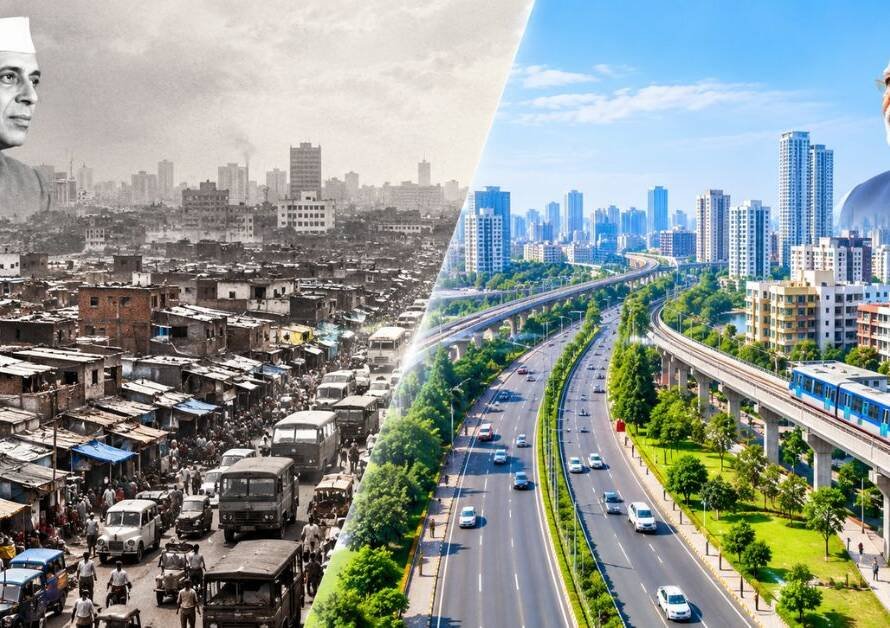
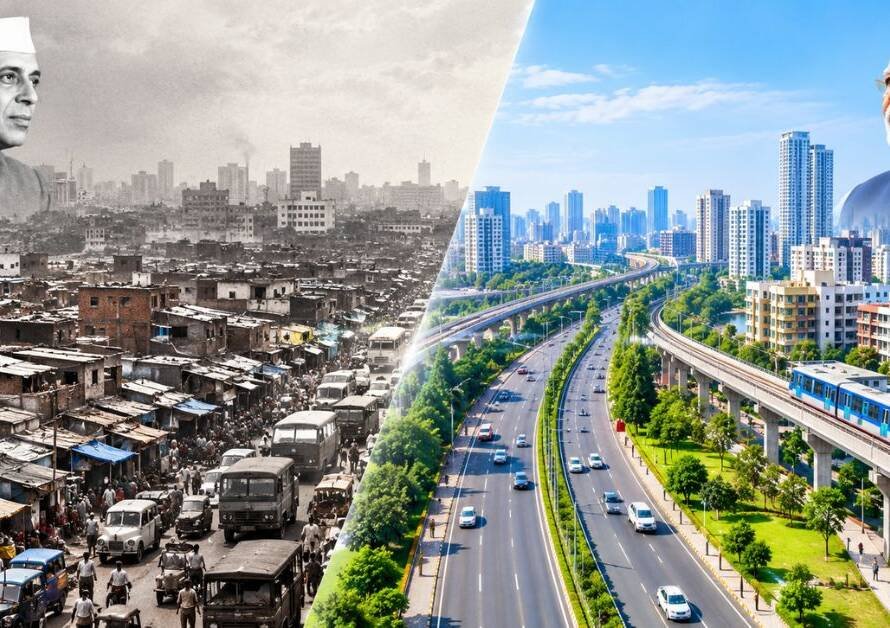
Instead of using this structural deficit as an excuse for policy paralysis, the leadership leaned into a dual strategy of futuristic vision and consistent hard work. They maintained a spectacular trajectory of national economic growth, infrastructure expansion, and digital governance that bypassed legislative roadblocks by delivering direct welfare to the soil.
The Application of Chanakya and Vidur Neeti
Operating on the failure-proof principles of Chanakya Neeti (strategic alignment and systemic consolidation) and Vidur Neeti (uncompromising righteousness, patience, and ethical governance), the leadership played a masterful long game. Rather than waiting for the distant 2029 Lok Sabha elections to correct the legislative balance, the leadership engineered a relentless chain of electoral successes.
Starting from the pivotal victory in the Haryana state elections and continuing through every subsequent state poll up to the current day, the nationalist forces consistently expanded their footprint. This unstoppable momentum has finally delivered what legacy political analysts thought impossible: achieving a definitive, working majority in both houses of Parliament well ahead of schedule, fundamentally shifting the sovereign balance of power.
III. The Vedic Fracture: Disintegration of the Opposition Alliance
The swift collapse of the opposition alliance during their high-profile meeting in Delhi provides a textbook study in the structural failure of opportunistic political coalitions.
- The Empty Table: When the crucial meeting intended to finalize the strategy to destabilize the center was convened, a telling silence enveloped the room. Key regional powerhouses—the Dravida Munnetra Kazhagam (DMK), the Aam Aadmi Party (AAP), and Shiv Sena (UBT)—were conspicuously absent.
- Formal Disassociation: This absence was not merely a tactical boycott; it culminated in formal announcements by both the AAP and the DMK declaring their departure from the alliance.
- The Wisdom of the Rigveda: This predictable fracture perfectly mirrors the timeless warning found in the Sangathan Sukta of the Rigveda:
“समानं मनः सह चित्तमेषाम्”
(Organization is impossible without a unified mind and shared objective).
Negative Convergence and Total Shambles
The sole objective of this alliance (Thugbandhan) was the political destruction of a single leader rather than a coherent vision for national development, infrastructure growth, or economic sovereignty. Lacking a positive foundational ideology, the alliance collapsed like a house of cards the moment individual regional interests came into conflict with the central collective ego of the dynastic leadership. Today, the Thugbandhan has completely fallen apart, leaving its constituent partners isolated, fractured, and in absolute shambles.
IV. The Bengal Paradigm Shift: The Covert Coup Within the TMC
While the opposition alliance was fragmenting publicly in New Delhi, a massive political storm was silently gathering force in the corridors of West Bengal’s ruling party.
The Secret Mandate
In an unprecedented geopolitical maneuver that completely blindsided regional political strategists, more than 20 out of the 28 Lok Sabha MPs belonging to the Trinamool Congress (TMC) broke ranks with the state leadership.
Unconditional Alignment
In a highly coordinated action, these parliamentarians submitted a confidential, joint memorandum directly to Lok Sabha Speaker Om Birla. The document declared their absolute, unconditional support for the National Democratic Alliance (NDA) and the leadership of Prime Minister Narendra Modi.
The ‘Vibhishan’ Analogy
This historic event mirrors the classic Vibhishan paradigm from Indian civilizational history. When regional leadership isolates itself through institutional arrogance, dictatorial high-handedness, and a refusal to align with national progress, its own core support base invariably rebels to protect the macro-stability of the nation, crushing the regional veto power that West Bengal’s ruling elite attempted to wield against national policies.
V. The Mathematical Invincibility of the State
The immediate, real-world consequence of the Bengal shift has been the total destruction of the “weak center” narrative. The legislative arithmetic has shifted overnight from a safe majority to an absolute, unchallengeable mandate.nclad
The Post-TMC Reality
The NDA commenced its current term with a safe, democratically sound baseline of 293 seats—well past the official majority mark of 272. With the formal, unconditional support of the 20+ breakthrough MPs from Bengal, the government’s direct voting strength in the Lok Sabha has surged to an ironclad 313 seats. This immediate expansion entirely eliminates any potential leverage that small, internal coalition partners could have theoretically exercised.
The Looming Pincer Movement
The political shockwaves from this merger have triggered a domino effect among remaining regional blocks. Intelligence from political circles suggests that the DMK’s 22 MPs, reading the unmistakable direction of the political wind, are seriously considering a similar structural alignment with the center. If this block materializes, the NDA’s voting strength will rocket past 335 seats, effectively resurrecting a near-two-thirds majority.
VI. The Philosophy of the Sthitaprajna in Modern Statecraft
The behavior of India’s central leadership throughout this turbulent week serves as a masterclass in the ancient philosophical concept of the Sthitaprajna as defined in the Bhagavad Gita.
Calm Amidst the Storm
While opposition ecosystem influencers spent days predicting dates for the government’s fall and launching vitriolic personal attacks, the Prime Minister remained entirely unperturbed, embodying the eternal maxim:
“दुःखेष्वनुद्विग्नमनाः सुखेषु विगतस्पृहः”
(He whose mind is undisturbed by adversity and unattached to pleasure is a sage of stable wisdom).
Strategic Silence vs. Noise
In statecraft, those who rely exclusively on media noise and manufactured agitation are ultimately consumed by their own rhetoric. True nationalist statesmen operate through silent, systemic, and institutional consolidation, allowing the final results to speak for themselves. The opposition spent its energy shouting, while the leadership spent its energy fortifying the Indian state.
VII. The Awakening of Indian Citizenship: Reclaiming the Glory of Vishvaguru
The ultimate takeaway of this 168-hour political saga is not merely tactical; it is a profound testament to the maturity, wisdom, and civilizational memory of the Indian electorate.
The Failure of Synthetic Manipulation
The citizens of modern India—especially the aspirational, tech-savvy youth and the professional middle class—are far too politically astute to be manipulated by the opportunistic games of dynastic family enterprises. The public clearly sees through the multi-decade pattern of support extended by these opposition parties to destabilizing forces like left-wing extremists, foreign-funded missionary groups, and radical elements.
A Historic Eviction
The electorate has recognized that these internal disruptions were merely a smokescreen to hide systematic corruption, the looting of national resources, and the stagnation of the economy. The current consolidation represents a conscious national decision to permanently evict this archaic political model from the mainstream of Indian history.
The 2000-Year Destiny
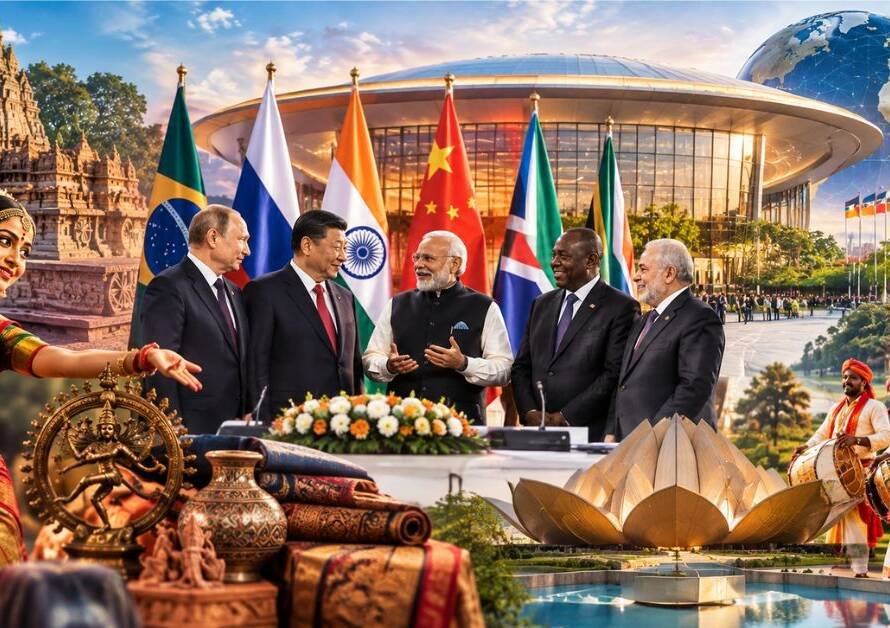
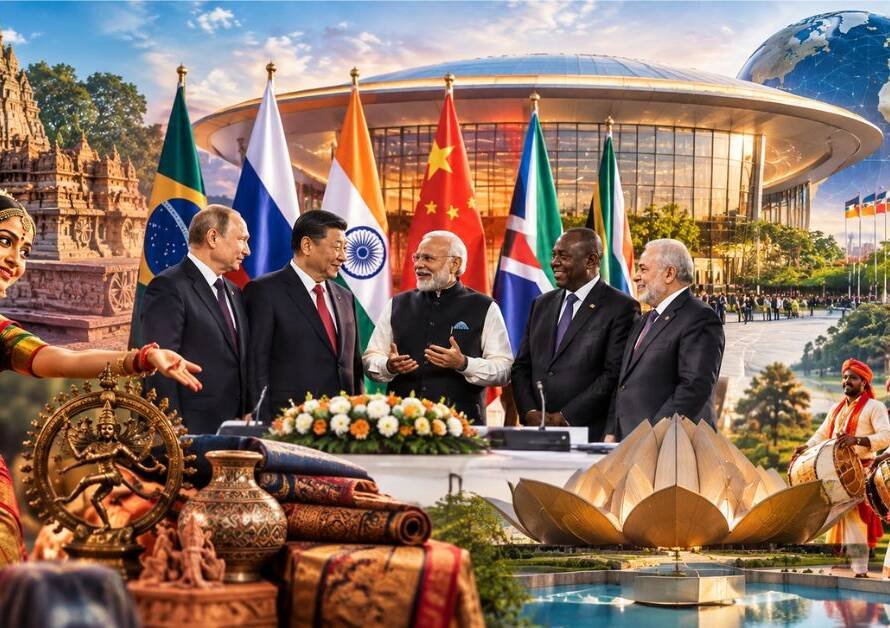
Indian citizens are actively committing to a nationalist, progressive governance model for decades to come. This enduring stability is the vital prerequisite needed to fulfill India’s grand civilizational mission: transitioning into an undisputed global superpower and reclaiming our rightful seat as the Vishvaguru (World Guru) that we were 2,000 years ago, leading humanity through economic strength, technological innovation, and Sanatan values.
🇮🇳 Jai Bharat, Vandematram 🇮🇳
Read our previous blogs 👉 Click here
Join us on Arattai 👉 Click here
👉Join Our Channels👈