Summary
This essay presents a detailed, fact-based, and strategic analysis of the active patterns of ‘hybrid warfare’ operating globally and the orchestrated conspiracies directed against India.
The essay elaborates on four key points:
- The Global Instability Model: A multinational analysis of sponsored chaos suddenly erupting in countries like France, Belgium, Chile, and Spain around local and educational issues (such as school reforms or housing/rent) after they adopted independent foreign policies.
- India’s Strategic Autonomy: India’s firm stance in continuing discounted energy imports from Russia, negotiating trade deals on its own terms, and completely neutralizing foreign tariffs despite heavy pressure from Western nations and superpowers.
- Failed Attempts to Destabilize India (Toolkits): The exposure of failed efforts to generate internal discontent—first via the NEET examination controversy, then through a sponsored ‘fix schools movement’, and now by fabricating narratives of ‘vote theft’ to undermine democratic institutions when external pressure failed.
- The Ultimate Objective: To halt India’s rapid economic progress, defense self-reliance, and global leadership, and force the nation to bow to external terms.
- A careful study of contemporary geopolitics reveals an undeniable truth—no major social protest, sudden student movement, or chaos on the international stage is merely a coincidence.
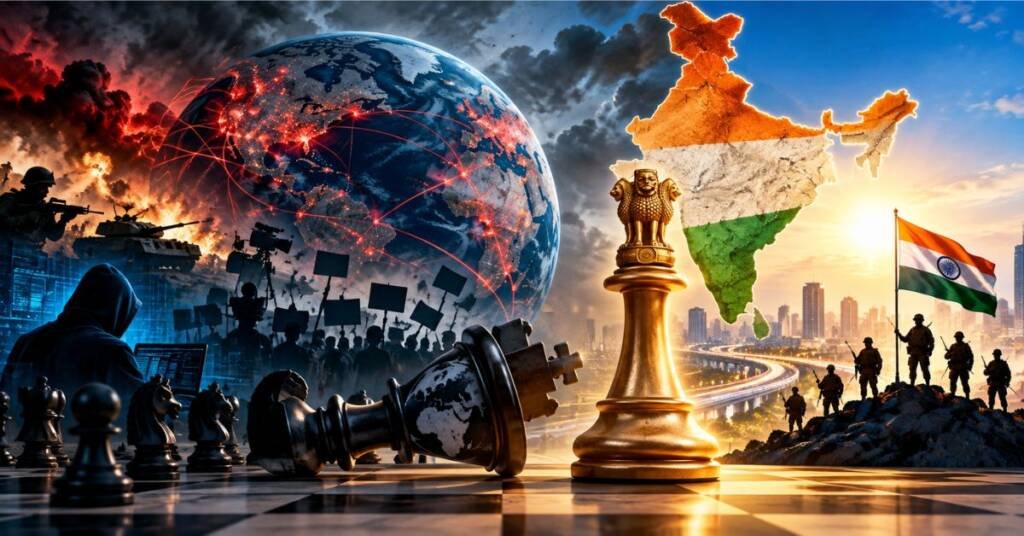
- When powerful nations and global lobbies fail to bend a self-respecting sovereign nation to their will through direct diplomatic or economic pressure, they activate a ‘hybrid warfare’ model designed to generate civil unrest within that nation.
- An unbiased analysis of recent global events and current conditions in various parts of the world exposes this hidden pattern.
Global Instability, Hybrid Threats, and India’s National Security
1. The Four-Nation Example: The Agenda of Global Instability Disguised as Local Issues
Whenever a country attempts to pursue an independent foreign policy contrary to the directives of the US or Western powers within the global power balance, intense internal discontent suddenly flares up on its domestic front. The freshest examples of this can be seen in four major countries:
- France: When France openly opposed unilateral US policies and refused to align with Washington regarding geopolitical issues connected to Iran and West Asian conflicts, an aggressive movement under the banner of “school conditions and education reform” was abruptly launched. Within days, this local issue engulfed the entire France in violent protests and arson.
- Belgium: Amid disagreements over European diplomacy and budgetary priorities, when Belgium expressed an independent viewpoint independent of US-Western strategic pressures, large-scale protests were systematically engineered under the guise of educational infrastructure and budget cuts, paralyzing administrative machinery.
- Chile: In South American politics, when Chile challenged US dominance regarding regime-change in Venezuela and independent regional diplomacy, violent student protests were initiated under the pretext of government education reforms and scholarship cuts, creating widespread domestic chaos.
- Spain: Following Spain’s clear refusal to join US-led military campaigns against Iran, an intense nationwide movement erupted among youth against skyrocketing “housing and hostel rents” (Affordable Housing Crisis), which quickly began challenging the entire administrative apparatus.
These events demonstrate that when nations refuse to bend to external geopolitical pressures, an established playbook operates to weaponize their internal socio-economic issues to weaken them from within.
2. India’s Strategic Autonomy and Western Pressure
Amidst these global circumstances, the unprecedented strategic autonomy demonstrated by India over the past decade has most deeply unsettled traditional Western power desks:
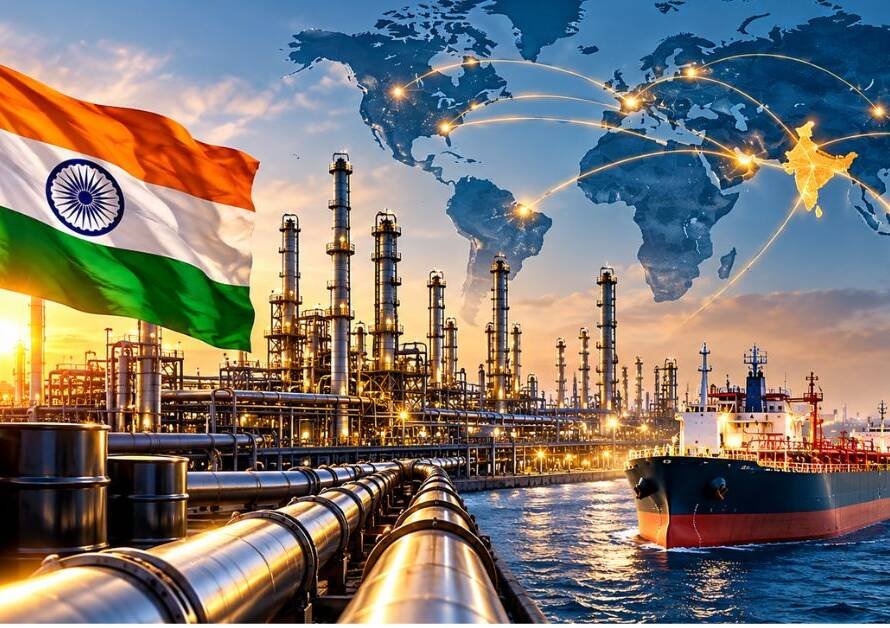
- Energy Imports from Russia (Crude Oil): Despite historic sanctions imposed on Russia by Western nations and immense diplomatic pressure on India not to purchase Russian crude, India firmly continued discounted oil imports to secure affordable energy for its 1.4 billion citizens and control domestic inflation.
- National Interest Paramount in Trade Deals: In global trade negotiations, India flatly refused to accept one-sided American or Western terms that compromised its domestic industries, agricultural sector, dairy market, and digital sovereignty.
- Tariffs and Economic Pressure Nullified: All efforts to pressure India through foreign tariffs and economic restrictions proved completely ineffective against India’s rapidly growing digital economy, record foreign exchange reserves, and massive domestic market.
3. Failed Attempts to Spread Instability Within India: The Reality of ‘Hybrid Toolkits’
When global powers and their domestic agents realized it was impossible to bend the Indian government through external pressures, they resorted to successive ‘toolkits’ to spread confusion, distrust, and chaos on the home front:
- The NEET Exam Controversy: Technical and administrative flaws in medical entrance exams were sensationalized to mobilize vulnerable youth onto the streets and manufacture widespread domestic discontent against the government. However, swift administrative action by investigative agencies, transparent mechanisms, and judicial intervention neutralized this conspiracy.
- ‘Fix the Schools’ Movement: Mimicking the European models seen in France and Belgium, artificial discontent was sought to be stirred up in India under the pretext of school education, buildings, and infrastructure—an agenda swiftly recognized and rejected by Indian citizens and parents.
- Fabricated Narrative of ‘Vote Theft’: When policies, exams, and social issues failed to shake the government, a new agenda was launched to directly question the credibility of constitutional and democratic institutions (such as the Election Commission and voting processes). Baseless narratives of ‘vote theft’ are being cooked up to cast shadow over electoral outcomes in advance.
Conclusion
- The central thread and purpose behind all these global and domestic developments is singular—to somehow obstruct India’s phenomenal economic progress, defensive self-reliance, and rising global leadership.
- Whenever external pressures fail, India’s conscious society, robust administrative leadership, and steadfast constitutional framework have consistently defeated these internal toolkit conspiracies aimed at destabilizing the nation.
🇮🇳Jai Bharat, Vandematram 🇮🇳
Read our previous blogs 👉 Click here
Join us on Arattai 👉 Click here
👉Join Our Channels👈