Summary
- This article presents a detailed and factual analysis of the deep-seated opacity, lack of accountability, and internal administrative discrepancies within the Indian judiciary.
- It raises sharp questions about how the apex court, under the guise of the democratic principle of ‘Checks and Balances’, has elevated itself above the Right to Information (RTI), external investigative agencies, and judicial review.
- From the removal of judicial criticism in NCERT textbooks to the recent historic and introspective remarks by sitting judges of the Madras High Court, this piece demonstrates that judicial reform is no longer just an administrative necessity, but an indispensable struggle to safeguard Indian democracy.
- The ‘club culture’ in judicial appointments and procedural corruption within the Registry leave the entire system highly suspect in the eyes of the public.
Is the Collegium System the Root Cause of Corruption in the Indian Judiciary?
1. Perspective: The Call for “Names” and the Double Standard of Suppressing Truth
A strange and deeply concerning paradox currently grips the Indian judicial system. While judges at the highest echelons proclaim the institutional purity of the system, any attempt to point out internal flaws is met with systemic suppression:
- The Suppression of NCERT Textbooks: When a political science textbook published by the National Council of Educational Research and Training (NCERT) referenced internal corruption, mounting pendency, and administrative anomalies within the judiciary, the top leadership of the apex court raised sharp objections.
- Seizure of Millions of Books: Following this stern institutional stance, directives were issued to expunge the chapter immediately, leading to the recall of nearly 250,000 books from the market. The court famously remarked: “Tell us who is corrupt, and we will take action.”
- Institutional Hubris vs. Sanctity: This defensive reaction raises a fundamental question: Is this stance genuinely aimed at eradicating corruption, or is it an attempt to shield institutional decay from public discourse and future generations? When institutions cannot tolerate constructive criticism, their impartiality naturally comes under scrutiny.
2. The Collegium System: A Maze of Opacity, Opaque Chambers, and Nepotism
In virtually any mature and large democracy across the globe—be it the United States, the United Kingdom, France, or Germany—judges do not appoint judges. India stands as the sole exception globally, practicing a self-created, unique mechanism known as the ‘Collegium System’:
- Beyond the Reach of RTI and Judicial Review: In a landmark ruling, a bench of the Supreme Court explicitly held that the selection process of judges and the deliberations of the Collegium are entirely outside the purview of the Right to Information (RTI) Act and Judicial Review.
- Decisions Made in the Dark: This absolute opacity in judicial selection casts a long shadow over institutional intent. If the process were thoroughly merit-based, fair, and transparent, citizens would have no reason to seek clarity through RTI. Yet, the Collegium fiercely guards its functioning like an exclusive, ‘secret club’.
- The Mysterious Elevation of Advocates: The most glaring loophole in the Collegium framework appears when, out of hundreds of thousands of experienced and senior advocates practicing across various High Courts, a select handful of two or four individuals are suddenly elevated to the bench.
- The ‘Uncle Judges’ Syndrome: The actual benchmark of this selection and the criteria for evaluation remain entirely unknown. This lack of transparency directly breeds nepotism, ensuring that the highest echelons of the judiciary remain dominated by specific families, dynasties, and those close to former judges.
- The Resistance to a Unified Exam: Why can a transparent, open, and competitive exam—such as the All India Judicial Service (AIJS)—not be conducted through the Union Public Service Commission (UPSC) for these top positions? The resistance stems from the fact that an exam-based meritocracy would completely dismantle personal biases, political wheeling-dealing, and the veto power of influential circles.
3. Procedural and Administrative Corruption: The Registry Matrix and the Market for Dates
Corruption in the judiciary is not merely confined to the direct exchange of cash or bribes. Administrative inertia, selective sensitivity, and the weaponization of procedures represent a far more lethal form of institutional corruption occurring daily at the courthouse door:
- The Enigmatic Workings of the Registry: The mechanisms governing which case gets listed before which bench, and when, have historically been mired in controversy. The matters of influential lawyers—who charge astronomical fees per hearing—and corporate giants are listed overnight or within hours before special benches.
- Vanishing Files and Deliberate Delays: Conversely, the appeals of ordinary citizens remain buried for decades, stalled by the Registry under the pretext of minor “technical defects.” The disappearance of critical case files from the vaults of the highest court, or the intentional delay in issuing formal notices to investigative agencies despite explicit judicial orders, serves as living proof of systemic manipulation.
- Silence on Asset Disclosure: Judges routinely order politicians, bureaucrats, and industrialists to disclose every penny of their wealth, yet they fiercely resist making their own movable and immovable assets public. This remains a blatant violation of democratic accountability and moral transparency.
4. Building the Shield: The ‘My Lord’ Doctrine Above the Law
Through its own judicial pronouncements, the judiciary has constructed an impenetrable fortress to insulate itself from external legal accountability, directly challenging the Right to Equality (Article 14) enshrined in the Constitution:
- Restrictions on Filing FIRs: Landmark judicial precedents (such as the K. Veeraswami case) dictate that no First Information Report (FIR) can be registered, nor can any punitive criminal investigation be initiated against a sitting judge for corruption, without the prior written permission of the Chief Justice of India (CJI).
- Immunity from Legal Accountability: In practice, this rule makes it virtually impossible for any central investigative agency (CBI, ED, or state police) to conduct a swift and independent probe. By the time administrative permissions are processed, evidence is often compromised or the matter is quietly managed. This protocol stands as the single largest institutional barrier to accountability.
5. When ‘Insiders’ Testify: The Historic Soul-Searching by High Court Judges
The allegations of decay within the judicial system are no longer coming solely from the general public, the media, or political analysts. Honest and courageous judges within the system are now breaking their silence against this suffocating culture:
- The Bitter Truth from the Madras High Court: A division bench of the Madras High Court delivered one of the most audacious and damning observations in India’s legal history, stating openly:
“None can deny there is corruption in judiciary, there were and are corrupt judges.”
- Challenging the Top Leadership: Since this testimony comes not from an outsider but from the bench itself, the top judicial leadership must engage with these sitting judges to identify and purge these corrupt elements. Remaining silent even after such an internal indictment deeply erodes institutional credibility.
6. A Cruel Joke on Democracy: The Game of ‘Decade-Long Delays’ in Election Petitions
Unreasonable delay in delivering justice is an injustice in itself, but when these delays directly stall democratic processes, they become an assault on national sovereignty:
- The Critique on Delayed Election Trials: Sitting judges have raised profound concerns over the deliberate stalling of Election Petitions. They note that dragging out electoral disputes for years fosters a culture of autocracy, posing a grave threat to democratic governance.
- Censuring the Apex Court: Critics point out that election disputes dating back to past assembly cycles remain pending for years on end. Observers have characterized these multi-year delays as a “grave mockery of justice and a threat to democracy.”
- Blatant Violation of Statutory Law: Section 86 of the Representation of the People Act, 1951 explicitly mandates that an election petition must be trial-concluded and decided within a maximum period of six months. Yet, courts routinely bypass statutory timelines enacted by Parliament, allowing unlawfully elected representatives to comfortably enjoy their full five-year terms in power.
7. Selective Sensitivity: Relief for the Powerful, Endless Dates for the Public
The most disconcerting aspect of the modern judicial landscape appears when the interpretation of the law undergoes a radical shift depending on the status of politicians, elite figures, and high-profile accused:
- Special Benches for Special Citizens: The extraordinary legal interpretations deployed to grant interim relief to politically influential accused, and the lightning-fast assembly of multi-judge benches to examine the validity of their arrests, leave the average citizen astounded.
- The Bench Formation Limbo: Paradoxically, while complex matters involving elites are often referred to larger constitutional benches, those benches frequently fail to form or convene for years, leaving the matter in legal limbo while the influential remain free.
- The Plight of Undertrials: On the other end of the spectrum, convicts with political clout enjoy prolonged periods out of prison on health or technical grounds, while millions of destitute undertrials languish in jails for minor infractions or without trial simply because they cannot afford elite legal representation. The practice of holding back orders or keeping files pending for years represents the ultimate institutional failure.
Practice What You Preach, My Lords!
The judiciary is the ultimate pillar of faith from which every citizen expects absolute fairness, truth, and transparency. The Supreme Court recently issued incredibly stringent directives to the executive branch to ensure flawless transparency in national competitive examinations (like NEET), which the government promptly implemented.
However, My Lords, the exact same rigorous yardstick used to audit external institutions, examinations, and public conduct must be applied internally—to your own appointment mechanism (the Collegium), your Registry, and your administrative operations.
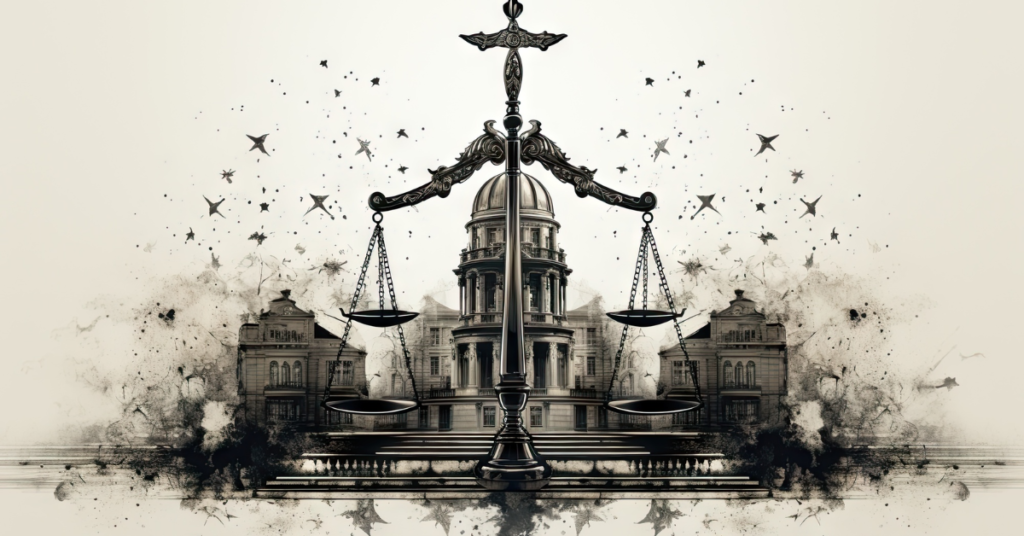
As long as the judiciary continues to harbor the illusion of being “Supreme” by placing itself entirely above the Right to Information, transparency, financial disclosures, and independent external reviews, the skepticism of 1.4 billion citizens will remain unappeased. The blindfold on the Lady of Justice is meant to ensure absolute equality before the law—not to protect insiders or conceal institutional shortcomings.
🇮🇳 Jai Bharat, Vandematram 🇮🇳
Read our previous blogs 👉 Click here
Join us on Arattai 👉 Click here
👉Join Our Channels👈