Summary
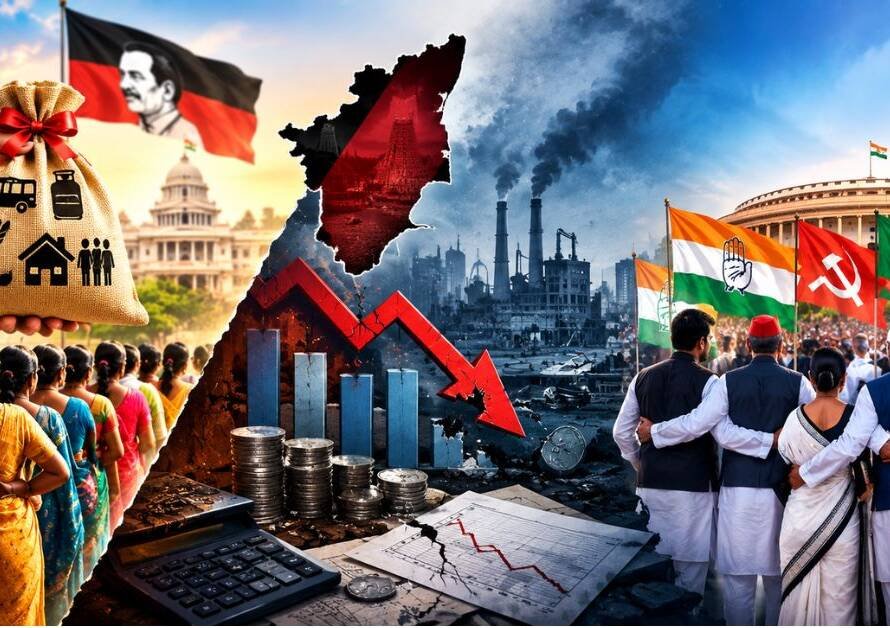
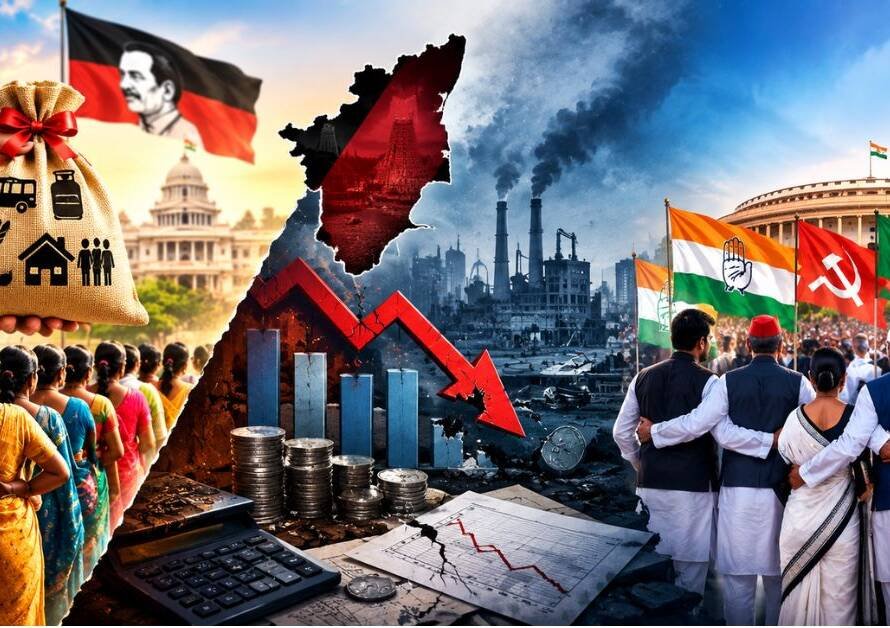
- This analytical investigation dissects the friction between hyper-aggressive public posturing and systemic legal accountability within the Indian judiciary.
- At the epicenter is the formal, written submission of regret by Leader of the Opposition, Rahul Gandhi, before the Madhya Pradesh High Court regarding defamatory statements targeting Kartikey Singh Chauhan.
- Contextualized within a broader pattern of strategic retreats—including apologies in the Rafale contempt case, the quiet burial of the “Chowkidar Chor Hai” slogan, and defensive maneuvering in the RSS defamation suits—this piece evaluates the credibility of high-profile political communication.
- It argues that a culture of hit-and-run character assassination followed by paper-based regrets to evade prison sentences compromises democratic discourse. To restore factual integrity, the legal system must strip away the shield of cheap court apologies and enforce strict statutory penalties for weaponizing falsehoods.
Decoding the “Daro Mat” Rhetoric on Judicial Scrutiny
The Anatomy of Rhetoric: Public Posturing Meets Legal Realities
- Podium as a Launchpad: In modern Indian political theater, the public podium has been transformed from a space for policy debate into a launching pad for unverified, high-decibel sensationalism to hijack the 24-hour news cycle.
- Asymmetric Timeline Strategy: This tactical school of slander assumes an accusation will inflict immediate, irreversible reputational damage, relying on the reality that digital media algorithms are transient and public attention will move on before formal verification occurs.
- Collision with Judiciary: This calculation fractures when it collides with an independent judiciary. While the political stage rewards volume and emotional manipulation, a courtroom strips away performance, recognizing only documented evidence and legally binding proof.
- Predictable Capitulation: When senior political figures attempt to import street-level rhetoric into matters of national security or private lives, they run into actionable defamation. Forced to either prove their claims under cross-examination or face criminal conviction, their transition from public defiance to submissive courtroom retreat becomes a structural certainty.
The Kartikey Chauhan Defamation Case: A Chronology of Retraction
- The Unsubstantiated Assault: During a campaign rally in Madhya Pradesh, Rahul Gandhi launched an unsubstantiated assault on Kartikey Singh Chauhan, son of Union Minister Shivraj Singh Chouhan, falsely linking him to the Panama Papers offshore leak scandal.
- Initiation of Legal Action: Seeking to protect his professional standing, Kartikey Chauhan initiated criminal defamation proceedings under Section 500 of the Indian Penal Code, shifting the burden of proof back onto the accuser.
- Procedural Delay Tactics: The defense initially deployed standard legal maneuvers—filing quashing petitions and challenging court summons—in an attempt to stall proceedings and avoid the embarrassing necessity of a personal court appearance.
- Submission of Written Regret: When procedural avenues were exhausted and a full-scale criminal trial loomed, the strategy of defiance collapsed. The defense moved an interim application before the Jabalpur High Court, explicitly acknowledging the accusation was an “error” and formally recording their regret on paper to evade punitive prison sentences.
A Documented Pattern: The Structural History of Legal Surrenders
- A Repetitive History: This written expression of regret fits into an ongoing historical pattern of public verbal escalation followed by immediate judicial surrender, offering sensationalist claims to the public and submissive retreats to the courts.
- The Rafale Contempt Case: After claiming the Supreme Court validated his corruption allegations regarding the Rafale jet acquisition, a formal contempt petition forced the leader to submit three successive written apologies to the apex court for misleading the public, drawing a strict institutional warning to be more responsible.
- The “Chowkidar Chor Hai” Retraction: The centerpiece slogan of a national electoral campaign faced an immediate legal challenge. Lacking any evidentiary backing to withstand judicial scrutiny under oath, the phrase was formally retracted and apologized for within the court of law, turning a core political narrative into a self-inflicted liability.
- The RSS Defamation Suit: Public claims linking the Rashtriya Swayamsevak Sangh to the assassination of Mahatma Gandhi were met with criminal defamation suits. Courtroom realities quickly transformed aggressive ideological posturing into defensive procedural maneuvering and calculated concessions to dilute personal criminal liability.
- The “Modi Surname” Litigation: A derogatory generalization targeting an entire community based on a surname led to a criminal defamation conviction in Surat and a maximum statutory two-year jail sentence, triggering temporary parliamentary disqualification and highlighting the real-world costs of unchecked speech.
- National Security Misstatements: Public assertions claiming massive territorial concessions to China or stating that the Chinese army beat Indian soldiers have drawn sharp rebukes from judicial benches for degrading national morale and acting as external propaganda tools.
- Demolishing the “Surrender” Narrative: The parallel political narrative painting Indian foreign policy as weak and submissive was structurally demolished on the global stage as India successfully negotiated and executed multi-billion-dollar trade and defense agreements with global powers entirely on its own sovereign, non-aligned terms.
The Credibility Gap: Slogans Confronting Historical Precedents
- The Slogan Paradox: This history of courtroom surrenders creates an irreconcilable paradox that hollows out the opposition’s primary brand identity of “Daro Mat” (Do Not Fear), which is deployed to project unyielding, principled courage.
- The Administrative Retreat: The judicial record reveals a recurring sequence of verbal escalation followed by quiet, administrative retreats the moment a judge demands evidence, exposing a structural gap between public projection and legal reality.
- A Sophisticated Double Game: Utilizing a written expression of regret functions as a sophisticated legal shield. It satisfies court requirements to avoid imprisonment while attempting to signal to loyal followers outside that an outright, humiliating public apology was not made.
- Impact on Public Trust: This manipulation compromises public trust, forcing the citizenry to view high-profile political discourse as an insincere performance where grand accusations are treated as superficial fabrications engineered for transient digital consumption.
The Dilemma of the Cadre: Stranded in Coordinated Ecosystems
- Accepting Rumor as Faith: Ground-level cadres and digital supporters accept high-stakes public accusations as absolute truth, activating organizational machinery to amplify and defend the narrative across social media and local communities.
- Profound Disillusionment: These ordinary workers invest their personal social credibility to defend the leadership’s claims, only to be left stranded and disillusioned when the leader signs a legal document declaring those very claims to be a flat-out error.
- Organizational Fatigue: This repeated cycle induces severe psychological and operational fatigue, reducing party loyalty to blind compliance. To manage the embarrassment of these surrenders, the digital echo chamber resorts to frantic deflection and conspiracy theories, which fail to alter the reality recorded in permanent judicial orders.
Constitutional Standards: The True Burden of High Office
- Weight of Public Words: Words spoken by senior parliamentarians carry profound institutional weight, impacting national morale, economic stability, and international relations, which demands a high standard of systemic responsibility.
- Unanswered Questions: A persistent pattern of making explosive statements that cannot survive basic legal validation raises fundamental questions about statesmanship and a leader’s inability to differentiate between raw political gossip and sustainable truth.
- Rot in Advisory Networks: This ongoing crisis highlights an insulated advisory network that consistently fails to perform basic due diligence, prioritizing short-term social media traction over long-term factual integrity and walking leadership into avoidable legal traps.
- Beyond the Theatrics: True statesmanship demands the intellectual discipline to reject cheap sensationalism. Modern citizens look beyond the temporary theatrics of a staged rally to evaluate a leader’s willingness to stand courageously by their words when confronted by independent constitutional authorities.
The Imperative for Absolute Accountability
- An Elite Exit Route: For too long, the legal system has functioned as a soft exit route for powerful elites, allowing individuals to utilize massive media reach for character assassination only to escape consequences by presenting a sanitized expression of regret once cornered in court.
- No Soft Compromises: Treating the destruction of a citizen’s reputation as a low-risk, high-reward political tool must be permanently dismantled. Asking for pardon or utilizing written retreats should no longer clean the slate; false and malicious accusations must be met with maximum statutory penalties.
- Measurable Consequences: Real integrity requires measurable consequences—including heavy financial damages, mandatory community service, and actual custodial sentences—for those who choose to weaponize institutional lies.
- Restoring the Fear of Law: Introducing non-negotiable legal penalties and ensuring swift implementation is the path to bring sanity back into public discourse. True structural integrity will return only when the fear of the law is visibly restored through uncompromising judicial precedents that treat national narrative integrity and individual reputations as sacrosanct.
The Realities of Political Cleanliness and Judicial Supremacy
- The Fracturing of Noise: Political slogans engineered purely for immediate narrative dominance inevitably fracture when subjected to the rule of law, which prioritizes verified facts over strategic noise.
- Measuring True Leadership: In a mature democracy, leadership is measured by the factual integrity of its speech and respect for institutional boundaries, not by the art of the written apology.
- Judicial Supremacy Reinforced: The transition from public defiance to a submissive legal stance demonstrates that true institutional pressure resides within the framework of law. The closure of successive defamation disputes reinforces the absolute supremacy of the Indian judiciary, serving as a reminder that public status grants no immunity to infringe upon an individual’s reputation.
🇮🇳 Jai Bharat, Vandematram 🇮🇳
Read our previous blogs 👉 Click here
Join us on Arattai 👉 Click here
👉Join Our Channels👈
Reads & Views: 119