Summary
- The political and economic discourse surrounding direct taxation in India has reached a critical juncture. Public figures, former party representatives, and social commentators frequently argue that the salaried middle class is being treated as an ATM for the state—bearing an unfair proportion of tax burdens while allegedly receiving inadequate public infrastructure, poor civic amenities, and minimal direct social benefits.
- These arguments often culminate in demands to completely abolish personal income tax for salaried citizens.
- However, a comprehensive analysis reveals that such populist narratives obscure the underlying structural realities of a developing economy.
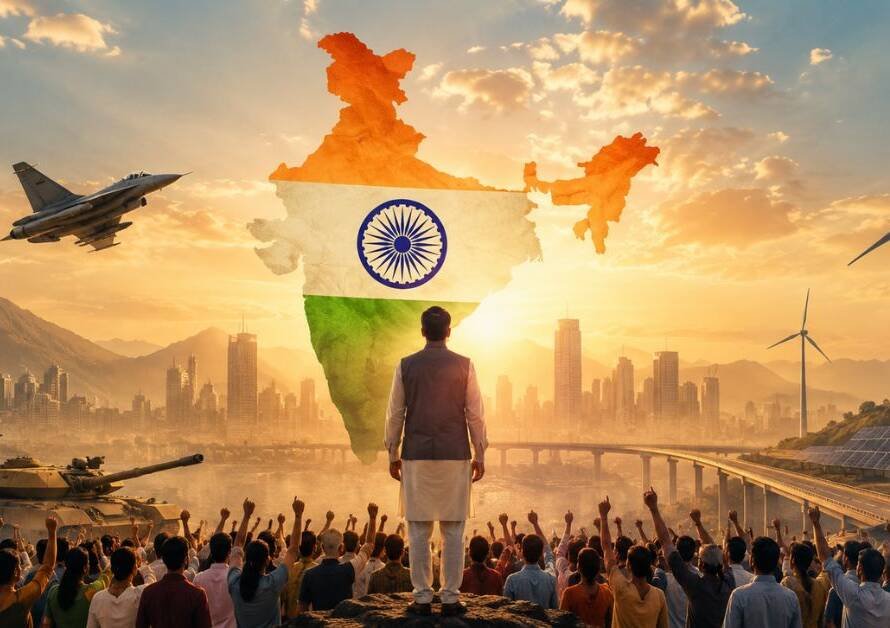
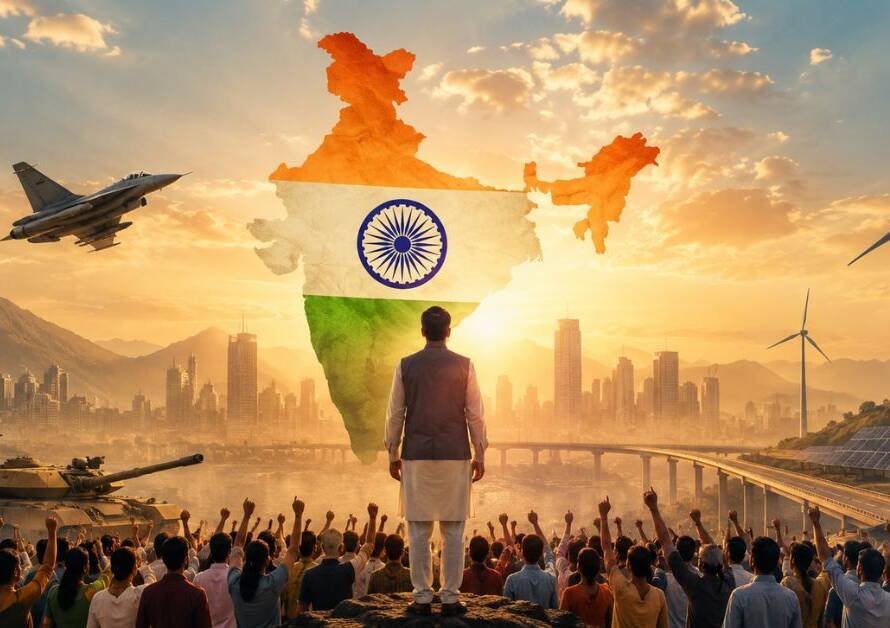
- The middle class acts as the primary economic catalyst—funding critical infrastructure, maintaining fiscal sovereignty, and enabling social welfare programs that uplift the nation’s underprivileged.
- Viewing taxation through the sole lens of individual return ignores the collective civil duty (Dharma) required for long-term nation-building.
Middle-Class Tax Dilemma: Populism vs. National Duty
1. Deconstructing the “Taxation as Exploitation” Rhetoric
The assertion that direct taxation represents an unjust extraction rests primarily on immediate consumer friction points and perceived systemic inequities. The Salaried Tax Deduction Trap: Unlike corporate entities or informal sector operators who utilize extensive accounting mechanisms, salaried workers face direct tax deduction at source (TDS), making them the most transparent and easily accessible revenue target.
- The Double-Taxation Burden: Taxpayers pay direct personal income tax on gross earnings and subsequently pay indirect taxes—such as Goods and Services Tax (GST), fuel cesses, and highway tolls—on virtually all consumption.
- Out-of-Pocket Utility Expenses: Critics highlight that despite high tax contributions, middle-class families frequently rely on private institutions for education, healthcare, and security, creating a perception of minimal return on tax investment.
- Urban Infrastructure Deficits: Potholed roads, environmental pollution, and administrative friction points serve as visual catalysts for populist calls to eliminate direct taxation entirely until “world-class facilities” are delivered.
The primary objective of these anti-national elements is to incite the middle class against the government and cause them to revolt and do demonstrations in an attempt to destabilize the government to arrest country’s growth as they have been trying to do for last couple of years but failing miserably.
2. The Sovereign Economics of Direct Taxation
Demands for the outright abolition of personal income tax overlook fundamental macroeconomic balances and sovereign fiscal obligations.
- Preventing Capital Deficits: Direct taxes form a massive proportion of state revenues. Eliminating them creates severe budget deficits, forcing the government to rely heavily on sovereign debt or increase indirect taxes, which harms low-income households.
- Funding Public Infrastructure: High-speed rail networks, freight corridors, expressways, national defense, and aerospace research require massive non-profit capital investments funded by direct taxation.
- Mitigating Economic Volatility: Direct tax collections provide a stable, predictable fiscal baseline for the state treasury, insulating national policy from global market shifts and currency fluctuations.
- Sustaining Private Industry: Top-tier corporate expansion relies on state-funded public goods—including secure borders, transportation grids, energy networks, and judicial enforcement—funded directly by tax revenues.
3. The Tri-Fold Duty (Dharma) of the Middle Class
Far from being an “exploited demographic,” the middle class functions as the structural core of the national economy, carrying three interconnected responsibilities:
- Engine of Internal Demand: By consuming industrial products and modern services, the middle class generates the market liquidity required for corporate profitability and overall GDP expansion.
- Architect of Sovereign Assets: Middle-class tax contributions build modern national assets—from digital payment infrastructure to deep-water ports—ensuring economic independence on the global stage.
- Guardian of Social Stability: Direct taxes fund subsidized food distribution, rural housing schemes, and basic healthcare for millions of underprivileged citizens. This redistribution maintains social harmony, preventing economic collapse and extreme poverty.
4. Re-framing Civic Contribution: From Grievance to Sanatana Duty
A sustainable nation-building perspective requires shifting the narrative from grievance to strategic civic responsibility.
- Aligning with Lokasamgraha: Under traditional philosophy (Sanatana Dharma), individual wealth creation serves the broader social order (Lokasamgraha), where personal contributions directly strengthen collective prosperity.
- Distinguishing Accountability from Abolition: DEMANDING administrative efficiency, anti-corruption measures, and transparent expenditure is a valid civic right. However, demanding total tax abolition undermines the state’s functional core.
- Preserving Political Sovereignty: Nations reliant on foreign loans or volatile external tariffs risk losing economic autonomy, whereas a strong domestic tax base preserves national sovereign decision-making.
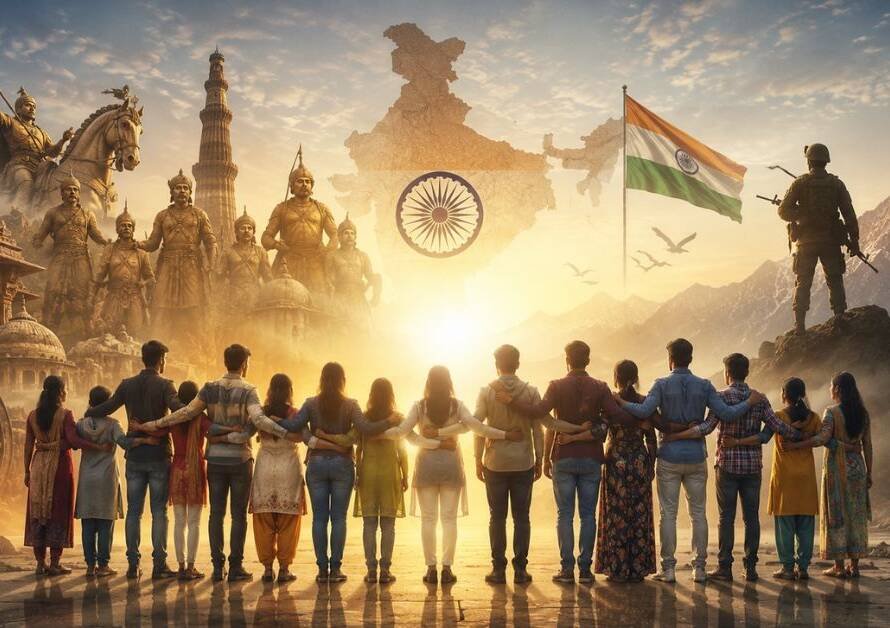
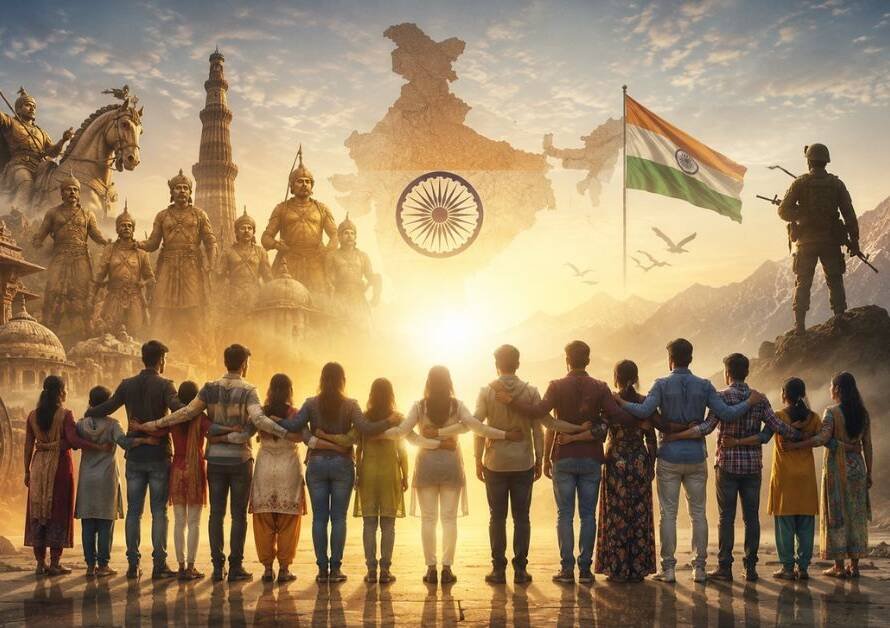
- Building a Legacy for Future Generations: Taxes paid today create world-class educational, technological, and transport infrastructure for future generations, transforming a developing economy into an advanced superpower.
Conclusion:
- The middle class serves a very important role in building the nation by helping the higher class through its efforts to build country’s economy and to help the country in building its infrastructure and capabilities and the poor and helping the underprivileged through the payment of taxes fairly.
- They should be very careful and not fall prey to the incitement by the anti-national ecosystem which wants to destabilize the government and arrest country’s growth for their selfish interest and hurting country’s interests.
Let’s all play our roles wisely to make India a great country and a superpower which is respected by rest of the world as a leader and Vishwaguru.
🇮🇳 जय भारत, वन्देमातरम 🇮🇳
Read our previous blogs 👉 Click here
Join us on Arattai 👉 Click here
👉Join Our Channels👈