Executive Summary
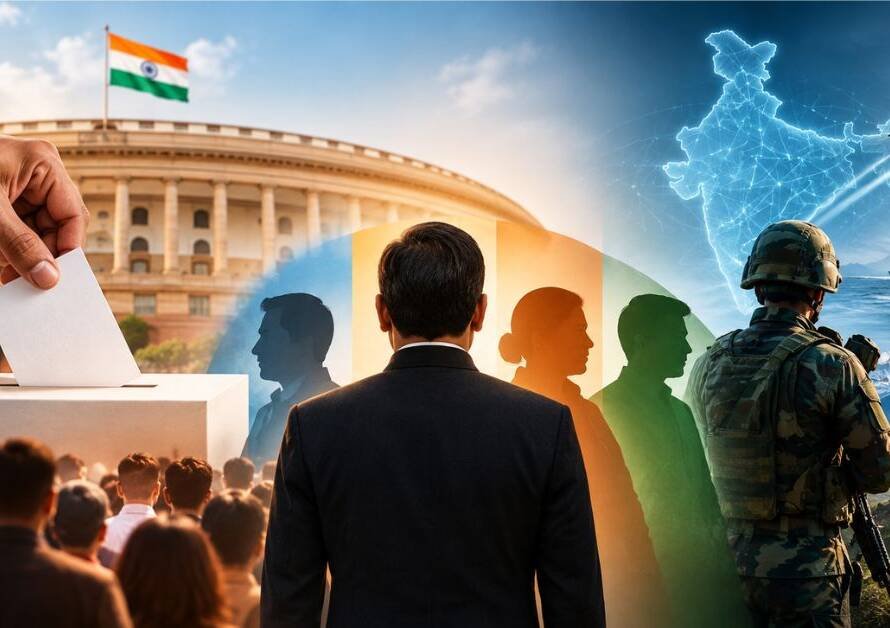
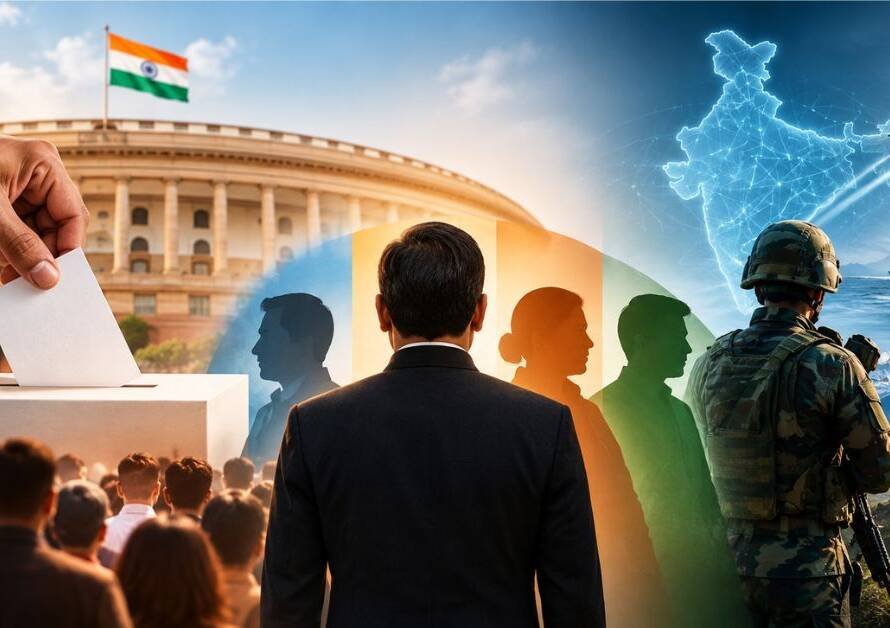
- This analytical narrative unpacks the deep-seated civilizational and political fault lines of South Indian politics, illuminated by the high-profile resignation of K. Annamalai from the state party leadership.
- Moving away from standard political reporting, this analysis dissects the structural challenges that a nationalistic, issue-based movement faces when confronting the entrenched regional dynamics of Southern states like Tamil Nadu.
- The text critiques the vulnerability of a fragmented Hindu majority that remains staunchly religious yet politically disorganized, while organized minority vote banks maintain consolidated influence.
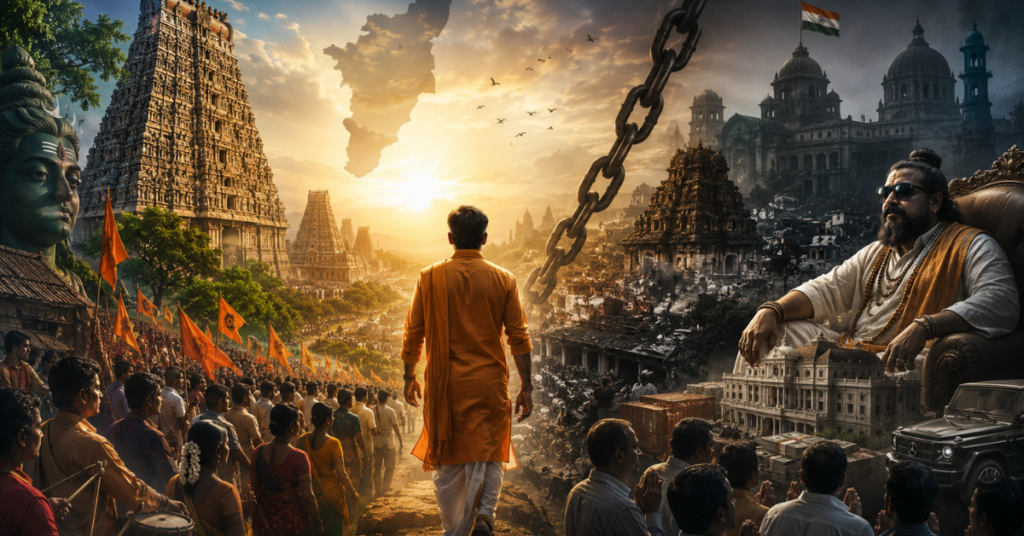
- Most crucially, it delivers a severe warning to modern spiritual leaders and the wealthy elite who remain neutral in the face of cultural subversion, invoking the tragic and sudden collapse of wealthy Hindu-Sikh Lahore during the 1947 Partition.
- The proposed roadmap advocates for temporary tactical entrenchment, localized cadre building, and a total civilizational awakening to secure the nation’s spiritual roots.
The Changing Landscape of South Indian Politics
I. The Distinct Poly-Centric Operating System of Southern Politics
The structural bottleneck faced by nationalistic forces in Tamil Nadu highlights a profound reality: the political landscape of South India runs on a completely different framework than the rest of the country, resisting national waves in favor of deeply localized, emotional axes.
The Cinematic Cult of Personality
In South India, film icons have historically transitioned from the screen to political thrones, treated by the masses as semi-divine messiahs. Figures like M.G. Ramachandran, J. Jayalalithaa, and N.T. Rama Rao bypassed traditional political pathways by transforming movie fan clubs directly into disciplined voting blocs. This cult of personality creates an entry barrier that heavily resists standard issue-based national policies.
The Weaponization of Linguistic Chauvinism
Since the anti-Hindi agitations of 1967, regional heavyweights have meticulously engineered a narrative centered entirely on Dravidian exceptionalism. Any political movement originating from New Delhi is instinctively branded as a “Northern imposition” or an encroachment on state autonomy, systematically drowning out crucial national priorities like global economic defense and national security.
II. The Paradox of the Silent Majority: Demographics vs. Political Power
The deepest irony of the Southern states lies in the stark contrast between their vibrant cultural realities and their actual political representation. The South remains the custodian of pristine, spiritually active Hindu temples, yet its political apparatus has frequently been weaponized against its own heritage.
- Fragmentation of Native Voters: While the majority community remains staunchly devout on an individual level, it is heavily fragmented politically along micro-caste identities, rendering its demographic weight ineffective.
- Consolidated Minority Influence: Conversely, through decades of patronization by legacy political factions, organized minority networks have consolidated their numbers into unified, strategic bargaining chips.
- Asymmetry of Institutional Freedom: This imbalance allows state governments to maintain tight administrative control over ancient Hindu temples—often diverting their revenues—while minority institutions enjoy complete autonomy and sweeping state patronization.
III. The Imperative of Structural Engineering: Building the Cadre from the Soil
The exit of a prominent leader from the state command grid underscores a fundamental strategic truth: individual charisma and social media popularity are meaningless without a robust, grassroots infrastructure to catch votes.
The Deficit of Ideological Infrastructure
The success of nationalistic movements in Northern and Western India is the result of generations of silent labor via local cells and door-to-door ground operations. In the deep South, this foundational cadre network remains thin.
The Strategy of Tactical Entrenchment
For long-term viability, a national party cannot afford high-octane, head-on collisions with deeply entrenched regional machines. The pragmatic path forward is a tactical shift—supporting cleaner, relatively aligned regional factions to secure immediate political breathing room while quietly expanding organizational roots into rural hamlets.
IV. The Grand Delusion of the Dharmagurus: Private Empires vs. Civilizational Deficit
While the political matrix is fraught with challenges, the most critical vulnerability stems from the widespread complacency of spiritual and cultural institutions.
- The Boom of Corporate Spirituality: Modern gurus are busier than ever acquiring vast real estate footprints, constructing mega-monuments, and launching global apps for spiritual tourism.
- The Convenience of Global Neutrality: In a bid to remain globally palatable and safe from controversy, these spiritual heads have adopted a stance of convenient neutrality, preaching individual peace while refusing to immunize their followers against cultural subversion.
- The Blindspot of Security: These leaders ignore the reality that their financial empires stand tall only because a protective, nationalistic civilizational architecture currently guards the country. They are feeding the branches while neglecting the roots.
V. The Ominous Echo of 1947: The Lahore Warning for the Wealthy and Devout
- To the spiritual leaders, corporate elites, and wealthy families who believe their private wealth will insulate them from systemic collapses, history offers a terrifying, blood-soaked correction.
- Prior to August 14, 1947, Lahore was the undisputed cultural and economic crown jewel of undivided Punjab, dominated heavily by elite Hindu and Sikh industrialists, bankers, and landowning merchants who lived in palatial bungalows. Operating under the delusion that their economic indispensability made them untouchable, they assumed business would go on as usual.
- When the borders were redrawn at Partition, the political and security architecture vanished within hours. Their millions in bank accounts could not buy a single bullet of protection, and their grand mansions were reduced to ashes.
- The spiritual hermits and wealthy merchants were the very first targeted by rioters because their vast accumulated wealth was the most lucrative prize. They fled with nothing, ending up in makeshift refugee tents in Delhi.
VI. A Final Call to Action for Survival
- The unvarnished lesson of history is absolute: private empires cannot survive the death of their parent civilization. When a structure undergoes a catastrophic collapse, it makes no distinction between a poor man’s hut and a guru’s golden palace.
- If the political and cultural leadership that protects the foundational fabric of this nation is lost due to voter apathy, caste fragmentation, or the cowardly silence of spiritual institutions, the tragic fate of Lahore 1947 can return with devastating speed.
- Every spiritual guide, intellectual elite, and ordinary citizen must look past regional illusions and linguistic traps to actively fortify the political structures that keep this ancient civilization alive.
🇮🇳 Jai Bharat, Vandematram 🇮🇳
Read our previous blogs 👉 Click here
Join us on Arattai 👉 Click here
👉Join Our Channels👈