Summary:
- This discourse uses the recent controversial statements of Rahul Gandhi as a foundation to conduct a profound analysis of India’s current political and security challenges.
- It elucidates how the ‘Thugbandhan’ model of the Congress and its allies—based entirely on personal and dynastic interests—could push India toward a failure similar to Pakistan and Bangladesh within the next decade.
- The central argument posits that the only way to establish India as a ‘Vishwaguru’ and a global superpower is through a ‘Nation-First’ policy, the impartial enforcement of stringent laws, and a zero-tolerance stance against corruption.
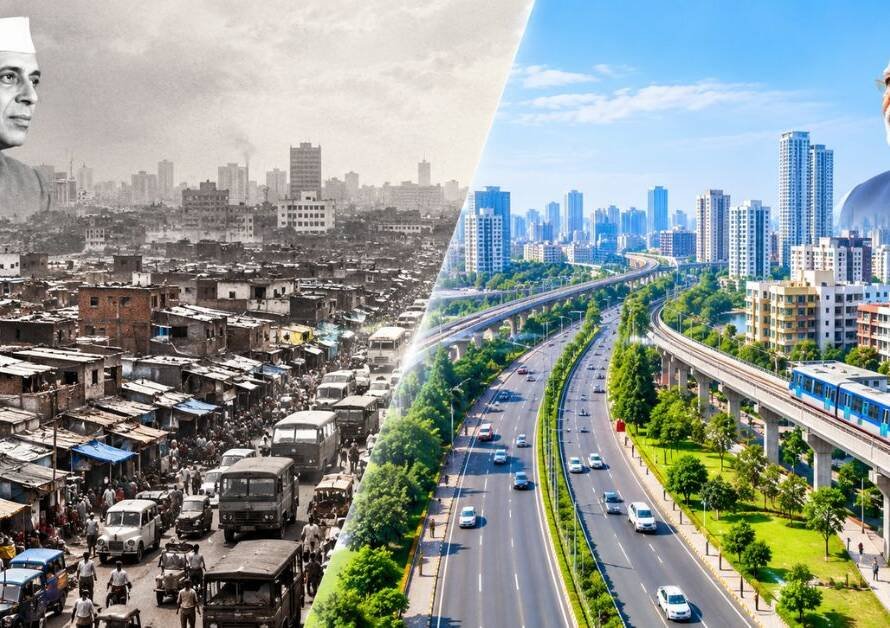
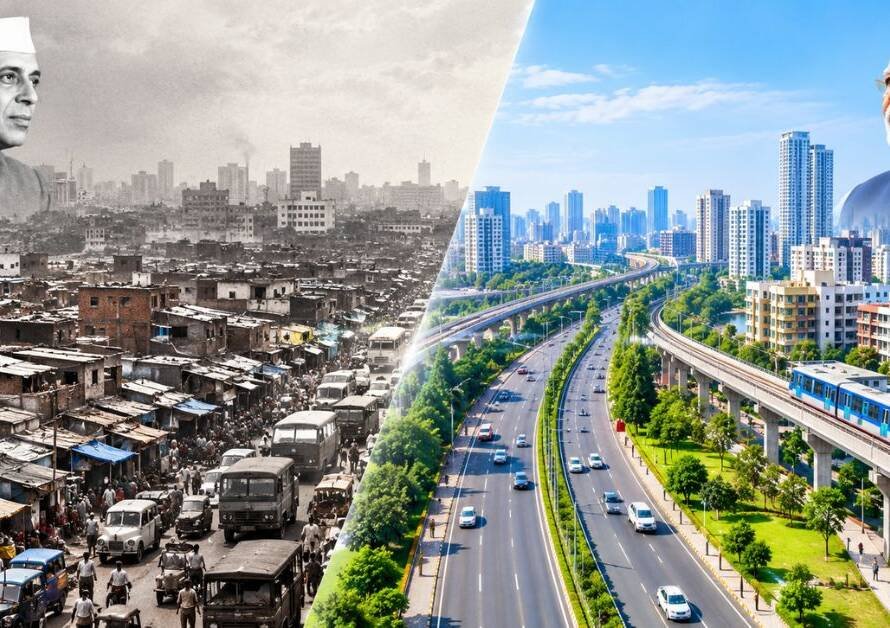
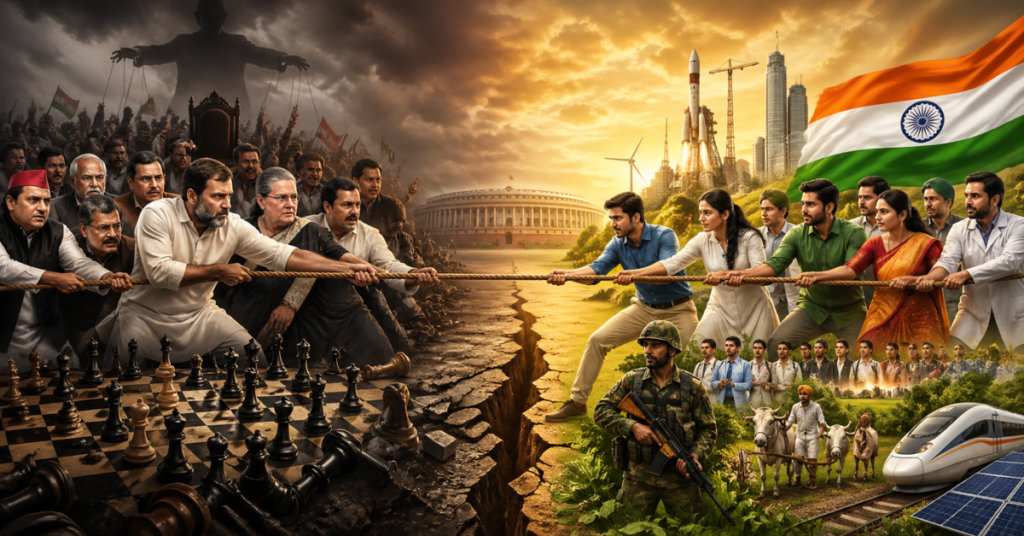
Contrast of national strength versus destructive dynastic politics
1. Introduction: Political Desperation and Personal Lament
The recent statement issued by Rahul Gandhi—“There are 36 cases against me across the country, my house was taken away, my Parliament membership was canceled, and the ED questioned me for 55 hours…”—is not merely a personal grievance of a leader. Rather, it is the desperation of an old political system that has long considered itself above the law and the Constitution.
- The Illusion of Being Above the Law: For decades, a single family treated the nation’s resources as their private fiefdom. Today, when constitutional institutions demand accountability based on evidence, labeling it the ‘murder of democracy’ is farcical. The reality is that in the eyes of the law, an MP and an ordinary citizen are equal.
- The Opposition’s Contradiction: Rahul Gandhi questioning Mamata Banerjee proves that this so-called ‘Thugbandhan’ is merely a selfish and temporary pact to seize power. They share neither a common ideology nor a solid roadmap for the nation’s upliftment.
2. The Operational Philosophy of ‘Thugbandhan’: Fatal for the Nation
The current structure of the opposition is a collective of parties with a history steeped in corruption, nepotism, and appeasement. Their operational philosophy is disastrous for the nation for the following reasons:
- Dynasty Over Destiny: The primary objective of these parties is not the holistic development of the nation, but the handing over of the seat of power to their next generation. When leadership merit is decided solely by a ‘surname,’ grave subjects like national security, economy, and diplomacy become secondary.
- Institutionalization of Corruption: Massive scams of the past severely wounded India’s global credibility. This philosophy is based on looting the national exchequer to nourish their political roots. If this model is reactivated, the economic backbone of India will shatter.
- Collusion with Foreign Powers: Going to foreign platforms to disparage India’s democratic institutions and implicitly seeking foreign intervention to save their own power is the greatest betrayal of the country’s sovereignty.
3. Comparative Analysis: India vs. Failed Neighbors (The Mirror of Pakistan & Bangladesh)
History and geography bear witness that whenever a country sacrificed national interests to serve personal ones, that country plummeted. If India once again falls into the hands of those who only protect dynastic interests, India’s condition in the next 7–10 years could mirror that of our unstable neighbors.
- Institutional Decay: The examples of Pakistan and Bangladesh are before us. Where political families and corruption hollowed out institutions, the economy and law-and-order collapsed. The Congress ‘ecosystem’ has also consistently attempted to paralyze Indian institutions so that their accountability ends.
- Economic Bankruptcy and Freebie Culture: Populist and impractical announcements will trap the country in the same web of inflation and foreign debt that Pakistan is entangled in today. To become a superpower, fiscal discipline is mandatory—something these parties lack.
- The Crisis of Internal Security: The ‘Thugbandhan’ policy of appeasement has historically provided indirect strength to cross-border terrorism and sleeper cells. Compromising on national security would be the first step toward making India a ‘Failed State.’
4. National Security and Integrity: No Place for Traitors
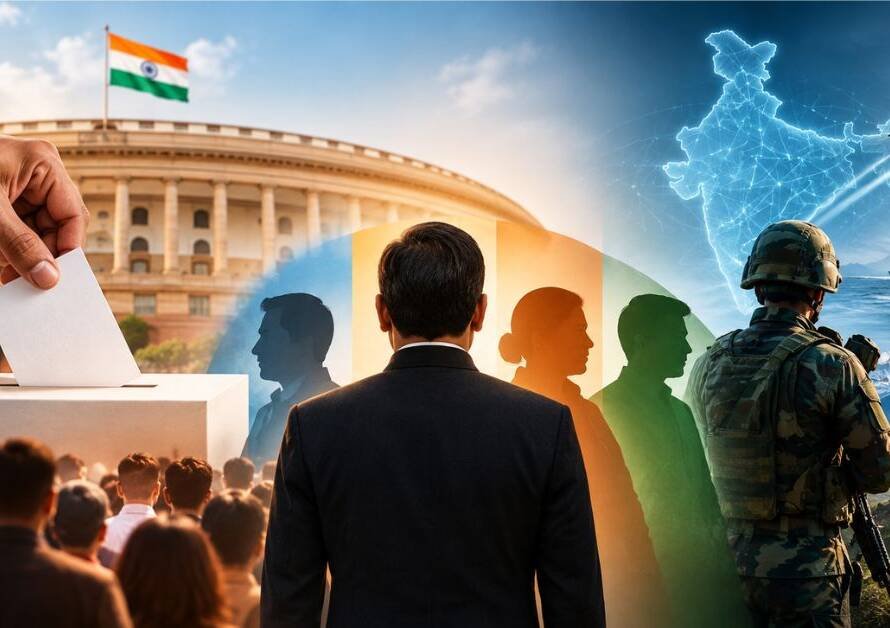
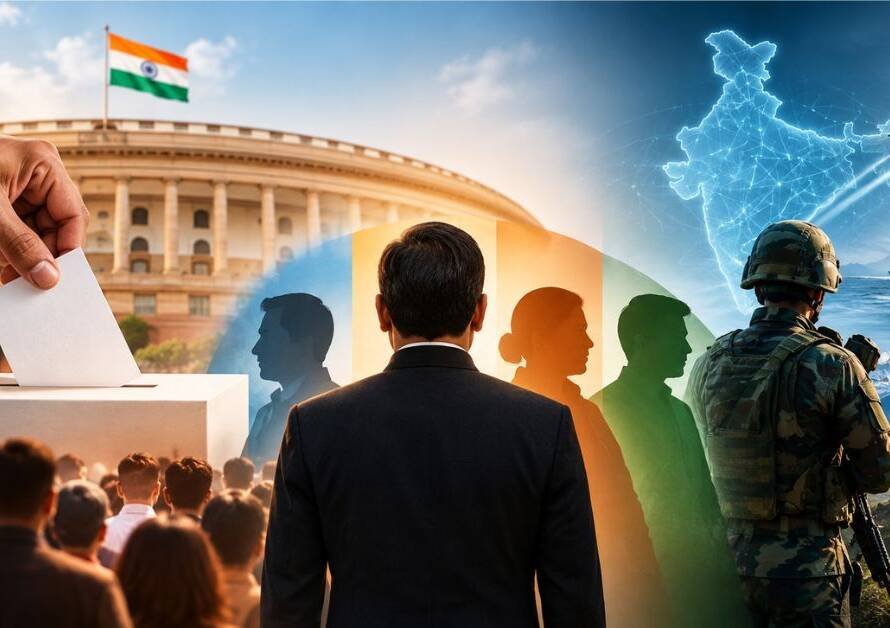
For a rising superpower, internal security must be impenetrable. Traitors and anti-national elements must be met with the treatment that ensures the safety of the nation.
- Impartial Enforcement of Strict Laws: Laws like PMLA, UAPA, and other security statutes must be enforced rigorously and without discrimination. If a leader is involved in treason or corruption, their punishment should be even harsher than that of an ordinary citizen to send a strong message to society.
- Autonomy of Investigative Agencies: Agencies must have the full freedom to interrogate for 55 hours or even 550 hours if it is necessary to account for every penny of the nation and to fortify national security. No ‘white-collar’ image should shield anyone from the clutches of the law.
- Ostracization of Traitors: Elements that challenge the integrity of the country or collaborate with foreign powers to spread instability within India should have no place in this nation. “Everyone’s turn will come” is not just a slogan, but a principle of justice.
5. The Path to Vishwaguru and Global Superpower: The Only Way Forward
To make India a ‘Vishwaguru,’ we do not need an alternative; we need a resolution. This resolution will only be realized when we stand firm on the following pillars:
- Digital and Technological Sovereignty: We must end reliance on foreign software and data centers. The development of indigenous technology will save us from digital colonialism.
- Infrastructure Supremacy: Massive projects like Sagarmala, High-Speed Rail, and modern ports will make India the main hub of global trade. This can only be achieved by a stable government with a strong will.
- Cultural and Civilizational Pride: India is not just a piece of land but a living civilization. The preservation of our cultural heritage and its global promotion will re-establish us as the ‘Vishwaguru.’
6. The Decisive Moment and Our Resolve
The politics of Rahul Gandhi and his associates is limited to a “struggle for power,” whereas the goal of the current nationalist discourse is the “construction of India’s capability.” The public must understand that the ideology supporting treason, corruption, and family rule will only lead India into deep darkness.
Our Path and Resolve are Clear
- Total Eradication of Dynasticism: Preventing power from becoming the fiefdom of families.
- National Security Supreme: No compromise with borders or internal systems.
- Corruption-Free India: A permanent end to the politics of plunder.
- Self-Reliant and Sovereign India: Never bowing before any foreign power, economically or technologically.
If we do not recognize these destructive forces today, future generations will blame us for a weak and divided India. The rebirth of Bharat is possible only when ‘Power’ is used to enhance ‘Capability,’ not to secure the wealth and influence of a specific ‘Dynasty.’
- This is the time to wake up and stand for the nation.
🇮🇳Jai Bharat, Vandematram 🇮🇳
Read our previous blogs 👉 Click here
Join us on Arattai 👉 Click here
👉Join Our Channels👈