Summary
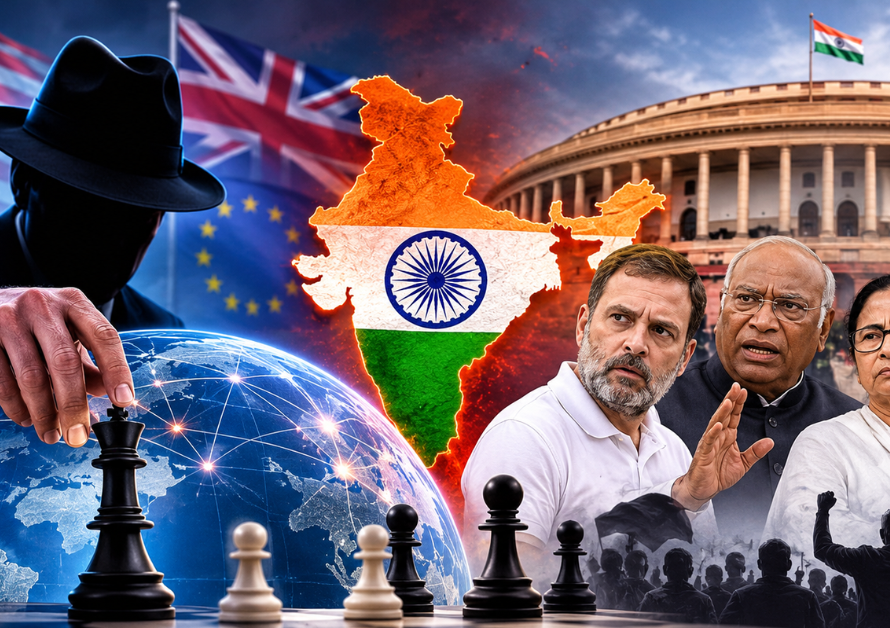
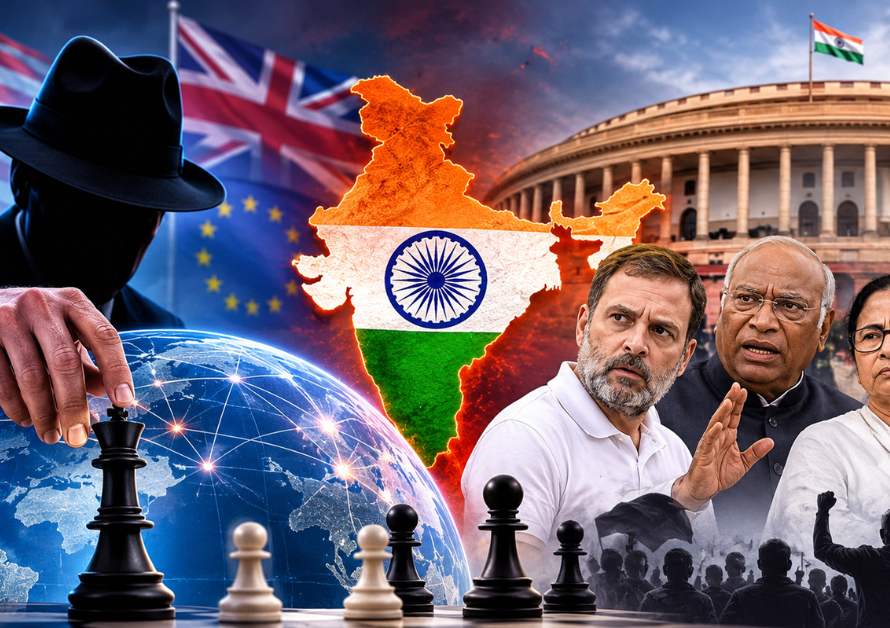
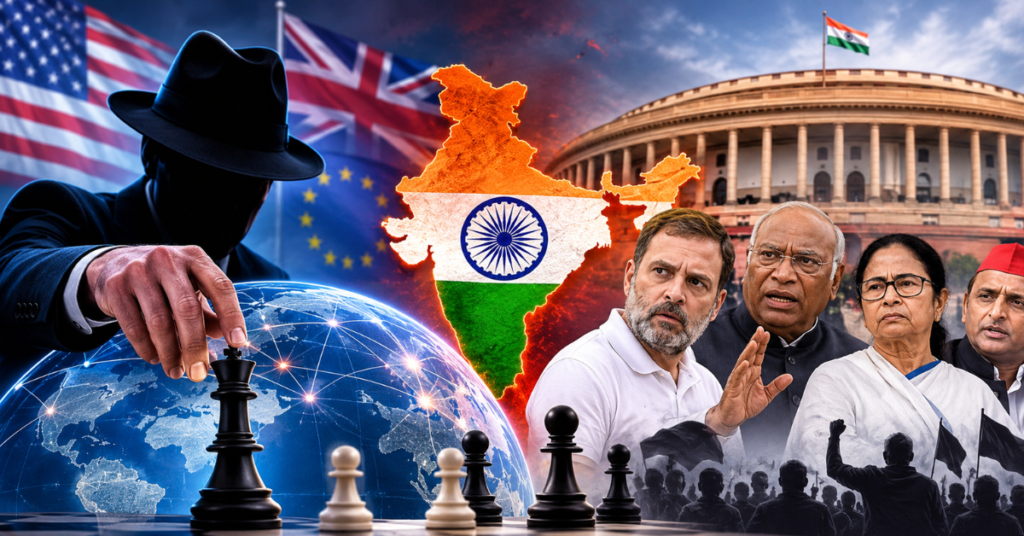
- An investigative report conducted by journalist and author Asra Nomani for Fox News exposed an international network comprising over 100 radical, far-left, and activist organizations operating across multiple nations.
- This transnational ecosystem—highlighted by entities such as ‘Progressive International’ and ‘Indian Alliance Paris’—has been implicated in orchestrating and amplifying street protests and civil unrest across Europe, with explicit indicators targeting India’s democratic framework.
- Significantly, engagements between representatives of ‘Progressive International’ and senior Indian opposition leaders at 10 Janpath highlight a concerning alignment between domestic political actors and foreign activist networks. Over the past 12 years (2014–2026), India has achieved unprecedented political stability, economic growth, and national security under Prime Minister Narendra Modi and Home Minister Amit Shah.
- Consequently, attempts to engineer artificial instability or replicate external ‘regime change’ models are met with sharp public resistance.
- This narrative examines the mechanics of these foreign linkages, critiques opposition tactics, and emphasizes the necessity of internal democratic reforms (‘regime change’) within entrenched political dynasties.
The Imperative of Internal Political Reforms
1. Global Interconnected Networks and the ‘Progressive International’ Axis
In a sovereign constitutional democracy, electoral mandates are decided exclusively by citizens at the ballot box. The involvement of transnational activist networks in domestic political movements raises critical questions regarding national security and foreign intervention:
- The Investigative Findings: Asra Nomani’s investigation identified a vast network of radical and far-left organizations operating globally, utilizing synchronized protest playbooks to convert localized grievances into broader political crises.
- Cross-Border Coordination: Entities such as ‘Indian Alliance Paris’ and ‘Progressive International’ function as umbrella platforms, coordinating messaging across Europe and developing linkages with activist groups in India.
- High-Level Engagements at 10 Janpath: Meetings held between foreign representatives of ‘Progressive International’ and top Congress leadership (including Sonia Gandhi and Rahul Gandhi) underscore an ongoing dialogue between domestic political strategists and international activist organizations.
- Stability vs. Orchestrated Unrest: Under the leadership of Prime Minister Narendra Modi and Home Minister Amit Shah, India has maintained national security and internal stability. External attempts to induce street-level chaos directly challenge the country’s economic momentum and public safety.
2. Foreign Trips and the Strategy of Globalized Opposition
The timing of frequent overseas visits by key opposition leaders during periods of domestic political friction has drawn significant scrutiny regarding the globalization of India’s internal politics:
- Public Demand for Transparency: Citizens and political analysts actively question whether international platforms are being leveraged to build external pressure against a democratically elected domestic government.
- Democratic Accountability vs. External Pressure: Democratic opposition requires engaging voters domestically through policy debate and electoral mobilization, rather than relying on foreign media narratives or global activist support to challenge government legitimacy.
- Convergence with Radical Echo Chambers: The shifting posture of the Indian National Congress—from a broad-based national party to one increasingly aligned with far-left and disruptive echo chambers—reflects an ideological drift aimed at creating systemic friction.
3. The Imperative of Internal ‘Regime Change’ Within Family-Led Parties
While opposition factions advocate for changing the Union Government, the true structural requirement for democratic health in India is an internal ‘regime change’ within entrenched, family-controlled political parties:
- The Monopoly of the Gandhi Family in Congress: The Indian National Congress remains locked under the control of a single dynasty, stifling internal meritocracy and alienating grassroots leaders. Removing family hegemony is essential for the party’s institutional revival (sooner the better for Congress and the nation).
- Entrenched Family Control Across Regional Parties:
- Samajwadi Party (SP): Leadership remains concentrated within the Yadav family, prioritizing dynastic longevity over genuine party-wide democratic processes.
- Rashtriya Janata Dal (RJD): Controlled tightly by the Lalu Prasad Yadav family, converting socio-political movements into inherited political assets.
- Other Regional Entities (DMK, NC, JMM, AIMIM): Succession follows hereditary lines rather than open, competitive internal elections.
- Realignments Reshaping the Status Quo: Shifts in regional political dynamics—such as Eknath Shinde’s movement in the Shiv Sena or Ajit Pawar’s leadership in the NCP—demonstrate that breaking dynastic monopolies allows political organizations to realign with broader public expectations.
4. Dynastic Re-Branding and the Illusion of Inherited Authority
Sustained efforts to introduce next-generation heirs from political dynasties through curated media rollouts highlight the reliance on family lineage over proven public service:
- Curated Launch Campaigns: Political ecosystems frequently attempt to establish the credentials of family heirs through artificial branding—ranging from art exhibitions and photography showcases to high-profile social media appearances.
- Public Scrutiny of Inherited Privilege: In an increasingly merit-based society, voters reject sponsored political launches that rely on ancestral names rather than administrative capability or electoral experience.
- Failure of Artificial Political Re-Branding: Attempts to revamp political dynasties fail to resonate with a young Indian electorate that demands accountability, governance outcomes, and leadership grounded in national interest.
5. Conclusion: Uncompromising Commitment to ‘Nation First’
The Indian electorate has repeatedly demonstrated its resistance to foreign-influenced narratives, artificial social friction, and extraconstitutional attempts at political disruption. Over the past 12 years, transparent governance, infrastructure development, and strong national security have established a new baseline for Indian politics. Opposition parties must recognize that sustainable political relevance cannot be built on foreign activist alliances or inherited dynastic privilege. True democratic reform must begin internally within the political parties that operate as family fiefdoms. India’s democratic future remains firmly committed to merit, stability, and the principle of ‘Nation First.’
🇮🇳Jai Bharat, Vandematram 🇮🇳
Read our previous blogs 👉 Click here
Join us on Arattai 👉 Click here
👉Join Our Channels👈