Summary:
- This comprehensive analysis unmasks the strategic exploitation of the January 2026 UGC Equity Regulations controversy. It identifies a dual-track conspiracy by the “Thugbandhan” (Opposition alliance) and Congress to incite caste-based friction within the Hindu community.
- By manipulating the anxieties of the Swarna (General Category) and elite classes regarding the reservation system and the perceived threat of “reverse discrimination,” these entities aim to destabilize the nation’s governance, halt Bharat’s rapid economic growth, and reclaim power to resume a cycle of dynastic self-enrichment.
- The narrative warns that Swarna Hindus, by falling into this trap, are jeopardizing the very national stability that ensures their own survival.
Purpose of UGC Regulations and the Current Perspective
- The recent uproar surrounding the University Grants Commission (Promotion of Equity in Higher Education Institutions) Regulations, 2026, serves as a textbook example of how administrative reforms are being weaponized to create internal fissures.
- While the regulations were intended to institutionalize grievance redressal and address the “epidemic” of student suicides, the subsequent “boil” among the Swarna (General Category) and elite classes has been expertly hijacked by a desperate political opposition.
- This is not merely a debate on reservation; it is a calculated attempt to arrest Bharat’s spectacular growth by fracturing the very society that fuels it.
I. The UGC Controversy: A Manufactured Crisis for “Divide and Rule”
The notification of the 2026 Equity Regulations on January 13 provided a ripe opportunity for the Congress and the “Thugbandhan” to ignite long-simmering anxieties regarding merit, identity, and the legal presumption of guilt.
- Redefining Discrimination: Critics, fueled by opposition narratives, argued that the new regulations expanded the definition of “caste-based discrimination” to a point where it could be easily misused against General Category students and faculty. The absence of penalties for false complaints became a focal point for elite anxiety.
- The “Trap” for the Swarna Hindus: Swarna groups, fearing that the new “Equity Committees” and “Equity Officers” would act as parallel surveillance bodies, took to the streets in cities like Delhi, Lucknow, and Bareilly. However, these protestors are falling into a strategic trap. By attacking the government, they are strengthening the hands of political forces that historically used caste as a tool for “vote-bank” fragmentation rather than genuine social upliftment.
- The Supreme Court Intervention: On January 29, 2026, the Supreme Court stayed the regulations, noting they were “prima facie vague” and “capable of misuse.” While this provided legal relief, the political damage had already been done, with the “Thugbandhan” successfully painting the BJP-led administration as both “anti-merit” and “inept at maintaining social harmony.”
II. Destabilization as a Tool for Return to Power
The ultimate objective of this incitement is not the protection of meritocracy or social justice, but the disruption of Bharat’s momentum through “Hybrid Social Warfare.”
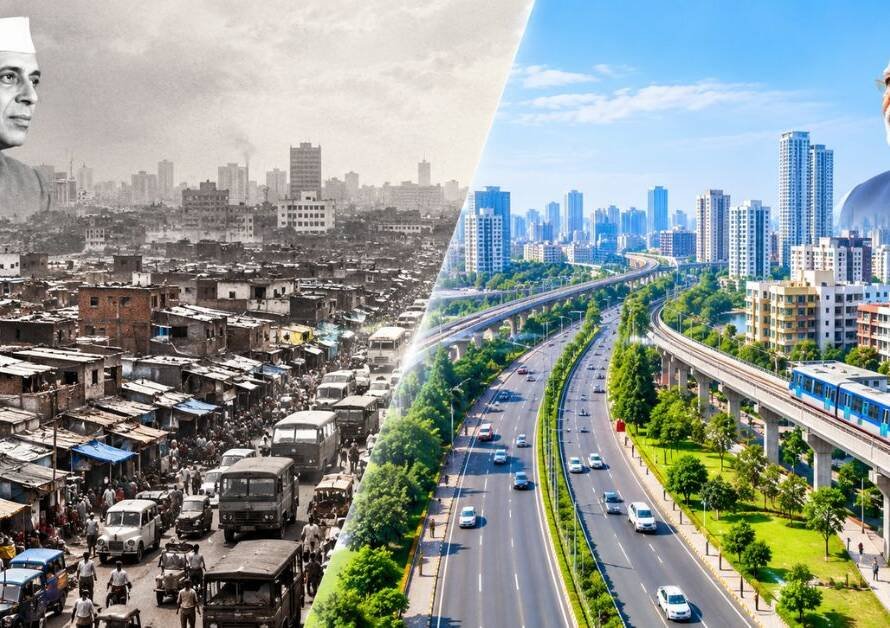
- Arresting Spectacular Growth: Bharat is currently on a trajectory to become the world’s third-largest economy, with the Ministry of Home Affairs aiming to eliminate Left-Wing Extremism (LWE) completely by March 31, 2026. A stable internal environment is the prerequisite for this growth. By triggering campus unrest and social disharmony, the “Thugbandhan” seeks to create an image of a nation in turmoil, thereby deterring foreign investment and slowing down the “Gati-Shakti” (force of progress).
- The Resumption of Dynastic “Bleeding”: The desperation to return to power is driven by the need to refill dynastic pockets. The 2004–2014 era of “Bleeding From Within” was characterized by a focus on self-enrichment and the systematic ignoring of internal security threats. To return to that era, the opposition requires the collapse of the current unified Hindu identity, which they view as the primary obstacle to their “divide and loot” model.
- Political Resignations as Performance: High-profile resignations, such as a BJP functionary in Raebareli on January 28, are being used as “proof” of internal dissent, masking the fact that these moves are often orchestrated by opposition handlers to create a sense of inevitable collapse.
III. The Strategic Blindness of Elite Demonstrations
The elite and Swarna classes, while protesting the perceived threats to the reservation system, are often blind to the broader geopolitical and strategic stakes involved in national stability.
- Hurting Their Own Survival: A fractured Hindu society is a vulnerable society. When the Swarna class clashes with other communities over administrative regulations, it weakens the collective resilience required to face external threats. History proves that in a destabilized nation, the “elite” are often the first to lose their security and economic standing.
- The 41-Case Context: As seen in the recent compilation of 41 espionage and terror-linked cases spanning 2019–2026, foreign adversaries look for “social friction” to embed their operatives. An India distracted by caste-wars on campuses is an India that is less vigilant against foreign handlers using social media to inject extremist narratives.
- The “Thugbandhan” Playbook: The behavior of the Congress and its allies reflects a “Power at Any Cost” ideology. Instead of suggesting refinements to the UGC rules, they have actively fanned the flames of “Savarna Wrath” while simultaneously telling marginalized groups that the government is not doing enough—a dual-edge strategy designed to ensure conflict regardless of the policy outcome.
IV. The “Everyman” Operative and Social Camouflage
The current unrest provides the perfect cover for “social camouflage,” where political agents and foreign-funded NGOs blend into legitimate student protests to escalate violence.
- Weaponizing Access: Just as espionage modules used security guards and YouTubers for reconnaissance in the Ghaziabad case, political destabilizers use “student activists” and “concerned citizens” to film and broadcast edited clips of police action, aiming to incite further riots and international condemnation.
- The Digital Iron Curtain: The government’s move toward a “Digital Iron Curtain” via NATGRID and AI-driven surveillance is the only deterrent against this chaos. The opposition’s loud shouting about “surveillance” and “fear” is a direct attempt to disable these security tools so they can resume their unchecked subversion.
The Need for Internal Vigilance
- The 2026 UGC regulation row is a stark reminder that the “Rising Web” of subversion is not always foreign—it is often domestic, political, and driven by the greed of dynasties.
- The Swarna and elite classes must look past the immediate grievances and recognize the larger game being played. Falling into the trap of caste-based incitement is a service to the “Thugbandhan” and a direct hit to the national interest.
- To protect Bharat’s spectacular growth and ensure its survival, the society must remain unified against those who wish to “bleed the nation” for their own political survival.
- The choice is clear: either a unified Bharat that moves toward the goal of “Vishwa Guru,” or a fractured nation that returns to the cycle of instability, dynastic corruption, and internal decay.
🇮🇳Jai Bharat, Vandematram 🇮🇳
Read our previous blogs 👉 Click here
Join us on Arattai 👉 Click here
👉Join Our Channels👈