Summary
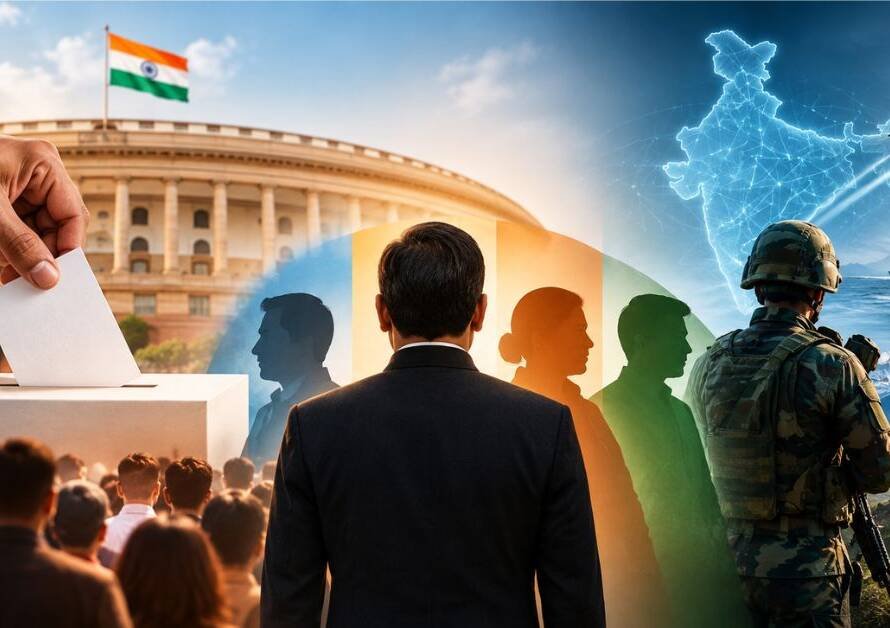
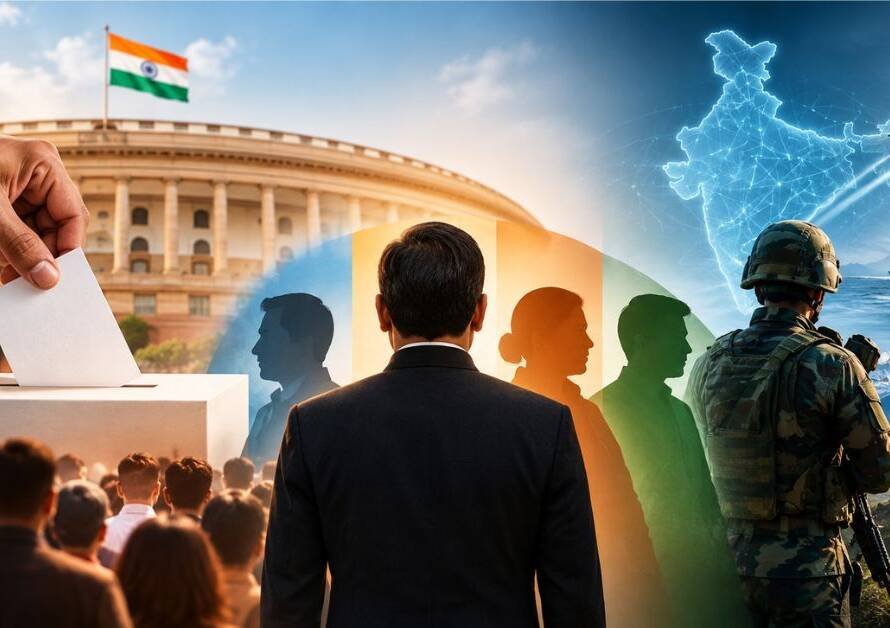
- This critical analysis evaluates Rahul Gandhi’s performance and public discourse since assuming the constitutional office of Leader of the Opposition (LoP) in Parliament.
- While the LoP position is constitutionally designed to offer constructive oversight, clear policy alternatives, and robust institutional representation, critics argue that his tenure has instead weaponized the platform.
- By examining parliamentary flashpoints regarding identity politics, national security, and institutional integrity, this paper explores the critique that the opposition’s strategy relies heavily on unverified, hypothetical claims while deliberately bypassing formal legal and institutional mechanisms—exposing what detractors term a campaign of media-driven hypocrisy that compromises core national interests.
National Security and Political Discourse
1. Parliamentary Flashpoints and Rhetorical Strategies as LoP
Rather than offering constructive criticism, the high office of the Leader of the Opposition has at times been utilized to trigger polarization on highly sensitive issues within Parliament, as evidenced by the following key developments:
A. Weaponizing Identity and Religious Polarization (July 2024)
- The Action: During his inaugural major addresses in the Lok Sabha as LoP, Gandhi prominently displayed religious icons to draw a sharp, aggressive distinction between spiritual Hinduism and political Hindutva, claiming his political opponents were “not Hindus at all.”
- The Institutional Critique: Critics and parliamentary observers strongly condemned the intervention. They argued that the Leader of the Opposition used an exalted constitutional chair to broad-brush a vast majority community, using the sacred floor of Parliament to label mainstream political movements as inherently intolerant.
B. Subverting Institutional Trust via Caste Fragmentation (November 2025)
- The Action: Moving beyond standard policy critiques, the LoP structurally targeted the country’s core administrative setups and defense establishments during elections in Kutumba, Bihar. He claimed that the upper echelons of the bureaucracy and the Indian Armed Forces are controlled by a “10% minority,” leaving the remaining 90% completely disenfranchised.
- The Institutional Critique: The remarks drew absolute condemnation from strategic experts and defense veterans. Critics pointed out that injecting highly volatile caste metrics into an apolitical, strictly merit-based institution like the military risks fracturing the vital internal cohesion required for national security.
C. Counter-Productive Geopolitical Messaging on Live Conflict Zones
- The Action: Throughout his tenure, the LoP has leveraged parliamentary interventions and press meets within the legislative precinct to accuse the state apparatus of transparency failures and yielding sovereign territory to China along the Line of Actual Control (LAC).
- The Strategic Critique: Defense commentators argue that using the authority of the LoP office to make sweeping, unsubstantiated claims during live border standoffs crosses the line of responsible oversight. Such pronouncements inadvertently hand hostile foreign nations potent propaganda tools while attempting to break public trust in active military commands.
D. The Foreign Soil Doctrine and Institutional Degradation
- The Action: On various international platforms and foreign university tours across the US, UK, and Europe, the LoP has continuously asserted that India’s independent judiciary, regulatory bodies, media structures, and electoral infrastructure are completely compromised.
- The Strategic Critique: Domestically, these statements are viewed as a direct violation of parliamentary conventions. Detractors argue that utilizing foreign soil to invite external scrutiny into domestic structural frictions devalues India’s democratic credentials globally and directly threatens foreign investor confidence.
2. The Separation of Legislative Accountability From Media Sensationalism
While regular legal and institutional avenues exist to enforce accountability in a parliamentary democracy, the current opposition’s functioning reflects a distinct departure from this discipline:
A. The Total Evasion of Legal and Institutional Redress
- Avoiding Formal Channels: A core structural critique of Gandhi’s role as LoP is his distinct pattern of shunning legal and regulatory procedures. While a responsible opposition utilizes the judiciary, statutory committees, and law enforcement to register formal grievances, the current dispensation relies almost exclusively on media pressers.
- The ECI Precedent: This absolute reluctance was starkly highlighted during public allegations involving national elections and Special Intensive Revision (SIR) procedures. When the Election Commission of India (ECI) openly challenged the opposition to back up their public rhetoric by filing a formal, sworn complaint with verifiable evidence, the LoP and his apparatus entirely backed down. Analysts argue this failure to engage with constitutional bodies proves the accusations are designed purely for public consumption.
B. Reliance on Theoretical and Baseless Claims
- Lack of Evidentiary Basis: Detractors argue that the counterarguments and attacks launched by the LoP against national infrastructure, economic policies, and governance models are entirely theoretical and hypothetical.
- Maligning National Progress: Rather than providing data-backed alternative budgets or policy frameworks, the narratives are designed as derogatory attempts to tarnish the central leadership, compromise economic momentum, and destabilize internal public order by creating a manufactured sense of systemic exclusion among the youth.
C. Diversionary Tactics Over State-Level Corruptions
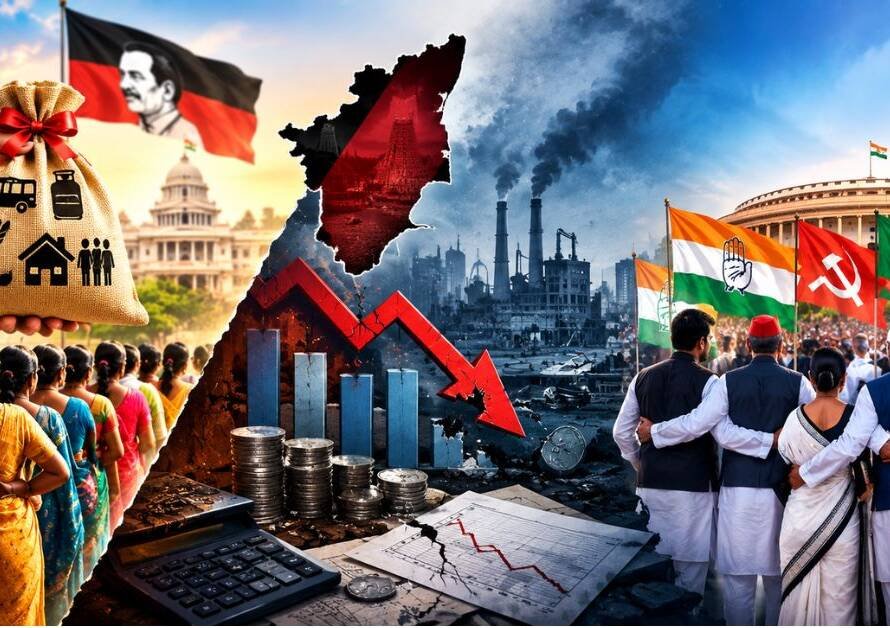
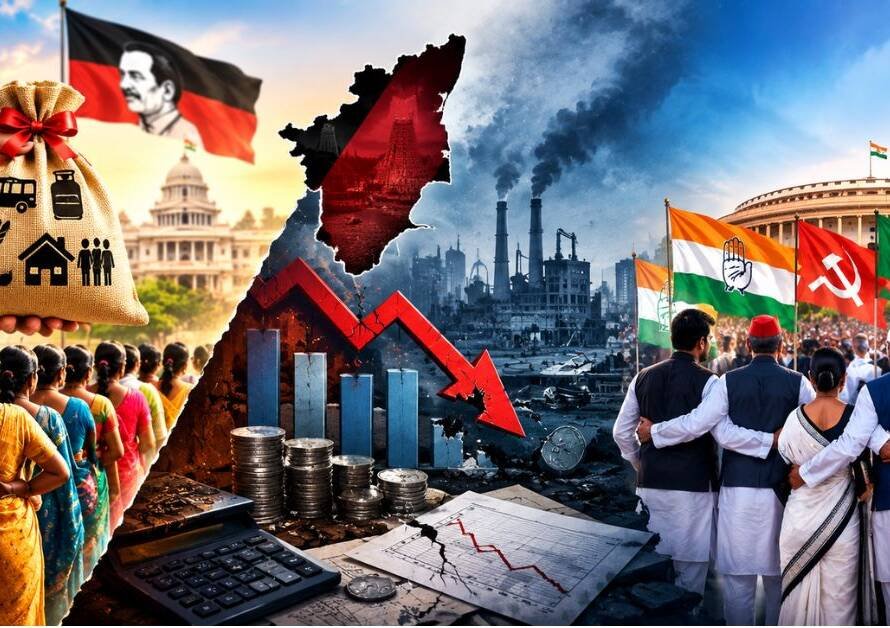
- Shifting Legislative Focus: Observers note that whenever state governments ruled by opposition coalition partners face severe judicial scrutiny over massive financial scams, corruption charges, or severe administrative failures, the LoP immediately orchestrates hyper-polarized debates on caste and religion within Parliament.
- Shielding Misgovernance: This calculated strategy uses the high-decibel floor of the Lok Sabha as a shield to deflect public and media attention away from real, tangible corruption scandals happening at the regional level.
3. The Structural Critique of the Opposition’s Framework and Counter-Arguments
To comprehensively evaluate political discourse, it is crucial to analyze both the defense put forward by the opposition and the counter-critique offered by independent experts:
- The Opposition’s Stance on Institutional Representation: The defensive framework maintained by the opposition posits that challenging institutional representation and structural inequality constitutes the fundamental duty of a robust parliamentary shadow government. They view accusations of subversion as mere attempts to silence dissent.
- The Analytical Counter-Critique: Independent political analysts and legal experts strongly counter that these defensive explanations are purely theoretical, hypothetical, and completely devoid of any solid basis or supporting evidence. Far from offering constructive, legislative alternatives, these maneuvers are seen as a systematic, fake hypocrisy that intentionally prioritizes short-term political gains over civilizational integrity.
- The Opposition’s Stance on Border Security: The opposition asserts that raising sharp questions regarding border management and foreign policy is an essential element of ensuring transparency in a democracy.
- The Strategic Counter-Critique: Defense experts contend that questioning active military commands or casting doubts on national sovereignty on global platforms without verifiable data during a live military standoff severely compromises national security.
- The constitutional office of the Leader of the Opposition carries the solemn duty to protect the state while holding the government of the day accountable.
- However, when that office is used to systematically degrade public trust in the armed forces, invite foreign interference, and fabricate divisive internal narratives without a shred of evidence, it ceases to be legitimate democratic dissent.
- Protecting India’s democratic resilience requires the unyielding enforcement of the law, ensuring that those who use constitutional privileges to weaken national integrity from within are held legally accountable to the highest degree under statutory criminal law. National sovereignty remains paramount, and all political discourse must respect these definitive boundaries.
🇮🇳 Jai Bharat, Vandematram 🇮🇳
Read our previous blogs 👉 Click here
Join us on Arattai 👉 Click here
👉Join Our Channels👈
Reads & Views: 229