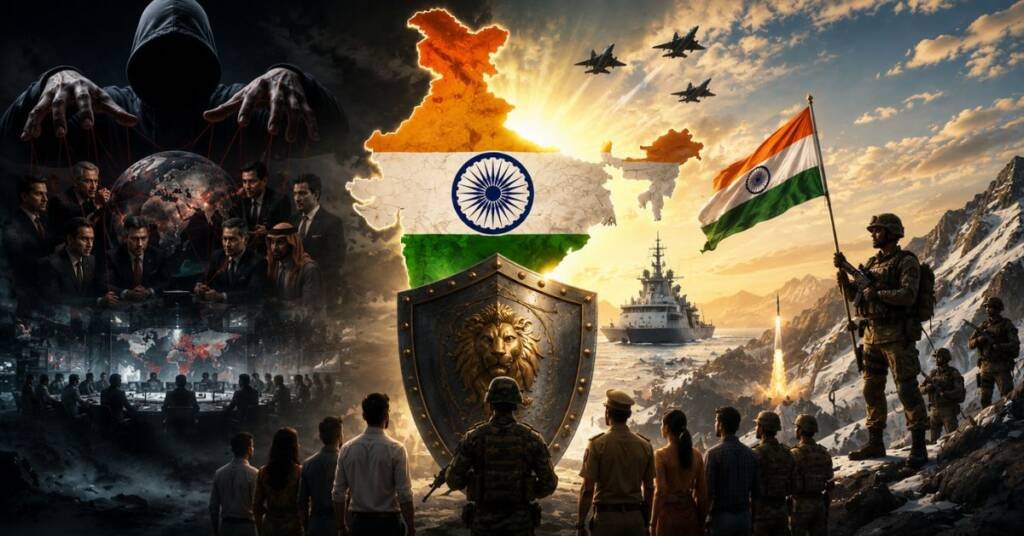
Summary
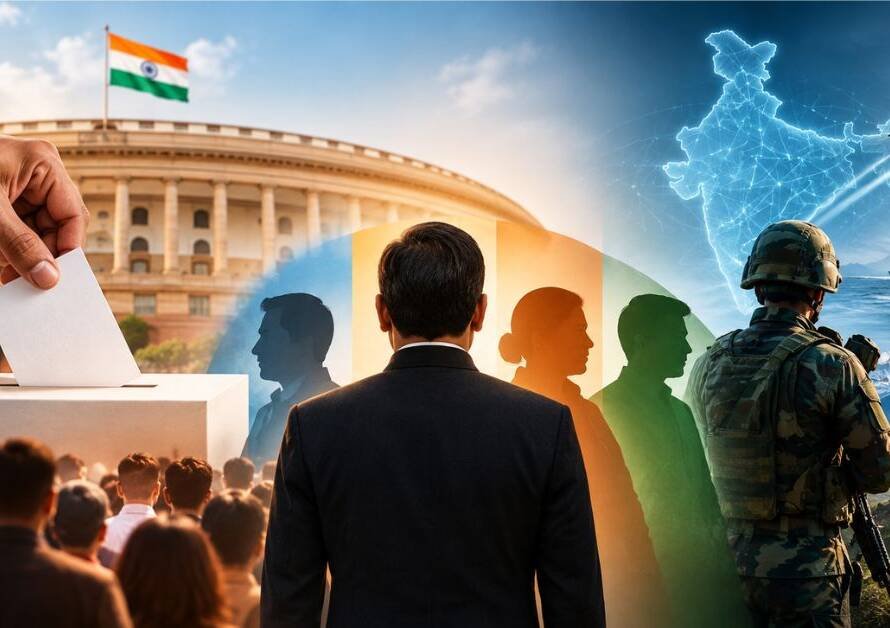
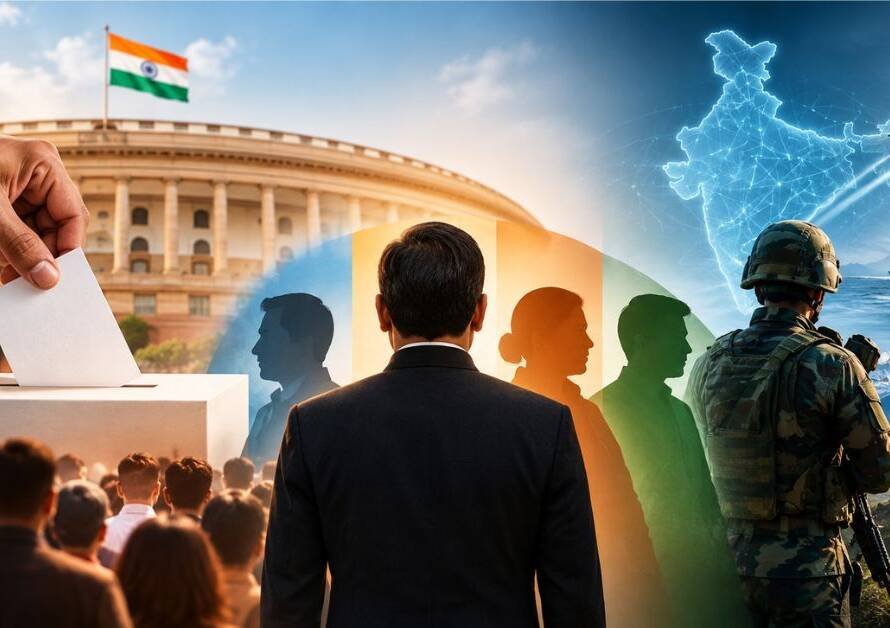
As India accelerates its trajectory toward becoming a $5 trillion economy and an assertive global superpower (Vishwa Guru), it faces unprecedented geopolitical friction. The intersection of an uncompromising “Nation First” foreign policy, strategic military autonomy, and domestic economic protectionism has unsettled traditional Western hegemonies and regional adversaries alike. This document provides an exhaustive, multi-layered breakdown of the external subversion tactics, hybrid warfare, foreign intelligence alliances (such as alleged CIA-ISI convergences), media-driven regime-change narratives, and internal socio-political fault lines currently being weaponized against India’s democratic framework.
A Comprehensive Strategic Analysis
1. Geopolitical Friction & Diplomatic Sovereignty
The core driver of foreign hostility toward the current Indian leadership stems from New Delhi’s refusal to align blindly with Western strategic orbits. India’s transition from strategic ambiguity to strategic autonomy has redefined global diplomacy.
- Strategic Independence in the Russia-Ukraine Conflict:
- Energy Security Priorities: Despite relentless diplomatic pressure and threat of secondary sanctions from Western capitals, India prioritized its domestic energy needs by importing discounted Russian crude oil. This saved billions in foreign exchange and kept domestic inflation under control.
- Neutrality as Power: Refusing to vote against Russia in UN forums demonstrated that India’s foreign policy is dictated strictly from New Delhi, not Washington or Brussels.
- De-Dollarization Trends: Initiating local currency trade mechanisms (Rupee-Ruble and Rupee-Dirham) directly challenged the hegemony of the US dollar in global energy markets.
- Military Autonomy & Advanced Defense Integration:
- The S-400 Triumphs: The procurement and operationalization of Russian S-400 Triumf air defense systems proved critical to India’s multi-layered air defense grid, defying CAATSA (Countering America’s Adversaries Through Sanctions Act) threats.
- Indigenous & Hybrid Weapons Systems: Breakthroughs in supersonic technology, such as the BrahMos cruise missile, alongside joint defense ventures, have given the Indian Armed Forces an unprecedented tactical advantage in high-altitude and maritime domains.
- Superior Operational Doctrine: Joint military exercises have repeatedly shown that Indian armed forces combine advanced technical hardware with superior tactical training, outmatching adversaries equipped with conventional Western or Chinese military exports.
- Resisting Asymmetric Trade Agreements:
- Protecting Domestic Agriculture: India firmly rejected foreign trade conditions that demanded the opening of domestic agricultural markets to subsidized Western agribusinesses, directly shielding millions of local farmers and smallholders.
- Data Sovereignty: Enforcing strict data localization norms for foreign tech giants prevented the unauthorized exploitation of Indian consumer data, frustrating Western tech cartels.
2. Hybrid Warfare, Deep-State Alliances & Regime Change Tactics
To counter a nation that cannot be defeated militarily or economically, hostile foreign entities often resort to Hybrid Warfare—a combination of intelligence operations, financial subversion, and psychological warfare (PSYOPS).
- The Tactical Convergence of Enemy Intelligence:
- Unholy Alliances: Observers note an increasing alignment between Western deep-state apparatuses (such as elements within the CIA) and regional intelligence networks (Pakistan’s ISI). Their shared interest lies in engineering an administration in New Delhi that is more malleable, compliant, and open to external dictates.
- The Regime Change Playbook: Drawing from historical precedents in the Middle East, Eastern Europe, and South Asia, regime-change operations rely heavily on manufacturing artificial domestic crises, funding opposition movements, and discrediting democratic processes.
- Financial Subversion & the NGO Ecosystem:
- The FCRA Crackdown: The strict enforcement of the Foreign Contribution Regulation Act (FCRA) exposed how vast sums of foreign money were entering India disguised as philanthropic aid, only to be diverted into local agitations, anti-infrastructure protests, and demographic shifts.
- Targeting Infrastructure Projects: Foreign-funded environmental and social NGOs systematically filed litigation against critical national infrastructure—including nuclear power plants, ports, mining projects, and expressways—to stall India’s industrial growth.
- Dismantling Conversion Networks: By choking illicit foreign funding pathways, the government severely disrupted organized, money-driven religious conversion syndicates that exploit vulnerable socio-economic groups.
3. Weaponization of ‘Gen Z’ and the Bangladesh/Nepal Template
The most potent weapon in modern hybrid warfare is the psychological manipulation of youth demographics. Foreign actors seek to replicate street-level destabilization models previously witnessed in neighboring nations.
- Manufactured Protest Movement & Pop-Up Entities:
- Astroturfing “Revolutionaries”: Overnight, overnight organizations (such as CJP and temporary activist cells) are created and heavily promoted across digital platforms. Individuals with minimal grassroot presence are elevated into global “youth icons” or “revolutionaries.”
- Importing Instability: Foreign-funded actors are sent back to India to organize street protests, capitalizing on minor grievances to create violent standoffs with law enforcement agencies.
- Bot Farms and Digital Information Operations:
- Fake Engagement Networks: Social media campaigns attacking Indian institutions are artificially boosted using automated bot networks operating out of Pakistan, Bangladesh, and Western proxy servers.
- Algorithmic Manipulation: Search engines and social media algorithms are leveraged to suppress positive national developments while amplifying divisive, inflammatory, or fabricated narratives.
- Manufactured Discontent Among Demographics:
- UGC and Educational Agitations: Academic and administrative reforms (like UGC guidelines) are deliberately misrepresented to instigate student union protests and foster anti-government sentiment among Gen Z.
- Caste and Class Weaponization: Continuous attempts are made to manufacture friction between General, SC, ST, and OBC categories by spreading false claims about the abolition of affirmative action, despite leadership representing these very communities.
- Minority Fear-Mongering: Laws aimed at granting citizenship (CAA) or national integration (Article 370 abrogation) are weaponized via international media to spread panic among minority populations regarding their constitutional rights.
4. Institutional Sabotage, Media Narrative Warfare & Internal Betrayal
A key component of asymmetric subversion is the systematic erosion of public trust in a nation’s core democratic and legal institutions.
- Politicizing Legal and Administrative Processes:
- SIT & Judicial Distortions: When financial irregularities or administrative corruption occur (e.g., within local trusts, municipal projects, or government bodies), the state deploys independent Special Investigation Teams (SIT). Hostile narratives instantly bypass the judicial process to falsely blame top political leadership, attempting to destroy public credibility.
- Undermining Elections: Continuous attacks on the Election Commission of India (ECI), Electronic Voting Machines (EVMs), and the judiciary are designed to make the citizenry lose faith in the democratic process itself, laying the groundwork for post-election unrest.
- The Role of Internal ‘Gaddars’ (Traitors):
- Historical Parallels: Indian history repeatedly demonstrates that external invaders succeeded primarily when aided by internal betrayals motivated by power, greed, or political survival.
- Political Opportunism: Certain domestic political factions and media houses willingly adopt narrative points scripted by foreign think tanks, prioritizing short-term political gains over long-term national sovereignty and security.
5. Strategic Conclusion & The Path Ahead
The battle for India’s future is no longer fought merely on physical borders; it is actively waged in digital spaces, policy corridors, academic institutions, and economic forums.
- The Sovereign Shield: As long as the Indian citizenry remains vigilant, analytical, and united beyond artificial caste, class, and regional divides, external hybrid warfare tactics will consistently fail.
- Economic and Military Absolute Resolve: Strong state-level leadership, coupled with an unwavering commitment to national security and economic self-reliance (Atmanirbhar Bharat), remains the ultimate defense against global interventionism.
Key Takeaways for Citizens
- Verify Before You Amplify: Always cross-check viral political narratives and sudden street movements against verifiable facts and official data.
- Recognize Foreign Narratives: Identify subtle attempts by foreign media houses and NGOs to influence domestic electoral outcomes and law-and-order situations.
- National Unity as Priority: Reject rhetoric designed to fragment Indian society along caste or religious lines.
🇮🇳Jai Bharat, Vandematram 🇮🇳
Read our previous blogs 👉 Click here
Join us on Arattai 👉 Click here
👉Join Our Channels👈