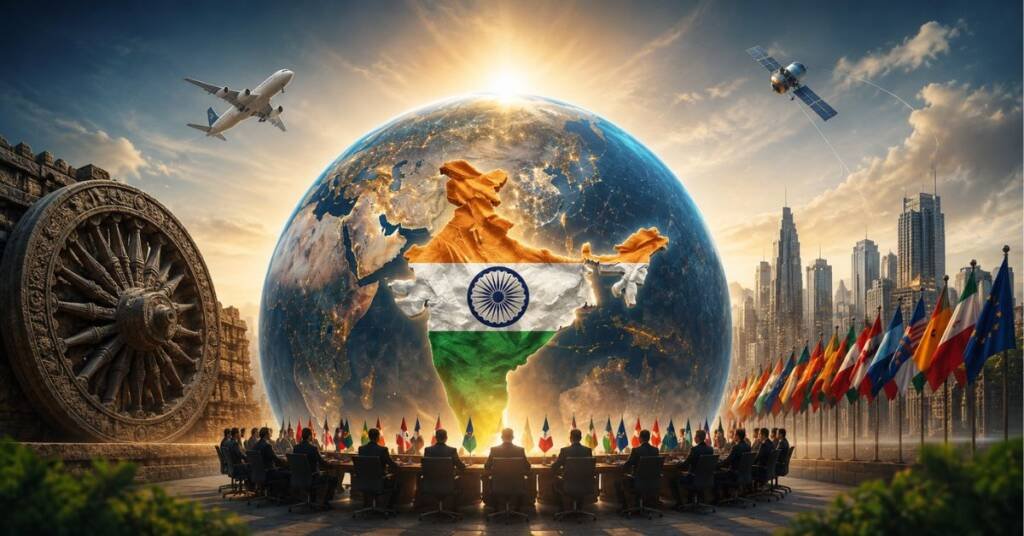
Summary
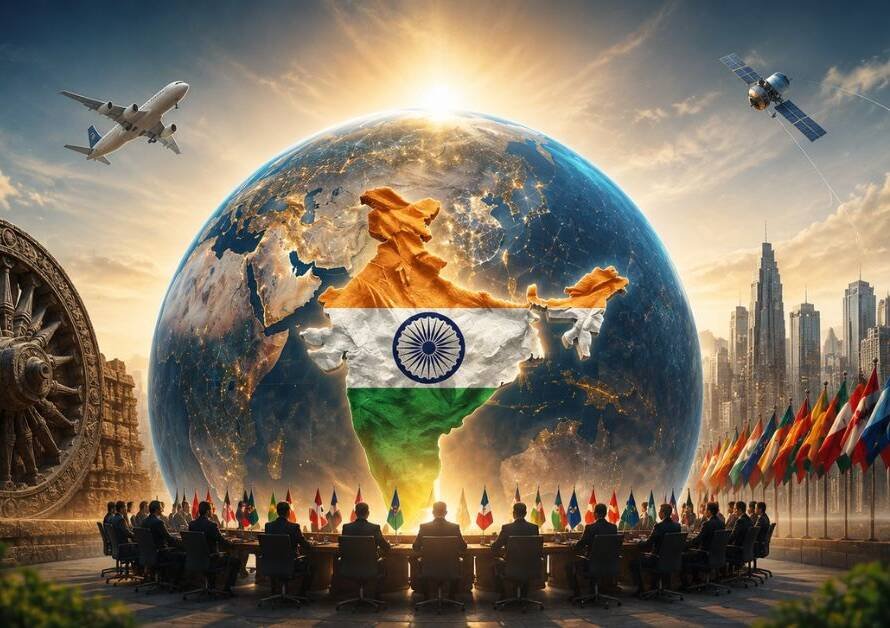
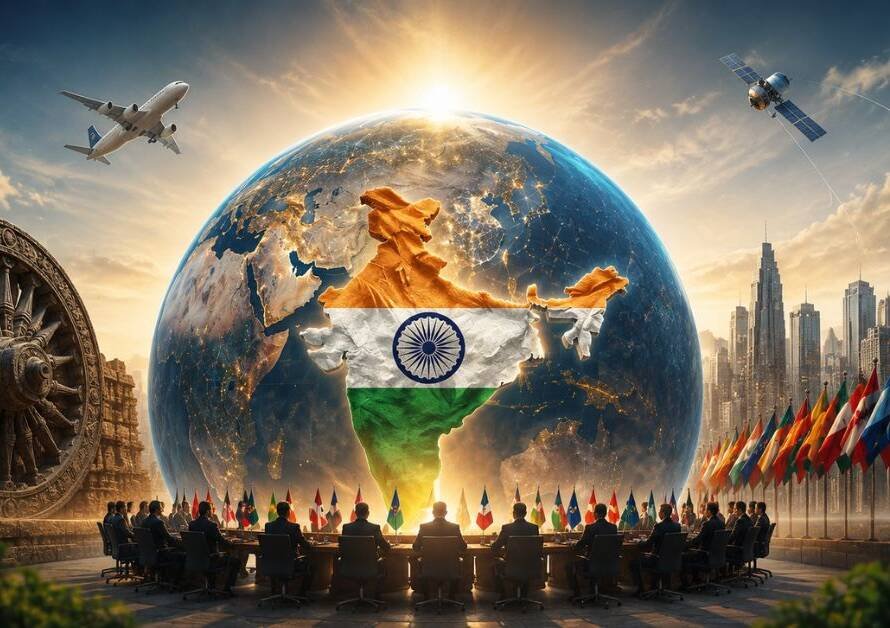
- The Global Shifts: Amid growing international polarization, regional wars, and economic turbulence, the world is actively seeking neutral, credible leadership capable of bridging deep geopolitical divides.
- Strategic Autonomy: India has transformed its foreign policy from passive non-alignment to proactive strategic autonomy, building robust partnerships with rival powers while refusing external coercion.
- Global Validation: Defense and foreign policy experts from both Western nations and the Middle East view Indian leadership as uniquely equipped to mediate severe conflicts, such as the US-Israel-Iran tensions.
- Civilizational Vision: Grounded in the ancient ethos of Vasudhaiva Kutumbakam (the world is one family), India acts as a decisive “solution provider” and the undisputed champion of the Global South.
- Collective Resolve: Despite internal political cynicism, India’s elevated global standing is driven by the economic vitality, security resolve, and collective confidence of 1.4 billion citizens.
India’s Diplomacy: A New Identity in Global Leadership
1. A World in Crisis: The Search for a Credible Mediator
- Geopolitical Fragmentation: The modern international order faces unprecedented strain due to conflict in Europe, escalating friction in the Middle East, and expanding economic block rivalries.
- The Leadership Vacuum: Major global powers are increasingly tied to rigid military alliances, ideological blocs, or unilateral sanctions, rendering them incapable of serving as neutral arbitrators.
- Rise of a Balanced Power: India has stepped into this vacuum not as a passive observer, but as a constructive force committed to stability, dialogue, and international law.
- A Paradigm Shift: Indian foreign policy has evolved from the reactive stance of past decades into a confident, forward-leaning framework that shapes global discourse.
2. Strategic Autonomy in Action: Navigating Complex Alliances
- Rejection of Hegemony: India consistently refuses to join restrictive military pacts or act as a junior partner to any global superpower, maintaining absolute freedom in its decision-making.
- Multi-Vector Diplomacy: New Delhi successfully balances active participation in Western-led security groupings like the QUAD (with the US, Japan, and Australia) alongside vital strategic ties with Russia and participation in BRICS.
- National Interest First: Whether securing energy resources during global supply disruptions or modernizing defense infrastructure, India prioritizes its national sovereignty and the economic well-being of its people over external pressure.
- Building Mutual Respect: By engaging transparently with all international actors, India has earned a reputation for consistency, reliability, and strategic clarity.
3. Global Endorsements: International Recognition of India’s Diplomatic Weight
- Western Security Perspective: Former US Army Colonel Douglas Macgregor highlighted that de-escalating complex multi-nation friction between the US, Israel, and Iran requires decisive leadership—a role he noted Prime Minister Narendra Modi is exceptionally qualified to undertake.
- Middle Eastern Diplomatic View: Former Iranian Ambassador Hassan Nizami stated that direct intervention and dialogue by Prime Minister Modi could create a critical diplomatic breakthrough between Israeli and Iranian leadership.
- A Hotline to All Capitals: Unlike nations constrained by ideological divides, Indian leadership maintains direct, trusted communication channels with Washington, Moscow, Tel Aviv, Tehran, and nations across the Global South.
- Transformative Presence: These high-level global assessments demonstrate that India’s diplomatic intervention is viewed not as a symbolic gesture, but as a real-world catalyst for peace.
4. The “Solution Provider”: Civilizational Ethos Meets Modern Statecraft
- Vasudhaiva Kutumbakam: Rooted in the civilizational philosophy that “the world is one family,” India’s statecraft blends moral clarity with practical, real-world utility.
- Vocal Champion of the Global South: During its historic G20 Presidency, India successfully led the initiative to grant permanent membership to the African Union, ensuring developing nations have an active voice in shaping international policy.
- Humanitarian Leadership: From global relief operations during natural disasters to wide-scale medical support across developing nations, India consistently leads crisis response efforts without political conditions.
- The Doctrine of Peace: Prime Minister Modi’s statement that “Today’s era is not an era of war” has been widely adopted by international bodies as a guiding principle for resolving modern international disputes.
5. Economic Engine and Cultural Soft Power
- An Indispensable Economy: As the world’s fastest-growing major economy, India’s internal market, technological innovation, and manufacturing capacity make it an essential anchor for global supply chains.
- Energy Security Leadership: India has taken a leading role in global sustainability by co-founding international initiatives like the International Solar Alliance and the Coalition for Disaster Resilient Infrastructure.
- Cultural Identity as Strength: India’s civilizational heritage, widespread diaspora, and cultural outreach serve as strong pillars of soft power that enhance its global Goodwill and influence.
6. The Domestic Paradox: Overcoming Internal Cynicism
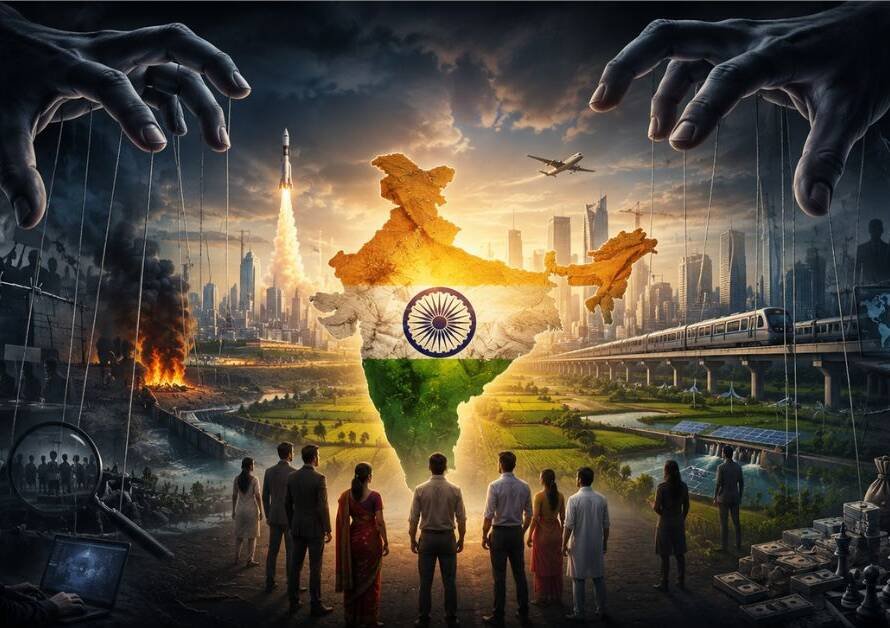
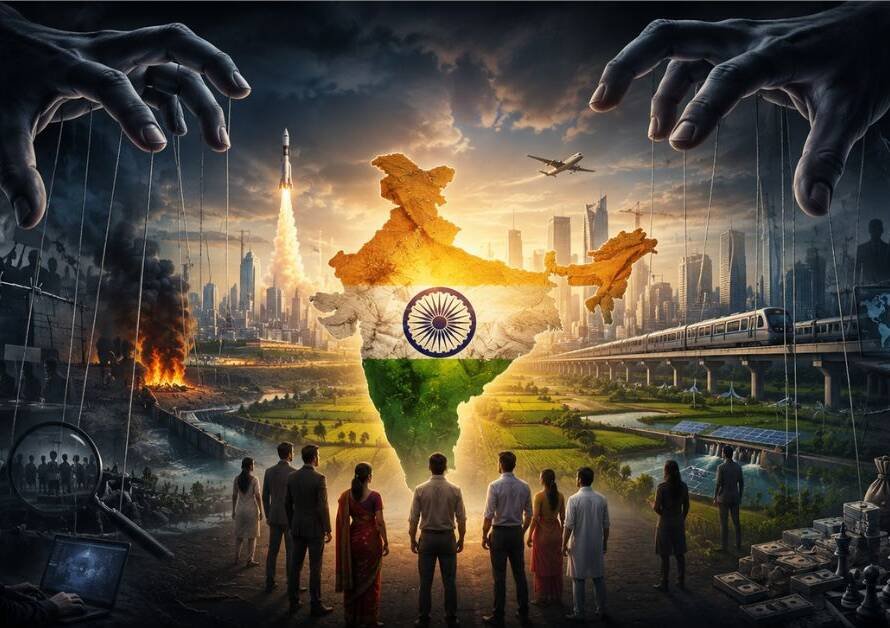
- A Striking Contradiction: While foreign policy experts worldwide praise India’s strategic balance, domestic political debates are frequently dominated by short-term criticism and skepticism.
- Constructive Democracy vs. Blind Opposition: While political debate remains an essential component of democracy, overlooking significant international achievements risks weakening the national consensus required for long-term global power.
- Reflecting 1.4 Billion People: A nation’s weight abroad is a direct reflection of its internal stability; India’s diplomatic victories belong to the collective hard work, skill, and confidence of its 140 crore citizens.
7. The Promise of New India
- Firm on Security, Open to Peace: The “New India” combines strong defense readiness and secure borders with an unyielding commitment to global conflict resolution through dialogue.
- An Independent Path: India has demonstrated that a nation can protect its national interests while serving as a compassionate, constructive member of the global community.
- A Stabilizing Force: As international dynamics grow more unpredictable, India stands firm as an anchor of balance, reason, and mutual respect.
🇮🇳 Jai Bharat, Vandematram 🇮🇳
Read our previous blogs 👉 Click here
Join us on Arattai 👉 Click here
👉Join Our Channels👈
Reads & Views: 32