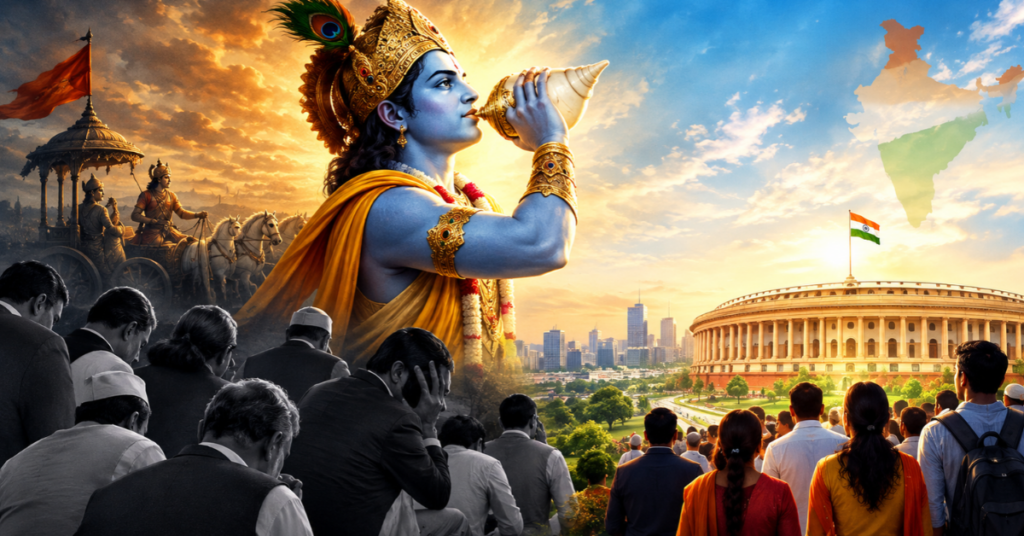
Summary:
- Based on the Indian political landscape, this detailed and comprehensive satirical article weaves together the eternal philosophical verses of the Bhagavad Gita, the strategic references of Mahabharata’s ‘Krishna Neeti’, and current political reality.
- It analyzes the pathetic state of the Congress party and the opposition ‘Thugbandhan’, who, after enjoying power for decades, are now forced into political exile and grassroots struggle.
- Simultaneously, it highlights how since 2014, a permanent and revolutionary change has taken place in the nation’s politics and diplomacy—moving away from the traditional framework of appeasement and passive tolerance towards adopting every necessary policy—whether Sam, Dam, Dand, Bhed, or Chhal when required—to completely destroy ‘Adharma’ in the national interest.
Karma, Krishna Neeti, and Politics: The Undeniable Truth of the Opposition’s Political Eviction
1. Rahul Gandhi and Dynastic Politics in the Perspective of the Gita’s Verses
Understanding the comparison between the traditional dynastic nature of Indian politics and today’s harsh, ruthless electoral reality requires a philosophical and satirical perspective:
- “What did you bring that you have lost?”: When political dynasties, who held a monopoly over national power, the government treasury, and resources for decades, no longer possess actual public support today, they wander door-to-door trying to find their lost political ground.
- The Instability and Shattering of the Vote Bank Myth: Votes are not any politician’s private property or dynastic fiefdom; they are the sacred trust of the public. Vote banks that were once considered the monopoly of a single family or party have completely shifted with an unprecedented change in public consciousness. Dynasties assumed power was a birthright, but the public completely shattered this myth.
- Arrogance vs. Hard Ground Reality: The massive decline in electoral figures and repeated defeats are undeniable proof that the conscious voter of India no longer votes merely on the basis of a ‘surname’ or family identity. The public prioritizes solely work, performance, national loyalty, and grassroots connection.
- The Illusion of Permanent Power: For decades, the privileged political class believed that their position at the top of national leadership was an unassailable fixture. Today, as voters systematically dismantle these entrenched power structures, the opposition faces the harsh realization that political dominance is ephemeral without genuine service.
2. From ‘Ram Neeti’ to ‘Krishna Neeti’: A New and Resolute Vow of National Defense
A massive ideological and practical shift has taken place in Indian governance, diplomacy, and national security, clearly defining the country’s internal and external landscape:
- Moving Beyond Traditional Toleration: Until now, India’s political and strategic modus operandi was largely based on traditional tolerance (Ahimsa and Sahishnuta) and idealistic principles. History shows how anti-national forces repeatedly exploited this hyper-tolerance to hollow out the nation from within. However, time and harsh experiences have taught that passive peace and non-violence alone are insufficient to protect national integrity, sovereignty, and Dharma.
- The Reality and Strategic Application of ‘Krishna Neeti’: In the Mahabharata war, Lord Krishna proved that when Adharma is at its peak and the nation faces crisis, wars cannot be won merely by textbook rules. Today, governance and diplomacy have adopted the policy to counter anti-national forces, terrorists, and the treacherous ecosystem thriving within the country by using Sam, Dam, Dand, Bhed, and even Chhal (deception) as required. National defense, security, and sovereignty are today’s highest and supreme Dharma.
- A Clear Message to Opposing Forces and the Anti-National Ecosystem: Anti-national ecosystems, so-called liberal intellectuals, and opposition parties who conspired to weaken India, divide it in the name of caste, and defame the nation at foreign behest now understand well that New India’s leadership does not merely believe in preaching, but knows very well how to strike diplomatically and strategically right inside the homes of the wicked.
- Uncompromising National Sovereignty: Under this revised framework, national interest takes absolute precedence over international posturing or ideological hesitation. Decisive action has replaced prolonged inaction, signaling that any threat to the nation’s integrity will be met with maximum force and tactical precision.
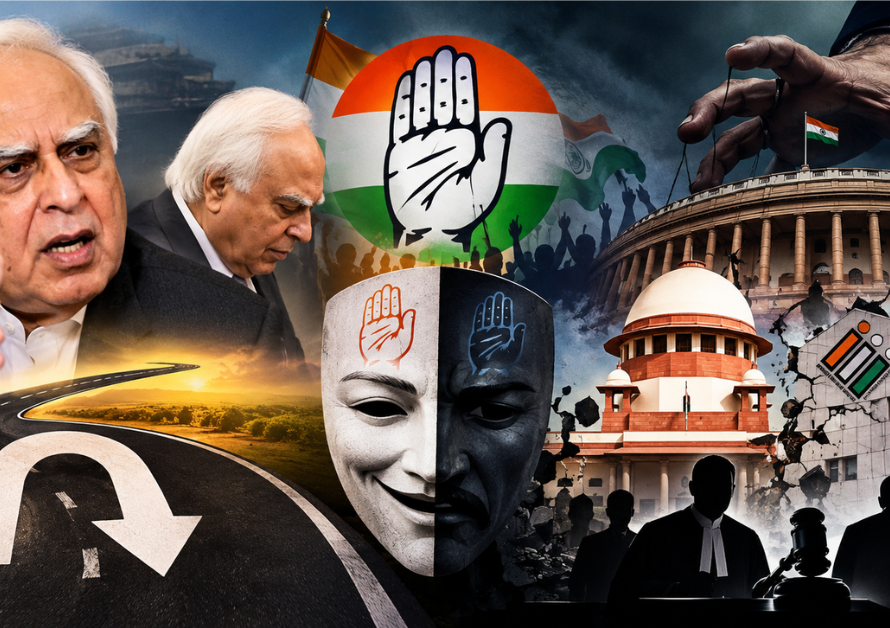
3. The ‘Thugbandhan’ and the Punishment for Historical Sins Prior to 2014
The current political crisis and the pathetic state of the opposition are not sudden occurrences, but the inevitable consequence of misdeeds, scams, and anti-national policies committed over past decades:
- The Dark Era of Corruption, Scams, and Appeasement: Prior to 2014, the nation witnessed countless scams from the Commonwealth Games to 2G, coal, and AgustaWestland, policy paralysis, surrender before terrorism, and blatant appeasement. Today, the opposition suffers the severe consequences and historical punishment for the same. The public has not forgotten the days when national wealth went into the vaults of middlemen.
- The Ultimate Victory of Dharma Over Adharma: The eternal and unshakable message of the Gita is that Adharma, the spread of falsehood, and pseudo-secularism can never defeat truth and national duty. Today, truth, transparency, cultural pride, and the spirit of ‘Nation First’ are achieving an ultimate and undisputed victory in the country.
- The Opposition Digging Its Own Graves: Unless the opposition stops relying on negative politics, rumors, opposition to Sanatana Dharma, and anti-national narratives, its political relevance will completely vanish. The more energy they waste trying to topple the government, the faster they sink into political oblivion and the pages of history.
- The Collapse of Opportunistic Coalitions: The desperate attempts to forge unnatural alliances—often dubbed the ‘Thugbandhan’—have consistently failed before the electorate. Lacking a unified vision or constructive roadmap for the nation, these temporary coalitions implode under the weight of internal contradictions and mutual distrust.
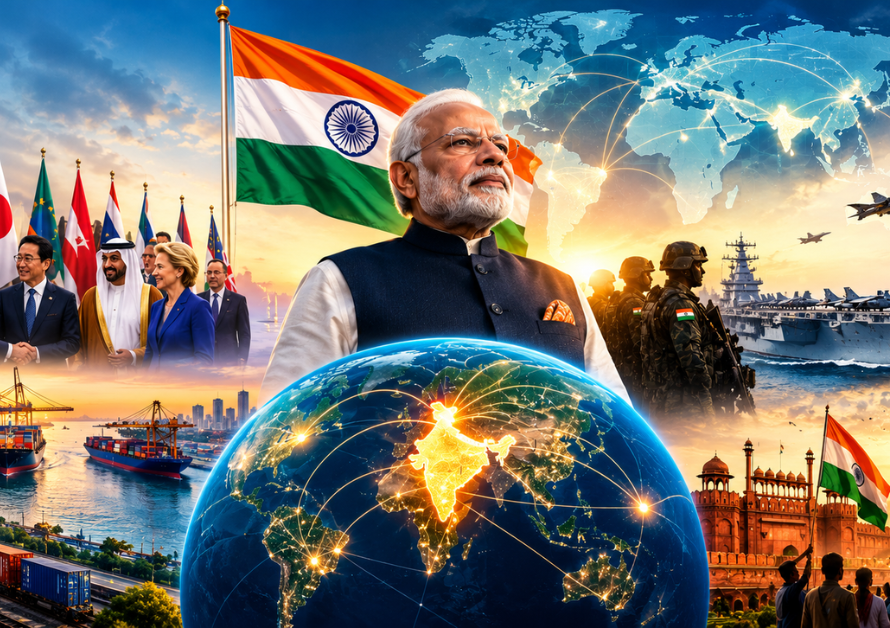
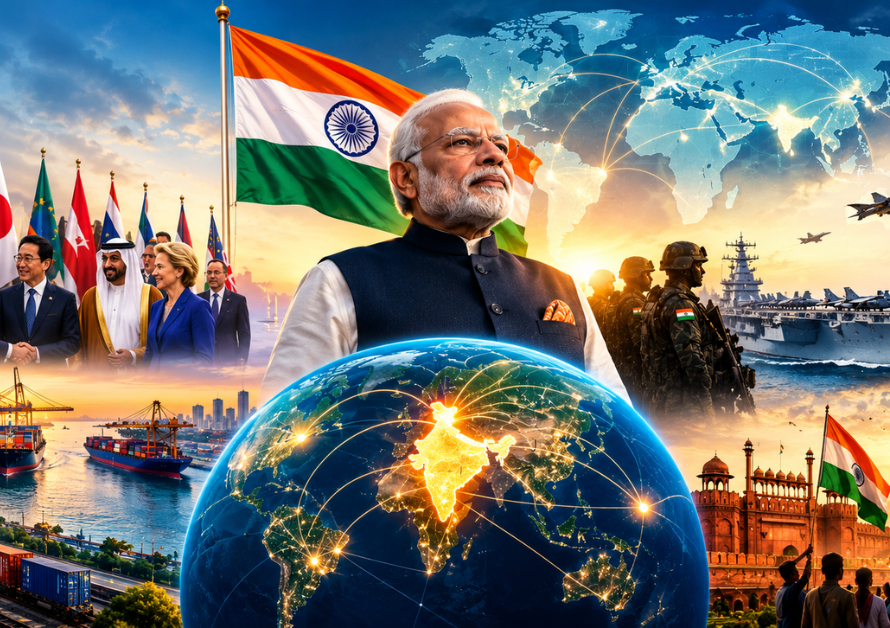
4. The New, Empowered, and Conscious India of the ‘Modi Era’
Today’s India is not the helpless, paralyzed, and frustrated India of before 2014; it has become an empowered, self-reliant, technologically advanced, and ideologically conscious nation:
- Changed Public Mindset and Ideological Awakening: The youth and common citizens of New India no longer fall for anyone’s misleading rhetoric. They consider development, robust infrastructure, internal security, and their cultural renaissance (especially the pride and symbols of Sanatana Dharma) their top priorities.
- The Farewell of Dynasty and ‘Free Lunch’ Culture: Parties and leaders who once sat in the air-conditioned rooms of Lutyens’ Delhi deciding the nation’s destiny—receiving everything pre-packaged on a silver platter—are now forced to come out into the dust, heat, and streets to sweat it out. The public no longer falls for empty promises and dynastic entitlement. Now, everyone must prove their standing through their own merit.
- Democratization of Political Opportunity: In this new landscape, political stature is no longer gated by familial privilege or social connections. Ordinary citizens from grassroots backgrounds now find real pathways to leadership based entirely on capability, dedication, and measurable contribution to public welfare.
- Cultural Confidence on the World Stage: New India takes immense pride in its heritage, discarding the legacy of self-doubt and cultural cringe. The revival of Sanatana Dharma stands not as an isolated sentiment, but as the foundational pillar of the nation’s civilizational identity and global self-assertion.
5. Conclusion: Karma, Krishna Neeti, and the Golden Future of the Nation
Change is the only eternal and unchanging rule in politics and history. Political parties that fail to recognize shifting times, misread the public pulse, and engage solely in opposition and destruction instead of constructive nation-building are bound to become politically irrelevant:
- The Immutable Law of Accountability: The political trajectory of modern India proves that no individual, family, or party is immune to the law of cause and effect. Decades of misgovernance and arrogance have culminated in inevitable electoral retribution, serving as a cautionary tale for all future leadership.
- The Unstoppable Chariot of Development: The message of the Bhagavad Gita and Lord Krishna’s ‘Krishna Neeti’ is proving 100% relevant and true today—the total destruction of Adharma, the defense of the nation, and the establishment of truth is the greatest duty in the universe. This chariot of New India will not stop now, and those who create obstacles in this journey of development will be pushed to the margins of history.
🇮🇳Jai Bharat, Vandematram 🇮🇳
Read our previous blogs 👉 Click here
Join us on Arattai 👉 Click here
👉Join Our Channels👈