Summary
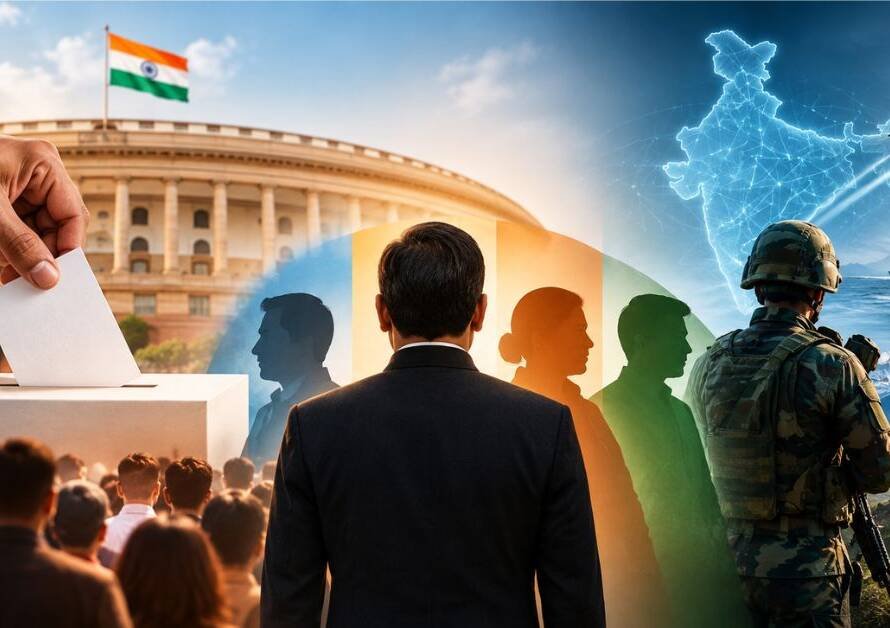
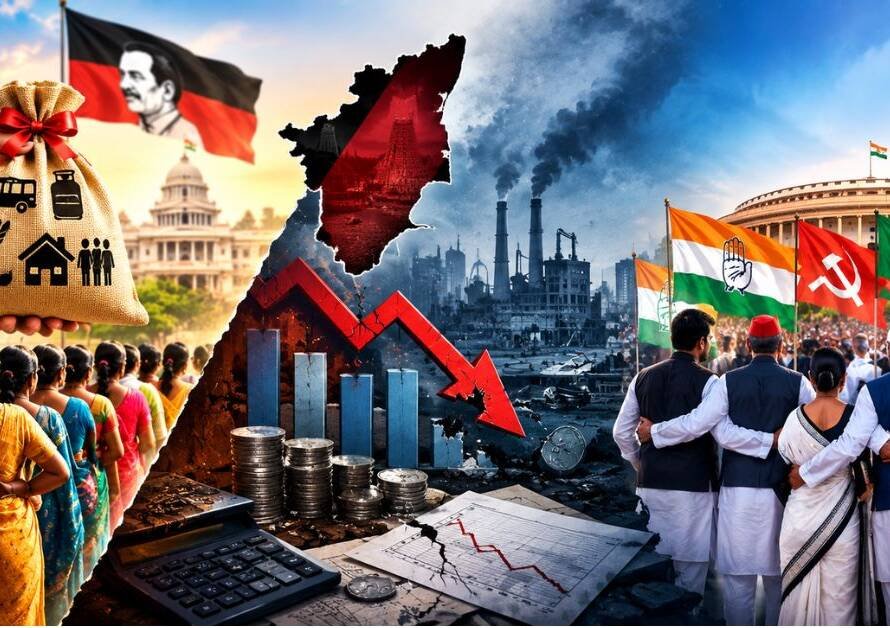
- In the current global landscape, war, economic sanctions, and shifting strategic priorities have disrupted the old diplomatic order.
- Amid this global churn, India stands firm on its principles of ‘Strategic Autonomy’ and ‘Nation First’, without becoming a follower of any power bloc.
- This analysis presents a detailed and in-depth study of India’s energy security, its unique role in BRICS, the hollow nature of China’s defense and diplomatic models, and the civilizational difference (DNA) between India and China.
- India’s rise is not a threat to any nation, but a sovereign model for global balance and peace.
India’s Civilizational Thought: A New Direction for Global Leadership
1. Energy Security and Independent Diplomacy: ‘National Interest’ Above All
India’s continued oil imports from Russia, despite heavy diplomatic pressure and harsh economic sanctions from the West, sends a clear message that India’s Ministry of External Affairs and leadership are accountable solely to its own people.
- Economic Realism and Inflation Control:
- India is a rapidly growing developing economy with a population of over 1.4 billion. The nation’s energy needs directly impact domestic markets, transportation, and manufacturing sectors.
- As long as India receives crude oil at competitive rates from Russia, it will continue to purchase it to ensure its energy security.
- Affordable crude oil keeps domestic inflation in check, limits the Current Account Deficit, and safeguards foreign exchange reserves.
- Western Objections and the Reality of MAGA Politics:
- Objections raised by the US and European nations are often part of their domestic political posturing.
- Policies such as Trump’s ‘America First’ or ‘MAGA’ (Make America Great Again) are primarily aimed at signaling to local, rural voter bases that the world still functions solely on Washington’s directives.
- India has recognized that a significant portion of US statements is meant for domestic consumption. Therefore, rather than reacting impulsively, India manages its long-term interests with strategic maturity.
- Multipolar Relationships Based on Equality:
- The greatest strength of India’s diplomacy is that its relationship with one country is never determined at the cost of another.
- India can maintain deep cooperation with the US in technology, defense, and economic sectors, but this by no means implies that it will sever its historical and strategic ties with Russia.
2. BRICS and Strategic Balance: Creating Alternatives, Not Opposition
India’s presence on the global stage is uniquely balanced. On multilateral forums, India’s approach has always been rooted in ‘multi-alignment’—the modern version of non-alignment.
- India’s Unique Position in BRICS:
- Within BRICS (Brazil, Russia, India, China, South Africa, and new members), India is the only country that is not part of an anti-US or anti-Western agenda.
- While China and Russia seek to use this forum to build an anti-Western pole, India views it strictly as a platform for global balance and economic cooperation.
- Strategic Safety Valve Against Economic Pressure:
- India’s primary objective in remaining in BRICS is to maintain an alternative global framework to counter monopolistic policies and potential economic pressure from Western nations.
- Should Western nations attempt to weaponize systems like SWIFT or the US Dollar against India in the future, an alternative financial and trade route remains accessible through BRICS.
- Russia’s Shrinking Footprint in the Mediterranean and New Dynamics:
- Due to global circumstances, Russia finds itself on the defensive. Losing its grip on Syria, the crisis in Iran, and being restricted to Crimea indicate that Russia’s traditional influence in the Mediterranean and the Middle East is fading.
- Completely isolating Russia in this situation would push it entirely into China’s orbit. India standing by Russia prevents it from becoming a ‘satellite state’ of China, thereby preserving the global equilibrium.
3. China’s ‘Paper Tiger’ Model and the Primacy of Security
This global turmoil has exposed China’s strategic doctrine, its defense technology, and its so-called ‘three-tiered security’ model.
- The Collapse of ‘Three-Tiered Energy Security’:
- China bet on three key nations to secure its uninterrupted energy supply—Iran, Venezuela, and Russia.
- In Venezuela, the US asserted a strong presence precisely when a Venezuelan delegation was visiting China, leaving Beijing a silent spectator.
- Today, Iran is fighting an existential battle, and China has failed to provide it with any concrete military or strategic protection.
- Russia is already bogged down by Western sanctions and war. Consequently, China’s energy security framework has crumbled.
- China’s “Parade Military Model”:
- The People’s Liberation Army (PLA) has virtually zero real combat experience, having fought no major war since the Sino-Vietnamese War.
- China displays its advanced weapons, fighter jets, and missiles primarily during Communist Party events and grand military parades.
- Whenever a regional crisis erupts—be it in Venezuela, the Middle East, or the Russia-Ukraine conflict—China retreats into silence. Its appointments and weaponry seem designed merely for ‘marching past’ and exerting psychological pressure.
- The Reality of Weapons and India’s Defense Leadership:
- Air defense systems sold by China to various nations have proven ineffective in real combat scenarios, leaving buyer nations feeling deceived.
- In contrast, Israel’s ‘Iron Dome’ and India’s ‘Multilayered Air Defense System’ have proven to be the most precise and reliable in real battlegrounds.
- Demand for the ‘BrahMos’ supersonic cruise missile, manufactured in India through a joint venture with Russia, is rapidly growing in the global market. This conflict has proven that economic or infrastructural investments without a robust defense setup are unsustainable.
4. Civilizational Differences: ‘Global Bully’ vs. ‘Global Brother’
Although India shares no direct competition with the United States at present, a historic opportunity is emerging for India to surpass China on the global stage. The fundamental difference between the rise of India and China lies in their civilizational ‘DNA’.
- China’s ‘Middle Kingdom’ Complex and Expansionist Model:
- China’s rise is driven by an arrogant, historical mindset that considers China the center of the world with an absolute right to rule the planet.
- Expansionism is embedded in China’s core identity. It continuously attempts to encroach upon the land of Bhutan—a small, peaceful, and strategically vulnerable neighbor. Its strategists view territorial expansion as the primary benchmark of success.
- India’s ‘Vasudhaiva Kutumbakam’ and Coexistence Model:
- Indian society and philosophy are anchored in the principle of ‘Live and Let Live’. Indian thought has never held the ambition to subjugate other nations.
- India does not aspire to be a global bully or an authoritative boss; it seeks to be a trusted partner and brother standing equally alongside every nation in times of joy and hardship.
- An Example of Cultural Morality: If an Indian government were to forcefully attempt to occupy a peaceful neighbor like Bhutan or Nepal today, Indian society and its citizens would take to the streets in protest. Our culture explicitly teaches: What is not ours, we do not want. But what is ours, we will reclaim today, tomorrow, or the day after.
5. Cultural Continuity and Self-Confidence: Beware of Alarmists
Today, various propaganda websites, social media handles, and hostile narratives attempt to spread a false story that India’s future is bleak and that we are a nation in crisis. The answer to such disinformation lies in our cultural continuity.
- A 5,000-Year Unbroken Journey:
- If India were destined to vanish, it would have been erased during a thousand years of brutal foreign occupation, countless invasions, and cultural destruction.
- Ancient contemporary civilizations—Egypt, Mesopotamia, Greece, and Rome—faded into history, losing their core identities.
- In contrast, India stands firm today on the exact same foundation it occupied five thousand years ago. Our core beliefs remain unchanged, our traditions endure, and we face no ‘identity crisis’.
- Internal Reform and the Path Ahead:
- India is a dynamic, living civilization. As flaws, shortcomings, or distortions have crept into society over time, we continuously self-reflect and reform.
- Carrying forward what is timeless, noble, and humane, we step into modernity.
- Society must remain vigilant against elements spreading unnecessary despair and distrust. They may wear different political or social masks, but they can never be true friends of India.
- This turning point in global politics presents a ‘Historical Window’ for India. China’s strategic contraction, the exposure of its defense systems, and Russia’s growing trust in India prove that India has emerged as Asia’s most balanced, strong, and dependable power.
- India’s future rests not on fear or uncertainty, but on the solid foundation of its sovereignty, security, and moral values.
- India’s rise is not a threat to any nation, but the dawn of a new era of peace, prosperity, and balance for all of humanity.
🇮🇳 Jai Bharat, Vandematram 🇮🇳
Read our previous blogs 👉 Click here
Join us on Arattai 👉 Click here
👉Join Our Channels👈