Summary
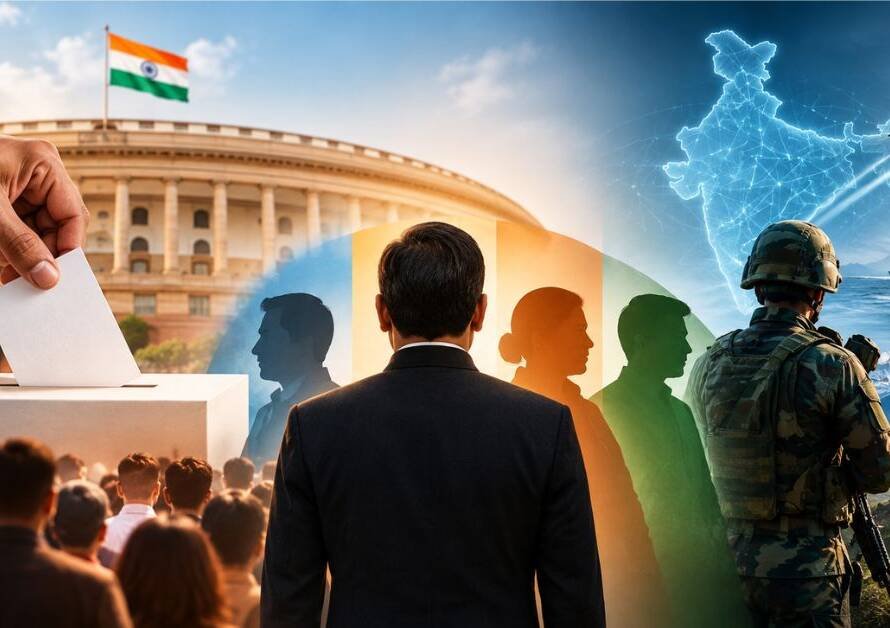
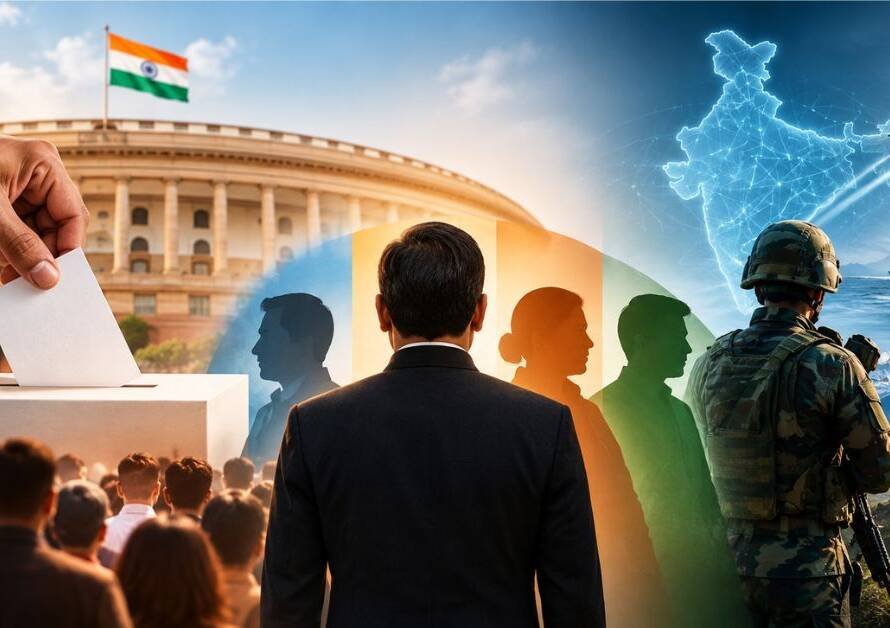
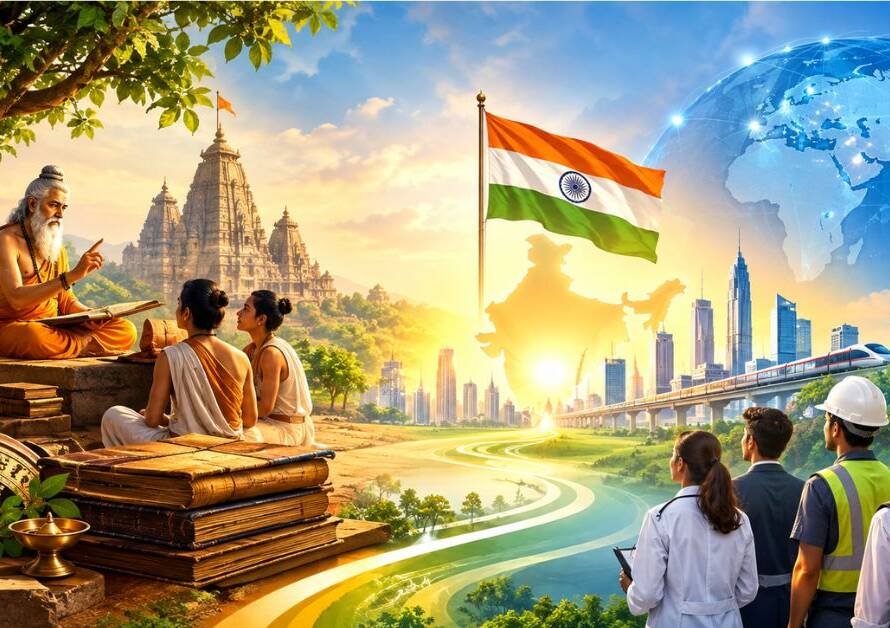
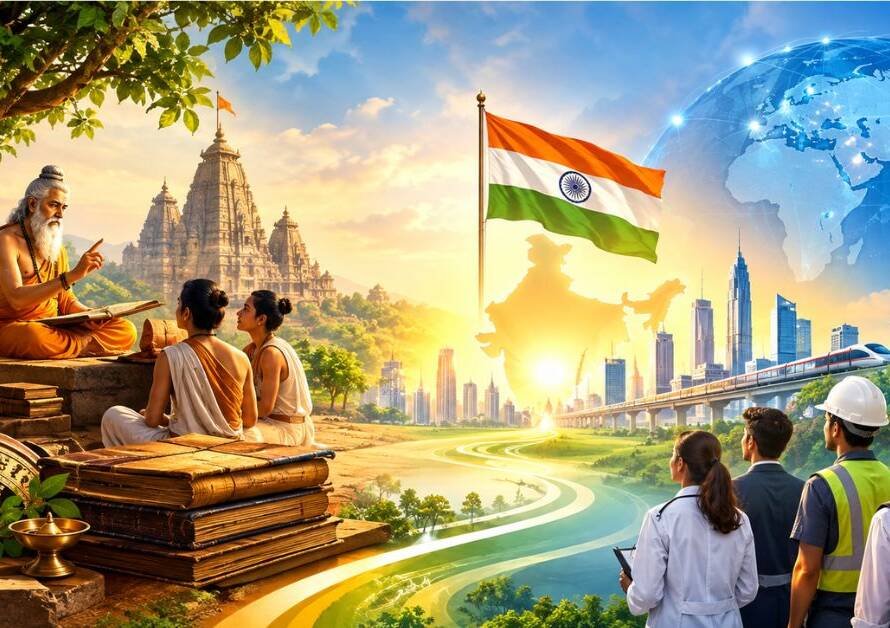
- This analysis documents the epochal transformation within 21st-century India—a shift that has propelled the nation out of an old era of mere survival onto the path of a global superpower.
- Standing in stark contrast to the strategic inertia, defensive hesitation, and appeasement politics of the first seven decades post-independence, this article presents a comparative evaluation of the past 12 years of bold decisions, robust infrastructural development, strengthening of internal security, and the resurgence of Sanatan pride.
- Armed with rule-based digital governance, Antyodaya (upliftment of the last person), and the core mantra of ‘Vikas bhi, Virasat bhi’ (Development as well as Heritage), India is leading its own civilizational renaissance.
Global Acceptance, and Neo-Cultural Renaissance
1. A New Paradigm of Strategic Resolve: From Defensive Hesitation to Active Resistance
Over the past 12 years, India’s foreign policy and national security architecture have completely shed their historical inhibitions. For decades, India was viewed as a nation that merely registered paper protests against external provocations and cross-border proxy wars. Today, that era has permanently ended.
- Bold Rewriting of Global Equations: On the global stage, India no longer sits as a petitioner or a subordinate ally, but as an equal and powerful strategic partner. Whether dealing with a superpower like the United States or European nations, global policies are no longer framed without considering India’s stance. India has completely contained the aggressive expansionist policies of regional adversaries through firm, asymmetric diplomatic and economic countermeasures.
- The Doctrine of Active Counteraction: India no longer waits for terrorist attacks; instead, it demonstrates the strategic courage to enter enemy territory and destroy terrorist infrastructure at its source. The successful execution of several surgical and air strikes has sent a clear warning to adversaries that India’s territorial integrity is non-negotiable.
- Economic Isolation of Adversarial Nations: By astutely utilizing global financial structures and multilateral international forums, India has globally isolated neighbors that use terrorism as state policy. Countries that once leveraged their geopolitical location to extract international aid now stand on the brink of complete economic bankruptcy.
2. Strengthening Internal Security and the Rooting Out of Anti-National Networks
No nation can claim to be a global superpower as long as its internal security is being undermined by proxy-ideological networks. Over the past twelve years, deep-rooted security threats within the country have been dismantled in a planned, data-driven manner.
- The End of Left-Wing Extremism: The threat of Naxalism, which affected a large socio-economic corridor in Central India, has been structurally neutralized. The alignment of aggressive law enforcement, precise intelligence operations, and infrastructure development in remote areas has broken the back of extremist networks.
- Financial Demolition of the Terror Ecosystem: Instead of merely reacting to terrorist incidents, security agencies have focused on completely dismantling the financial, logistical, and ideological networks that nurture them. Through stringent legislative reforms and digital financial tracking, terror-funding pathways have been permanently blocked.
- Termination of Divisive Designs: Ideological campaigns run with the objective of fracturing the country’s sovereign unity—such as the extremist doctrines of ‘Ghazwa-e-Hind’—have been thoroughly crushed. Any attempt to compromise India’s territorial or cultural integrity is being dealt with by the full force of constitutional law.
3. Civilizational Renaissance: Unprecedented Cohesion of ‘Development as well as Heritage’
The greatest distinction of the current leadership is that it has woven modern economic progress with India’s ancient Sanatan culture in such a way that both have become complementary to each other.
- Complete Constitutional Integration of Kashmir: The long-standing constitutional anomaly of Article 370, which kept Jammu and Kashmir administratively isolated, was decisively terminated. This step completely integrated the region into the mainstream constitutional and economic framework, ending the culture of stone-pelting while paving the way for digital governance.
- Cultural Nationalism and the Revival of Heritage: The cultural pride that was suppressed during centuries of subjugation and the post-independence era of pseudo-secularism has found a new identity today. The construction of the grand Shri Ram Janmabhoomi Temple in Ayodhya, the transformation of the Kashi Vishwanath Corridor, and the magnificent restoration of the Kedarnath-Badrinath Dhams are not merely religious events; they represent the restoration of India’s lost self-respect.
- Global Impact of Sanatan: Today, Yoga, Ayurveda, and the Sanatan way of life are being acclaimed on scientific touchstones across the world. The United Nations’ recognition of June 21 as International Yoga Day testifies that Sanatan Dharma is showing the path of peace and balance to the entire world in the spirit of ‘Vasudhaiva Kutumbakam’ (The World is One Family).
4. The Defeat of Domestic Negativity and Geopolitical Maturity
The past twelve years in the history of Indian politics have witnessed a distinct political experiment where the opposition’s strategy shifted entirely from constructive policy alternatives to personal attacks.
- Political Transformation of Abuse: When personal attacks are launched on a leader of high stature that do not align with the ground realities experienced by the public, those attacks backfire. The derogatory manner in which the term ‘Chaiwala’ (tea-seller) was hurled was turned around by Modi in an instant, connecting it to the self-respect of crores of underprivileged and working-class people. Similarly, the public rejected the slogan ‘Chowkidar Chor Hai’ and adopted the ‘Main Bhi Chowkidar’ campaign.
- Global Leadership and Ratings: In the global surveys of the international rating agency Morning Consult, Narendra Modi consistently ranks at the top of the list of the world’s most popular democratic leaders. At a time when heads of state of other powerful nations are facing severe domestic discontent, an Indian leader maintaining the top spot consistently highlights global strategic acceptance.
- Strategic Autonomy: Protecting its national interests (such as importing affordable oil) amidst the Russia-Ukraine conflict while simultaneously strengthening its ties with Western nations highlights India’s diplomatic maturity. From its successful G-20 presidency to ‘Vaccine मैत्री‘ (Vaccine Friendship), India has proven itself as the vocal voice of the Global South, presenting practical solutions to global problems.
5. Ruling the Hearts of Indians: Public Welfare, Antyodaya, and Infrastructure
This mass connect is not the result of electoral manipulation, but of direct dialogue and service. Through Digital India and Direct Benefit Transfer (DBT), the culture of middlemen has been permanently eliminated from the governance system. Welfare funds reach the beneficiary’s bank account directly without any leakage.
- Jal Jeevan Mission: Ensured the supply of pure tap drinking water to crores of rural households.
- Ujjwala Yojana: Provided LPG cylinders to crores of women, liberating them from the traditional smoke of firewood and coal.
- Ayushman Bharat: Provided health security by guaranteeing free medical treatment up to ₹5 lakh to the poorest citizens.
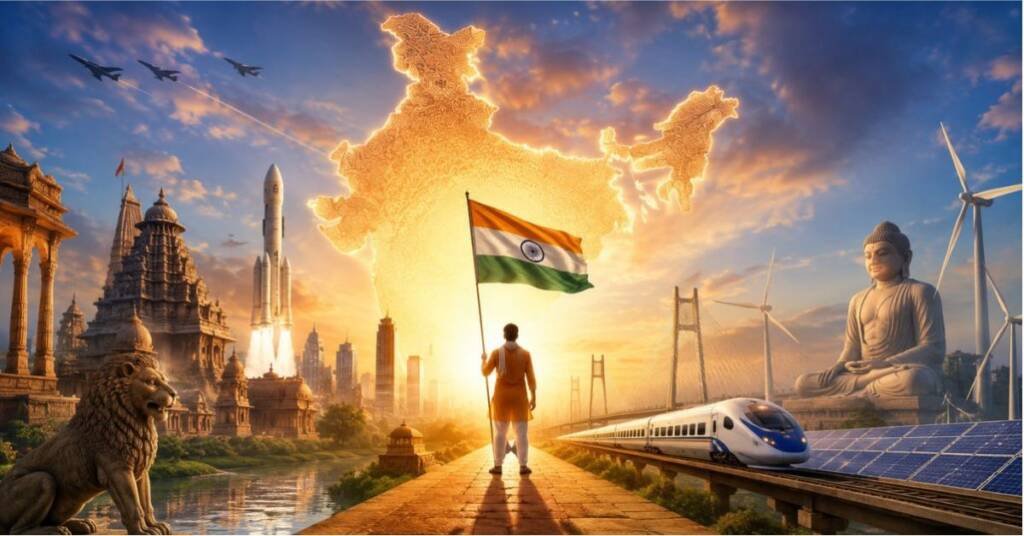
- Amalgamation of Modernity and Tradition: On one hand, India is stepping into the future with the Semiconductor Mission, 5G-6G technologies, and space expeditions like Gaganyaan; on the other hand, it places the knowledge tradition of the Vedas and Upanishads at the core of its policymaking.
6. Seven Decades of Stagnation vs. The Decisive Mandate of Awakened Voters
- For over seventy years, systems driven by appeasement and personal patronage failed to deliver even twenty percent of the security, infrastructure, and cultural milestones achieved in the last twelve years.
- Decades were squandered merely on crisis management rather than permanently solving problems.
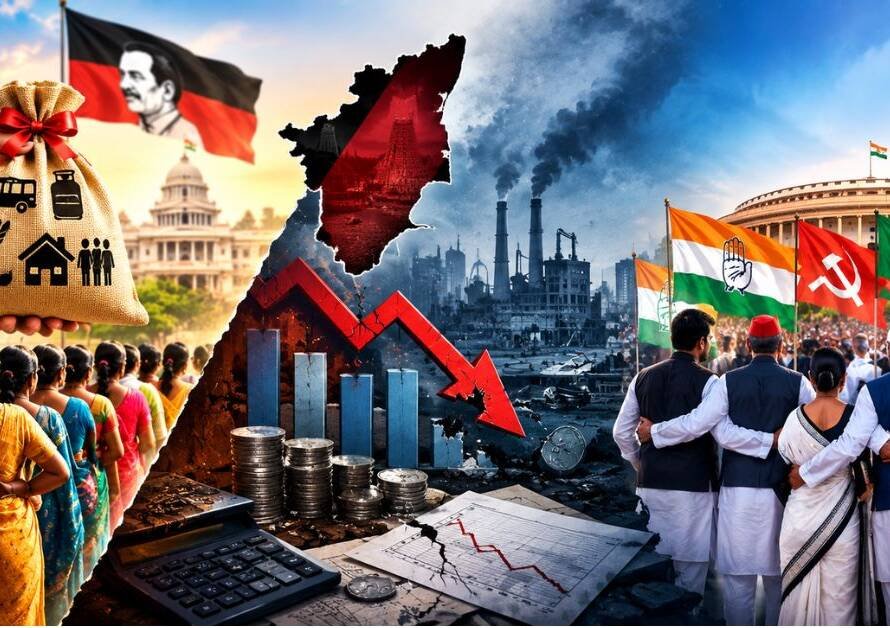
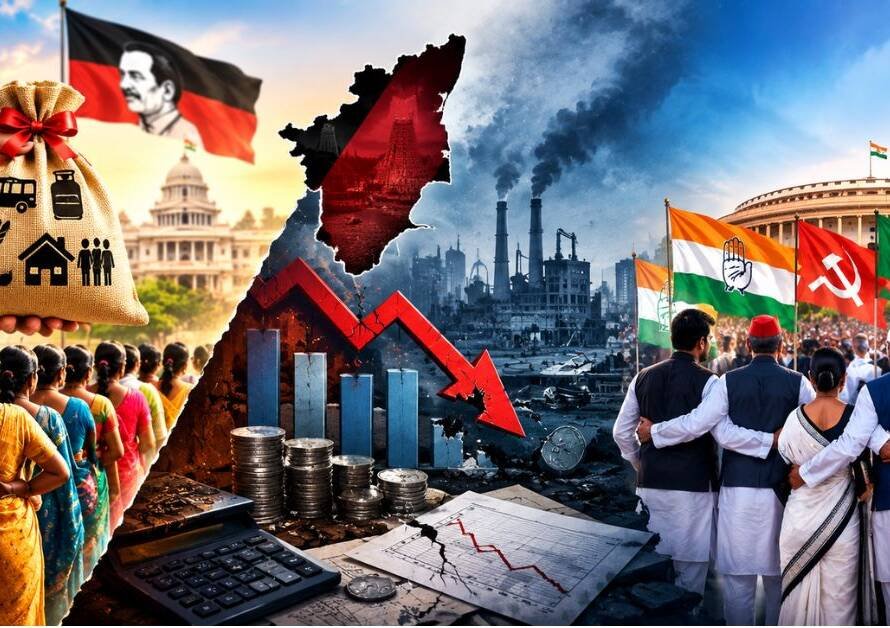
- In their obsessive quest to undermine the nationalist leadership, the BJP, and the RSS, the opposition has become completely disconnected from the core aspirations of common citizens. The political traps they dug to ensnare nationalist forces have now swallowed them instead, rendering them irrelevant.
- From the crucial assembly elections in Haryana to state-level mandates in Delhi and Bihar, voters have systematically rejected old narratives of caste patronage and divisive politics.
The Highway of Unobstructed Progress
- The message emerging from every corner of India is absolutely clear: the nation has moved forward.
- The people have transitioned out of an era of mere survival and strategic anxieties into an era of global ambition and civilizational pride.
- This New India will neither stop nor bow; it is marching toward the global summit with its strategic resolve and cultural pride.
🇮🇳 Jai Bharat, Vandematram 🇮🇳
Read our previous blogs 👉 Click here
Join us on Arattai 👉 Click here
👉Join Our Channels👈