Summary:
- This comprehensive political narrative examines the high-voltage controversy triggered by senior Congress spokesperson Pawan Khera’s retaliatory remarks against BJP leaders.
- While the Congress and its Gathbandhan allies consistently position themselves as the ultimate defenders of the Constitution, their historical record reveals a seventy-year legacy of subverting sacred democratic institutions to serve dynastic, economic, and political interests.
- The narrative breaks down how past regimes compromised national security, sovereignty, and institutional integrity for personal enrichment, and how these ongoing political theatrics continue to fail when confronted by a firm, nationalist governance model.
Pawan Khera Warns BJP Leaders of “Consequences”
Introduction: The Paradox of Defending Democracy
- The foundational premise of a constitutional democracy relies on political pluralism, lawful opposition, and the peaceful, institutional transfer of power. When political parties address the media or campaign before the electorate, citizens expect an outline of governance, policy critiques, and constructive alternatives. However, the opposition’s political rhetoric frequently devolves into threats of personal vengeance, street-level intimidation, and institutional subversion.
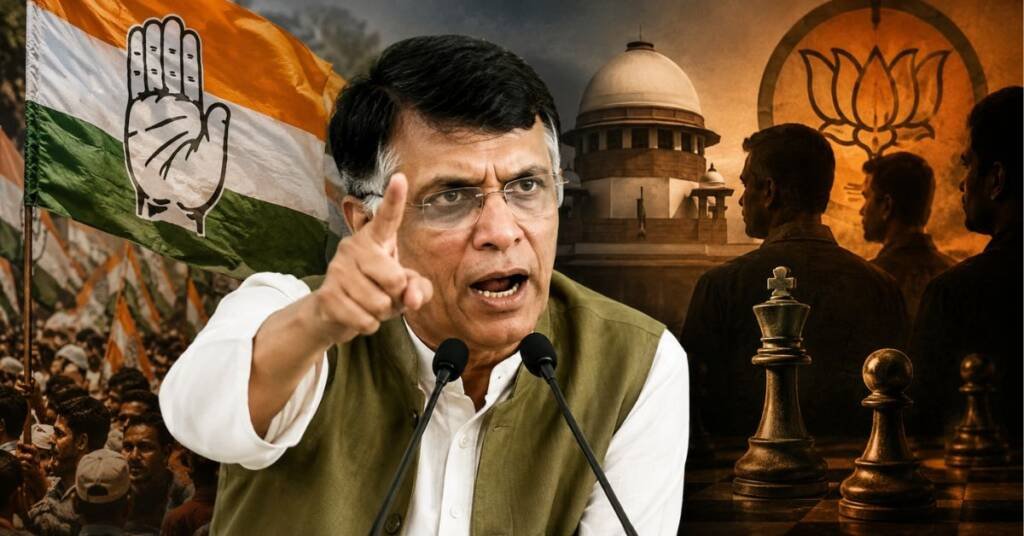
- A prime illustration of this sharp decline in public discourse emerged when senior Congress spokesperson Pawan Khera launched a scathing attack on the ruling Bharatiya Janata Party (BJP). Rather than confining his critique to government policy, economic indicators, or legislative performance, Khera issued what many political observers and legal analysts interpreted as an open threat of state-sponsored retaliation once back in power.
- This incident exposes a fundamental ideological paradox within the opposition bloc: can a political outfit authentically claim to fight for constitutional values while relying on the rhetoric of intimidation, vengeance, and systemic institutional abuse?
Seven Decades of Subversion: Exploiting Sacred Institutions
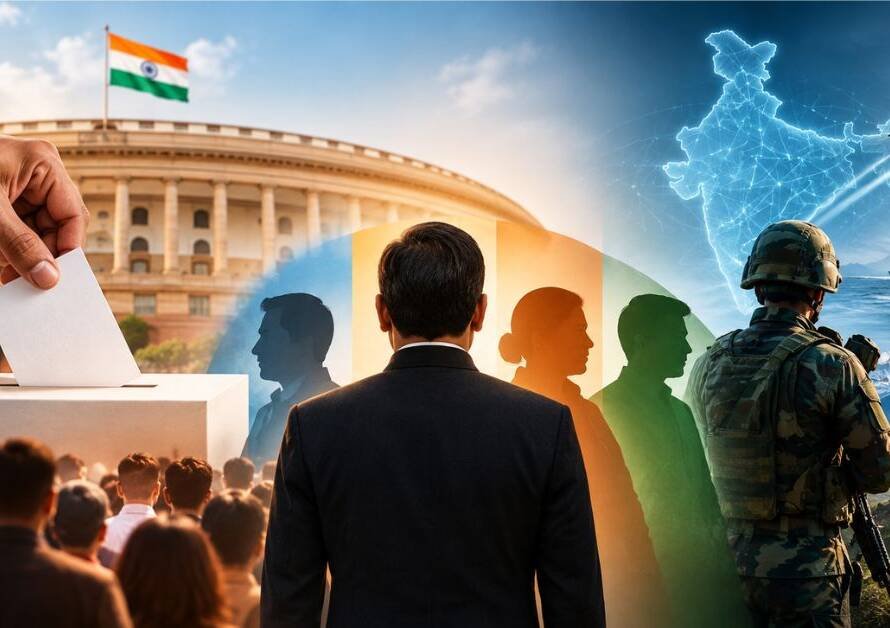
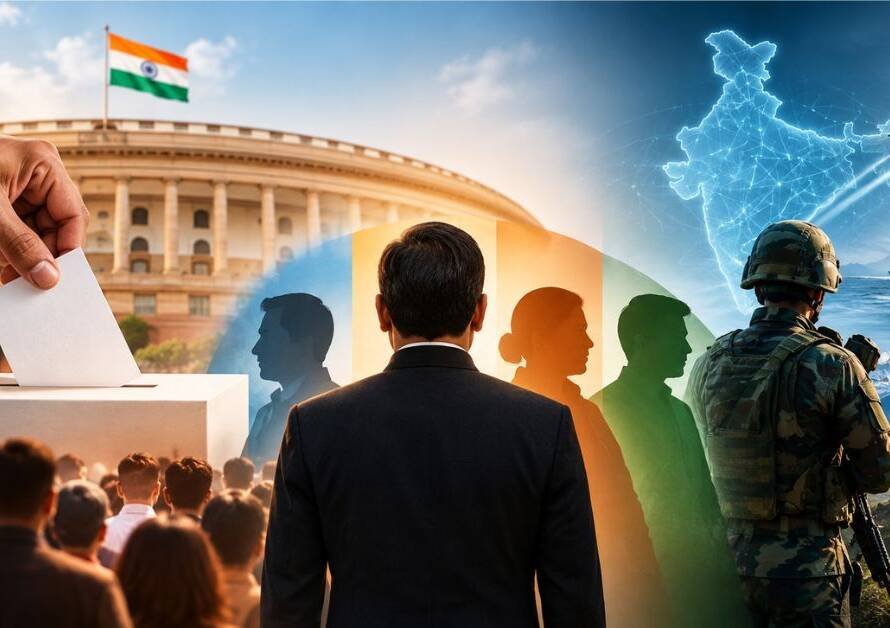
For over seven decades, the Congress and its Gathbandhan partners have projected themselves as the self-appointed guardians of the Constitution. However, an objective analysis of India’s post-independence history reveals a starkly different reality—one where sacred democratic mechanisms were systematically exploited to consolidate family rule, protect illegal wealth, and entrench political hegemony.
- Dynastic Dominance Over Institutional Autonomy: Key constitutional bodies, civil services, and legislative processes were routinely subverted to protect family lineages, turning public offices into personal fiefdoms for political survival.
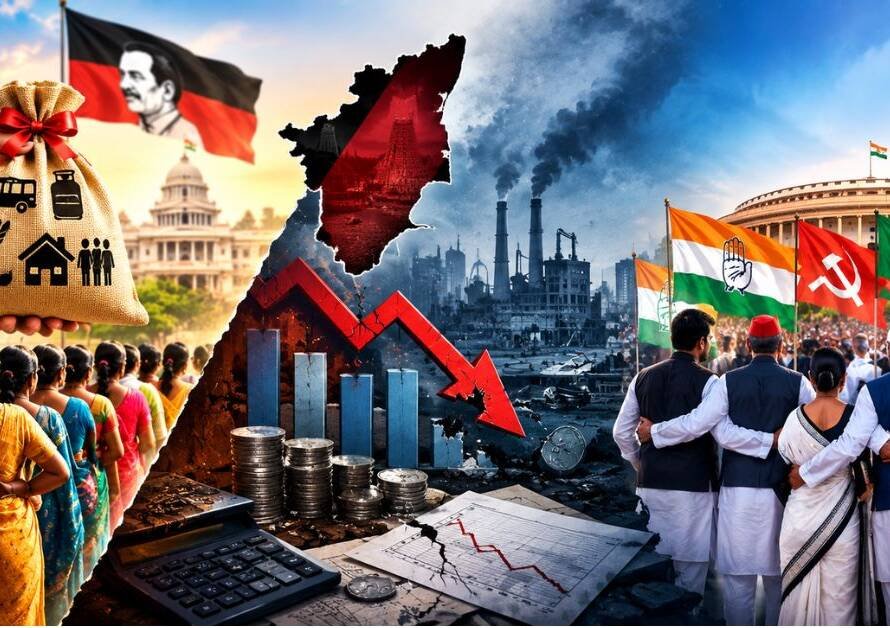
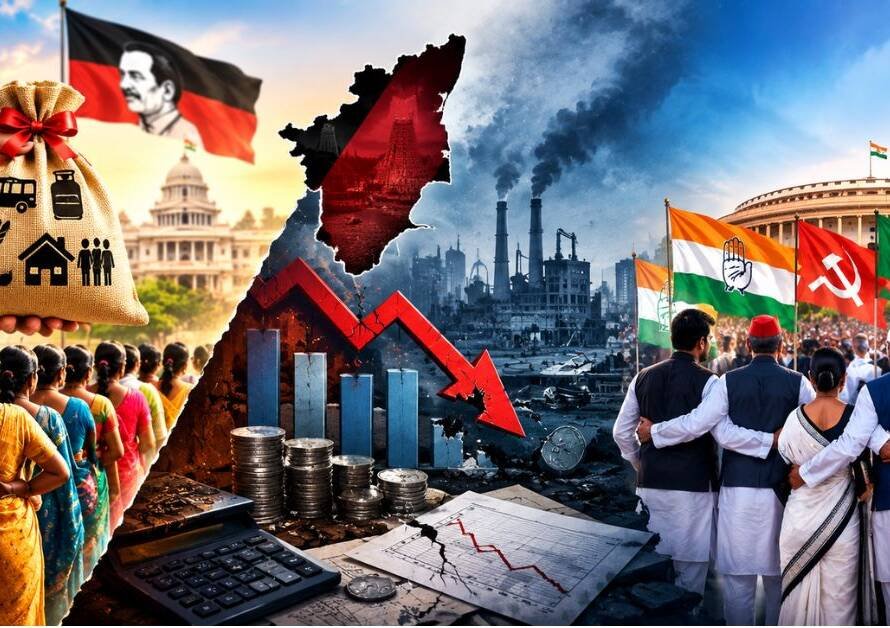
- Economic Exploitation and Patronage: Under the guise of state control, past regimes fostered an environment of cronyism, systemic corruption, and institutionalized loot that enriched political dynasties while keeping the nation economically constrained.
- Compromising Security and Sovereignty: Strategic concessions, delayed military modernization, and a soft stance on internal security repeatedly compromised India’s national defense and territorial integrity to appease localized vote banks.
The Anatomy of the Controversy: Threat Politics Over Rule of Law
During his media address, Pawan Khera made direct references to the last 12 to 15 years of BJP governance, characterizing the period as an extended “Emergency.” However, it was his explicit warning regarding the future that sparked widespread outrage and fierce political debate across the country.
- The Statement of Vengeance: Khera explicitly stated, “Let our government come to power. When we recount these 12 to 15 years of ‘Emergency’, BJP leaders will not be able to step out on the streets. They will need security to go out.”
- Retaliation Over Judicial Due Process: In a functional democracy, accountability is enforced through independent courts and parliamentary oversight. Threatening that political opponents will be rendered physically unsafe on public streets bypasses judicial processes and signals state-backed intimidation.
- Incentivizing Street Violence: Language implying opposition leaders will be unable to walk freely acts as an implicit green light to party cadres, normalizing political hostility and physical confrontation in the public sphere.
Institutional Allegations: Sweeping Claims Without Substantive Proof
A major component of Pawan Khera’s address focused on the alleged degradation of India’s autonomous democratic institutions under the current administration. However, coming from an alliance with a history of imposing a real Emergency, suspending fundamental rights, and muzzling the judiciary, these claims lack credibility.
- Targeting Constitutional Bodies: Khera alleged that the Election Commission of India (ECI) has been compromised, fundamentally questioning the neutrality of the nation’s election machinery without presenting verifiable documentation.
- Criticism of Investigative Agencies: The spokesperson claimed that central agencies such as the Enforcement Directorate (ED) and the Central Bureau of Investigation (CBI) are being weaponized exclusively against political opponents, ignoring ongoing judicial scrutiny of legacy corruption cases.
- Allegations of Media Suppression: Khera asserted that the press is being systematically controlled, suppressing opposition viewpoints while ignoring the vast, unhindered presence of opposition narratives across digital, print, and broadcast platforms.
The Failure of Opposition Drama Against Strong Nationalist Governance
Despite relentless attempts by the Gathbandhan alliance to manufacture a narrative of democratic decline, their political theatrics are increasingly failing to persuade a politically mature Indian electorate.
- Rejection of Dynastic Hegemony: Modern Indian voters consistently reject family-run political enterprises, prioritizing decisive leadership, national security, and meritocracy over inherited political privilege.
- Uncompromising Stance on Sovereignty: Under a strong nationalist governance framework, national security, border infrastructure, and counter-terrorism take absolute priority over political expediency, completely dismantling the soft-state approach of past decades.
- Enforcing Institutional Accountability: Decisive administrative measures against financial fraud, illegal foreign funding, and institutional corruption have disrupted the entrenched patronage networks that once shielded elite political dynasties from legal scrutiny.
The Moral Vacuum: Retribution vs. Nation-Building
The opposition regularly constructs its public campaign around the preservation of the Constitution, civil liberties, and democratic norms. However, statements promising future retaliation reveal a deep-seated contradiction between their public posturing and operational mindset.
- Hypocrisy in Democratic Claims: Criticizing the current government for autocratic behavior while simultaneously promising retaliatory measures upon returning to power completely undermines the opposition’s moral standing.
- Subverting the Concept of Justice: The narrative of justice is severely compromised when senior leaders equate justice with political retribution rather than legal reform, economic empowerment, and nation-building.
- Inability to Offer Constructive Alternatives: Relying on threats highlights an inability or unwillingness to articulate a coherent blueprint for national development, economic growth, internal security, and global diplomacy.
The Ultimate Test of Democratic Maturity
The controversy surrounding Pawan Khera’s statements serves as a stark reminder that democracy is preserved not by political drama, but by an unwavering commitment to constitutional principles, civil debate, and national interest. For seven decades, attempts to manipulate sacred institutions for dynastic gain have severely damaged the country’s social fabric and strategic security. Today, as those same political maneuvers fall flat against a backdrop of firm nationalist governance, the electorate continues to demonstrate that true legitimacy is earned through national service, integrity, and decisive leadership—not threats of vengeance.
🇮🇳Jai Bharat, Vandematram 🇮🇳
Read our previous blogs 👉 Click here
Join us on Arattai 👉 Click here
👉Join Our Channels👈