Summary
- This narrative provides a detailed analysis of international digital conspiracies aimed at undermining India’s sovereignty, the unethical practices of foreign tech conglomerates, algorithm-driven digital subversion, and the Indian government’s firm legal response against anti-national networks operating on foreign funding.
- It highlights Meta sacrificing corporate ethics to support financial and political agendas, the official apology delivered by Joel Kaplan following parliamentary pressure, targeted attempts to influence India’s Gen-Z youth via Instagram, ISI-operated modules operating across borders, and the strategy to break the back of anti-national networks by strictly enforcing FCRA rules without exception.
India’s Firm Crackdown on Foreign Toolkits
1. Corporate Unethics and the Double Standards of the US and Meta
Numerous multinational tech companies operate globally with a willingness to sacrifice ethics, neutrality, and human values for financial gain and political agendas. The United States and its tech giants are no exception.
- Trading Ethics for Profit: Western tech conglomerates often project a facade of human rights and freedom of expression while behind the scenes supporting unethical activities to advance their financial and geopolitical interests.
- Meta’s Suspicious Conduct: Meta’s actions serve as a stark example of how global tech firms tacitly support elements that attempt to weaken a sovereign nation’s internal stability and democratic frameworks.
- Censorship of the Prime Minister’s Live Address: When anti-social elements attempted to fuel unrest surrounding the NEET exam paper leak, Prime Minister Narendra Modi accepted the resignation of Education Minister Dharmendra Pradhan and addressed India’s Gen-Z via an Instagram Live broadcast to stabilize the situation.
- Suppression by the Platform: In an attempt to suppress the message, Meta acted in tandem with anti-national elements by removing the Prime Minister’s live address from the platform and curbing its reach.
2. Parliament’s Crackdown: Joel Kaplan’s Surrender in Delhi
India is a self-respecting, sovereign nation of 1.4 billion citizens that will not permit any foreign corporation to interfere with its borders, internal security, or democratic processes.
- Parliamentary Committee Ultimatum: The Parliamentary Standing Committee and the Ministry of Electronics and Information Technology (MeitY) took swift action by summoning Meta CEO Mark Zuckerberg to appear before Parliament to provide an explanation.
- Warning on Safe Harbor Status: The Indian government issued a clear warning that continued non-compliance with Indian laws would lead to the revocation of Meta’s legal protection under Section 79 of the IT Act (“Safe Harbor”).
- Apology Issued in Delhi: Facing potential legal sanctions and a parliamentary summons, Meta’s Chief Global Affairs Officer, Joel Kaplan, traveled to Delhi and formally tendered an official apology before the government and the parliamentary committee.
- A Firm Message: The Indian government delivered an unequivocal message: to operate within India’s market, corporate arrogance must yield to full accountability under the Indian Constitution and local laws.
3. The Reality of Digital Subversion and Anti-India Algorithms
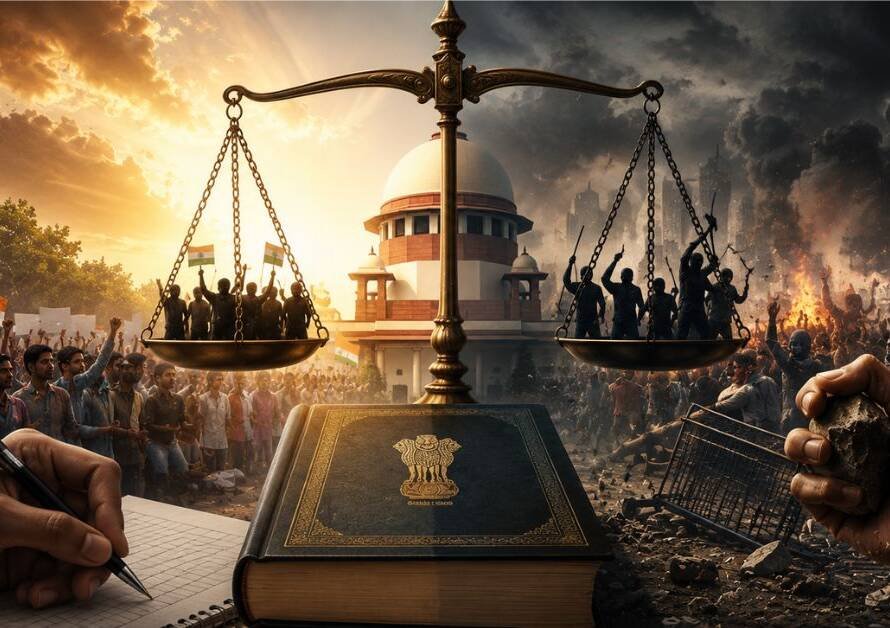
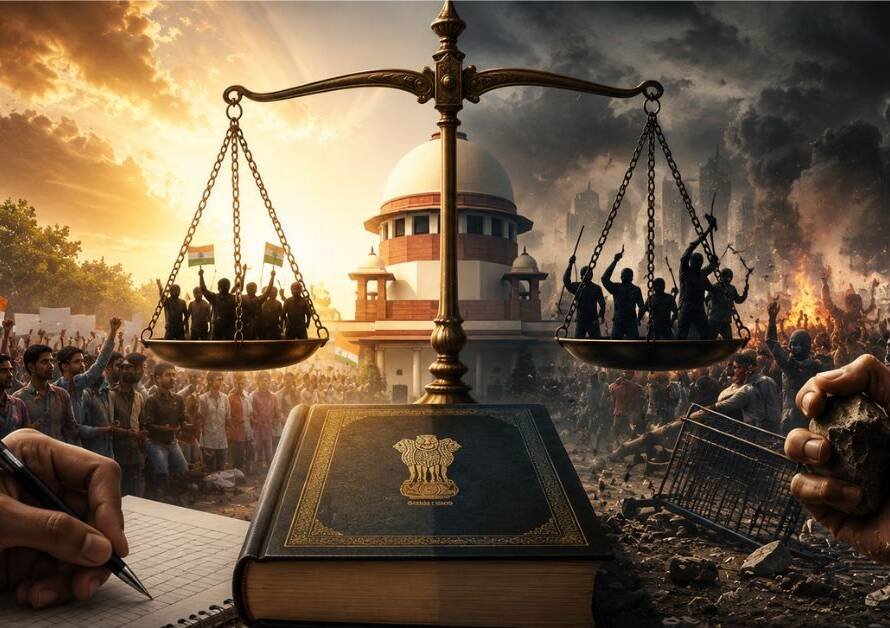
It has become increasingly evident that social media platforms are being leveraged not merely for communication, but as tools of digital subversion aimed at creating internal instability within India.
- Conspiracies Dating Back to May 2014: International funding networks, alongside foreign entities and Meta, have manipulated algorithm configurations to influence digital narratives against India and its government.
- Suppression of Patriotic Content: Biased algorithmic structures were deployed to suppress the reach of patriotic content creators while artificially boosting anti-India narratives and misleading information.
- Monetization of Anti-National Content: Platforms like YouTube and Meta provided monetization payouts to accounts generating high reach through anti-India narratives, allowing hostile influencers to generate substantial revenues.
- Strict Enforcement Without Exceptions: Ensuring national security mandates making digital and legal rules more stringent. These rules must be applied strictly across every tech platform and digital creator without exception.
4. Targeted Manipulations Directed at Gen-Z on Instagram
India’s youth population aged 15 to 30 represents the nation’s core strength and future. Consequently, foreign actors seeking to drive specific agendas singled out this demographic.
- Targeting the 15–30 Demographic: Because India’s Gen-Z is highly active on Instagram, the platform was turned into a primary battleground for narrative warfare.
- Attempts at Algorithmic Influence: By manipulating algorithm feeds, hostile elements attempted to introduce anti-national narratives and foster distrust toward constitutional institutions and security forces among young users.
- Investigative Unveilings: Detailed investigative reports by journalists Manish Thakur, Deepak Chaurasia, and Piyush Padmakar prompted government agencies to initiate deep-level reviews into the financial and algorithmic networks of these platforms.
5. Cross-Border Operations: The ISI, Jantar Mantar, and Threats to Security
Disclosures by investigative agencies and senior law enforcement officials revealed that several street protests were sponsored from across the border rather than being organic movements.
- Funding Minors via Digital Wallets: Cross-border handlers utilized digital wallets (such as Paytm) to transfer funds directly to minors participating in protests.
- Reconnaissance and Attacks on Security Forces: These minors were brought to demonstration sites like Jantar Mantar under the guise of protest, where they were tasked with tracking the movements of Indian security forces and launching petrol bomb attacks.
- The “Nepal-Bangladesh-Sri Lanka” Strategy: Attempts were made to replicate patterns seen in regional neighbors, where digital subversion and street unrest were used to destabilize elected governments.
6. Financial Restrictions and Enforcing FCRA Regulations
Legal and financial measures have been executed to dismantle the funding infrastructure supporting foreign-funded NGOs and agitators.
- Rejection of Foreign Instability Models: Attempts to recreate regional crises within India have failed, with public sentiment regionally recognizing the stability offered by strong national leadership.
- Dossiers Prepared on Subversive Networks: A complete accounting of individuals and associated ecosystems involved in disrupting public order and administrative functions has been documented by authorities.
- Strict Enforcement of FCRA Rules: Rules under the Foreign Contribution (Regulation) Act (FCRA) are being enforced strictly to block illicit foreign funding channels operating under the guise of NGOs, preventing foreign capital from interfering with Indian democracy.
7. Monitoring of Digital Channels and Judicial Enforcement
Digital channels operating on foreign agendas or questionable funding models are now subject to strict legal oversight.
- Over 100 Channels Identified: Authorities have identified more than 100 YouTube channels and social media handles involved in spreading anti-national narratives or receiving questionable foreign transactions.
- Action Under the Bharatiya Nyaya Sanhita: Proceedings under the Information Technology Act and relevant sections of the Bharatiya Nyaya Sanhita (BNS) have been initiated against these accounts.
- Judicial Stance on Digital Offenses: Indian courts have maintained a firm stance regarding digital subversion, hate speech, and fake news, disrupting anti-national digital networks.
8. The Strength of 1.5 Billion Global Indians
India’s core strength resides in its 1.4 billion domestic citizens and over 100 million Non-Resident Indians (NRIs) residing worldwide.
- Commitment of the Global Diaspora: The Indian diaspora across North America, Europe, Australia, and the Gulf regions maintains strong cultural and national ties to India, supporting national integrity.
- Sovereignty Over Corporate Agendas: Multinational tech corporations and foreign deep-state actors cannot dictate terms to or compromise the self-respect of 1.5 billion Indians.
- Rule of Law Without Exception: India has established that national security and sovereignty supersede the interests of tech conglomerates. Strict, impartial adherence to laws remains essential to safeguarding the nation’s digital sovereignty.
🇮🇳Jai Bharat, Vandematram 🇮🇳
Join us on Arattai 👉 Click here
👉Join Our Channels👈