Summary
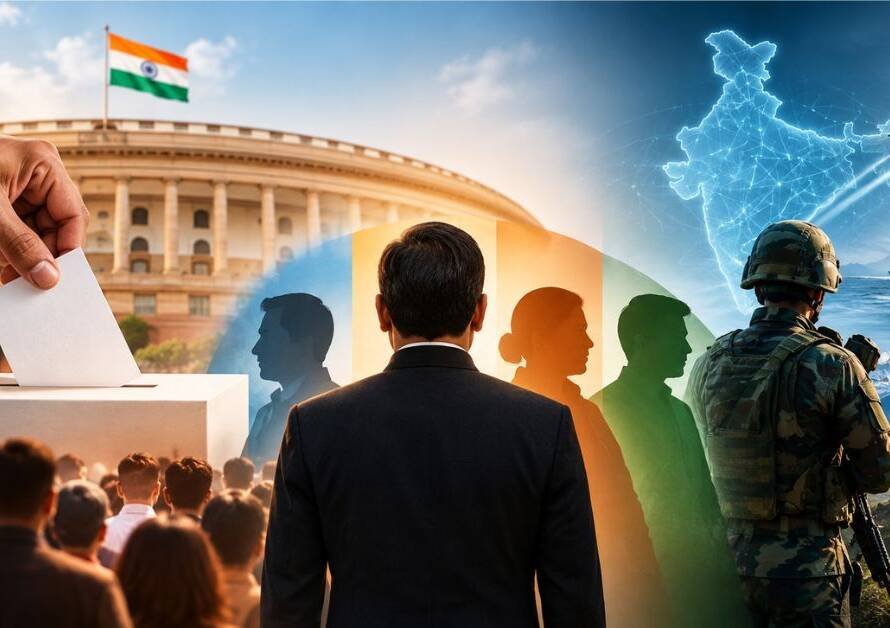
- Rising above political and ideological differences, this detailed discourse presents an in-depth, point-by-point analysis of modern India’s transformation based purely on national interest, administrative resolve, and civilisational renaissance.
- It outlines the transition from ‘policy paralysis’ to the principle of ‘Nation First’.
- The article offers a comprehensive and factual account of decolonising the national mindset, the full integration of Jammu & Kashmir following the abrogation of Article 370, a ‘zero-tolerance’ policy against terrorism, the historic decline of Left-Wing Extremism, the rising self-belief of Indian citizens, and India’s independent, sovereign foreign policy on the global stage.
After Becoming Prime Minister: A New Direction for India’s Development
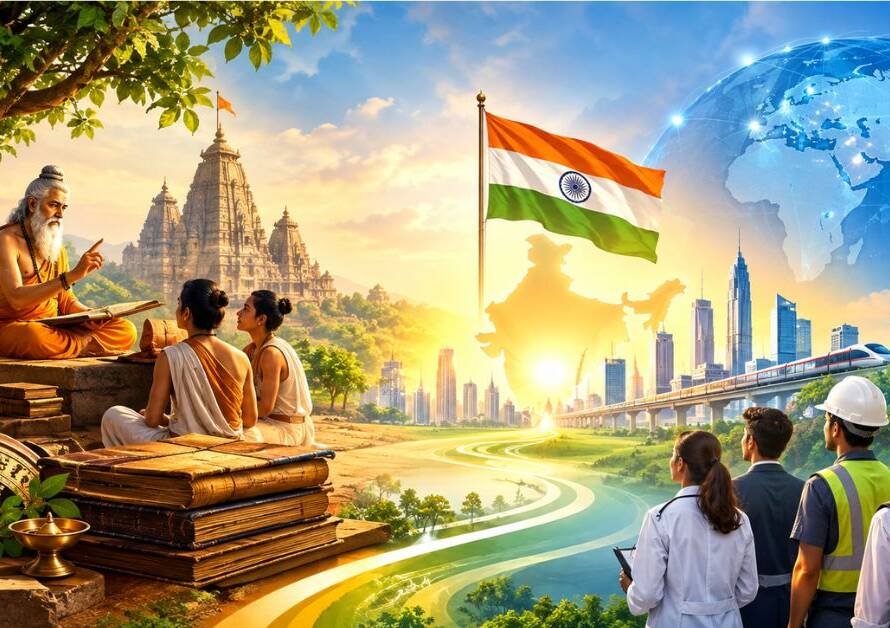
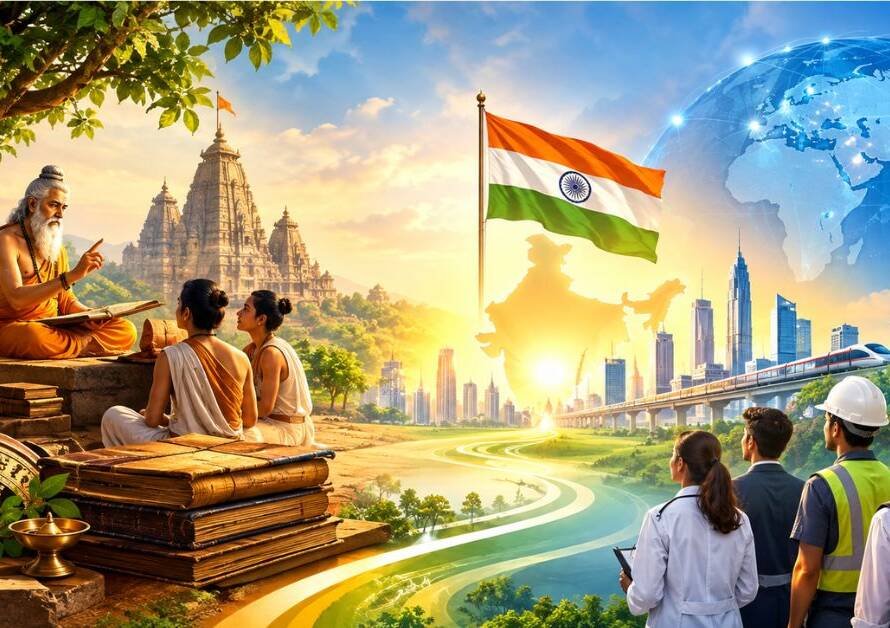
I. The Era of Awakening: Reclaiming a Civilisational Destiny
History bears witness that the resurgence of great civilisations is never accidental. Civilisational rebirth becomes possible when their dormant and limitless collective potential encounters an unwavering catalyst—a force that steadfastly refuses to accept hesitation, policy paralysis, and global indifference as the nation’s natural destiny.
- Liberation from Self-Doubt: For decades, a country rich with thousands of years of heritage, unprecedented intellectual depth, and a vast human capital remained bound by systemic inertia and the frustration of a colonial mindset.
- A Psychological Awakening Beyond Governance: The turning point arrived when national leadership evolved from mere routine administrative management into a profound psychological movement that awakened the collective consciousness of the people.
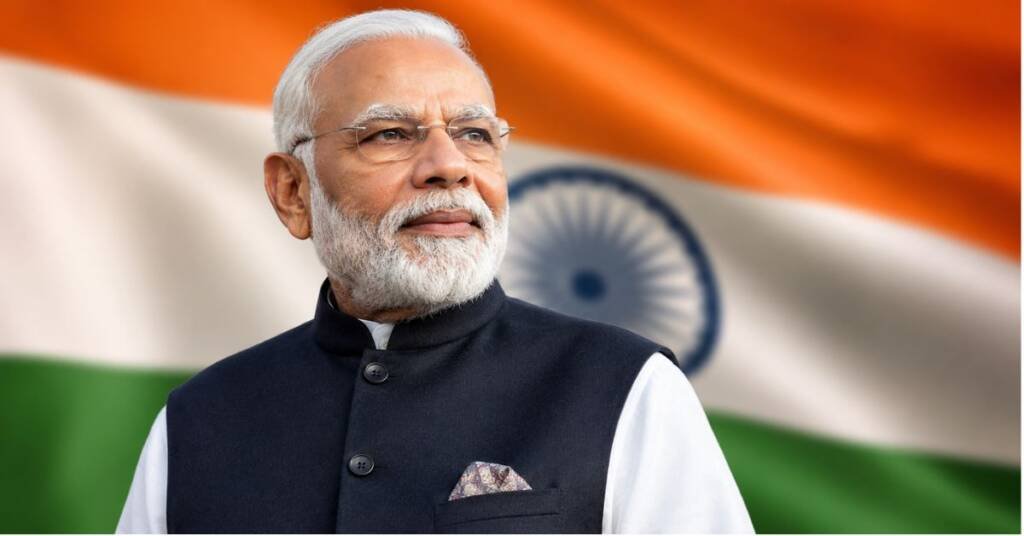
- Civilisational Rebirth: Narendra Damodar Modi represents that decisive moment in modern Indian history that propelled the country away from incremental management toward a leading role on the global stage.
II. Displacement of Old History: Building a New Narrative for India
For a long time after independence, the mental framework and administrative machinery of the country retained a deep imprint of the colonial era. The current leadership has dismantled this established convention, ushering in a new era of indigenous pride and self-respect.
- Ideological Decolonisation (Panch Pran):
- Hundreds of irrelevant, colonial-era statutes and laws were repealed and replaced with modern, transparent, citizen-centric legal systems.
- Colonial symbols and language styles were removed from administrative and state institutions, giving priority to Indian languages and values.
- Symbolic and Cultural Reclamation:
- From Rajpath to Kartavya Path: Renaming the imperial symbol ‘Rajpath’ (King’s Way) to ‘Kartavya Path’ (Path of Duty) signifies that governance is no longer about ruling over citizens, but a commitment to serving the nation.
- Restoration of National Heroes: Installing a grand statue of Netaji Subhas Chandra Bose at India Gate and adopting a new Indian Navy ensign inspired by the royal seal of Chhatrapati Shivaji Maharaj, replacing colonial symbols.
- Reawakening Civilisational Memory:
- Rewriting Indian history to accord rightful space to freedom fighters and heroes who had been relegated to the margins of historical accounts.
- The historic consecration of the Shri Ram Mandir, along with the redevelopment of the Kashi Vishwanath Dham and Ujjain’s Mahakal Lok, proves that India no longer views its existence through a colonial lens, but in the light of its Sanatan heritage.
III. Unyielding Resolve: National Security and Sovereign Determination
The shift in India’s security policy is not merely strategic; it is fundamentally ideological. It has permanently ended ‘defensive hesitation’ and rendered India’s sovereignty unshakeable.
1. Complete Integration of Jammu & Kashmir: A Historic and Civilisational Reform
- End of Constitutional Anomaly: The abrogation of Articles 370 and 35A on August 5, 2019, stands as independent India’s greatest strategic achievement. It ended seven decades of isolation and extended the full jurisdiction of the Constitution of India across the entire state—fulfilling the vision of ‘One Constitution, One Head, One Emblem’ (Ek Vidhan, Ek Pradhan, Ek Nishan).
- Destruction of the Separatist Ecosystem: Strict action by the National Investigation Agency (NIA) and security forces broke the backbone of stone-pelters, hawala networks, and cross-border financiers.
- Socio-Economic Progress: West Pakistani refugees, the Valmiki community, and women received full equal rights for the first time. The successful hosting of G20 meetings along Dal Lake and record-breaking tourism marked the beginning of a new era of peace.
2. ‘Zero-Tolerance’ Against Terrorism: Shift from ‘Defensive’ to ‘Offensive’ Policy
- Cross-Border Surgical and Air Strikes: The surgical strikes following the Uri attack and the Balakot air strike sent a clear global message that India will no longer merely defend within its borders, but will strike terrorists inside their sanctuaries.
- Neutralisation of Urban Sleeper Cells: The modernization of intelligence agencies (IB, RAW) brought an end to the era of recurring terror bombings in major Indian cities.
- Military Modernisation: Security forces were equipped with modern hardware, including Rafale fighter jets, Sig Sauer rifles, indigenous armored vehicles, and advanced drone technology.
3. Overhaul of Internal Security: Historic Shrinking of the Red Corridor
- Strategic Offensive: Security forces were given full authority to move beyond a reactive stance, establishing forward camps deep inside former Maoist strongholds such as Abujhmad in Bastar and Budha Pahad.
- Integrated Security and Development Model: While military operations forced top Maoist leadership to surrender or face elimination, roads, mobile towers, bank branches, and Eklavya Model Residential Schools were simultaneously introduced to remote tribal regions.
IV. Self-Confidence: Instilling Self-Belief and Capability in Every Citizen
True leadership does not stop at building physical infrastructure; it elevates the thinking and self-respect of its citizenry.
- Public Participation and Direct Dialogue: Communication platforms like Mann Ki Baat brought unsung national heroes, cleanliness, environmental conservation, and local art forms into the national spotlight, transforming everyday citizens into active partners in nation-building.
- Digital Public Infrastructure (DPI): Through UPI, Jan Dhan Accounts, and Aadhaar, India established the world’s largest and most transparent financial inclusion model, eliminating middlemen and directly empowering citizens in remote areas.
- Boosting Domestic Manufacturing: Initiatives like ‘Make in India’ and ‘Vocal for Local’ instilled confidence in local entrepreneurs, artisans, and startups that Indian-manufactured goods can match global standards of quality.
V. Firm Determination: Willpower to Turn the Impossible into Possible
Projects that were stalled in official files for decades or dismissed as politically unviable were executed within strict deadlines, setting a new benchmark for administrative efficiency.
- Infrastructure Revolution: Construction of national highways at record speed, operation of modern Vande Bharat trains, dedicated freight corridors, and nationwide air connectivity (UDAN scheme) have provided modern momentum to India’s geography.
- Social Security and Welfare: Revolutionary improvements in living standards were achieved by providing millions of underprivileged families with pucca houses, sanitation facilities (Izzat Ghar), piped water, LPG connections (Ujjwala), and free medical treatment up to 5 lakh rupees (Ayushman Bharat).
- Economic Resilience: Structural reforms like the Goods and Services Tax (GST) and corporate tax rationalisation formalised and streamlined the economy, making India one of the world’s fastest-growing major economies despite global headwinds.
VI. Unshakable Courage: Steadfast Leadership in Every Crisis
A nation’s true test lies in the composure and swift decision-making of its leadership during global or internal crises.
- Global Pandemic Management: During the COVID-19 crisis, India manufactured indigenous vaccines (Covaxin and Covishield) in record time and successfully executed the world’s largest digital vaccination drive (CoWIN).
- Support for 800 Million Citizens: Under the Pradhan Mantri Garib Kalyan Anna Yojana, free foodgrains were guaranteed to hundreds of millions of citizens during and after the pandemic, ensuring food security for all.
- Swift Operations in Conflict Zones: Initiatives like ‘Operation Ganga’ (Ukraine) and ‘Operation Kaveri’ (Sudan) brought home thousands of Indian citizens and foreign nationals safely under the protection of the Indian national flag.
VII. Global Identity: A Strong Voice Resonating on the World Stage
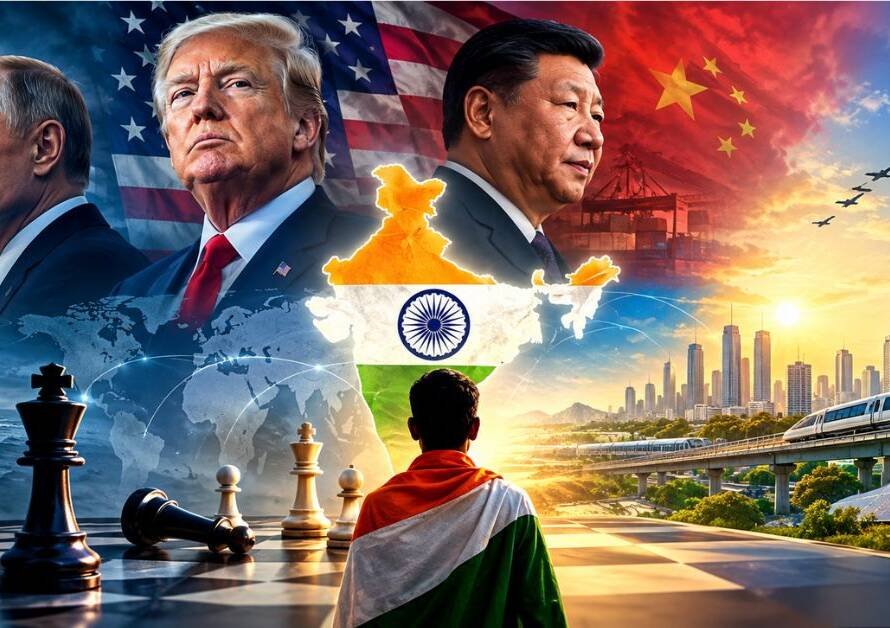
In international relations, India is no longer a passive observer or a nation susceptible to external pressure; it has become a central pillar shaping the global agenda.
- Independent and Sovereign Foreign Policy: From standing firm along the border during standoffs in Doklam and Ladakh to maintaining energy imports in the national interest during global conflicts despite external pressure, India has demonstrated complete strategic autonomy.
- Leadership of the Global South: By securing permanent G20 membership for the African Union during its presidency and centering the priorities of developing nations—such as food security, climate finance, and digital technology—India asserted its moral leadership.
- Strategic Balance: By engaging actively across multilateral forums (BRICS, QUAD, SCO), India proved that its diplomacy is not based on bloc politics, but on the principles of Vasudhaiva Kutumbakam (The World is One Family) and mutual national interest.
The Invincible State
Remember: When leadership is strong and decisive, the nation becomes invincible!
An invincible nation is defined not merely by GDP metrics or military strength, but by the psychological fortitude of its citizens, pride in its historical identity, and the resolute willpower of its leadership. When conviction at the top aligns with the aspirations of 1.4 billion people, a nation does not merely drift through history—it creates new history.
🇮🇳 Jai Bharat, Vandematram 🇮🇳
Read our previous blogs 👉 Click here
Join us on Arattai 👉 Click here
👉Join Our Channels👈