Executive Summary
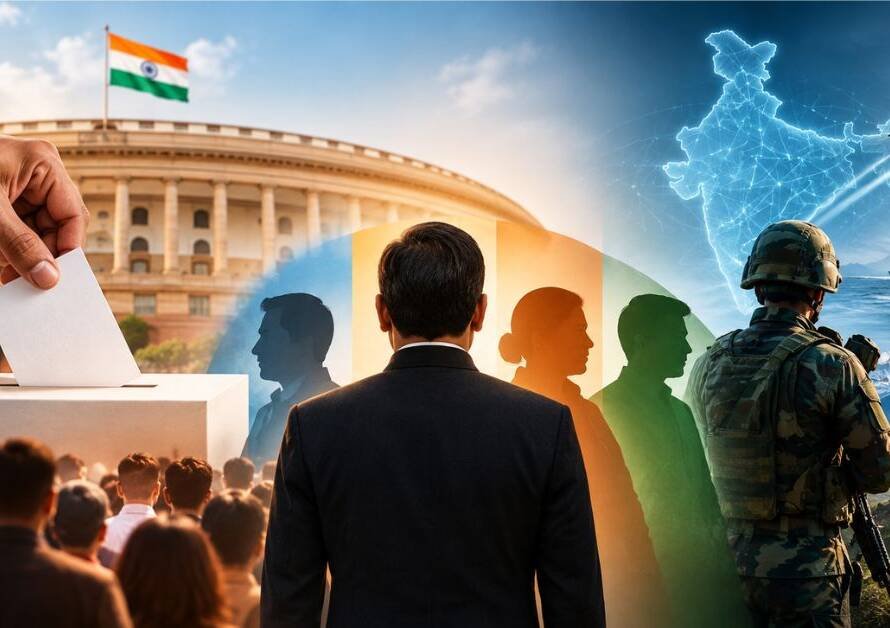
- This policy and legal analysis examines the growing leniency in judicial interpretations of India’s stringent anti-terror and economic offense laws (UAPA, PMLA).
- By critically evaluating the national security risks of applying conventional criminal law doctrines like “bail is the rule, jail is the exception” to cases of sedition and narco-terrorism, this article highlights how judicial activism can inadvertently dilute legislative intent.
- Real-world precedents demonstrate that prioritizing absolute individual liberty at the cost of national sovereignty fundamentally compromises the security of the state.
Rashtriya Suraksha vs Judicial Interpretation
1. The Clash Between Statutory Mandate and Judicial Interpretation
Modern democratic governance faces a critical friction point: the tension between stringent laws enacted by a sovereign parliament to protect the nation and the hyper-individualistic philosophy applied by courts.
- Diluting Legislative Intent: Parliament enacts special laws based on ground realities and pressing national security demands. However, hyper-liberal and micro-interpretations by courts risk blunting the efficacy of these core statutory frameworks.
- Marginalizing State Capability: When laws meant to protect the socioeconomic fabric—such as the Prevention of Money Laundering Act (PMLA), Protection of Children from Sexual Offences (POCSO) Act, and Unlawful Activities Prevention Act (UAPA)—are diluted via routine judicial observations, administrative efficacy is severely compromised.
- The Supreme Duty of the State: A sovereign nation’s primary legal obligation is self-preservation. If the state itself is compromised, the constitutional rights of individual citizens cannot survive.
2. UAPA and the “Bail is a Rule” Doctrine in Terror Cases
A Supreme Court bench recently introduced a highly debatable approach while handling a sensitive, high-profile narco-terrorism and terror-funding case stemming from Jammu and Kashmir.
- Misapplying Conventional Norms: The bench applied the standard criminal law doctrine of “bail is a rule, jail is an exception” to a case registered under the anti-terror statute, UAPA.
- The Constitutional Debate: The court reasoned that the stringent statutory restrictions on bail under Section 43D(5) of the UAPA cannot entirely override the right to life and personal liberty guaranteed under Article 21 of the Constitution. Consequently, a narco-terror accused incarcerated for over five years was granted bail.
- The Public Dilemma: Granting such liberty raises a fundamental question: Should individuals accused of participating in networks that wage war against the nation be allowed back into society on the grounds of Article 21? This access risks allowing them to reactivate sleeper cells and logistics networks.
3. Trial Court Mindsets and Low Conviction Rates
A major operational bottleneck in national security cases lies within the judicial process, where the requirements of conventional litigation fail to match the reality of modern asymmetric warfare.
- The Statistical Disconnect: Between 2019 and 2023, data reveals that 3,662 individuals were arrested under the UAPA in Jammu and Kashmir alone, yet only 23 were ultimately convicted. Nationwide, out of 10,440 arrests in the same period, convictions stood at just 335.
- Unrealistic Evidentiary Standards: This low conviction rate is driven by a trial court mindset that demands the same direct, absolute eyewitness evidence for complex proxy warfare as it does for a routine domestic crime. Lower courts frequently demand absolute proof, as if complex underground networks operate in plain sight.
- Eboldening Anti-National Elements: In an era of digital sleeper cells, hawala transactions, and decentralized terror networks, traditional eyewitnesses are virtually non-existent. When courts grant technical bail due to an absence of direct physical evidence, it erodes the deterrent effect of the law.
4. The Illusion of “Passive Support” in Asymmetric Warfare
Recent judicial philosophy has drawn a distinction between active participation and secondary involvement—a view that separates itself from the operational reality of how terror networks function.
- The “Mere Association” Logic: Recent judicial observations have stated that “mere association” or “passive support” of a banned or terrorist organization is insufficient to attract the harshest provisions of the UAPA unless direct participation in an overt act of violence is proven.
- The Real Danger of Enablers: In modern irregular warfare, the ideological, financial, or logistical enabler provides the lifeblood for front-line actors. Providing safe houses, conducting reconnaissance, or hiding assets cannot be dismissed as harmless or passive.
- Lessons from History: Past security incidents, such as the Pahalgam civilian massacre, demonstrate that external actors rely entirely on local guides for logistics and shelter. Without this covert, secondary support structure, deep-rooted terror operations cannot execute large-scale strikes.
5. Historical Context of the Bail Principle and Modern Misapplication
The concept of “bail is the rule, jail is the exception” has deep roots in Indian jurisprudence, but its modern application to national security offenses marks a significant shift from its original intent.
- Judicial Precedents: This philosophy was established by Justice Krishna Iyer in the landmark State of Rajasthan v. Balchand case (1977) and reinforced in Moti Ram v. State of M.P. (1978) and Satender Kumar Antil v. CBI (2022).
- The Need for Categorization: This principle is entirely just when applied to ordinary criminal cases, economic misdemeanors, or civil-criminal disputes where undertrials await adjudication for minor offenses.
- The Erosion of Deterrence: Applying this exact standard to acts of sedition, organized rioting, or armed insurgency compromises public safety. Blending routine crimes with threats to national integrity removes the legal fear necessary to deter anti-national elements.
6. The Misuse and Over-Expansion of Article 19
Just as the expansion of Article 21 has been stretched to accommodate high-risk accused, a similar pattern is visible in the modern deployment of Article 19(1)(a) (Freedom of Speech and Expression).
- Rise of Absolute Freedom Narratives: The public sphere has witnessed narratives where absolute freedom of speech is used to target constitutional institutions, state security apparatuses, and national interests without accountability.
- Fueling Internal Friction: Political and social discourse has shifted, with actors actively using domestic forums and international platforms to run campaigns that undermine the country’s democratic mandate and external image.
- Ignoring Reasonable Restrictions: The framers of the Constitution specifically provided for “Reasonable Restrictions” under Article 19(2) to protect sovereignty, territorial integrity, and public order. These boundaries are increasingly obscured by expansive judicial interpretations.
7. The Integrity of the Nation is the Bedrock of Justice
- The critical question of whether the “bail is a rule” doctrine should apply to exceptional, stringent legislations like the UAPA has now been referred to a larger Five-Judge Constitution Bench of the Supreme Court.
- The upcoming ruling must balance individual liberties with the collective right of a society to remain secure. Constitutional rights can only exist as long as the sovereign state itself remains intact and secure.
- The judiciary must recognize that the administration of justice depends entirely on a stable, sovereign framework. A “Nation First” approach remains the necessary foundation for interpreting laws designed to defend the country against existential threats.
🚩 Jai Bharat, Vande Mataram 🚩
Read our previous blogs 👉 Click here
Join us on Arattai 👉 Click here
👉Join Our Channels👈