Summary
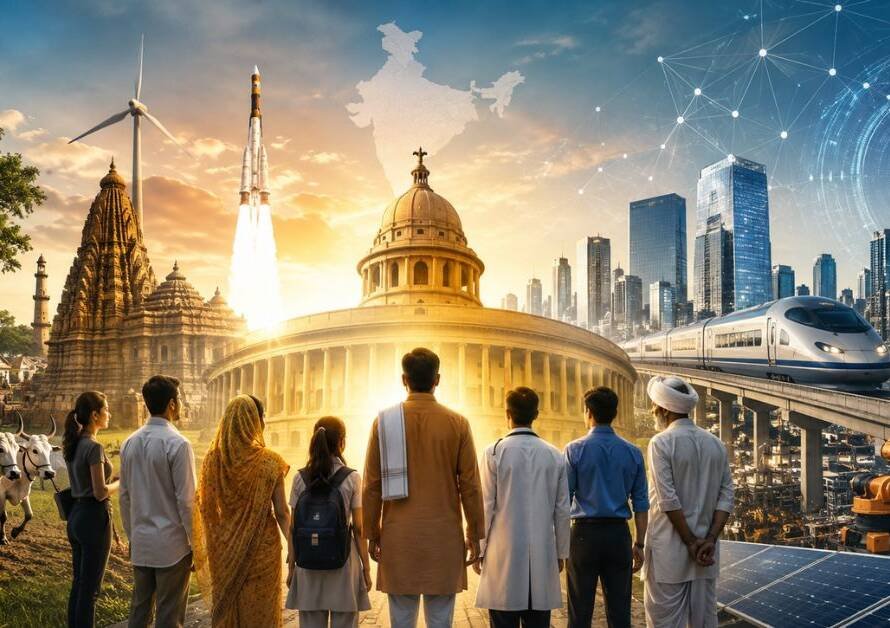
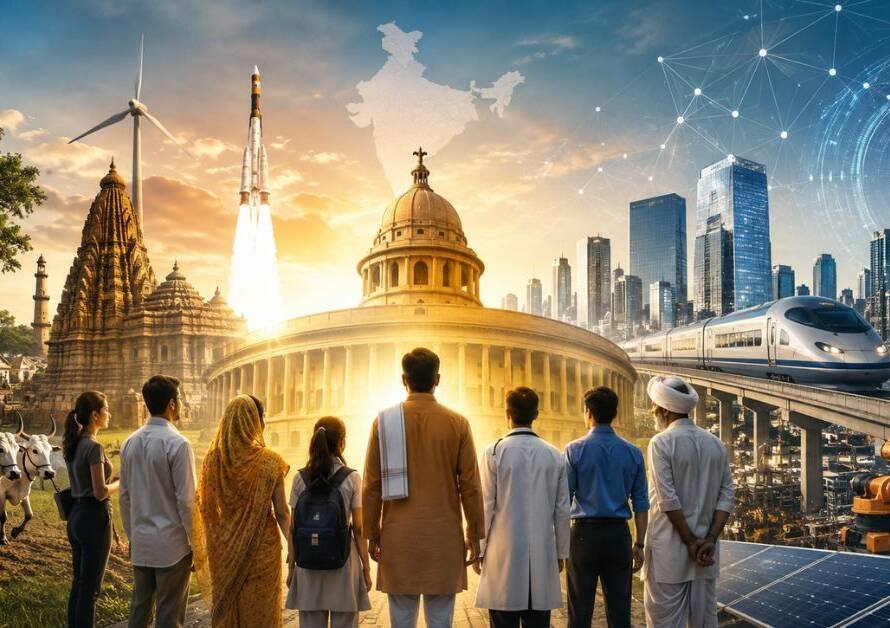
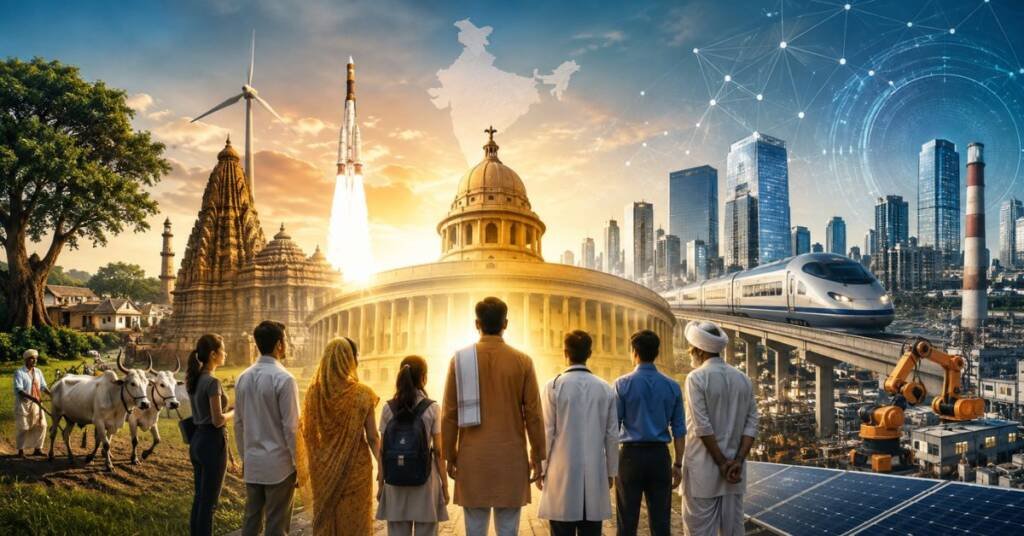
- Over the past decade, India has undergone an unprecedented administrative, socio-economic, and institutional transformation. Grounded in unattached leadership (Anasakta Yoga) and classical civilisational statecraft, executive governance shifted the nation from a fragile, inflation-ridden economy plagued by systemic leakages into the world’s 5th largest economy.
- By dismantling political patronage networks, scaling population-scale digital infrastructure, rebuilding national physical connectivity, and asserting strategic autonomy on the world stage, this decade marks a fundamental transition toward a self-reliant, developed nation (Viksit Bharat).
Reimagining Governance: India’s Socio-Economic Transformation and the Evolving Role of Statecraft
1. Unattached Leadership and Decisional Freedom
At the core of this political and administrative revival lies a paradigm shift in how executive power is held, defined, and executed at the highest levels of governance:
- Service Over Privilege: Executive authority has been reconfigured from an instrument of personal enrichment, political patronage, and institutional preservation into a daily, disciplined responsibility toward 1.4 billion citizens (140 crore countrymen).
- Zero Corruption at the Top: Free from private empires to protect, dynastic inheritances to secure, or personal fortunes to safeguard, national policy choices are liberated from fear, greed, and short-term political expediency. Decisions are evaluated solely through the uncompromising prism of long-term national interest.
- Civilisational Grounding in Classical Wisdom: Modern administrative frameworks draw seamlessly from India’s rich intellectual heritage, translating ancient doctrines into active 21st-century statecraft:
- Chanakya’s Strategic Foresight: Anticipating long-term geopolitical and internal security shifts, neutralizing threats before they disrupt the state, and fostering long-range national capacity.
- Vidura’s Administrative Ethics (Vidura Niti): Grounding governance in absolute transparency, unyielding duty (Dharma), and prioritizing the welfare of the ordinary citizen (Loka Sangraha) over elite interests.
- Kautilya’s Economic Realism (Arthashastra): Expanding self-reliance (Aatmanirbharta), strengthening state fiscal health, and replacing discretionary patronage systems with rule-based economic structures.
- Radical Administrative Accountability: Institutionalizing performance-linked evaluations within the civil services, dismantling outdated colonial red tape, and replacing arbitrary decision-making with objective, quantifiable benchmarks.
- Leadership by Personal Example: Demonstrating relentless dedication through austerity, rigorous work ethics, and an absolute alignment between personal conduct and public duty (Sadhana in Seva).
2. Digital Public Infrastructure (DPI) & Ending Systemic Leakages
By leveraging technology as an instrument of social justice, India built a globally unprecedented digital public framework that democratized access to the formal economy:
- The JAM Trinity Revolution: Integrating Jan Dhan financial accounts, biometric digital identity, and ubiquitous mobile connectivity created a population-scale digital architecture that redefined public service delivery.
- Direct Benefit Transfer (DBT) at Scale: Directing over ₹34 lakh crore ($400+ billion) directly into the bank accounts of beneficiaries eliminated middleman commissions, cut administrative delays, and removed millions of fake or duplicate “ghost” beneficiaries from state registries.
- Formalizing the National Economy: Combining seamless digital payments via Unified Payments Interface (UPI) with unified indirect taxation through the Goods and Services Tax (GST) brought millions of informal micro-enterprises into the formal banking system, expanding the national tax base and drastically reducing the parallel shadow economy.
- Democratizing Credit & E-Commerce: Expanding platforms like ONDC (Open Network for Digital Commerce) and OCEN (Open Credit Enablement Network) to ensure small street vendors and local MSMEs access formal credit and global markets without predatory platform monopolies.
- Data-Driven Governance & Real-Time Tracking: Utilizing GIS mapping, big data analytics, and dashboard-based monitoring systems (Pragati) to review stalled multi-billion-dollar infrastructure projects directly from the highest office.
3. Physical Infrastructure Modernization & Universal Basic Welfare
True social empowerment requires bridging the gap between basic human dignity and physical infrastructure, executing welfare programs with a focus on 100% saturation (Antyodaya):
- Saturation Welfare Delivery (Antyodaya): Moving beyond selective welfare distribution to universal coverage—delivering over 4 crore pucca housing units (PM Awas Yojana), providing more than 11 crore rural tap-water connections (Jal Jeevan Mission), and granting health insurance coverage to 50 crore low-income citizens (Ayushman Bharat).
- World-Class Physical Infrastructure:
- Doubling national highway construction speeds and deploying modern access-controlled expressways nationwide.
- Achieving 100% electrification of broad-gauge railway tracks and introducing modern indigenous transit networks like Vande Bharat and Namo Bharat.
- Doubling the number of operational commercial airports, drastically expanding regional air connectivity (UDAN), and modernizing maritime port handling capacity through Sagarmala.
- Multidimensional Poverty Alleviation: Uplifting more than 24.8 crore Indians out of multidimensional poverty within a single decade by simultaneously addressing housing, sanitation, health, clean cooking fuel, and financial inclusion.
- Clean Energy Transition: Scaling renewable energy capacity exponentially, establishing global leadership via the International Solar Alliance (ISA), and aggressively building domestic supply chains for green hydrogen and battery storage.
- Urban and Rural Resiliency: Transforming urban spaces through the Smart Cities Mission and empowering rural communities with clear, digital land title ownership via the SVAMITVA scheme.
4. Strategic Autonomy & Global Stature
On the international stage, India transitioned from a passive balancing state into an assertive, self-assured global anchor:
- Assertive Diplomacy and Strategic Autonomy: Departing from passive non-alignment in favor of multi-alignment and strategic autonomy—unhesitatingly defending national choices regarding energy security, international trade agreements, and territorial sovereignty despite severe global geopolitical pressure.
- Voice of the Global South: Championing the economic priorities, food security concerns, and climate adaptation needs of developing nations during India’s historic G20 Presidency, while establishing a global reputation for rapid, compassionate humanitarian assistance during disasters (Operation Dost, vaccine distribution, etc.).
- Indigenous Defense Production (Aatmanirbhar Bharat in Security): Modernizing national defense architectures, expanding domestic defense manufacturing, sharply increasing high-value defense exports, and enforcing a firm, non-negotiable border posture guided by the core mandate of “Nation First.”
- Civilisational Soft Power & Global Engagement: Elevating India’s cultural heritage—from the global adoption of Yoga and Ayurveda to the restoration of historical heritage corridors—reclaiming India’s rightful place as a Vishwaguru (global guide).
- Diaspora Empowerment & Global Standing: Converting the global Indian diaspora into a vibrant, proud bridge of diplomatic and economic strength, ensuring their security and dignity anywhere across the world.
The Horizon Ahead: Building Viksit Bharat 2047
- The transformation of the past decade is not a final destination, but the foundational bedrock for an ambitious civilisational revival.
- By replacing fragile governance, discretionary patronage, and structural leakages with unattached statecraft, population-scale digital infrastructure, and saturation welfare, India has established the prerequisite capabilities required of a modern superpower.
- As the nation marches toward its centenary of independence, the focus naturally shifts toward mastering deep technology, advancing judicial efficiency, strengthening high-value manufacturing, and ensuring energy independence.
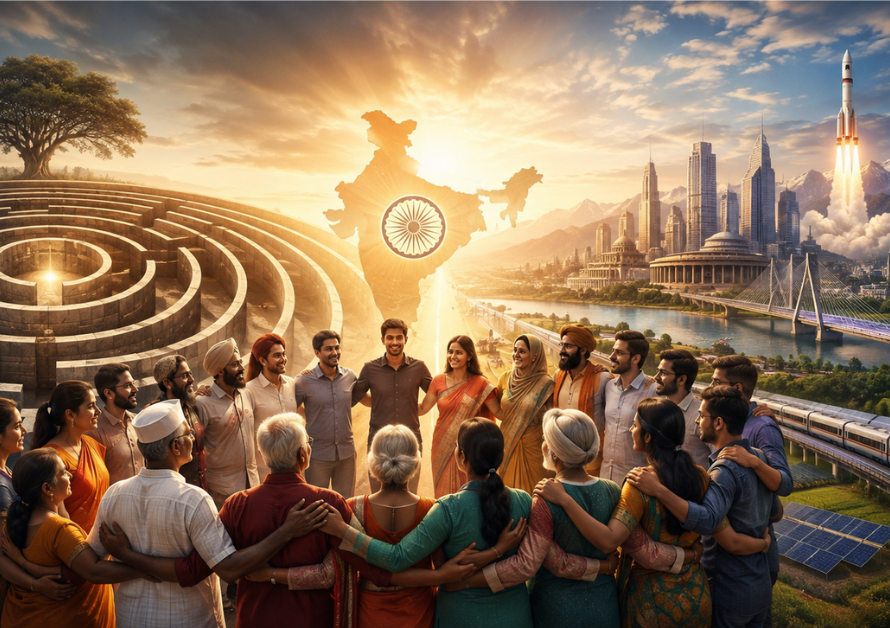
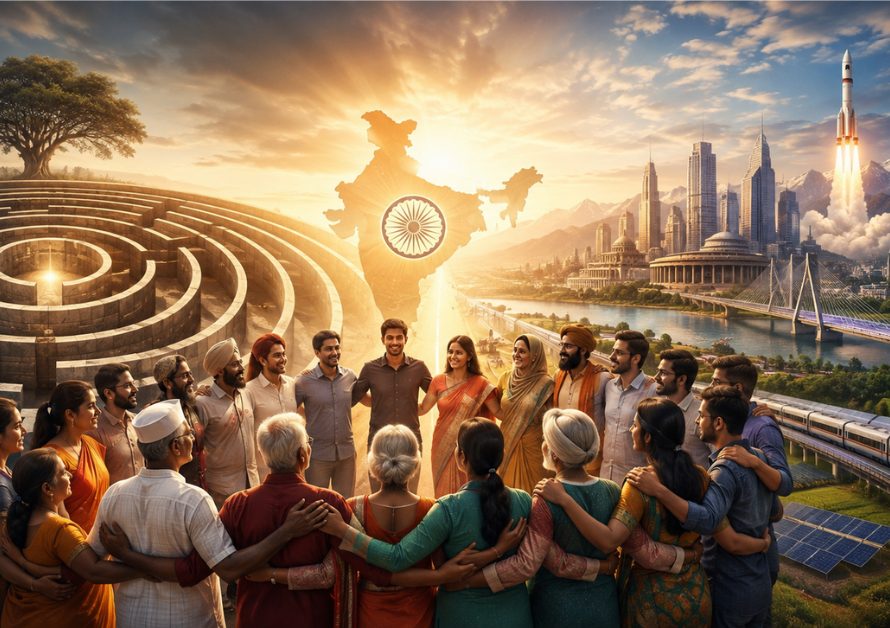
- Grounded in Nation First and driven by the collective resolve of 1.4 billion citizens, India is actively executing a disciplined, long-term roadmap to emerge as an economically secure, culturally confident, and globally formidable Viksit Bharat.
“राष्ट्र प्रथम, सदैव प्रथम।”
Nation First. Always First.
🇮🇳Jai Bharat, Vandematram 🇮🇳
Read our previous blogs 👉 Click here
Join us on Arattai 👉 Click here
👉Join Our Channels👈