Summary:
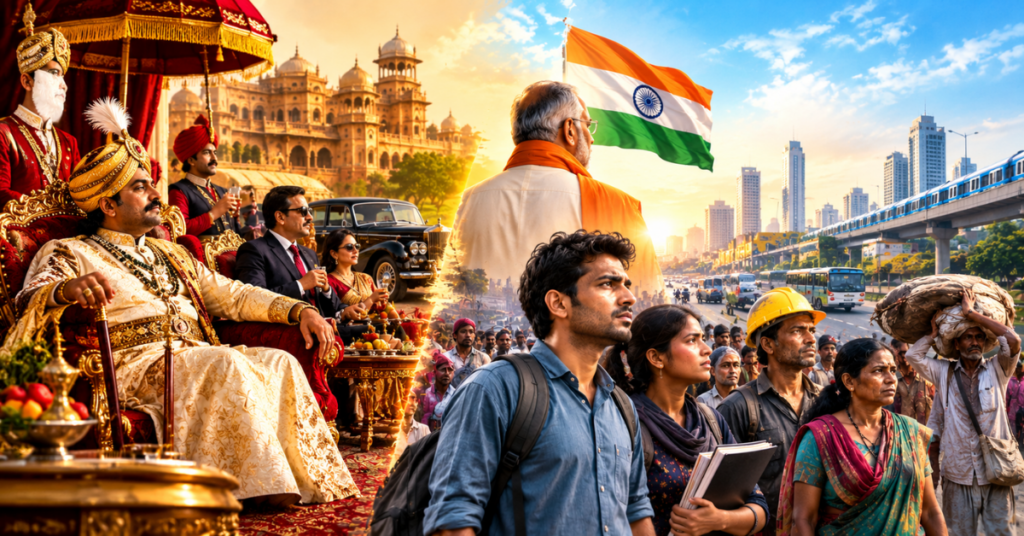
- The shift in power over the last decade in Indian politics is not merely limited to statements; it has completely transformed the modus operandi of long-established royal political dynasties and their privileged class.
- Through the sharp political satire this analysis explores how the ‘Prince and Princess’—who once enjoyed the fruits of power from air-conditioned homes—are now struggling on the streets for their political relevance and existence.
- ‘New India’ of today has abolished the culture of ‘free lunches’ without hard work, recognizing only relentless effort, sweat, and tangible results.
New India: The End of Privilege and the Shift from Royal Splendor to Street-Level Struggles
1. Background of the Satire: 40 Years of ‘Royal Splendor’ vs. 10 Years of ‘Political Exile’
Indian politics has a long history where certain political families and their loyal, privileged class inherited power, government resources, and social influence as a matter of birthright.
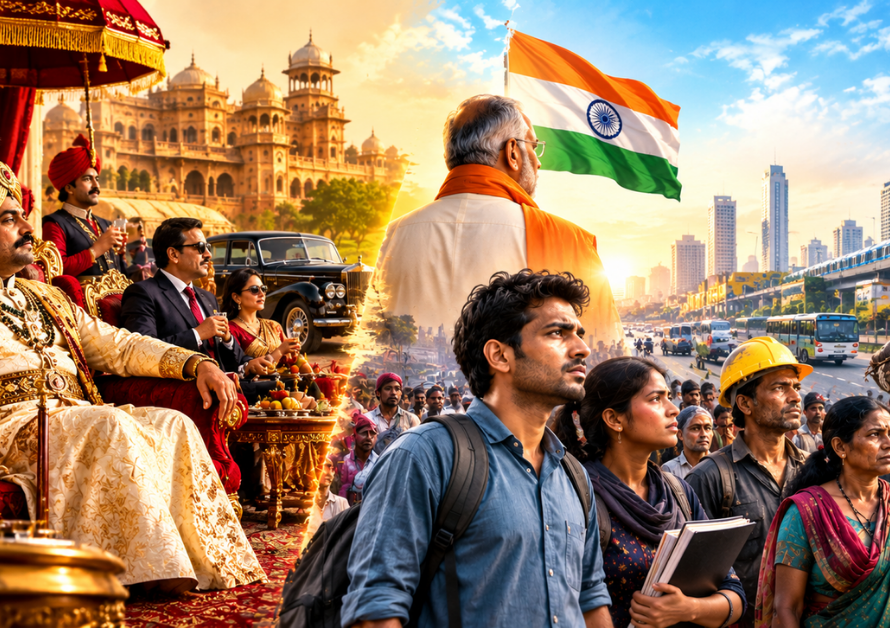
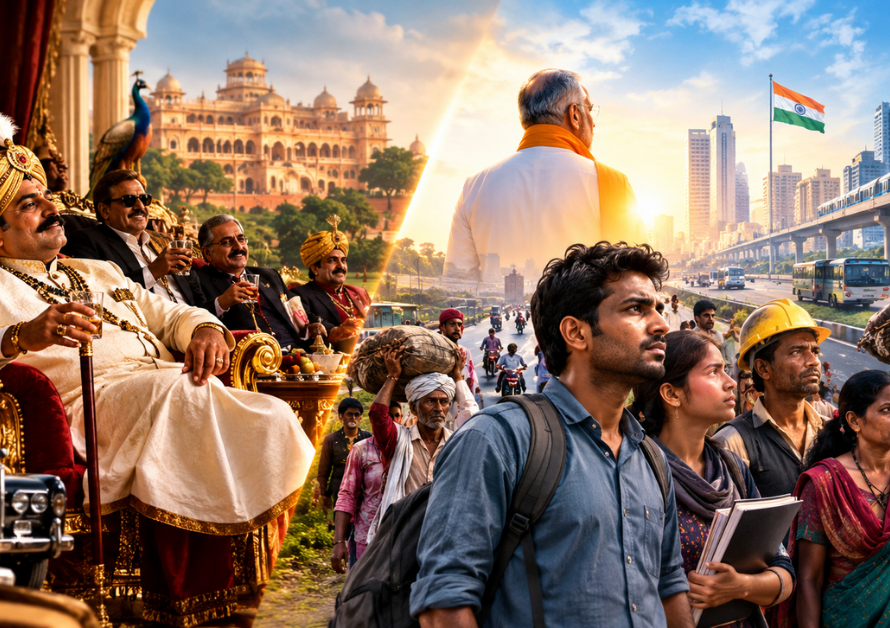
- The History of Privilege-Based Politics: For several decades after independence, the path to power was considered smooth and uncontested for the nation’s political ‘Prince and Princess’. Policy-making, grand government bungalows in Lutyens’ Delhi, and running governments and parties from air-conditioned rooms revolved entirely around them.
- Traditional Political Framework: In that era, securing public support did not require sweating it out on the ground 24/7. A family surname and an aligned media ecosystem automatically ensured electoral success and political relevance.
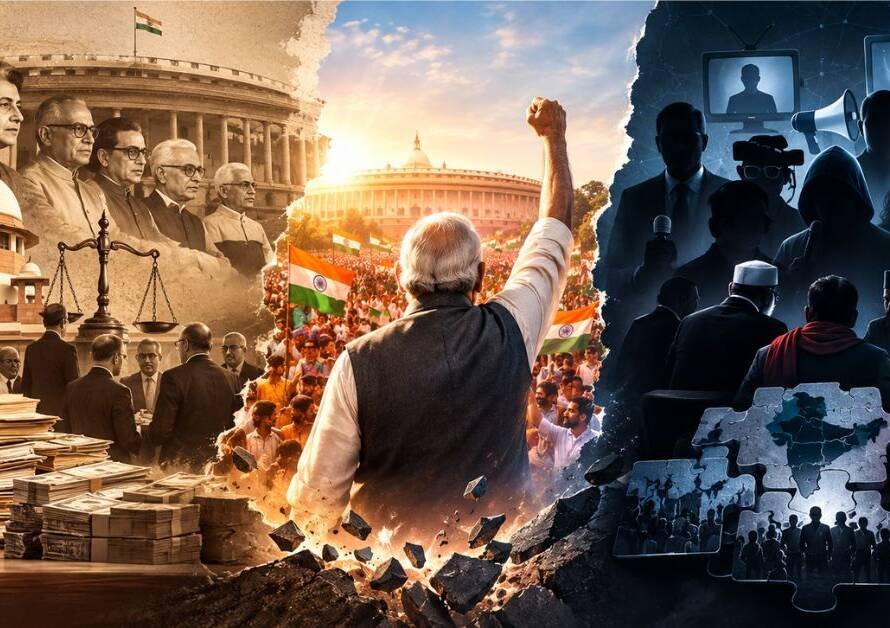
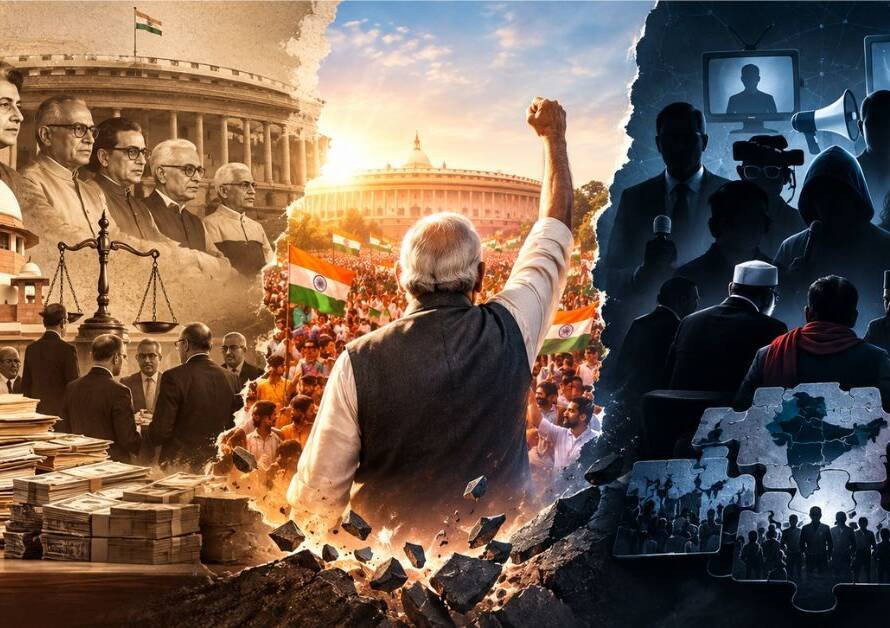
- The Power Shift of 2014: After 2014, the entire grammar of Indian politics underwent a transformation. A leadership emerging from non-traditional, grassroots backgrounds (the Modi-Shah duo) not only changed electoral arithmetic but uprooted the entire structure of ‘dynastic politics’.
- An Era of Political Displacement: Over the last 10–12 years, consecutive electoral defeats and a shrinking base displaced a class that once considered itself the ‘natural rulers’ of the country.
2. The Political Message in Satirical Terms: The “Bunty-Babli” Metaphor and Public Outrage
When the public and political analysts use such metaphors and sharp satire, a deeper political and social shift lies beneath:
- The Symbolism of “Hitting the Streets”: In this satire, phrases like “brought to the streets” or “sitting under a tree like beggars” do not signify financial poverty. Rather, they symbolize ‘political eviction’ and the compulsion to step out of air-conditioned rooms to sweat in the heat, dust, and rain.
- An Unprecedented Crisis of Identity: The phrase “no one will even recognize them” points to a political decline where a family whose single nod once dictated government formation now struggles on the streets just to save its political credibility, worker morale, and very existence.
- Public Neutrality: Rather than showing sympathy toward such dynasties, the general public views their current struggle as a long-overdue lesson. People feel that the same struggles an ordinary citizen faces daily are now finally being experienced by these privileged leaders.
3. The End of ‘Free Lunches’: The True Democratic System of New India
Behind this political and social transformation lies a new philosophy and work culture that has reshaped the entire landscape:
- Complete Abolition of ‘Free Lunch’ Policies: The old India was one where political dynasties and their inner circles received top positions, election tickets, and government perks for free, without organizational effort. ‘New India’ has completely done away with this free-lunch policy.
- Earn Through Struggle: In the new democratic framework, everyone—regardless of whether they are the heir to a major dynasty—must earn their place on the streets through struggle, cadre-building, and winning public trust.
- True Democracy of New India: The new India does not prioritize surnames or family legacies. Here, work, performance, transparency, and continuous presence among the people are the sole guarantees of success.
- A Direct Blow to Feudal Mindsets: Political analysts view this as the true ‘democratization’ of Indian politics, where birth-based privileges have been replaced by individual merit and hard work.
4. Modi-Shah’s Strategic Execution and the Final Blow to ‘Dynastic Politics’
The ruling party, through its organizational strategy, has established an aggressive, logical, and sustainable narrative before the public:
- The Lasting Narrative of ‘Namdaar vs. Kaamdaar’: On one side are the ‘Namdaars’ (the privileged titled) who fled from struggle; on the other are the ‘Kaamdaars’ (the hard workers) who work and serve 24/7. This narrative deeply resonated with the middle class and youth of the nation.
- The End of AC Culture: Due to intense political and electoral pressure, leaders who once appeared before the public only during elections are now forced to undertake continuous foot marches, rallies, and sit-ins—what the satirist humorously calls “having their faces ruined.”
- The Compulsion of 24/7 Politics: Modern elections are no longer won merely by speeches. Micro-management at the booth level and relentless public outreach have rendered the old, relaxed working style of opposition dynasties completely irrelevant.
5. Future Political Scenario and Challenges for the Privileged Class
The concluding part of the satire highlights the direction and state of Indian politics in the years ahead:
- The Ultimate Battle for Existence: Unless opposition dynasties and their elite supporters abandon their old mindset and adapt entirely to cadre-based, disciplined, and grassroots politics, their political identity risks complete erasure over time.
- Absence of Sympathy: The Indian voter has become highly discerning. Playing the ‘victim card’ or claiming persecution no longer translates into votes; the public assesses who is actively working to solve their daily life problems.
- The Rise of New Leadership: The most positive outcome of this shift is that talented youth from ordinary families, without any major political background, are now rising to the top of national politics.
Conclusion
- While written in a humorous and satirical tone, this commentary reflects one of the largest ideological, social, and organizational transformations in independent India.
- It delivers a clear and undeniable message: ‘New India’ will no longer accommodate ‘free lunches’ or the comfort of air-conditioned rooms for anyone.
- Every political party and leader must now prove their relevance through hard work on the streets—this is the true, vibrant, and real democracy of ‘New India’.
🇮🇳Jai Bharat, Vandematram 🇮🇳
Read our previous blogs 👉 Click here
Join us on Arattai 👉 Click here
👉Join Our Channels👈