Summary
- This comprehensive policy and political analysis exposes the deep nexus between the unprecedented administrative scam at Mohammad Ali Jauhar University in Rampur and the politics of appeasement that has persisted in India for decades.
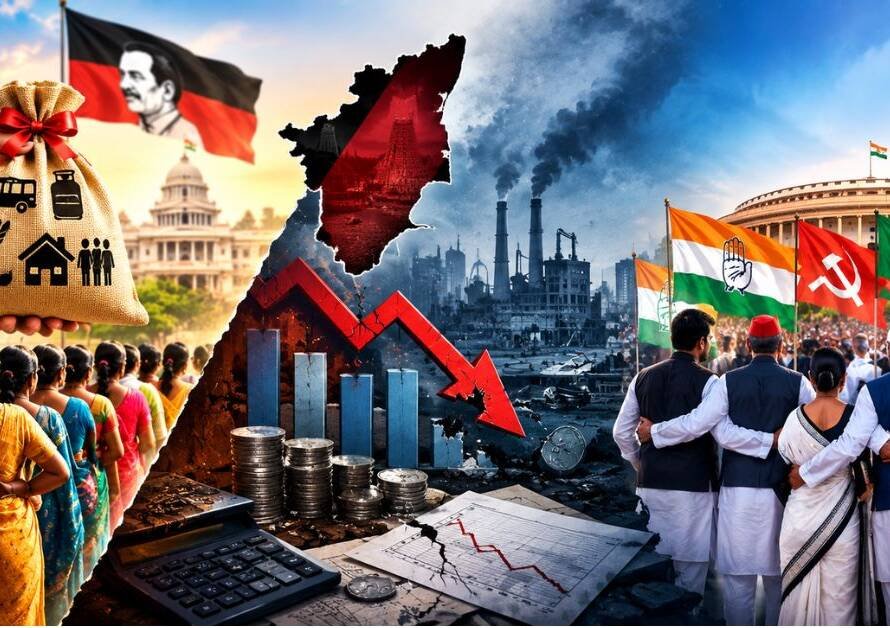
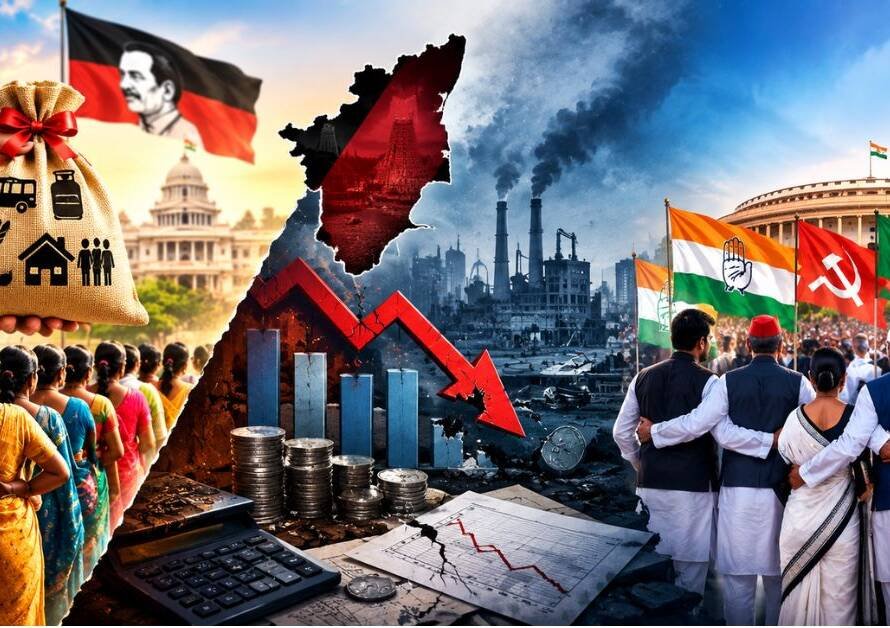
- The analysis reveals how Congress and its allies (the so-called Thagbandhan) openly misused government machinery, public funds, and constitutional frameworks to cater to their political vote bank and private patrons.
- From the direct misappropriation of nearly ₹3,000 crore of taxpayer money and private encroachment on government land in Rampur, to fund irregularities in Kerala’s greenfield institutions, government grant allocations through the Madrasa Board in Bihar, a lenient stance on terrorism, protection of illegal infiltration, overturning the Supreme Court’s ruling in the Shah Bano case, and granting unchecked powers to the Waqf Board—these decisions not only hollowed out India’s administrative and financial structure, but also severely threatened the country’s internal security and sovereignty.
Legal Cases Associated with Jauhar University
1. Private and Religious Appeasement from the Public Exchequer: The Reality of Rampur Jauhar University
The case of Rampur’s Jauhar University is not merely a dispute over an educational institution; it stands as a prime symbol of the blatant misuse of public wealth and state power carried out in the name of development for decades.
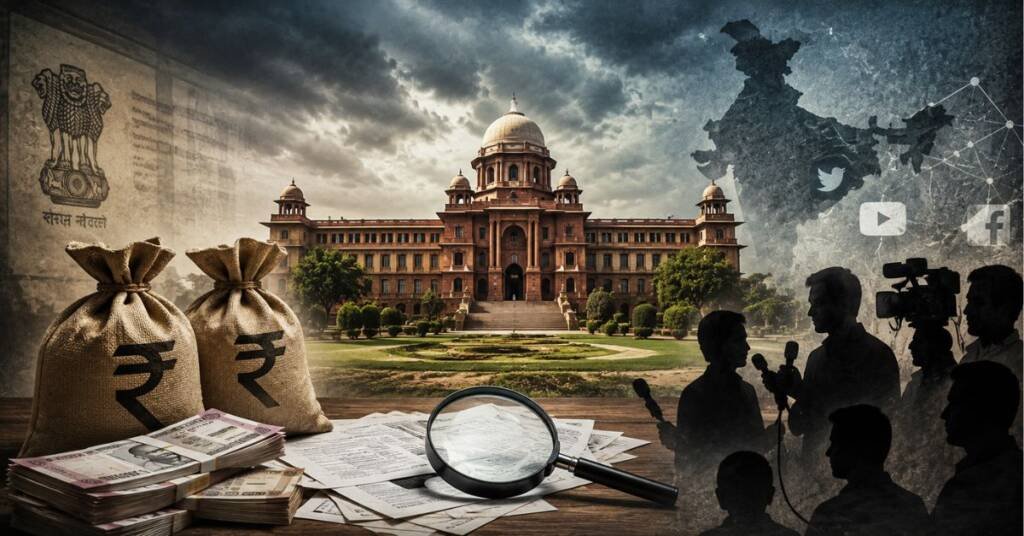
- Privatization of ₹3,000 Crore of Public Money: During the tenure of the then Uttar Pradesh government led by Akhilesh Yadav, approximately ₹3,000 crore from the state treasury along with infrastructure support were provided for the construction of Jauhar University. The university’s roads, guest houses, power sub-stations, water tanks, and main buildings were constructed using tax money paid by the general public.
- Government Land and Private Ownership: While the land and entire infrastructure belonged to the state government, ownership and control were handed over to a private trust headed by Azam Khan. When questioned, the political patrons maintained an authoritarian stance: “It was our government, so it was our choice.”
- The 2013 ‘Minority Status’ Game: After constructing a private property using public funds, it was granted ‘Minority Institution’ status in 2013 to provide it with a legal and social shield. The goal was to remove the institution from state regulations, transparency, and accountability.
- Playing the ‘Victim Card’ Behind the Clamor: Today, as the law tightens its grip on this alleged ₹3,000 crore scam, these same political parties cry foul, claiming “attacks on institutions” and “targeting temples of education.” Those who make noise over other administrative events remain completely silent about this direct misappropriation of government property.
2. Parallel Examples of Institutional Appeasement and Plunder of the Treasury
The Jauhar University case is not an isolated incident; public resources have been siphoned off under this same model of appeasement across several other states.
- Financial and Administrative Concessions by LDF/UDF in Kerala: In Kerala, both Left and Congress-led coalitions have periodically allotted government land to specific religious trusts and minority educational bodies at nominal prices. While the right to appoint staff in government-aided minority colleges remained with private trusts, the full cost of their salaries and pensions continued to be funded by state taxpayers.
- Government Budgets Allocated to Bihar Madrasa Board and Unverified Institutions: In Bihar during previous coalition regimes, thousands of unverified madrasas were brought under the Madrasa Board, releasing government salaries directly from the state budget. Billions of rupees were allocated without standard verification or quality checks purely to secure a political vote bank.
- Special Contracts and Schemes for Religious Bodies in Karnataka: During previous administrations in Karnataka, exclusive budget allocations were made for specific commercial bodies and religious welfare societies, disregarding the needs of the general population.
3. Compromising Internal Security and Counter-Terrorism
The most lethal impact of vote-bank politics was felt on the nation’s internal security infrastructure and intelligence apparatus. To remain in power, leniency was repeatedly shown in matters of counter-terrorism.
- Demoralizing Security Forces: Following the famous 2008 Batla House encounter in which Delhi Police Inspector Mohan Chand Sharma lost his life, senior leaders of Congress and its alliance partners raised doubts about the encounter’s legitimacy simply to appease a specific vote bank.
- Fabricating the ‘Saffron Terror’ Narrative: To politically counter questions surrounding Islamic terrorism on global platforms, top ministers of the then government coined the narrative of ‘Saffron Terror.’ This biased ongoing investigations and weakened India’s standing internationally.
- Repealing Strict Laws Like POTA: Immediately upon coming to power in 2004, the then UPA government repealed the anti-terror law POTA (Prevention of Terrorism Act). Although framed as a civil liberties measure, security experts noted that it severely hampered tracking financial networks and activities of terrorists.
4. Border Security, Illegal Infiltration, and Demographic Imbalance
Preventing illegal infiltration across India’s borders was a matter of national interest, but border demographics were allowed to shift unchecked for political gain.
- IMDT Act as a Shield for Illegal Immigrants: The Illegal Migrants (Determination by Tribunal) Act implemented in Assam in 1983 made it virtually impossible to identify Bangladeshi infiltrators, as the burden of proof lay on the accuser rather than the suspect. Even when the Supreme Court struck down the Act in 2005 terming illegal migration an “external aggression on Assam,” the then state governments attempted to seek legal loopholes.
- Fake Identity Cards and Vote Bank Politics: Fake ration cards, Aadhaar cards, and voter IDs were facilitated in the border districts of West Bengal, Assam, and Jharkhand to accord citizenship rights to illegal infiltrators, turning them into a permanent vote bank.
5. Disregard for Constitutional Norms, Judiciary, and the Asymmetric Expansion of Waqf
Whenever Supreme Court rulings clashed with the interests of pseudo-secular forces and religious fundamentalists, parliamentary majorities were used to overturn judgments or grant unchecked expansion to laws like the Waqf Act.
- The Shah Bano Case (1986): In 1985, the Supreme Court delivered a landmark ruling granting maintenance rights to 62-year-old Shah Bano. However, under pressure from fundamentalist appeasement, the Rajiv Gandhi government passed legislation in Parliament to nullify the apex court’s judgment.
- Drafting of the Communal Violence Bill (2011): The draft Prevention of Communal and Targeted Violence Bill prepared by Congress’s National Advisory Council (NAC) presumed that the majority community was inherently the perpetrator in any religious violence. Critics termed this a direct attack on the constitutional right to equality.
- The 1995 and 2013 Waqf Amendments: Amendments to the Waqf Act granted Waqf Boards unchecked powers to claim public or private properties without judicial oversight. Conversely, the management and total revenue of major Hindu temples across the country remained under direct state government control.
- Whether it is the ₹3,000 crore scam of government funds at Jauhar University, undue budgetary advantages given to minority institutions in Kerala and Bihar, or historic compromises made with national security and the judiciary—all of these formed part of a single model of appeasement and ‘narrative war.’
- However, a awakened India today has completely rejected this model of pseudo-secularism. The citizens of the country have united politically and socially to stand firmly behind national interest, the indigenous economy, and cultural revival.
- Only by completely boycotting this anti-national and corrupt ecosystem economically and socially can India protect its borders, culture, and sovereignty, establishing itself as a formidable global power and Vishwaguru in the times to come.
🇮🇳 Jai Bharat, Vandematram 🇮🇳
Read our previous blogs 👉 Click here
Join us on Arattai 👉 Click here
👉Join Our Channels👈