Summary
- This expanded strategic document provides an exhaustive, multi-layered analysis of the reservation debate in India, examining its political mechanics, psychological warfare dimensions, historical parallels, and national security implications.
- It details how quota-based agitations are systematically leveraged by opposition cartels, foreign-funded NGOs, and radical networks to fracture the majority community along caste lines. Particular focus is given to the tactical attempts to destabilize governance in strategically crucial states like Uttar Pradesh.
- The text addresses the strategic dilemma faced by the nationalist movement, contrasting the immediate emotional impulse of social polarization against the long-term imperatives of merit protection, economic growth, counter-terrorism, and civilizational revival.
- Drawing lessons from historical moments of internal fragmentation—such as the era of Prithviraj Chauhan, the 1857 betrayals, and the post-1992 political abandonment of Kalyan Singh—the document formulates an actionable roadmap for Sanatan society.
- It emphasizes unwavering support for national security leadership, the complete eradication of caste hierarchies, institutional capacity building, and intellectual vigilance to ensure India’s sovereign rise as a global superpower by 2047.
A Strategic Analysis For National Security And Viksit Bharat @2047
1. The Agitation Landscape And Tactical Political Warfare
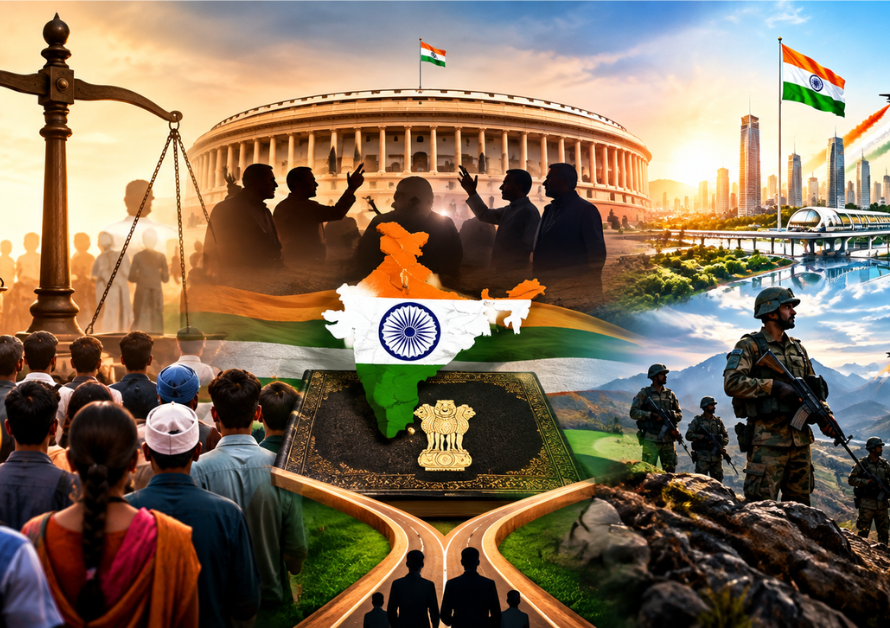
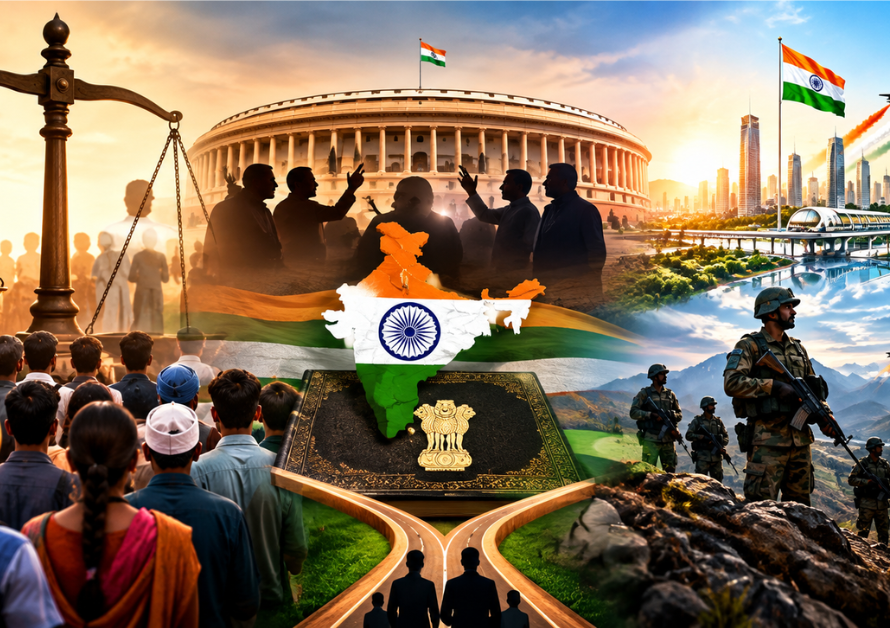
The nationwide debate surrounding reservation policies in India is neither a spontaneous outburst of civic frustration nor a simple movement for social justice or meritocracy. When examined through a strategic lens, it reveals itself as a calculated, multi-layered political operation designed to exploit existing societal fault lines, distract from national development, and weaken the state’s administrative stability.
- The Infiltration and Hijacking of Protest Spaces: Anti-national networks, radical student groups, and opposition cartels have systematically infiltrated civic protest platforms, including historic demonstration hubs like Jantar Mantar. Their objective is to redirect legitimate concerns regarding meritocracy, administrative efficiency, and brain drain into direct hostility against the current nationalist administration, deliberately framing historical, constitutional structures as recent creations of the present government.
- The Strategic Ambiguity of Opposition Demands: While certain segments of the majority community are mobilized to demand the complete abolition of quotas, the political opposition has no intention of scaling back reservations. On the contrary, key leaders across the opposition spectrum—ranging from the Congress leadership to regional outfits like the Samajwadi Party, Bahujan Samaj Party, and Rashtriya Janata Dal—are actively advocating for the expansion of reservations into the private sector, the removal of the 50% legal cap, and the execution of caste censuses designed to permanently institutionalize identity-based politics.
- Targeted Destabilization of Key Administrative States: A primary tactical objective of this coordinated agitation is to disrupt law and order and governance in strategically vital states, most notably Uttar Pradesh under the leadership of Yogi Adityanath. By fanning the flames of caste-based resentment between general and reserved categories, opposition networks seek to fracture the social cohesion, economic momentum, and decisive security model established in the state over recent years.
- Psychological Warfare and Narrative Framing: Through coordinated social media campaigns, biased media coverage, and academic commentary, hostile ecosystems amplify feelings of victimhood across all demographics. General category youth are persuaded that their future is entirely hopeless under the current system, while reserved categories are told that their constitutional rights are under immediate threat, creating an environment of mutual suspicion and hostility.
2. The Strategic Dilemma And Narrative Traps
The ongoing agitation creates a profound strategic trap for the nationalist governance framework, forcing a artificial friction between its core voter base and broader social categories.
- The Demographic Balancing Act: The nationalist political architecture relies on unifying a diverse electorate—balancing a traditional 30% core voter base with the broader 70% reserved categories (OBC, SC, ST). Any unconsidered policy declaration, emotional reaction, or hasty legislation risks alienating one major demographic, thereby handing a decisive electoral advantage to opposition cartels waiting to exploit the fracture.
- The Dilemma of Meritocracy vs. Electoral Survival: There is an undeniable policy reality that unconstrained, poorly implemented reservation policies can penalize merit, erode administrative capacity, and accelerate the flight of skilled professionals abroad (Brain Drain). However, weaponizing this genuine concern to bring down a nationalist government plays directly into the hands of political alliances that openly advocate for even more radical, identity-based distribution models.
- Asymmetric Risk in Political Warfare: The opposition operates with zero political risk in escalating this debate. Their entire electoral platform rests on caste-based division and promises of expanded patronage (“Jiski Jitni Aabadi, Uska Utni Hissedari”). Conversely, the nationalist governance model—which prioritizes national security, physical infrastructure, digital innovation, and cultural revival—faces maximum disruption whenever society fractures along internal sub-identities.
- The Smokescreen for Corruption and Governance Failures: By keeping the national discourse perpetually fixated on caste quotas and social conflict, opposition cartels successfully draw public attention away from their own histories of systemic corruption, financial scams, administrative paralysis, and soft-on-terror policies.
3. Historical Lessons: The Trap Of Internal Fragmentation
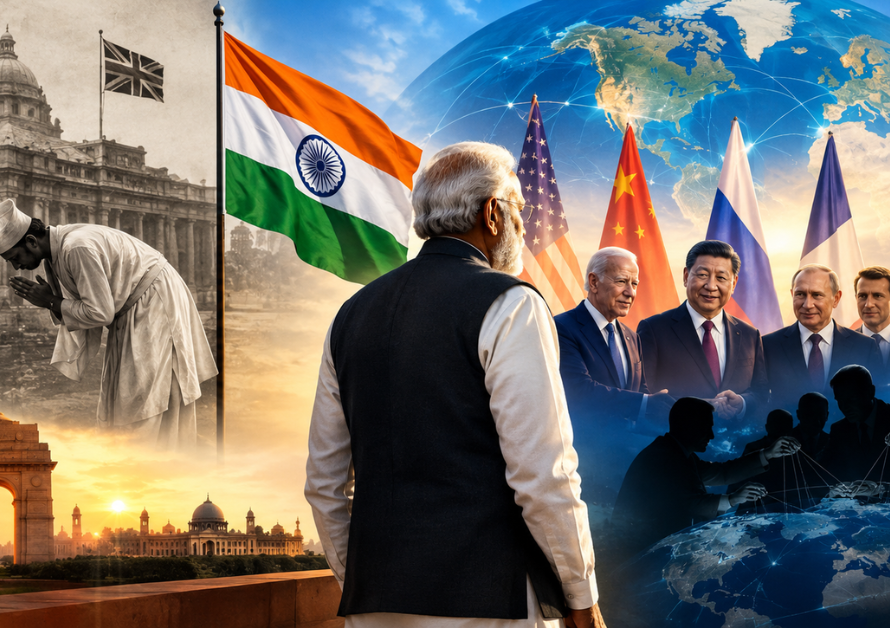
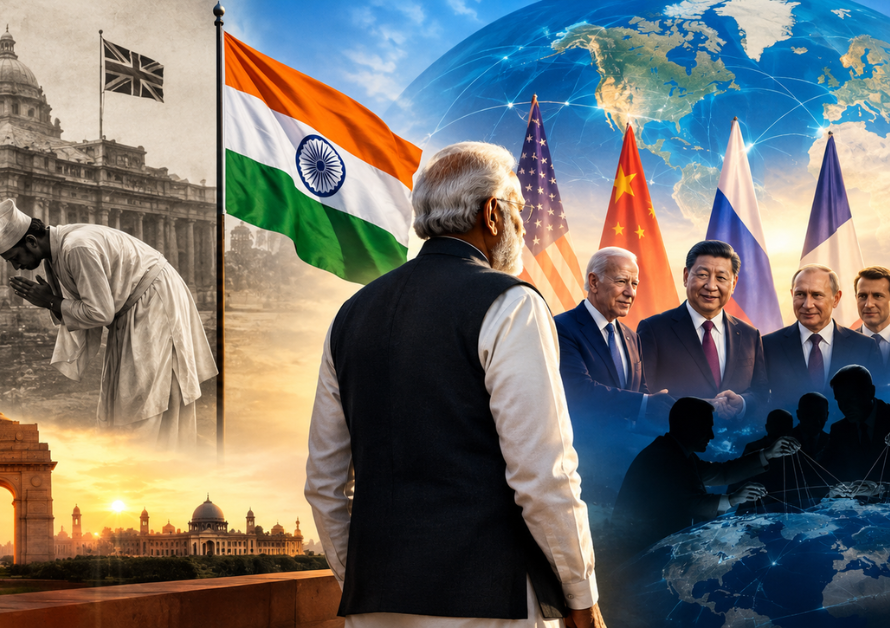
History provides unequivocal proof that whenever Indian society allowed internal caste grievances, personal pride, or regional rivalries to override overarching national security and civilizational unity, the inevitable result was prolonged instability, foreign domination, and widespread destruction.
- The Recurring Pattern of Internal Betrayal: From the internal feuds during the era of Prithviraj Chauhan that facilitated foreign invasions, to the betrayal of key local rulers during the 1857 War of Independence, Indian history is littered with instances where short-term emotionalism sabotaged long-term civilizational sovereignty.
- The Political Abandonment of Kalyan Singh: Following the events of 1992, Chief Minister Kalyan Singh sacrificed his government for the cause of the Ram Janmabhoomi movement. However, when the majority community failed to stand by him politically in subsequent elections due to immediate caste and regional considerations, it set back the cause of national awakening and cultural restoration by nearly two decades.
- The Warning of the 2024 Electoral Fluctuations: The outcome of the 2024 general elections serves as a modern case study in societal vulnerability. Despite historic civilizational achievements—including the construction of the grand Ram Temple in Ayodhya, the abrogation of Article 370 in Jammu & Kashmir, and major counter-terrorism successes—the nationalist mandate was reduced because significant segments of the electorate succumbed to targeted caste narratives and false constitutional panics engineered by opposition alliances.
The Reality of Alternative Governance Models: Dismantling or weakening the current security and development apparatus out of immediate frustration over reservation policies would inevitably pave the way for political coalitions that have historically declared that minority communities have the first claim on national resources, reopening the door to appeasement politics and compromised national security.
4. Comprehensive Roadmap For National Stability And Viksit Bharat @2047
Navigating this complex socio-political crisis requires moving away from reactive emotionalism toward a disciplined, long-term civilizational strategy. Resolving internal policy issues must never come at the expense of national sovereignty, territorial defense, or political stability.
- 1. Prioritizing National Security and Unwavering Political Stability:
- Maintain absolute public support for strong, decisive national leadership focused on border defense, counter-terrorism, economic self-reliance, and global diplomacy.
- Recognize that rational policy adjustments—including the protection of merit, rationalization of quotas, and economic criteria—can only be discussed and implemented under a stable, nationalist government, never under unstable coalitions controlled by radical vote-banks.
- Actively assist state security agencies and intelligence networks by monitoring local agitations, identifying professional agent provocateurs, and preventing civil unrest in key urban and industrial centers.
- 2. Total Eradication of Internal Caste Hierarchies:
- Actively dismantle internal caste discrimination, social distance, and prejudice within the majority fold. A society divided into rigid, competing sub-identities remains permanently vulnerable to political exploitation and external manipulation.
- Ensure that social welfare, educational resources, and economic opportunities reach the most marginalized rural and tribal families, building true social harmony (Samajik Samrasata) across all communities.
- 3. Institutional Capacity Building and Alternative Support Systems:
- Establish private, community-funded educational trusts, competitive exam coaching centers, research institutes, and skill-development platforms to support high-performing youth from non-reserved categories, ensuring no deserving talent is left behind due to financial constraints.
- Encourage young professionals and scholars to excel in critical state institutions—civil services, judiciary, defense forces, technology sectors, and mainstream media—to ensure long-term administrative capability and intellectual rigor.
- 4. Intellectual Vigilance and Narrative Control:
- Educate civil society, student networks, and young professionals on the tactical motives behind sudden social agitations, ensuring citizens do not inadvertently support networks seeking to destabilize the nation.
- Counter identity-based political narratives by reinforcing a unified civilizational identity anchored in the vision of making India a developed, self-reliant superpower (Viksit Bharat) by 2047.
Conclusion
The reservation debate cannot be viewed as an isolated policy discussion; it is a critical battleground in the ongoing war for India’s internal security, political stability, and civilizational future. Falling into the trap of caste-based polarization will undo decades of economic growth, national security consolidation, and cultural awakening. By exercising strategic foresight, rejecting narrative manipulation, eliminating internal divisions, and remaining unconditionally focused on national sovereignty and development, Sanatan society can safeguard its heritage and guarantee a secure, prosperous future for generations to come.
🇮🇳 Jai Bharat, Vandematram 🇮🇳
Read our previous blogs 👉 Click here
Join us on Arattai 👉 Click here
👉Join Our Channels👈