Summary
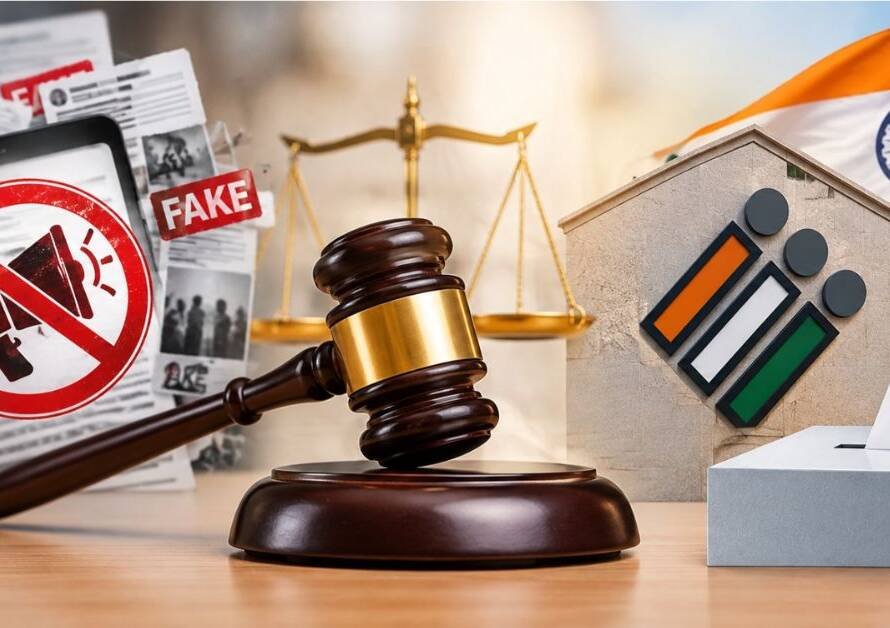
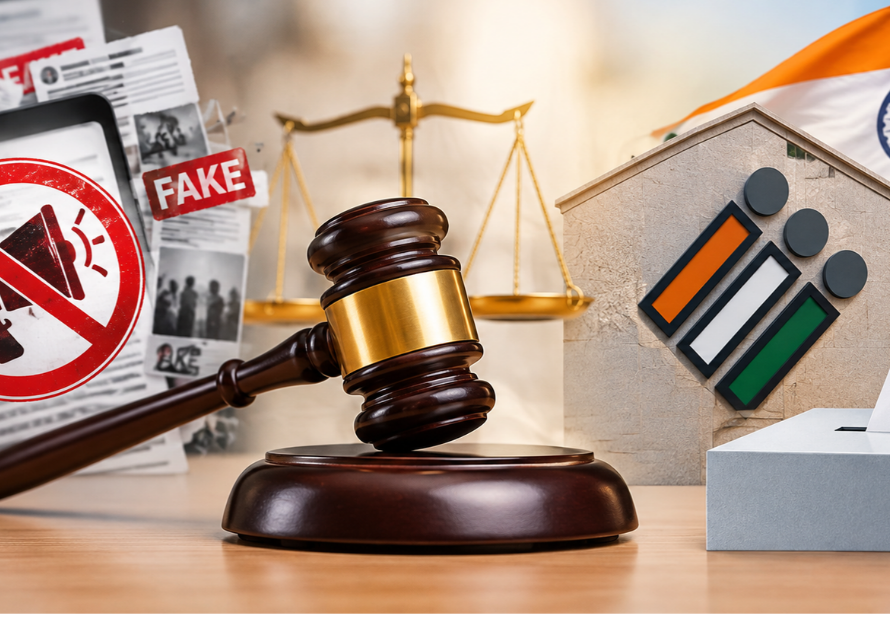
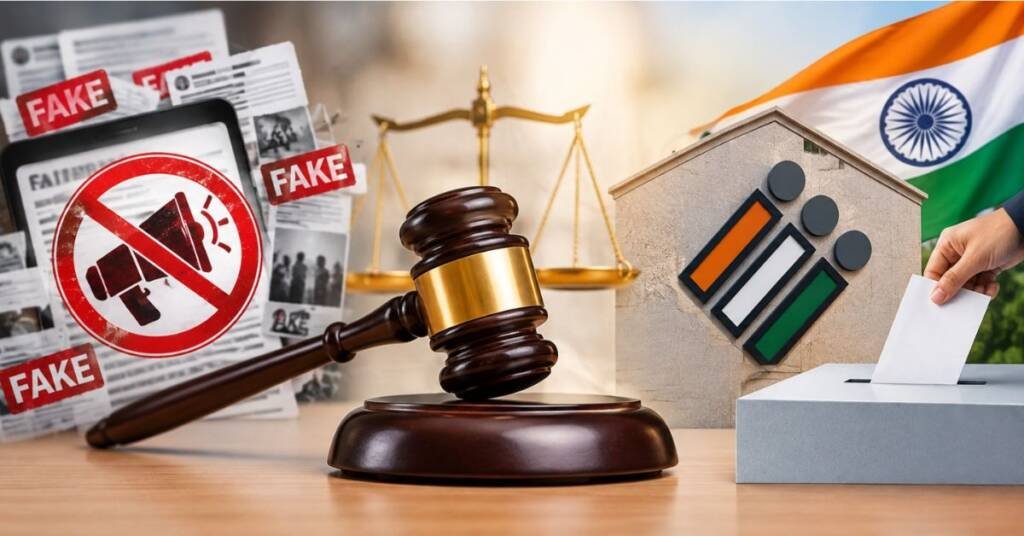
- This detailed and analytical article examines how a constitutional and legal solution can be pursued against sponsored and baseless allegations like “vote theft” and “SIR” made against the Election Commission of India (ECI) and Chief Election Commissioner Gyanesh Kumar.
- Although the Election Commission as an autonomous constitutional body cannot file a criminal defamation suit directly, its members and officials are fully free to file defamation cases in their individual and official capacities.
- By presenting a historical account of six major defamation cases involving Rahul Gandhi, this piece demonstrates that approaching the court puts an immediate halt to misleading and irresponsible statements.
- Supported by an open letter from 44 former judges, Supreme Court precedents, and electoral evidence, this article asserts that fixing individual legal accountability is the only effective way to restore the dignity of democratic institutions.
The Legal Remedy for False Propaganda
Introduction: Attacks on Constitutional Institutions and the Crisis of Democratic Dignity
- The cornerstone of Indian democracy is its fair, transparent, and independent electoral system. The constitutional responsibility to operate this entire mechanism without bias rests upon the Election Commission of India (ECI) and the Chief Election Commissioner.
- Unfortunately, for some time now, a orchestrated and misleading narrative has been pushed using fabricated claims like “vote theft” and “SIR,” questioning the integrity of the Election Commission, Chief Election Commissioner Gyanesh Kumar, and other officials.
- Levying direct allegations against individuals occupying constitutional posts on political platforms and in press conferences without any concrete evidence is an open violation of democratic norms. Whenever a political party attempts to pin the blame for its defeat or failure on independent institutions, it risks creating distrust in the minds of the public toward the democratic process itself. This raises a crucial question:
- Is the Election Commission and its officials helpless before this unsubstantiated propaganda, or do they possess a concrete, constitutional legal remedy to curb this misleading style of politics?
1. The Legal Position: Institutional Limitation vs. Individual Capacity
Under the legal and constitutional framework, the Election Commission, as a corporate body, cannot directly file a criminal defamation case as an institution under Section 356 of the Bharatiya Nyaya Sanhita (BNS) (formerly Sections 499/500 of the IPC). However, an extremely important and effective provision is embedded in the law:
- Freedom to File a Case in an Individual Capacity: If defamatory allegations are made directly against the personal integrity, honesty, and official conduct of Commission members or the Chief Election Commissioner through statements, campaigns, or press conferences, those officials hold full legal rights to file a criminal defamation suit in their individual capacity.
- What Choice Does Chief Election Commissioner Gyanesh Kumar Have? Chief Election Commissioner Gyanesh Kumar stands directly at the center of this propaganda campaign. The allegations leveled against him attack both his official capacity and his personal reputation. Therefore, in his individual capacity, he is fully empowered to file a criminal defamation suit against Rahul Gandhi and other concerned leaders in the competent magistrate’s court.
- Strength of Facts: In such cases, the law stands firmly with the official, as the burden of proof falls on the accusing party to present physical and legal evidence in court to substantiate their claims.
2. History Stands Witness: Whenever Defamation Cases Were Filed, the Rhetoric Shifted
If one examines the history of Congress leader Rahul Gandhi’s political statements and the legal actions taken against them over the past decade, a clear and interesting pattern emerges. As long as only political responses were given to his statements, unchecked attacks continued; but as soon as the aggrieved party knocked on the doors of the court and filed a criminal defamation suit, those controversial statements came to a permanent halt.
Below are six major historical and legal examples demonstrating this pattern:
- 1. The RSS and Mahatma Gandhi Assassination Case (Bhiwandi Court, Maharashtra):
Rahul Gandhi frequently accused the Rashtriya Swayamsevak Sangh (RSS) of being responsible for the assassination of Mahatma Gandhi during his public rallies. Against these baseless attacks, RSS activist Rajesh Kunte filed a criminal defamation case in the Bhiwandi court in Maharashtra. After the case was registered, court summons were issued, and legal proceedings commenced, Rahul Gandhi stopped repeating these direct allegations against the RSS on public platforms.
- 2. The ‘Commander-in-Thief’ Statement Case (2018):
In a 2018 political speech, Rahul Gandhi used inappropriate language against the Pradhan Sevak of the nation, referring to him as the “Commander-in-Thief.” BJP activist Mahesh Shrimall filed a defamation suit in a Mumbai court against this objectionable remark. The result of this legal action was that Rahul Gandhi never used that specific phrasing again.
- 3. The ‘Modi Surname’ Case and the Historic Verdict of the Surat Court (2019):
During the 2019 Lok Sabha election campaign, Rahul Gandhi remarked at a rally in Karnataka, “Why do all these thieves have the surname Modi?” Against this statement targeting an entire community and surname, BJP MLA Purnesh Modi filed a defamation suit in the Surat court. Following a lengthy judicial hearing, the Surat court found him guilty and awarded him the maximum sentence of two years, resulting in the disqualification of his parliamentary membership. Although the Supreme Court later stayed his conviction—offering relief while the matter remains technically pending—Rahul Gandhi has not been heard making reckless statements about the “Modi surname” since that verdict.
- 4. Objectionable Comment Against Amit Shah (Sultanpur MP/MLA Court):
During a press conference in Bengaluru in 2018, Rahul Gandhi used highly objectionable words, calling then-BJP President Amit Shah a “murderer.” Against this, BJP activist Vijay Mishra filed a criminal defamation case in the Sultanpur MP/MLA Court in Uttar Pradesh. Rahul Gandhi had to secure bail on a personal bond, and the case is now in its final hearing stage. (A similar case is also pending in a Jharkhand trial court, currently under a procedural stay from a higher court.) Following this legal pressure, Rahul Gandhi did not dare repeat those words against the Home Minister of the country.
- 5. The Swatantryaveer Savarkar and ‘Mafiveer’ Controversy:
Making disrespectful remarks like “Mafiveer” against Swatantryaveer Vinayak Damodar Savarkar, one of India’s great freedom fighters, had become a regular habit for Rahul Gandhi. However, when Savarkar’s family members and supporters approached the courts—leading to stern oral observations from the Supreme Court—such low-level attacks against Savarkar ceased entirely.
- 6. Inappropriate Remarks Concerning the Indian Armed Forces:
In the context of the China border dispute, Rahul Gandhi made a highly irresponsible statement, claiming that “our soldiers are getting beaten up by Chinese troops.” Former Director of the Border Roads Organisation (BRO) filed a defamation case against this statement, which harmed the morale of the Indian Armed Forces. Although the matter remains pending in a higher court on technical grounds, that legal step checked the stream of baseless remarks regarding the Indian military.
3. The ‘Vote Theft’ Allegations Lack Substance: Data and Evidence Favor the Commission
This is the most opportune moment for Chief Election Commissioner Gyanesh Kumar to file a defamation suit, because all ground realities, statistical data, and constitutional evidence stand fully in his and the Election Commission’s favor to be presented in court. Claims of “vote theft” and tampering with Electronic Voting Machines (EVMs) are merely the product of political frustration:
- Clear Mandates in Opposition-Ruled States: If ‘vote theft’ or rigging were possible at any level within the electoral system, opposition parties would never have come to power in states like Kerala, Tamil Nadu, West Bengal, Telangana, and Punjab.
- The Contradiction of Congress’s Own Victories: The Congress party itself won elections and formed governments with massive majorities in Himachal Pradesh and Karnataka through these exact transparent and impartial processes conducted by the Election Commission. Claiming fair processes upon victory but alleging ‘vote theft’ upon defeat exposes the hollow nature of their own assertions.
- Historic Open Letter from 44 Former Judges: The strongest proof of Chief Election Commissioner Gyanesh Kumar’s and the Election Commission’s credibility came recently when 44 former Chief Justices and senior judges of the country issued a joint open letter. The former judges strongly condemned the attacks on independent constitutional bodies driven by political self-interest and expressed their full support for the Chief Election Commissioner and the ECI.
4. Conclusion: A Defamation Lawsuit Is the Only Constitutional and Legal Solution
- Healthy political criticism and transparent questioning should always be welcomed in a democracy. However, striking at the nation’s democratic roots by making severe allegations like “vote theft” against the Election Commission and Chief Election Commissioner without any concrete evidence is entirely unforgivable.
- Chief Election Commissioner Gyanesh Kumar should leverage the moral support of the country’s 44 former judges, legal experts, and aware citizens to immediately file a criminal defamation suit in his individual capacity against Rahul Gandhi and other concerned leaders.
- History bears witness that when a matter reaches the courtroom and legal pressure builds to present evidence, leaders who shoot arrows in the air and construct misleading narratives are silenced.
- If Gyanesh Kumar takes this decisive legal step, this sponsored propaganda of “vote theft” and “SIR” will end forever, and the dignity of the country’s constitutional institutions will be fully restored.
🇮🇳Jai Bharat, Vandematram 🇮🇳
Read our previous blogs 👉 Click here
Join us on Arattai 👉 Click here
👉Join Our Channels👈