Summary
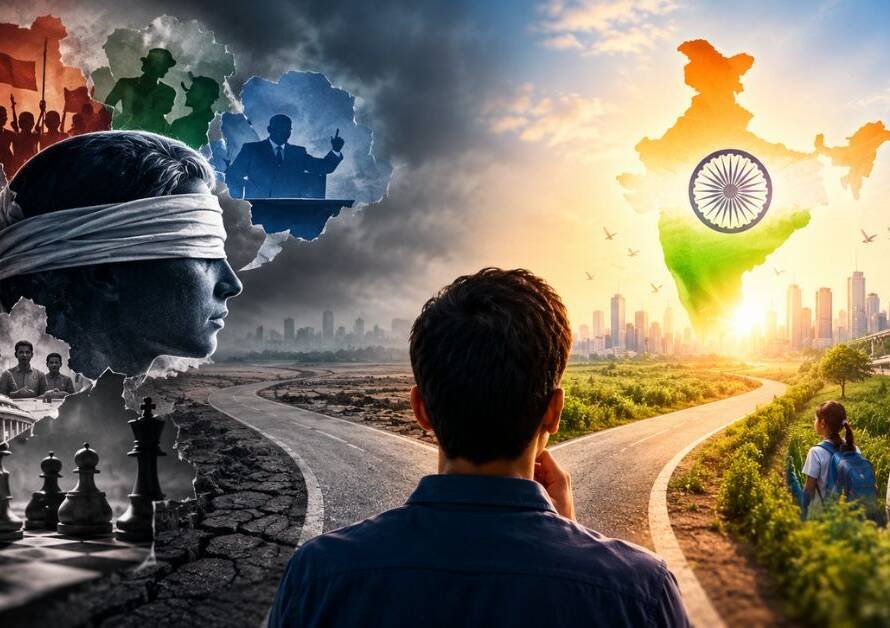
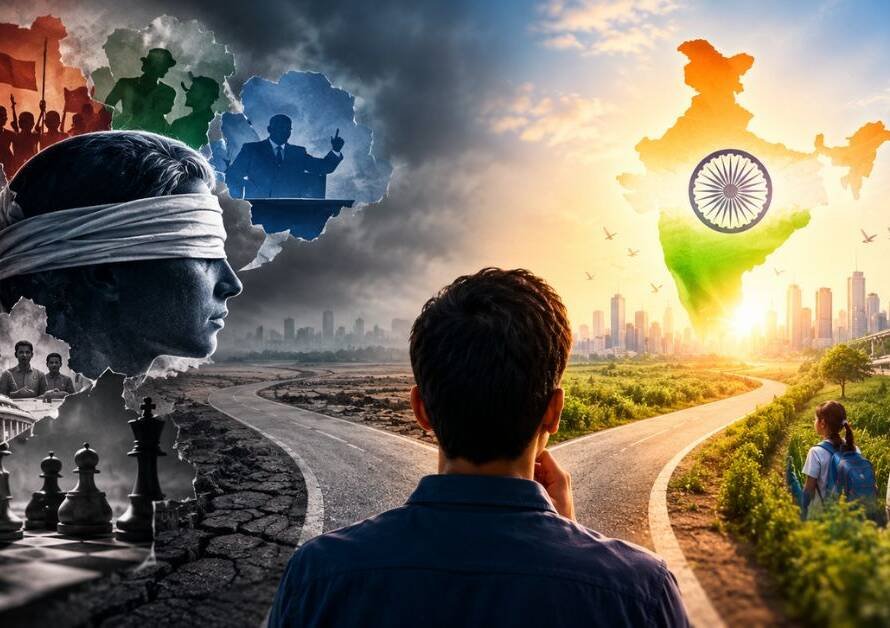
- A vibrant constitutional republic relies on citizens distinguishing between constructive political debate and actions that harm sovereign national interests.
- While criticizing government policy is a constitutionally protected right, but ttempting to weaken state institutions, undermine defense capabilities, or align with anti-national ecosystems damages the country’s security and global standing.
- In recent elections, voters have increasingly rejected obstructionist politics, choosing stability, economic development, and national unity over disruptive agendas.
Democratic Responsibility
1. The Constitutional Division: Nation vs. Executive
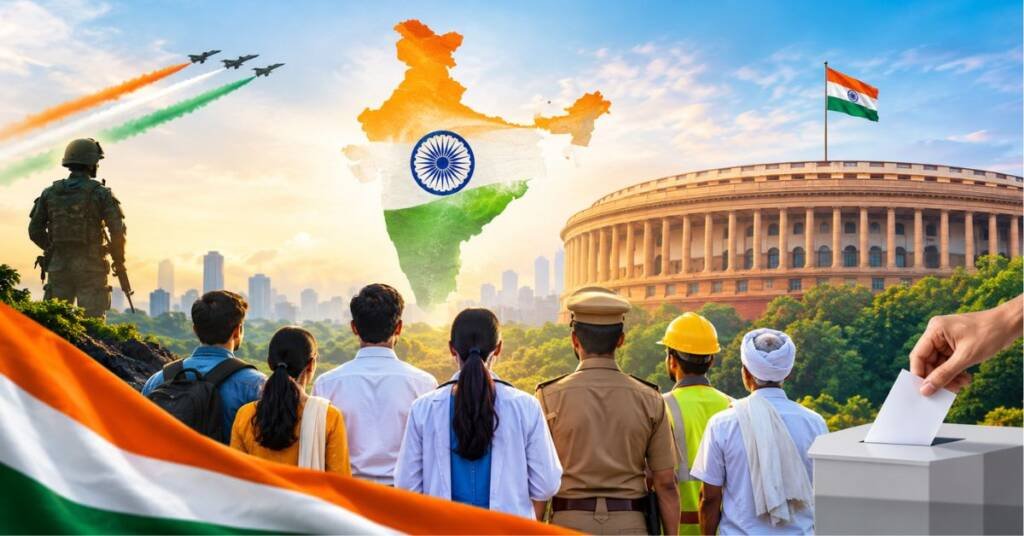
- Sovereignty is Permanent: The nation consists of its land, Constitution, people, and democratic institutions. A government is merely a temporary executive body elected to manage state administration for a specific term.
- Constitutional Protection for Critique: Under Article 19 of the Indian Constitution, citizens and elected representatives have the fundamental right to freedom of speech, expression, and peaceful assembly to question administrative choices.
Reasonable Restrictions: The Constitution explicitly allows restrictions under Article 19(2) when speech or action threatens national security, public order, foreign relations, or sovereign integrity.
2. The Role of a Constructive Opposition
- Vigilant Oversight: A healthy opposition acts as an auditor—scrutinizing executive legislation, highlighting administrative errors, and offering viable policy alternatives to improve governance.
- Historical Consensus: Historically, political rivalries ended at national borders. During security crises or on foreign soil, political parties maintained a unified national stance to protect state dignity.
- Strengthening Institutions: Constructive critique prevents executive overreach, ensures transparency, and reinforces public trust in democratic mechanisms.
3. The Danger of Disruptive and Unaligned Tactics
- Loss of Constructive Debate: Modern opposition tactics have frequently shifted from constructive oversight to systematic obstructionism, characterized by constant parliamentary shutdowns, boycotts, and automatic rejection of national policies.
- Alignment with Anti-India Ecosystems: A major concern is the growing convergence between domestic political narratives and foreign or internal anti-national ecosystems. Weaponizing sensitive defense matters, questioning military readiness, or delegitimizing constitutional bodies on global platforms damages sovereign interests for short-term electoral gains.
- Economic and Strategic Stalls: Blocking critical infrastructure, economic reforms, and security legislation harms the country’s growth trajectory and projects internal instability globally.
4. Public Response and Electoral Realities
- Rejection of Obstructionism: Electorate behavior across national general elections and state assembly contests demonstrates a clear rejection of persistent negation and disruption.
- Erosion of Traditional Strongholds: Even in long-standing regional strongholds, opposition bases are shrinking as voters choose political continuity, national integration, and development-led governance.
- Demand for Solutions: Voters are sending a clear signal that political dissent must offer well-researched, constructive solutions rather than perpetual confrontation.
5. Framework for Responsible Citizenship
- Prioritize Country Over Party: Evaluate political actions and policies based on their long-term impact on national security, social cohesion, and economic growth rather than partisan loyalty.
- Demand Policy Alternatives: Hold opposition parties accountable to offer tangible, well-researched policy options instead of relying on political paralysis.
- Protect Core Institutions: Defense forces, judicial processes, constitutional bodies, and electoral systems must remain shielded from partisan attacks.
- Reject Destructive Narratives: Refuse to support political discourse that aligns with, amplifies, or leverages external or internal hostile forces seeking to destabilize the state.
🇮🇳 Jai Bharat, Vandematram 🇮🇳
Read our previous blogs 👉 Click here
Join us on Arattai 👉 Click here
👉Join Our Channels👈
Reads & Views: 49