Summary
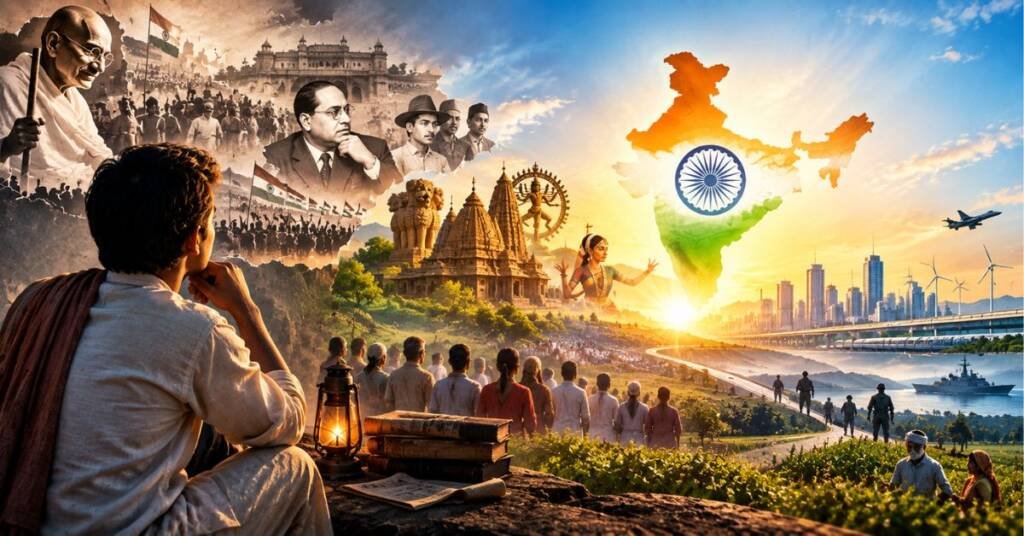
- Over the past decade, India has witnessed an unprecedented civilizational, political, and strategic renaissance.
- National security, cultural pride, territorial integrity, and economic governance issues that remained stalled for decades and centuries—such as the construction of the Ram Mandir, the abrogation of Article 370, decisive action against Naxalism, and digital governance—have been realized within a short span of 10 to 12 years.
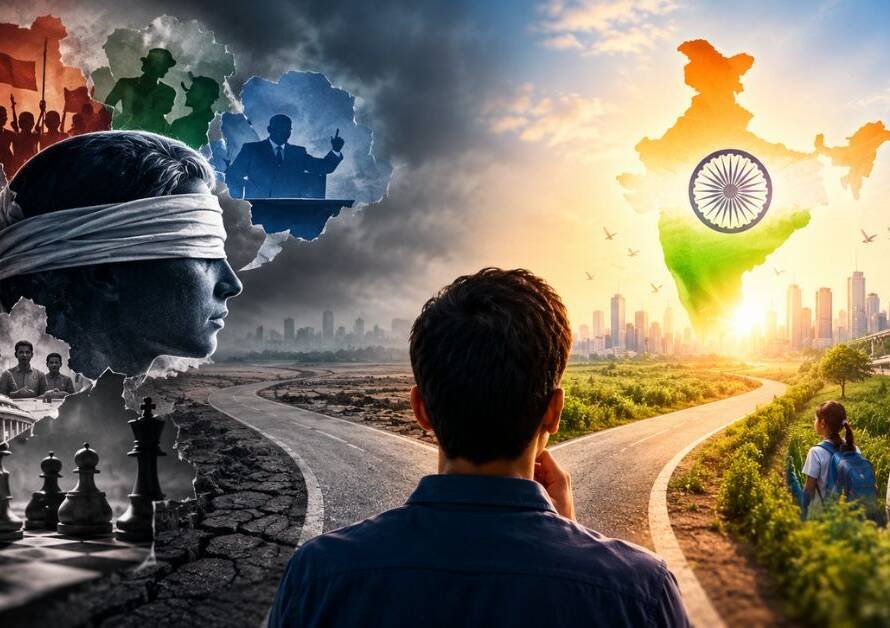
- This narrative presents a comprehensive analysis of this historic journey, the decline of dynastic politics, the defense of national sovereignty against hostile global ecosystems, and the vital role patriotic citizens must play as India emerges as a global superpower and Vishwaguru.
From an Impossible Dream to India’s Historical Resurgence
1. Cultural Pride and the Revival of Faith
- Ram Lalla Enshrined in a Grand Temple: After a 500-year-old legal, social, and religious struggle, the enshrined presence of Ram Lalla moving from a temporary tent into a grand and divine temple is not merely the erection of a structure. It symbolizes the rebirth of India’s cultural consciousness and the restoration of its historical self-respect.
- Restoration of Cultural Heritage: From the rejuvenation of Kedarnath Dham to the Kashi Vishwanath Corridor, Ujjain’s Mahakal Lok, and the grand celebrations of Dev Deepawali—these achievements prove that progress toward modernity is strengthening, rather than severing, India’s cultural roots.
- Dignity for the Displaced (CAA): Granting legal citizenship and refuge to persecuted minorities from neighboring countries embodies the core ethos of Vasudhaiva Kutumbakam and demonstrates practical human compassion.
2. Internal Security, Integrity, and Correcting Historical Faults
- Abrogation of Article 370: Decades of constitutional separatism in Kashmir, which constantly challenged national integrity, were brought to an end. The vision of “One Nation, One Constitution, One Symbol” is now an operational reality.
- End of Stone-Pelting and Separatism: Frequent stone-pelting, shutdown calls, and separatist networks in the Kashmir Valley have been eradicated. Tourism, education, sports, and economic development have taken center stage.
- Near-Elimination of Naxalism: Naxal insurgency originating from the dense forests of Bastar and the Red Corridor, which posed a severe internal security threat, has been pushed to its final phase. Roads, schools, and mobile towers have replaced bullets.
- End of Appeasement Politics: Policy decisions have moved away from vote-bank politics to prioritize national interest and inclusive development for all.
3. External Security, Defense Strategy, and Strategic Autonomy
- Decisive Cross-Border Action: Surgical strikes and air strikes fundamentally altered India’s defense doctrine. The approach to countering cross-border terrorism shifted from reactive defense to proactive deterrence.
- Neutralizing Asymmetric Threats: Anti-national networks, terror-funding channels, and foreign handlers are systematically dismantled using modern technology and robust intelligence infrastructure.
- Energy Security and Diplomatic Balance: During global conflicts and Middle Eastern crises, when international oil and gas prices surged, India maintained strategic autonomy to secure stable energy supplies for its citizens despite external pressure.
4. Modern Infrastructure, Governance, and Economic Might
- India as the Global Growth Engine: Amid global economic slowdowns, India has emerged as the fastest-growing major economy. From Digital Public Infrastructure (UPI) to manufacturing, India has built a resilient pillar in the global supply chain.
- Transparent Public Health Execution: The transparent delivery of over 2 billion indigenous COVID-19 vaccine doses without corruption stands as a global benchmark for digital governance and scientific capability.
- Connectivity and Speed Revolution: Expressways, Vande Bharat trains, and rapid transit networks have reduced travel times across cities from hours to minutes.
- Steps Toward a Uniform Civil Code (UCC): Concrete steps have been initiated toward implementing a Uniform Civil Code to build a modern, progressive, and equitable society.
5. Decline of Dynastic Politics and Public Trust
- Closure of Corrupt Networks: For political dynasties that exploited national resources and sovereignty for seven decades to serve familial interests, accepting this transformation has proven difficult. With systemic corruption and middleman networks shut down under the current administration, patronage-based politics has collapsed.
- Desperation vs. Popular Mandate: Opposition alliances seeking short-term political gains have worked continuously to counter these shifts, yet informed voters consistently reaffirm their mandate for national progress.
- Triumph of Nationalism and Governance: Strong public trust remains aligned with national interest and clean governance, ending the era of vote-bank politics and establishing an era centered on national progress.
6. Citizen Responsibility: Countering Global & Internal Challenges
- Leadership Has Delivered; Now Citizens Must Act: While the national leadership has executed its duties in nation-building and defense with dedication, a country cannot be protected by the government alone.
- Threats from Global Ecosystems and Internal Adversaries: Foreign ecosystems uncomfortable with India’s rise as a superpower and Vishwaguru, alongside internal subversives, continuously attempt to spread misinformation and societal division.
- Duty to Protect Society, Faith, and Nation: It is the duty of patriotic citizens to stand firmly behind nationalistic and progressive leadership. Protecting society, culture, and national interests against internal and external subversion requires active citizen participation.
7. A Defining Civilizational Epoch
- A Compilation of Historic Achievements: Looking objectively at history, if any administration had achieved just one of these milestones—whether abrogating Article 370, constructing the Ram Mandir, or dismantling insurgency—its place in history would be secure.
- Divergence in Perspective: Those viewing national developments purely through narrow political lenses often fail to grasp the long-term momentum of civilizational change.
- Civilizational Triumph: For the first time in modern history, India is not merely defending itself; it is asserting its strategic capability, ideological clarity, and cultural heritage on the global stage.
Prayer & Resolve:
- May this leadership, guided by resolve and vision, carry India’s resurgence to its decisive fulfillment.
- May you live a long life… and may every decision made serve to make this great nation eternal, prosperous, and supreme in glory.
🇮🇳 Jai Bharat, Vandematram 🇮🇳
Read our previous blogs 👉 Click here
Join us on Arattai 👉 Click here
👉Join Our Channels👈
Reads & Views: 54