Summary
- This integrated policy discourse outlines a comprehensive, practical, and civilizational blueprint to fortify India’s economic sovereignty and structurally transform its rural and tribal landscapes.
- Breaking the matrix of global multinational corporate exploitation requires adopting Swadeshi (indigenous) products—not merely as a personal lifestyle choice, but as a strategic national necessity.
- By dismantling colonial-era centralized development models and replacing an outdated, job-seeking education system with value-based skills and self-reliant leadership, India can unleash a new era of decentralized micro-economies.
- This strategic restructuring transforms farmers, forest communities, and youth from passive recipients of state welfare into the self-sustaining drivers of national prosperity.
A Blueprint for Civilizational Transformation Through Economic Sovereignty
I. The Structural Paradox: Centralized Development and Corporate Exploitation
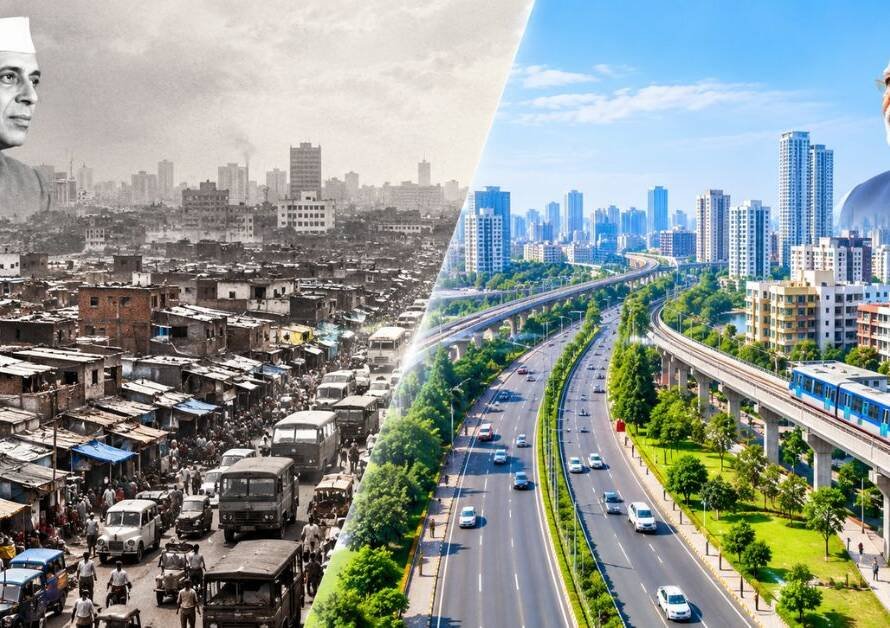
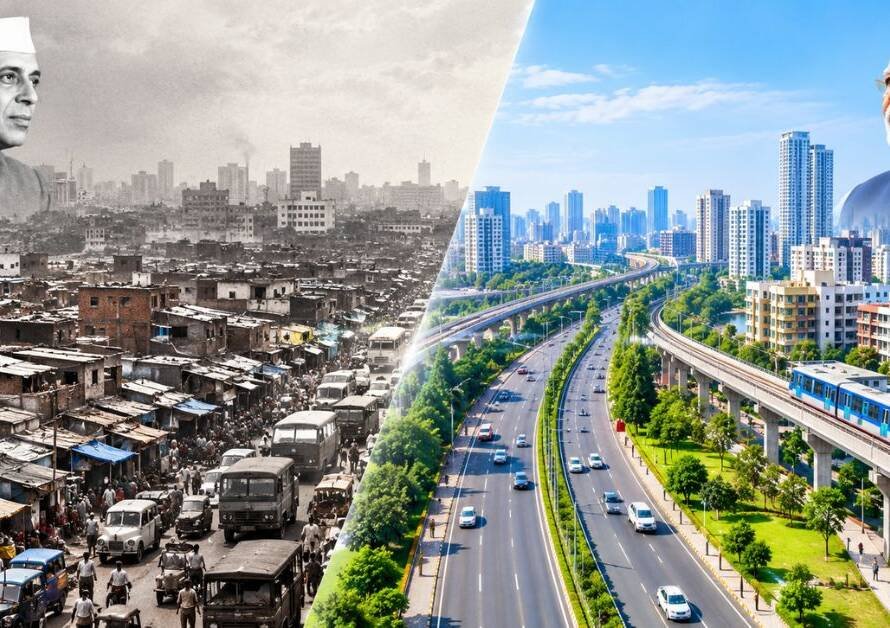
The contemporary global and domestic economic architecture presents a sharp contradiction. While urban tech hubs, metropolitan financial districts, and automated manufacturing corridors record rapid growth metrics, millions in rural and tribal sectors remain tethered to subsistence-level economies that have fundamentally stagnated. Concurrently, global Multinational Corporations (MNCs) view India merely as a massive consumer market—exploiting local water, land, and labor to enrich foreign banks.
- The Continuous Drain of Wealth: When consumers purchase foreign-branded packaged foods, chemical-laden carbonated drinks, or daily cosmetics, a massive share of that revenue is funneled abroad as ‘royalties’ and ‘dividends’ to overseas headquarters, removing liquidity from the domestic market permanently.
- The Failure of Top-Down Models: For decades, standard administrative approaches have relied on highly centralized, top-down development paradigms. This legacy system educates regional youth through a standardized, purely academic curriculum designed to produce administrative clerks, pushing them into overcrowded cities in search of corporate or government jobs. This drains rural areas of their finest talent while oversaturating urban infrastructure.
- Reversing the Flow: True structural transformation demands a complete reversal of this flow. India’s long-term future depends on transitioning from a centralized, job-seeking economy to a decentralized, wealth-generating network. Real security is achieved by anchoring educational frameworks in foundational ethics and building robust local value chains from the rich biological resources of rural and tribal ecosystems.
II. Re-Engineering the National Psyche via Value-Based Skills and Swadeshi Consciousness
Every civilization that has successfully sustained economic and social stability over centuries built its prosperity on clear ethical and practical foundations. For India, that blueprint lies in blending timeless foundational values with an active Swadeshi consciousness.
- The Ethical Anchor of Duty: Integrating core values directly into the mainstream school curriculum addresses a deep spiritual and psychological void in modern professional life. When individual ambition is completely decoupled from social responsibility, economic activity degenerates into short-term exploitation. By teaching that personal growth is deeply intertwined with community welfare, the education system creates entrepreneurs who view wealth generation as a broader social responsibility.
- A Strategic Pivot to Vocational Competence: The outdated education system must be entirely replaced by a modern, skill-driven framework. From early childhood, theoretical concepts must connect directly to real-world applications—shifting the focus from abstract memorization toward critical problem-solving, digital fluency, technical design, and advanced electronics.
- Conscious Citizenship Over Tokenism: True patriotism means recognizing the economic weapon inherent in daily Purchasing Power. While the “90 days: ₹2 = $1” messages circulated on social media may be economically mythical, the underlying sentiment is accurate. Consumers must look beyond political slogans or companies that use indigenous values purely for marketing, and intentionally choose local alternatives based on pure economics and health.
III. The Self-Starter Model: Transitioning from Job Seekers to Opportunity Creators
When education successfully synthesizes internal ethics with technical execution, it triggers a critical psychological shift in youth: transitioning from the identity of a passive job seeker to that of a self-reliant creator.
- Cultivating a Problem-Solving Mindset: A well-trained, self-reliant youth does not wait for a corporate entity or a government department to outline their workspace. Equipped with localized market data and decentralized digital tools, they analyze their immediate geography to identify operational bottlenecks, supply gaps, or unutilized resources—viewing a local inefficiency not as a permanent grievance, but as a direct business opportunity.
- The Multiplier Effect of Decentralized Employment: Foreign multinational factories are highly automated, generating minimal employment relative to their massive financial turnover. Conversely, when a young local team establishes a regional enterprise—whether focused on decentralized cold-storage assembly, localized renewable energy grids, or indigenous food processing—they become multipliers of employment, absorbing local labor and checking forced urban migration.
- The Internal Velocity of Money: The capital earned by a Swadeshi entrepreneur circulates entirely within India. The local vendor uses that income to pay local school fees, purchase goods from the neighborhood grocery, and buy clothes from a domestic textile merchant. Keeping capital active within the same district transforms economically vulnerable villages into self-sustaining hubs of commerce.
IV. Monetizing the Rural Economy Beyond Traditional Crops
Agriculture remains the historical backbone and cornerstone of food security. However, with land holdings fragmenting rapidly with each generation and weather patterns turning increasingly volatile, treating crop cultivation as the sole income source for rural populations is economically unviable.
- Localizing Processing Infrastructure (Processing Hubs): Raw agricultural goods are frequently sold immediately post-harvest at minimal returns because villages lack storage and processing facilities. Rural transformation requires establishing localized, small-scale industrial value chains directly within districts. By introducing regional processing, extraction, and packaging facilities, communities retain the lucrative manufacturing margins typically lost to urban middlemen.
- Converting Waste into Clean Energy Systems: Every rural ecosystem generates massive volumes of biomass and organic waste. Utilizing small-scale local processing technologies, communities can convert crop residues and biomass into high-density biofuels, compressed biogas, and enriched organic fertilizers—lowering operational costs for farmers while generating clean energy for local businesses.
- Escaping the Double-Exploitation Matrix: Foreign food conglomerates heavily market processed junk food, noodles, and chemical sodas loaded with sodium and preservatives, contributing to rising rates of diabetes and obesity. This creates a double-exploitation loop: consumers spend hard-earned money on toxic foods, then hand over massive sums to foreign pharmaceutical MNCs for healthcare treatments. Prioritizing natural alternatives like coconut water, sugarcane juice, lassi, buttermilk, and sattu rejuvenates both physical health and rural manufacturing.
V. Capitalizing and Structuring the Tribal Forest Economy
In the tribal areas within the nation’s forests, the need for systematic planning, structural resource investment, and sophisticated market integration is exceptionally acute. A highly organized, state-backed framework can transform these forests into thriving, sustainable economic zones that honor indigenous heritage while securing modern financial independence.
- Establishing High-Value Forest Produce Cooperatives: Non-Timber Forest Products (NTFPs)—including rare medicinal plants, wild organic honey, natural resins, and aromatic herbs—are highly sought-after commodities in global wellness and cosmetic sectors. The state must step in to establish and protect robust, tribal-owned processing cooperatives that handle collective bargaining, scale up supply, and enforce strict quality standards.
- On-Site Processing and Scientific Standardization: To maximize financial returns, primary processing must occur directly within or adjacent to forest regions. Deploying solar-powered distillation plants, precision drying units, and standardized testing equipment within tribal hubs allows communities to process raw herbs into concentrated oils, pure powders, and certified organic ingredients—shifting their status from primary collectors to value-adding manufacturers.
- Deploying Mega-Project Infrastructure Principles: Just as large-scale national infrastructure initiatives require detailed logistical planning and serious capital investment, the tribal forest economy demands an equivalent level of state prioritization. This systemic approach must include:
> Comprehensive state-backed financing for constructing rural processing plants, eco-friendly warehouses, and cold-chain transport networks.
> Rigorous technical training for tribal youth in modern inventory control, international organic certifications, and digital marketplace management.
> Strict legal and ecological frameworks to prevent corporate encroachment, ensuring that extraction rates remain fully sustainable and that the wealth generated stays directly with the guardians of the forest.
VI. The Path to Enduring Economic Sovereignty
- India’s future does not lie in mimicking the hyper-centralized, ecologically damaging urban development models of Western or East Asian nations. The real strength of the country resides in its vast, decentralized rural geography, its immense forest wealth, and its deep cultural heritage.
- Economic independence does not arrive overnight through external miracles; it requires the conscious, coordinated effort of every citizen. Transformation begins within your own pocket, your own kitchen, and your daily purchasing priorities.
- By training youth through an education system that marries practical skills with timeless ethics, and backing this human capital with an organized, systemic Swadeshi movement, India can unlock its inherent wealth from the ground up—fully secure in its historic identity and economic sovereignty.
Adopt Swadeshi; Keep India’s Wealth Working for India’s Growth!
🇮🇳 Jai Bharat, Vandematram 🇮🇳
Read our previous blogs 👉 Click here
Join us on Arattai 👉 Click here
👉Join Our Channels👈