Summary:
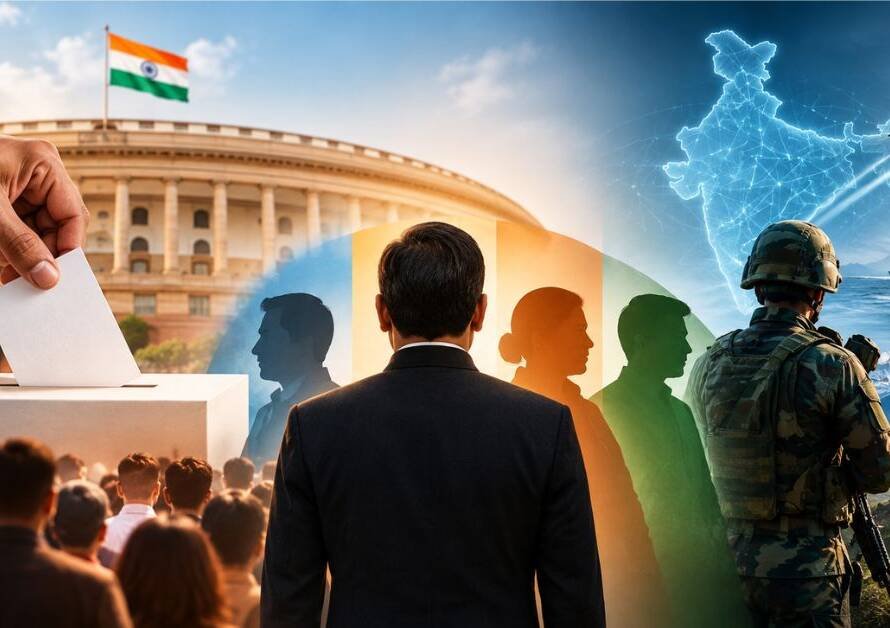
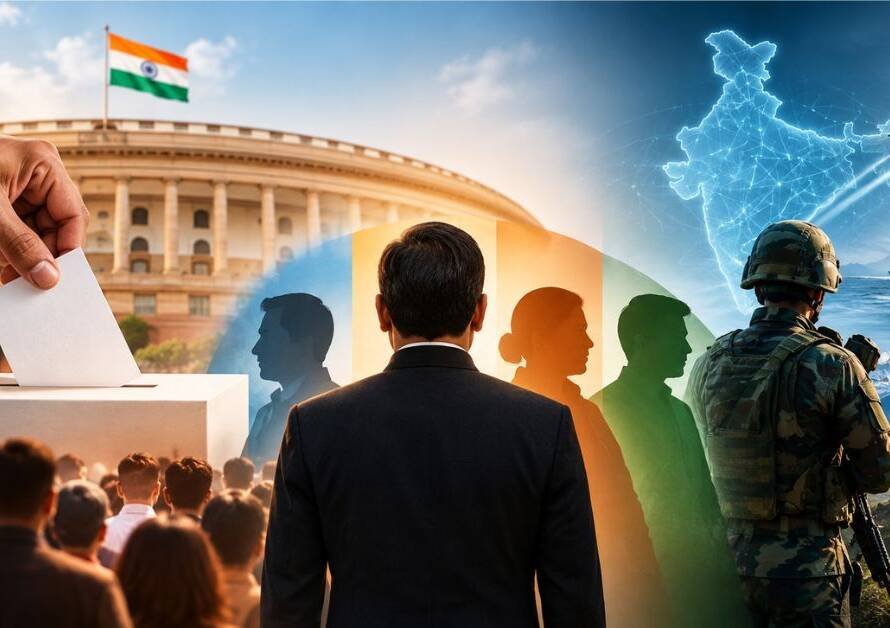
- The 1975 Emergency remains one of the most critical political turning points in modern Indian history. What was presented at the time as a necessary administrative step to restore order was, in reality, the culmination of years of power concentration, economic hardship, and mounting political unrest.
- Following the landmark 1971 election, central authority was increasingly consolidated around a single leadership core, sidelining traditional democratic processes and party structures.
- When economic crises fueled nationwide student protests and trade union strikes, the government responded with administrative force rather than structural reform.
- The turning point arrived with the June 1975 Allahabad High Court ruling, which invalidated the Prime Minister’s election. Rather than stepping aside, the ruling establishment invoked Article 352 to impose an Emergency, suspending civil liberties, detaining opposition leaders, and censoring the press to maintain its hold on power.
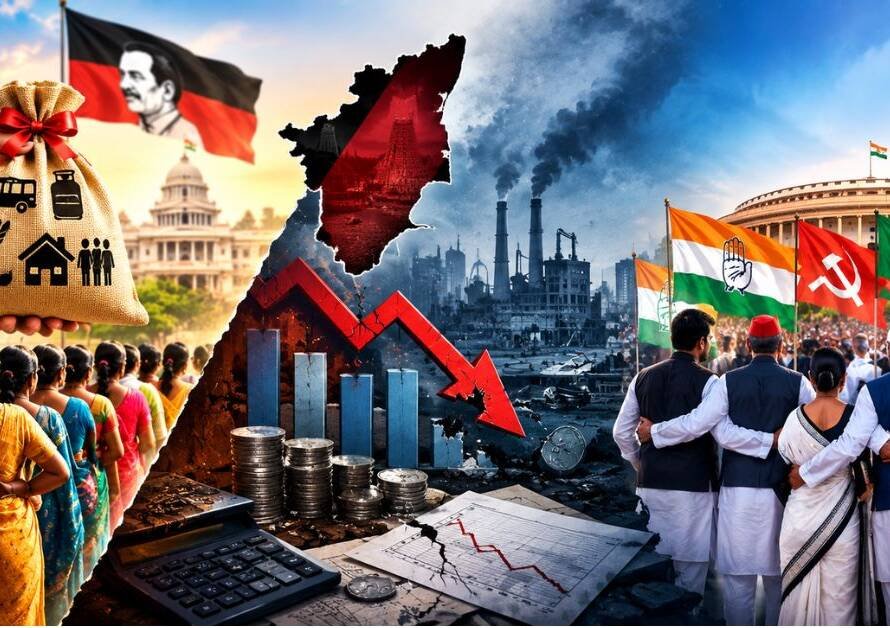
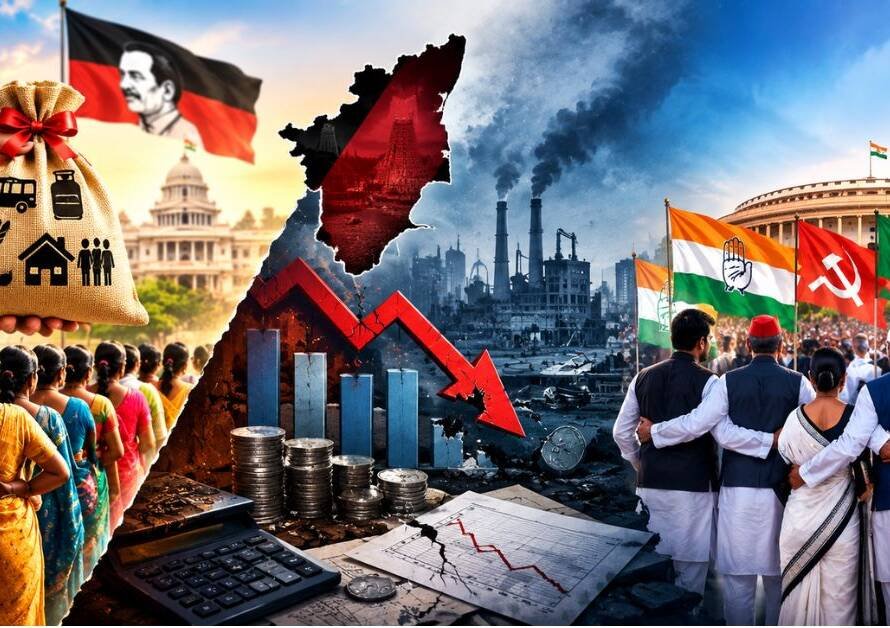
- This historical event also offers a stark contrast to India’s trajectory after 2014, when a shift toward nationalist-driven governance elevated the nation from the ‘Fragile-5’ to a top-5 global economy. This detailed analysis breaks down the key events leading to June 25, 1975, the structural shifts that followed, and the enduring lessons for democratic governance.
India’s Emergency: From Political Crisis to Constitutional Challenge
1. The 1971 Victory and the Structural Shifts in Power
The 1971 general election laid the groundwork for an unprecedented centralisation of authority within the central government.
- The Slogan and the Mandate: Riding on the populist slogan “Garibi Hatao” (Remove Poverty) and the victory in the 1971 Indo-Pak war, the ruling party secured a massive parliamentary majority, effectively marginalizing the opposition.
- Marginalization of Party Structure: Internal party democracy was gradually weakened. Traditional decision-making bodies within the ruling party were bypassed, concentrating authority in a small circle of advisors.
- Centralization of Executive Authority: Power became increasingly concentrated in the Prime Minister’s Office (PMO). Key administrative, intelligence, and legislative functions were brought under direct centralized oversight.
- Erosion of Institutional Autonomy: Civil services and democratic institutions were increasingly expected to demonstrate “committed” loyalty to the executive, diluting traditional administrative neutrality.
2. Economic Vulnerabilities and Rising Public Discontent
The political high of 1971 was quickly followed by severe economic challenges that strained public trust.
- Impact of the 1973 Oil Shock: The global energy crisis triggered sharp price hikes in petroleum, driving up transportation costs and creating widespread inflationary pressure across the country.
- Shortages and Soaring Inflation: India suffered severe food shortages, rising unemployment, and inflation rates that pushed essential goods out of reach for middle- and lower-income families.
- Governance and Administrative Strain: Industrial output slowed, and allegations of systemic corruption and inefficiency further eroded public confidence in central economic planning.
- Unmet Expectations: The gap between the 1971 campaign promises and the economic realities of 1973–1974 created deep-seated resentment among urban youth, farmers, and working-class populations.
3. Mass Uprisings: Gujarat and Bihar Student Movements
Public anger manifested on the streets, starting in educational institutions and spreading to the broader populace.
- The Gujarat Navnirman Movement (1973–1974): What began as a student protest over rising college mess bills expanded into a state-wide anti-corruption movement. Intense public pressure eventually forced the dissolution of the elected state assembly—a historic precedent.
- The Bihar Student Movement (1974): Inspired by events in Gujarat, students in Bihar formed the Bihar Chhatra Sangharsh Samiti to protest against rising unemployment, food scarcity, and government corruption.
- Escalation to a National Issue: Local student grievances rapidly evolved into a structured political challenge against both the state and central administrations.
4. Jayaprakash Narayan and the Call for ‘Total Revolution’
The entry of veteran freedom fighter Jayaprakash Narayan (JP) transformed localized protests into a organized national movement.
- Leadership of the Movement: JP came out of political retirement to lead the student movement, insisting on non-violent methods and a broad national agenda.
- Concept of ‘Sampoorna Kranti’ (Total Revolution): JP argued that removing a government was insufficient; India required a systemic transformation across political, economic, social, and cultural spheres.
- Unification of the Opposition: Under JP’s banner, diverse and previously fragmented opposition parties—ranging from social democrats to right-leaning groups—united against the ruling government.
- Industrial Disruption (May 1974 Railway Strike): Led by George Fernandes, nearly 1.7 million railway workers went on a nation-wide strike. The central government responded with severe measures, arresting thousands of workers and signaling its intent to crack down on public dissent.
5. The Allahabad High Court Ruling: The Catalytic Trigger
The legal crisis of June 1975 converted a political standoff into a constitutional turning point.
- The Election Petition: Socialist leader Raj Narain had challenged the Prime Minister’s 1971 election victory from Rae Bareli, alleging improper use of government machinery for campaign purposes.
- Justice Sinha’s Historic Order (June 12, 1975): Justice Jagmohanlal Sinha found the Prime Minister guilty of electoral irregularities, declaring the election void and barring the sitting Prime Minister from holding parliamentary office for six years.
- Refusal to Resign: Rather than stepping down on moral grounds or appointing an interim leader, the ruling establishment sought a conditional stay from the Supreme Court, allowing the Prime Minister to remain in office without voting in Parliament.
- Demands for Resignation: The opposition, led by JP, organized massive rallies demanding immediate resignation on constitutional and moral grounds.
6. June 25, 1975: Imposition of the Emergency
Faced with dwindling legal legitimacy and mounting public pressure, the government chose an extreme constitutional route.
- The Ramlila Maidan Rally: On June 25, 1975, JP addressed a massive gathering in Delhi, calling on the police and military to uphold the Constitution and refuse unlawful orders.
- Midnight Decision: Treating the rally as an existential challenge, the executive bypassed standard cabinet protocols and advised President Fakhruddin Ali Ahmed to declare a state of internal emergency under Article 352 of the Constitution.
- Crackdown in the Dark: Before dawn on June 26, electricity to major newspaper offices was cut off, and prominent opposition leaders—including JP, Morarji Desai, Atal Bihari Vajpayee, and L.K. Advani—were arrested under preventive detention laws.
- Suspension of Fundamental Rights: Civil liberties were suspended, strict press censorship was established, and judicial review of executive action was severely restricted.
7. The Post-2014 Shift: Economic Resilience and Governance Reform
The long-term impact of central executive management can be understood by comparing past economic fragility with recent performance.
- From ‘Fragile-5’ to Top Economy: Decades of administrative inefficiencies and political instability left India categorized among the ‘Fragile-5’ emerging economies prior to 2014.
- Nationalist Realism (2014–2026): Over the past 12 years, a focus on decisive governance, digital infrastructure, fiscal discipline, and manufacturing has elevated India into the top 5 global economies.
- Avoiding Structural Collapse: While several regional neighbors experienced severe balance-of-payments crises and governance instability, India maintained economic growth and energy security amidst global supply disruptions.
8. Lessons for Democratic Vigilance
The events of 1975 serve as a enduring case study on the vulnerabilities of democratic institutions under executive pressure.
- Protection of Institutional Checks: A healthy democracy relies on independent judicial oversight, a free press, and constitutional checks to prevent power concentration.
- National Interest Over Political Survival: The imposition of the Emergency highlighted the dangers of prioritizing short-term political survival over broader constitutional norms and national stability.
- Role of the Citizenry: The political recovery following the 1977 elections demonstrated that long-term stability depends on an informed public committed to protecting democratic processes and national progress.
🇮🇳 Jai Bharat, Vandematram 🇮🇳
Read our previous blogs 👉 Click here
Join us on Arattai 👉 Click here
👉Join Our Channels👈