Summary
- This integrated article presents an in-depth analysis of the three-dimensional political and cultural transition of modern India—flowing from university campuses to civic bodies and the broader national consciousness.
- The moral lessons learned from recent student protests, the resolve for cultural awakening against ideological polarization, and the election results from the Delhi University Students’ Union (DUSU) and local civic bodies deliver a clear message.
- Having failed miserably in parliamentary and democratic processes over the past 12 years, opposition parties and anti-national ecosystems have attempted to incite students using sensitive issues like UGC, NEET, and reservation policies, organizing sponsored protests to destabilize the central government through unfair means.
- However, the aware Indian voter—especially the modern ‘Gen-Z’ youth—has completely rejected this negative strategy. The country’s youth is now standing firmly with a nation-first, progressive, and governance-oriented approach from college campuses to the national stage, supporting the vision to transform India into a global superpower (Vishwaguru).
India’s Democratic Journey: Values, Ideology & Mandate
1. The First Pillar: Political Misuse of Student Unrest vs. The Foundation of Values
- Politicization of Issues and Attempts to Destabilize: Facing continuous defeats in democratic elections over the last 12 years, opposition factions and allied ecosystems have made aggressive attempts to weaponize sensitive and crucial issues like UGC, NEET, and reservation policies.
- The Agenda to Create Anarchy: The primary objective of these sponsored agitation efforts was not to find genuine academic or structural solutions for students, but rather to mislead them, generate unrest, and destabilize a democratically elected government through unfair means.
- Street Aggression vs. Family Values: When a movement strays from constructive reform into personal abuse, damage to public property, and serving narrow political interests, it highlights a failure of moral and family values long before any weakness in examination systems.
- Degrees vs. Character Building: Modern educational institutions are limited to imparting technical skills and professional qualifications. A responsible, prudent, and patriotic citizen is nurtured primarily through home environments, moral priorities, and cultural roots (dharma).
- Restraint and Decency as True Strength: Expressing dissent does not require hostility or public disruption. True courage and strength of character lie in maintaining dignity and civic decorum even during adverse circumstances.
2. The Second Pillar: The ‘Nation-First’ Resolve Amid Ideological Siege
- Failure of One-Sided Narratives: For decades, manufactured and targeted labels like ‘pseudo-secularism’, ‘Manuvism’, or ‘intolerance’ were weaponized to push Indian traditions, Sanatan philosophy, and national consciousness onto the defensive.
- Exposing the Hidden Agenda: Indian society and the youth have now fully understood the political agenda hidden behind these sponsored narratives, causing such misleading campaigns to rapidly lose relevance and impact.
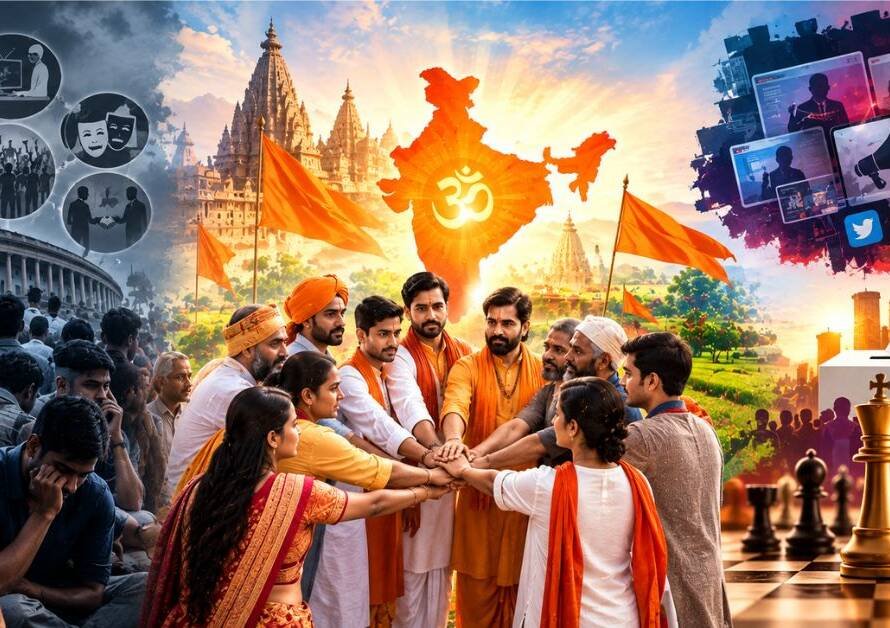
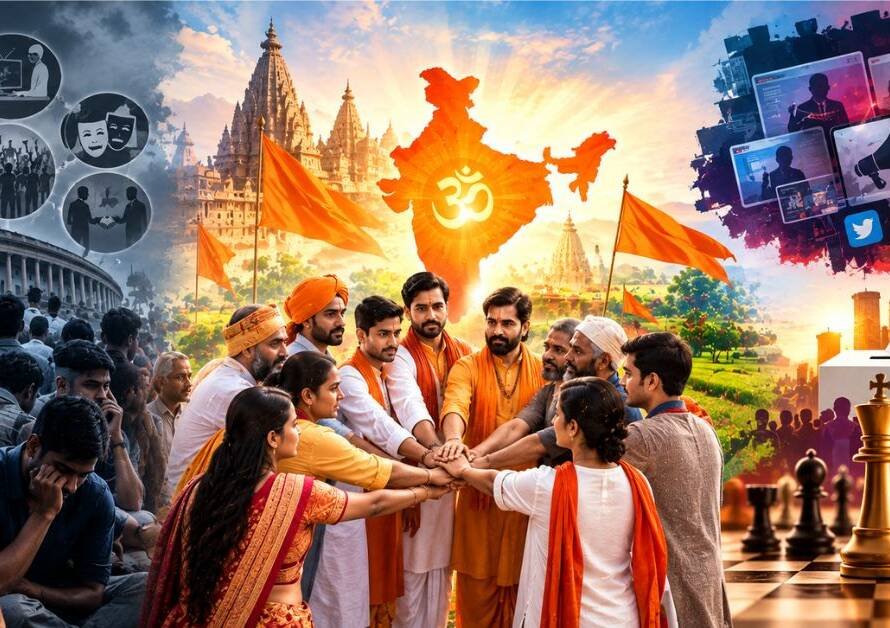
- The Rise of Conscious Citizenship: Shedding passivity and hesitation, a law-abiding society is actively asserting itself on ideological and intellectual fronts. Misleading narratives are now countered solely through facts, logic, constitutional principles, and strong character.
- Resolving Internal Divisions: Rejecting politics that divide society along caste, regional, and sub-group lines to build an integrated, self-respecting, and organized civic society is the only lasting path to security.
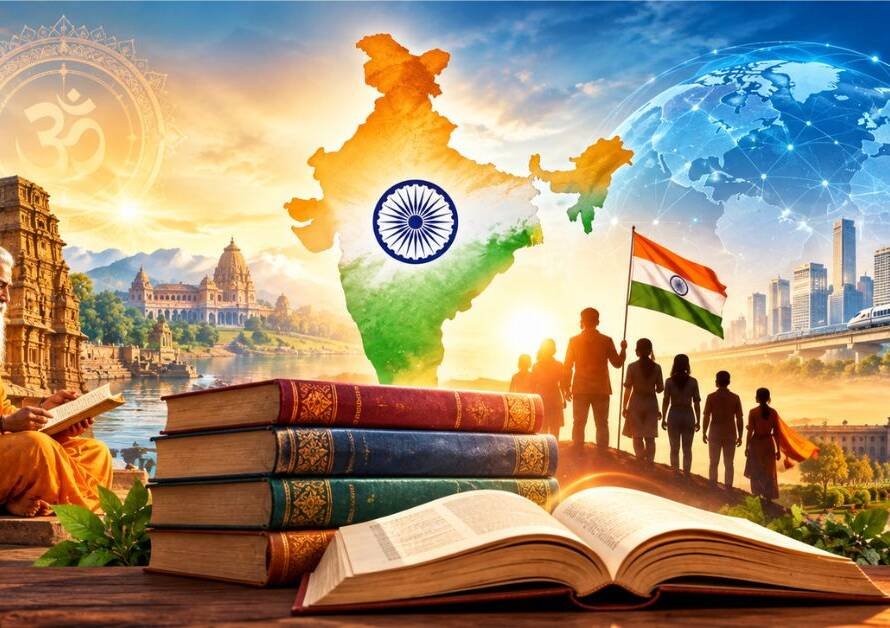
- The Aspiration to Become Vishwaguru: The majority of Indian society and the youth are uniting behind the broader national goal of establishing India as a global power (Vishwaguru) economically, technologically, and culturally, setting aside narrow regional or sectional divisions.
3. The Third Pillar: DUSU, Civic Elections, and the Clear Mandate of ‘Gen-Z’
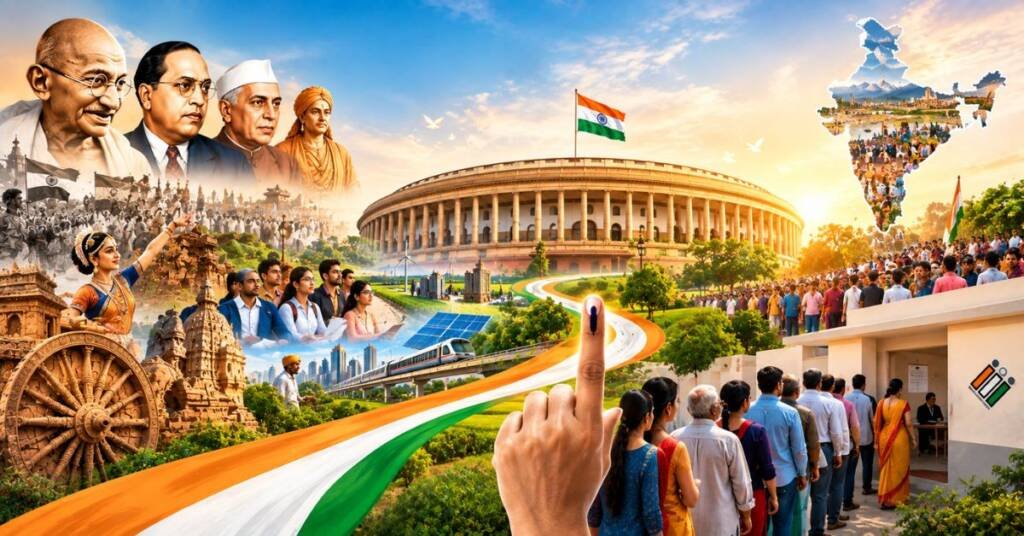
- National Thought in DUSU and Gen-Z’s Message: The major victory of the nationalist student organization (ABVP) in the Delhi University Students’ Union (DUSU) elections clearly demonstrates that students across college campuses have begun rejecting the opposition ecosystem and leftist agendas.
- A Check on Radical Campus Politics: Gen-Z youth have sent a clear signal that they will not participate in anti-national activities, attempts to disrupt campuses, or politically sponsored unrest. They demand progress and constructive development within academic environments.
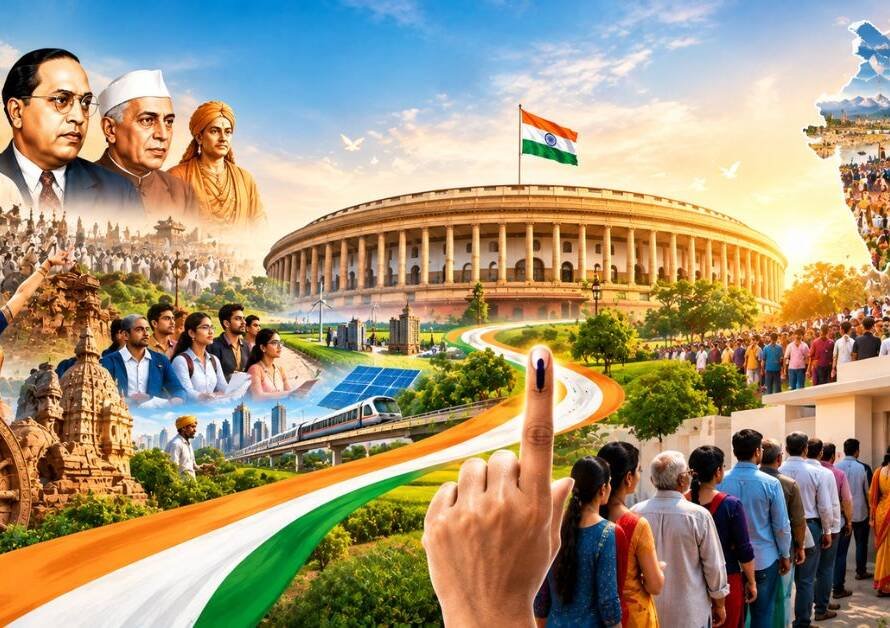
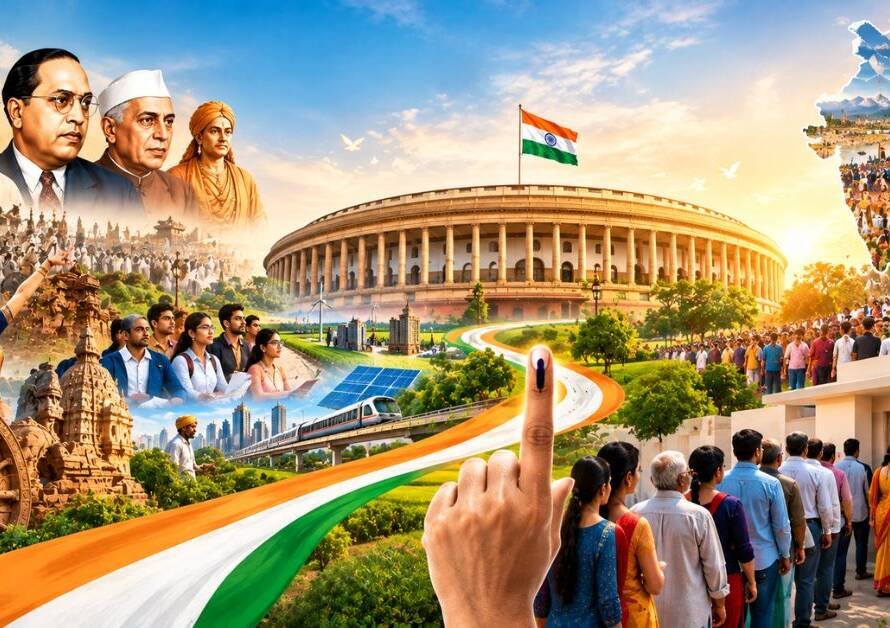
- Ground Reality in Civic Polls: Widespread success in urban local body elections across regions like Rajasthan proves that average voters prioritize grounded development, basic infrastructure, and good governance over misleading claims or artificial discontent.
- Irrelevance of Opposition Politics: Due to the electorate’s repeated rejection of negative politics at the ballot box, traditional opposition parties are facing a crisis of relevance on the fringes of Indian politics.
- Public Trust in Stability and Leadership: Modern Indian youth stand firmly for transparent opportunities, decisive leadership, and the country’s global growth. Voters understand that national progress can only be sustained through a stable, result-oriented government.
4. The Fourth Pillar: Institutional Strength and Future Outlook
- Administrative Fairness and Reforms: The government and autonomous bodies are continuously restoring youth confidence through transparent examination procedures, swift grievance redressal systems, and administrative rigor.
- Intellectual and Cultural Renaissance: Through digital media, research initiatives, and articulate discourse, Indian youth are confidently presenting India’s true history and rich perspective on the global stage.
- Expansion of Economic Opportunities: Historic growth in the startup ecosystem, research initiatives, and national infrastructure has motivated young people toward self-development and national service rather than chaotic agitations.
- Awareness of Civic Duties: Alongside demanding rights, growing awareness regarding civic duties, social discipline, and the protection of public property is laying the foundation for a bright national future.
5. Conclusion: The Rise of a Self-Respecting and Empowered India
- Whether through the return of national thought on university campuses, the failure of attempts to engineer political instability, or electoral mandates grounded in development—the entire sequence of events demonstrates the resilience of India’s democratic foundation.
- The negative politics that have failed continuously for the last 12 years no longer hold sway over the public mindset.
- When India’s Gen-Z youth and citizens reject narrow agendas to choose character, good governance, family values, and a ‘Nation-First’ policy, no opposing force can impede India’s journey toward becoming a global superpower and Vishwaguru.
“Degrees merely create professionals; values create human beings. And when the youth of a nation completely reject negativity to embrace nation-building as their ultimate duty, India’s march toward becoming a Vishwaguru becomes unstoppable.”
🇮🇳Jai Bharat, Vandematram 🇮🇳
Read our previous blogs 👉 Click here
Join us on Arattai 👉 Click here
👉Join Our Channels👈
Reads & Views: 72