Summary:
- This comprehensive narrative frames the Great Nicobar Project as the ultimate litmus test for Indian sovereignty. It contrasts the current government’s vision for a “Strategic Fortress” with seventy years of dynastic neglect, where national heroes like Veer Savarkar and Netaji Bose were sidelined in favor of family branding (Indira Point).
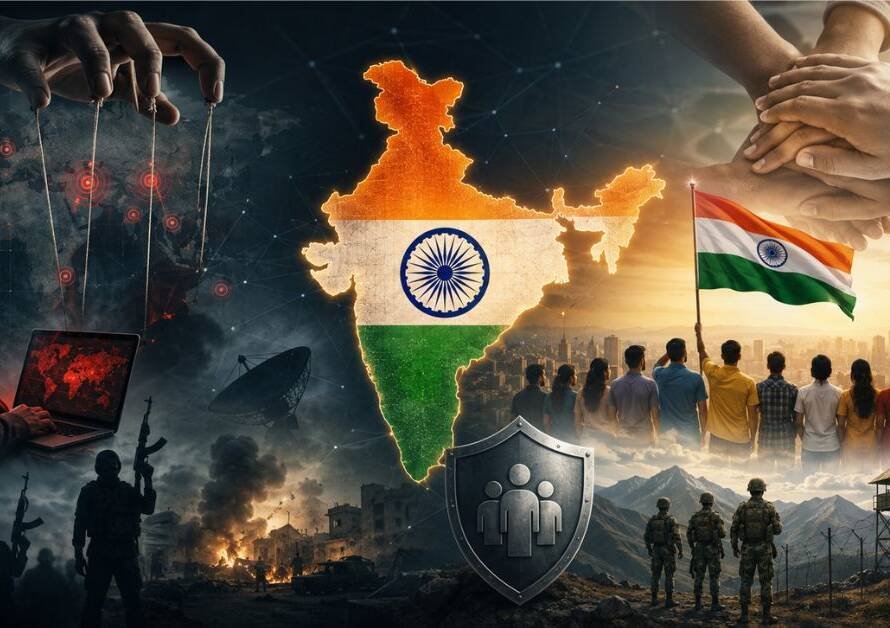
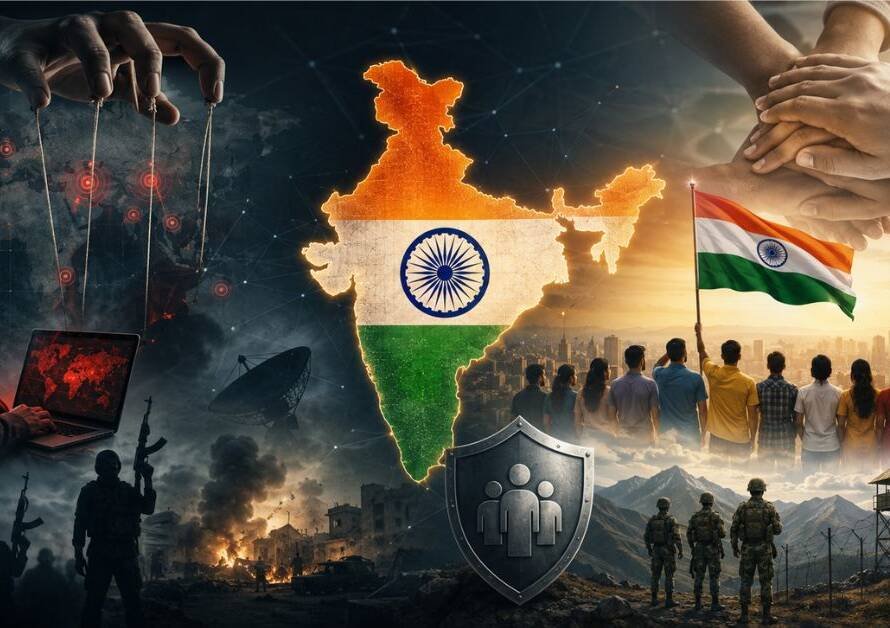
- The text argues that the opposition to this project is a coordinated effort by a domestic-international nexus—linking “PaPu” (Rahul Gandhi), secret MoUs with China, and Western “Deep-State” interests.
- It explains why not just China, but even the US and UK, prefer a dependent India over an autonomous one.
- The narrative concludes with an urgent appeal to citizens to politically and socially boycott these “traitorous” elements, continuing the momentum of the Haryana mandate to root out those who prioritize foreign agendas over the Indian Motherland.
The Global ‘Deep-State’ Assault
I. The Islands of Sacrifice vs. The Politics of Self-Promotion
For nearly three-quarters of a century, the Andaman and Nicobar Islands served as a silent witness to the disparity between those who bled for India and those who branded it for their own glory. To understand the current resistance to the Great Nicobar Project, one must first understand the historical betrayal of the region’s legacy.
- The Erasure of Revolutionary History: * Veer Savarkar: He spent 12.6 years in the harrowing isolation of Cellular Jail, enduring the “Kala Pani” torture for the dream of an independent India. His sacrifice was the bedrock of the islands’ revolutionary spirit. Yet, for decades, his name was deliberately omitted from official maps and landmarks by a regime that feared his ideology.
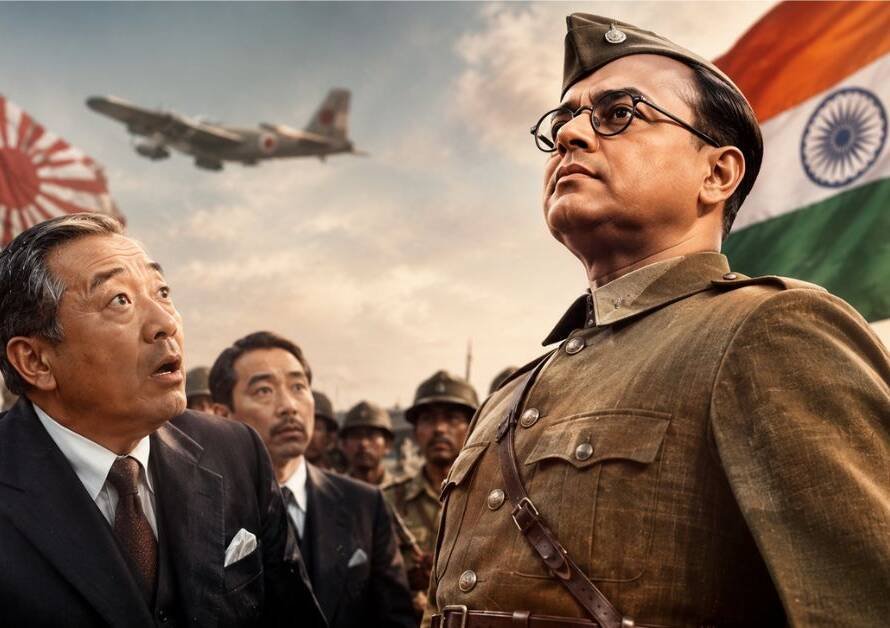
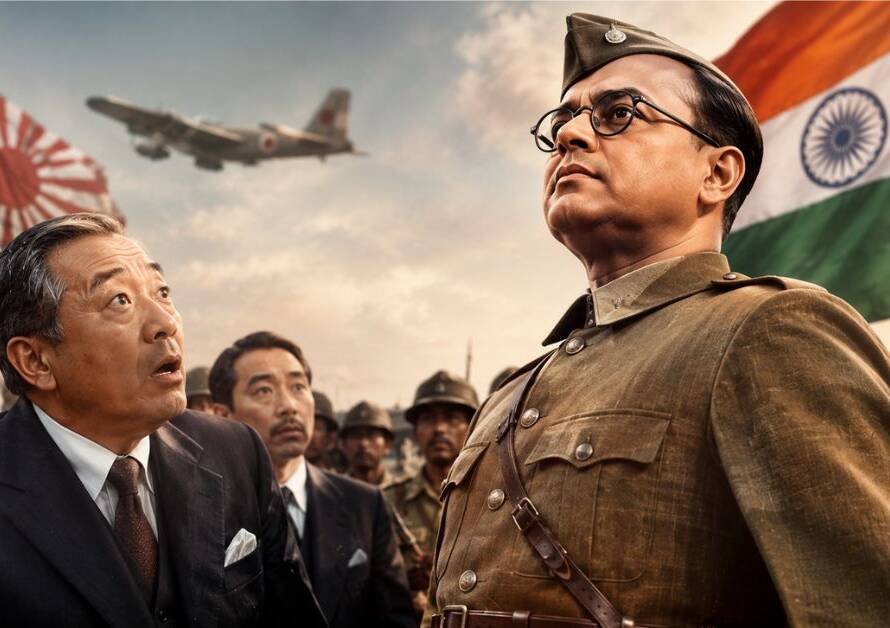
- Netaji Subhas Chandra Bose: In 1943, the Azad Hind Fauj first hoisted the Indian Tricolour on these liberated islands, naming them “Shaheed” and “Swaraj.” Despite this being the first soil of a free India, the post-independence establishment systematically diminished Netaji’s role to preserve a single-family narrative.
- The Cult of Personality: * In 1985, the southernmost tip of India—originally known as Pygmalion Point—was renamed Indira Point. This change was not the result of a liberation struggle or a heroic feat; it was a tribute to a routine visit by a Prime Minister.
- This naming convention highlights the “Seven-Decade Syndrome”: a mindset where India’s geography was treated as a canvas for a single family’s legacy, while the true martyrs were relegated to the footnotes of history.
II. The Great Nicobar Project: A Geopolitical Necessity
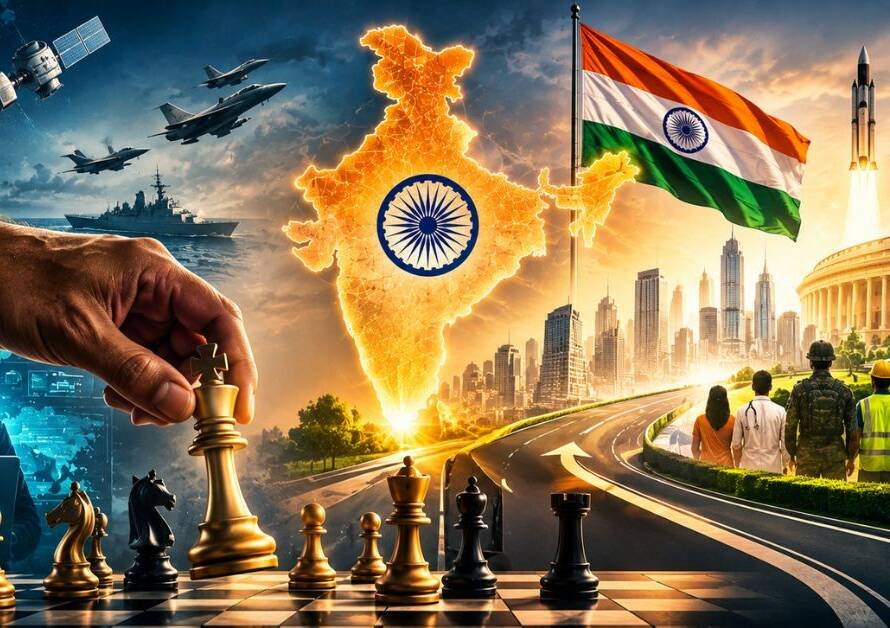
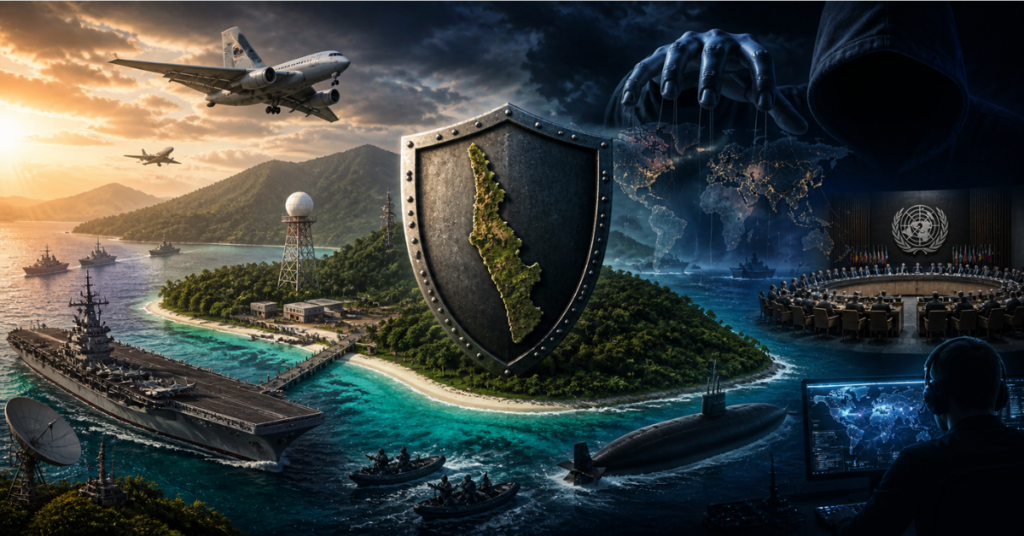
The ₹82,000 crore Great Nicobar Project is not just an infrastructure venture; it is the cornerstone of India’s future maritime security. Its strategic components—a Transshipment Port, an International Airport, and a fortified Military Base—are designed to transform India into a global maritime powerhouse.
- Choking the Malacca Strait: * Great Nicobar sits at the very mouth of the Malacca Strait, the world’s busiest maritime chokepoint.
- By developing this “Unsinkable Aircraft Carrier,” India gains the ability to monitor and, if necessary, halt hostile naval movements. This is the ultimate deterrent against regional bullies and a critical shield for the entire Indo-Pacific region.
- Economic Self-Reliance: * Currently, India loses billions in revenue as cargo is transshipped through foreign ports like Colombo or Singapore.
The Great Nicobar Port will keep Indian wealth within Indian borders, ending the era of economic leakage that previous regimes ignored for seventy years to keep India financially subservient.
III. The Western “Deep-State” and the NGO-Media Cartel
A fortified Great Nicobar rewrites the Indo-Pacific power equations—putting India in command of the Malacca Strait without the need for Western crutches. This is exactly why the resistance is not just coming from Beijing, but also from the “Deep-State” NGO-media cartel in the West.
Why the US and UK Fear Indian Autonomy:
The answer is simple: Washington and London prefer India to remain dependent on them to counter Chinese aggression. They do not want India to become truly strategically self-reliant.
- Geographic Control: Currently, the US maintains effective influence over the strait through its navy’s rotation in Singapore and strengthening partnerships with Indonesia. If India builds an independent, high-tech military base at Great Nicobar, New Delhi gains autonomous control and monitoring capability.
- India would no longer need US support or approval to manage the Western exit of the Malacca Strait, significantly reducing America’s commanding position in the region.
- The “Environmental” Hit Jobs: * Because they cannot openly oppose India’s security, these Western interests use “Deep-State” funded NGOs and a subservient media cartel to unleash “environmental” hit jobs.
- They weaponize ecology to stall projects that lead to Indian strategic autonomy. They did not care for the ecology when they were expanding their own naval bases; they only care when India decides to stand on its own two feet.
IV. The Anatomy of Treachery: Domestic “PaPu” and the Foreign Nexus
When the domestic opposition, led by figures like “PaPu” (Rahul Gandhi), labels this project a “scam” or an “ecological disaster,” they are not speaking for the Indian people. They are reading from a script provided by foreign vested interests.
- The Secret MoU with China: * The 2008 MoU signed between the Congress Party and the Communist Party of China (CPC) remains the “smoking gun” of Indian politics. It is a secret agreement that the Indian public is not allowed to see.
- Critics argue that any project that China dislikes—especially one that threatens China’s “Malacca Dilemma”—is automatically targeted by the Congress party. This is not political dissent; it is a contractual obligation to a foreign power.
- The Missing “Middle-Man” Factor: * For seventy years, “development” in India was synonymous with kickbacks and party-approved middlemen.
- The current government’s direct, transparent “Aatmanirbhar” model has eliminated these parasites. The opposition calls it a “scam” precisely because they cannot “cut a deal” or extract a commission. Their grievance is financial, not ethical.
V. The Pattern of the “Permanent Traitor”
The behavior of the current opposition is a consistent strategy used for seven decades to maintain a “fragile India” that is easier to rule and loot.
- Bleeding the Citizenry: By stalling infrastructure, they ensure high logistics costs and low employment, keeping the citizens dependent on doles rather than empowered by growth.
- Ignoring the Mandate: Despite being routed in state after state—most notably in the Haryana elections—the opposition refuses to introspect. Instead, they double down on anti-national rhetoric, fueled by a false sense of entitlement and a bruised, desperate ego. They treat the public mandate as an inconvenience to be ignored while they continue to fuel their false narratives.
VI. An Appeal to the Indian Citizen: Total Social and Political Boycott
The time for mere political debate has passed. When an opposition actively works to benefit foreign powers and stall the nation’s security, it enters the realm of treachery. The Indian electorate has shown its wisdom in Haryana, but the job is not yet finished.
- Political Punishment: Use the power of the vote to ensure that those who prioritize foreign MoUs and Western “Deep-State” agendas are permanently rooted out of the political landscape. A “traitor” to national interest should have no place in the temple of democracy.
- Social Boycott: Patriotic Indians must socially and intellectually boycott those who carry the water for foreign regimes. This means rejecting their narratives on social media, identifying the “activist” proxies in our communities, and refusing to give them the platform they use to weaken the state from within.
- Root Out the Ego: We must send a clear message: India is no longer a country that can be manipulated by false egos or foreign-funded media hit jobs. The era of ignoring the public mandate is over.
VII.Sovereignty is Non-Negotiable
- The Great Nicobar Project is the shield of India’s future. We are no longer a nation that will settle for “Pygmalion Point” while our heroes like Savarkar and Bose are forgotten.
- We are a nation that builds transshipment ports, strengthens its borders, and secures its own maritime destiny without Western crutches or Chinese permission.
- The Great Nicobar Project will move forward. Those who stand in its way—be they foreign adversaries or the “permanent traitors” within—will be consigned to the dustbin of history by the collective wisdom and strength of the Indian people.
Let the message be clear: The era of bleeding India for personal ego and foreign MoUs is over. India is rising, and it is rising on its own terms.
🇮🇳Jai Bharat, Vandematram 🇮🇳
Read our previous blogs 👉 Click here
Join us on Arattai 👉 Click here
👉Join Our Channels👈