Summary
- This article is an in-depth analysis of modern India’s economic, strategic, and ideological resurgence.
- It examines the well-planned ‘Information Warfare’ and misleading narratives spread on social media against the benchmark of evidence-based facts, economic statistics, and practical politics.
- It provides a detailed analysis of key pillars such as emerging from the 1991 economic crisis and the 2013 ‘Fragile Five’ era to become the world’s 5th largest economy today, revolutionary digital frameworks like UPI and DBT, transparent infrastructure development, an independent ‘India First’ foreign policy, and institutional accountability.
Introduction: The Terrifying Era of Information Warfare
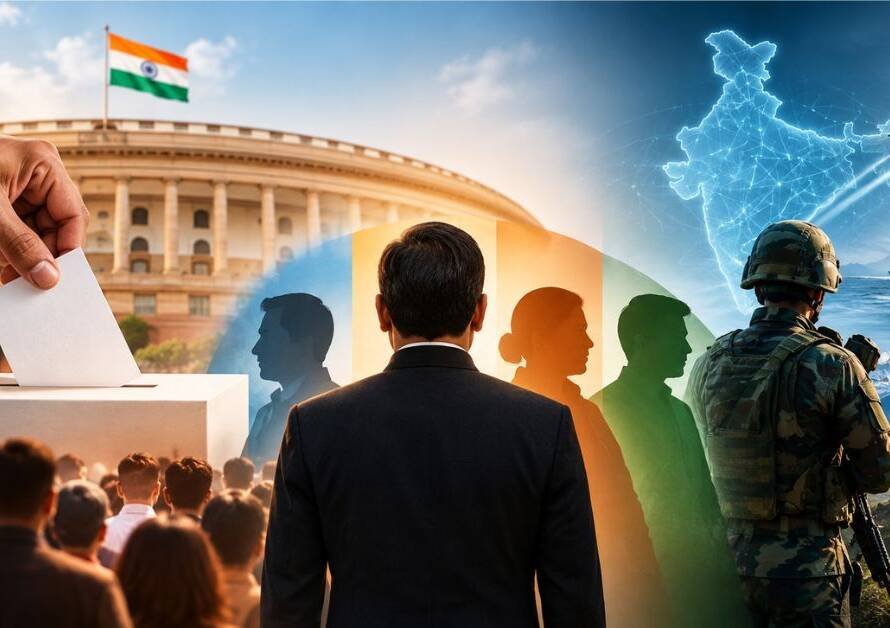
In today’s 21st century, the nature of warfare has completely transformed. In the modern era, wars are no longer fought only on borders with cannons and missiles; instead, this war is being fought on the smartphone screens inside the pockets of every Indian citizen. In global terminology, this is called ‘Information Warfare’ and ‘Narrative Building’.
- Well-Planned Propaganda: An extremely organized and well-funded network is being operated by global and internal adversary forces, whose sole objective is to tarnish the self-image of a rising India.
- Sowing the Seeds of Inferiority: Labeling the Prime Minister as ‘uneducated’, calling him a ‘thief’, or crafting the misleading narrative that “India is being sold to Adani-Ambani and America”—these are not merely political statements. This is a strategic conspiracy designed to create a sense of inferiority and doubt in the mind of the average Indian citizen regarding the development and leadership of their nation.
- The Pursuit of Truth: Psychological warfare of this nature can only be countered with statistical honesty, historical evidence, and ground realities.
1. The Arrogance of Degrees vs. Bitter Economic Reality
For several decades following independence, India witnessed the rule of ‘world-renowned’ economists, leadership adorned with degrees from foreign universities (Oxford, Cambridge, Harvard), and a so-called intellectual elite. But the question remains: Did those heavy degrees save the average Indian citizen from destitution and uncertainty?
A Bitter History of Destitution and Policy Paralysis
- The 1991 Economic Emergency: During the era of policy-makers equipped with foreign degrees, India’s foreign exchange reserves plummeted to such a level that the nation was forced to pledge its gold in foreign banks.
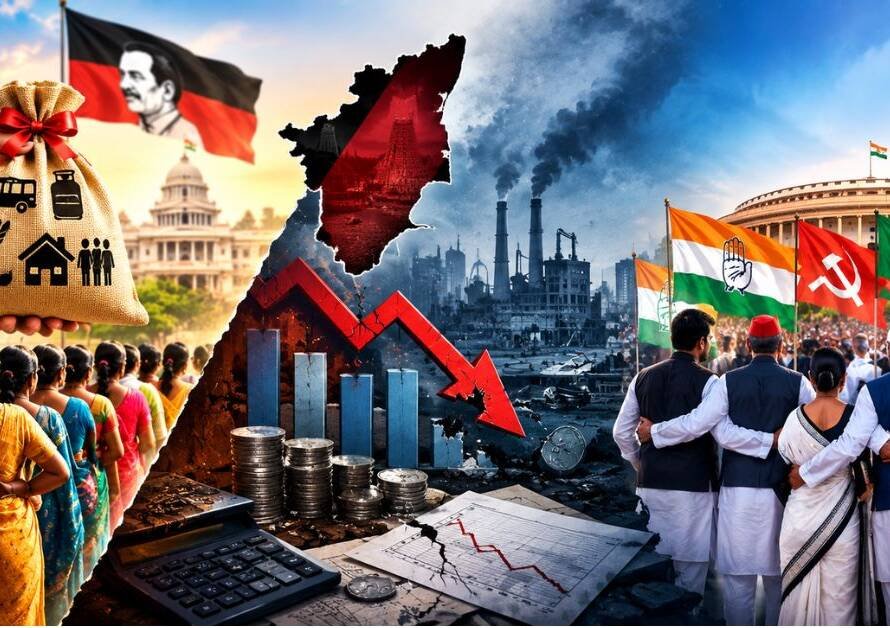
- The 2013-14 ‘Fragile Five’ Era: International financial institutions (such as Morgan Stanley) listed India among the world’s 5 weakest and most vulnerable economies (‘Fragile Five’). At that time, double-digit inflation (above 10%) and extreme ‘Policy Paralysis’ crippled the country.
Ground-Level Reforms and a Practical Vision
- The Triumph of Ground Realities Over Textbook Knowledge: When a leader from a humble background took charge, he prioritized understanding India’s actual problems and enforcing strict financial discipline instead of relying on Western textbook theories.
- The Journey from 11th Place to the Top 5: In 2014, India was ranked 11th in the global economy rankings. Today, India has overtaken the UK to become the world’s 5th largest economic superpower and is rapidly moving toward becoming the 3rd largest economy.
Factual Questions That Shatter Propaganda
- Digital Revolution (UPI): Could a short-sighted or ‘uneducated’ leadership build the world’s most complex, secure, and successful real-time digital payment architecture, which today handles over 46% of the world’s total digital transactions on its own?
- Poverty Alleviation: Could more than 250 million citizens be pulled out of the web of multidimensional poverty through hollow slogans alone?
- Respect for Democracy: Derogatory remarks made against national leadership are, in fact, an insult to India’s vibrant democratic system, which provides an ordinary citizen with the opportunity and capability to reach the highest office of the land.
2. The ‘Adani-Ambani’ Rhetoric and the Reality of Nation-Building
Opposing thinkers and social media activists frequently toss around the rehearsed narrative that the current government is handing over national assets to only two major industrialists. This argument is not only childish from an economic perspective, but it also reflects a lack of basic understanding regarding nation-building.
Public Infrastructure and Public Welfare
- National Assets: The vast network of National Highways, Dedicated Freight Corridors, modern airports, and redeveloped railway stations being laid across every corner of the country today are not the private property of any individual; they are the permanent infrastructural pillars of the nation.
- Benefits to the Last Person: When a student from an ordinary family travels in a state-of-the-art train like the Vande Bharat, or a small farmer uses a newly constructed expressway to transport his produce to major markets in a few hours without spoilage, the direct benefit goes to the general public.
The Economics of Capital Formation and Job Creation
- The Indispensability of the Private Sector: In world economic history, no nation has ever developed solely on the strength of a governmental apparatus. Whether it is America, Japan, or China—a strong corporate and private sector is what generates large-scale employment and tax revenue.
- The Startup Revolution: It is because of India’s unprecedented leap in ‘Ease of Doing Business’ that a massive ecosystem of over 100,000 registered startups and more than 100 unicorns stands in the country today.
Transparency and Global Competitiveness
- Open Tendering Process: The allocation of major infrastructure projects takes place through transparent, competitive, and legal e-tendering processes.
- Indian Sovereignty on the Global Stage: It is these very Indian industrial conglomerates that are competing directly with European and Chinese companies on international platforms, earning valuable foreign exchange and strategic assets for India. Attacking Indian industry is, in reality, equivalent to weakening India’s ‘industrial capacity’.
3. ‘Selling Off India’ or ‘Expanding India’s Strategic Power’?
Another absurd accusation is that India is mortgaging its sovereignty to ‘America’ or Western powers. This charge is leveled by the same section of people who remain stuck in the stagnant, Cold War-era mindset of the 1970s.
From Non-Alignment to ‘India First’
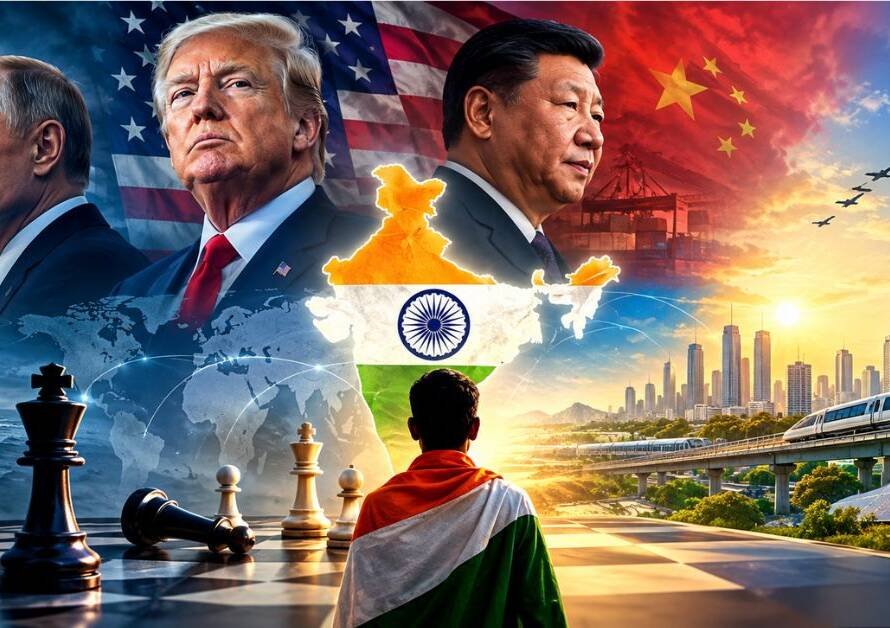
- An Independent Foreign Policy: Today’s India is not a follower or a junior partner to any global superpower.
- Strategic Balance: If India signs agreements with America on ‘QUAD’ and advanced defense technologies, the same India also purchases discounted crude oil from Russia for its national needs despite intense pressure from Western countries.
- Global Relations: Today India is a trusted friend of Israel, while simultaneously, India’s bilateral relations with major nations of the Arab world (UAE, Saudi Arabia) are at their highest and closest levels in history.
From Beggar to Global Friend and Mediator
- Leadership in Global Crises: Whether in the Ukraine conflict or global food and fuel crises, the world has seen that India no longer stands as a ‘beggar’ at international doorsteps; instead, it voices its perspective as a firm ‘giver’, ‘solution provider’, and unbiased ‘mediator’.
- Growing Global Respect: From the historic and consensus-based presidency of the G20 to the respect shown by world leaders toward Indian leadership on global platforms—this is not merely respect for one individual, but proof of the rising global stature of 1.4 billion Indians.
4. A ‘Threat’ to Democracy or Surgery on a Corrupt ‘System’?
Whenever the grip of law tightens on long-entrenched hubs of corruption in the country, or when networks of middlemen are dismantled, a certain group immediately plays the victim card claiming ‘democracy is in danger’.
Transparency and Direct Benefit Transfer (DBT)
- A Middleman-Free India: There was an era when the top national leadership itself admitted that out of 100 paise sent from the center, only 15 paise reached the poor, while 85 paise fell prey to a corrupt system.
- 100% Transfer: Today, through the ‘JAM Trinity’ (Jan Dhan-Aadhaar-Mobile) and DBT, 100% of the funds meant for public welfare schemes reach the beneficiary’s bank account directly without any leakage. The eradication of this middleman system is not an erosion of democracy, but a fundamental right of the common citizen.
Autonomy of Constitutional Institutions and the Rule of Law
- An Era of Accountability: When central investigative agencies take strict legal action against financial irregularities, money laundering, and benami properties, it is natural for corrupt elements to panic.
- Political Purity: This is not the downfall of an institution, but the formal end of the era of ‘dynasty’, ‘casteism’, and ‘appeasement’ in Indian politics.
5. A Time for Conscious Citizenship: From Illusion to Reality
Misleading terms like ‘uneducated’, ‘dictator’, and ‘thief’ are coined on social media by forces seeking to push India back into the pre-2014 dark era, where massive financial scams, policy paralysis, and terror attacks were daily news headlines.
Fact-Based Self-Introspection
- Why the Silence on Achievements? Elements spreading anti-India propaganda maintain complete silence on the historic success of Chandrayaan-3, the fastest rollout of an indigenous 5G network, the world’s largest free vaccination campaign, and the unprecedented transformation of infrastructure.
- The Question of Loyalty: This silence proves that their loyalty lies not with the nation’s resurgence, but with a narrow ideological agenda that prefers to see India as a weak, dependent, and divided nation.
- Look at Data and Reality: Remove the lenses of hatred and look at objective data, the expressways under construction, modernizing ports, strengthening foreign exchange reserves, and a rising passport index.
- Vigilance is the Shield of Sovereignty: If any citizen falls prey to these sponsored and orchestrated narratives today, they are unwittingly placing obstacles in India’s bright future. History never forgives those who become instruments of enemy propaganda during historical moments of national resurgence.
Epilogue: A New India, An Impenetrable Consciousness
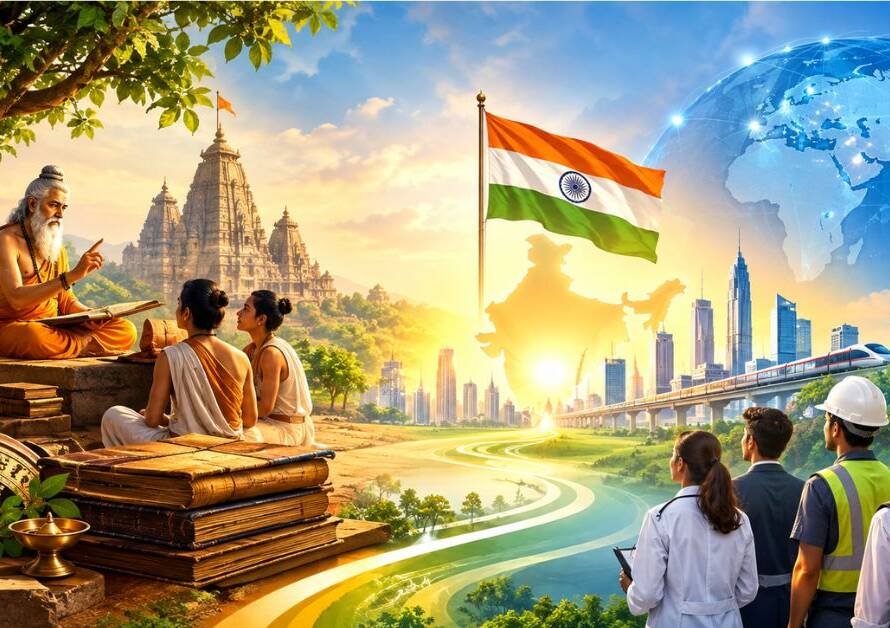
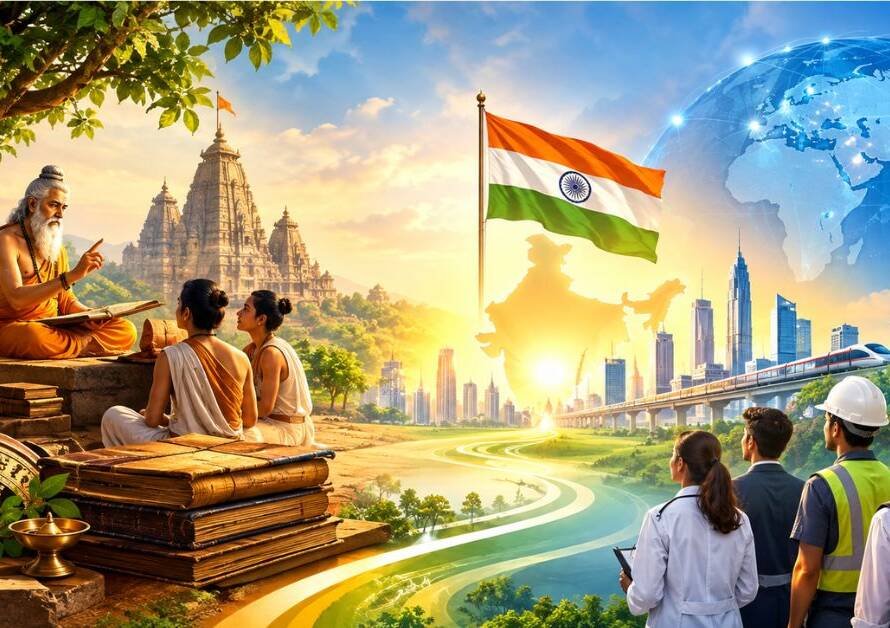
India is not going to stop now. This is a new and self-respecting India that trusts its capabilities, cultural roots, and indigenous talent, relentlessly advancing toward its goal of becoming a ‘Developed India’ and ‘Vishwaguru’ by 2047.
The rising noise from opposition camps is, in reality, the greatest evidence of their ideological despair. By becoming conscious, educated citizens imbued with a ‘Nation-First’ spirit, we must nurture the truth and dismantle every misleading piece of propaganda on the benchmark of facts.
Satyamev Jayate! Jai Hind! Bharat Mata Ki Jai!
🇮🇳 Jai Bharat, Vandematram 🇮🇳
Read our previous blogs 👉 Click here
Join us on Arattai 👉 Click here
👉Join Our Channels👈