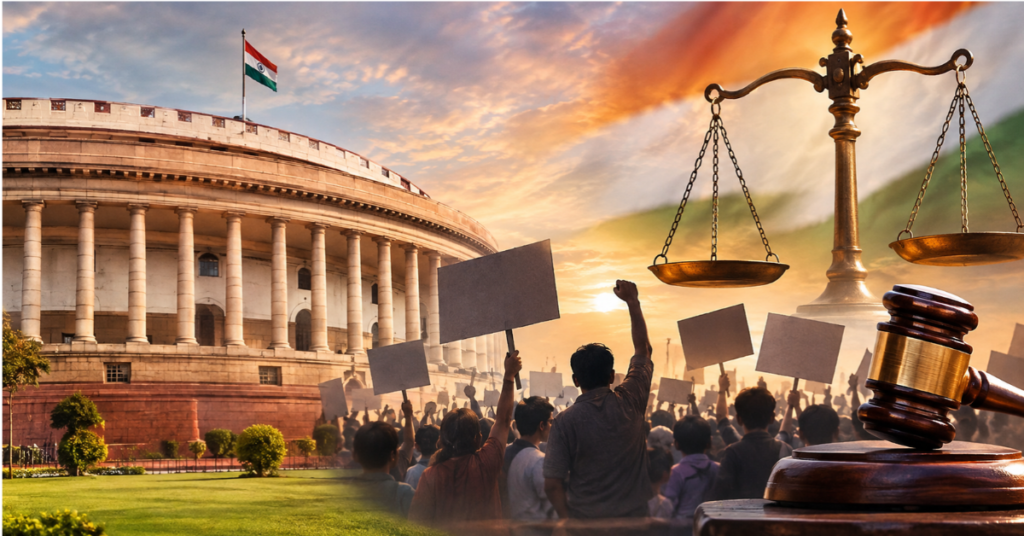
Summary
- This comprehensive analysis presents a factual and thorough examination of the protests, allegations, and their logical hollowness directed against the Election Commission in contemporary Indian politics.
- It clarifies how raising questions against constitutional institutions without any concrete proof or legal basis is a symbol of political frustration and opportunism.
- Referencing important chapters of history—especially the actual Emergency of 1975 and judicial decisions—this analysis highlights that the path to change in democracy is not paved by spreading anarchy on the streets, but by winning the public’s trust and presenting legitimate alternatives.
- Furthermore, this article emphasizes that decisively rejecting the opponents of national interest and cultural identity through democratic means, while supporting a strong alternative, is the duty of every responsible citizen.
Politics, Protests, and Democracy: Examining the Election Commission Controversy Through Logic
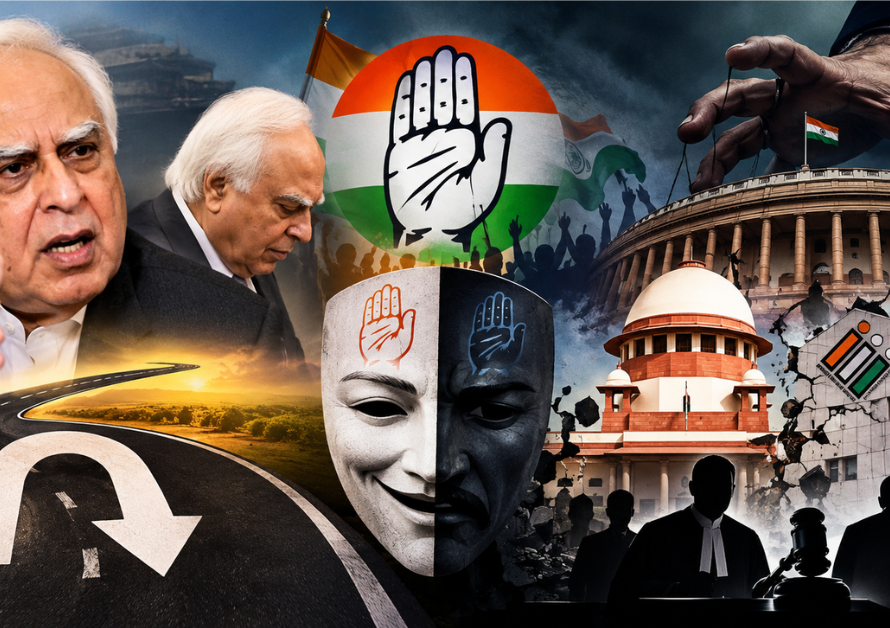
1. Allegations Beyond Logic: Baseless Claims of Vote Theft and the Election Commission
- Historical and Factual Inconsistencies: Political parties and leaders who are currently leveling grave allegations of vote theft against the Election Commission must remember that the current government has been in power since 2014, whereas the central government at the time of the 2014 general elections was led by the Congress.
- Diversity of Electoral Outcomes: If manipulation were possible in electronic voting machines or the Election Commission’s process, how would regional parties and opposition outfits continuously form governments in various states? Changes of power and opposition victories in multiple states serve as undeniable proof that the electoral process is free and fair.
- Total Absence of Proof: Making baseless allegations to create sensationalism is easy, but when it comes to presenting evidence on public platforms or in courts, not a single solid piece of proof is produced to support these claims.
2. Politics of Agitation and the Psychological Exploitation of Supporters
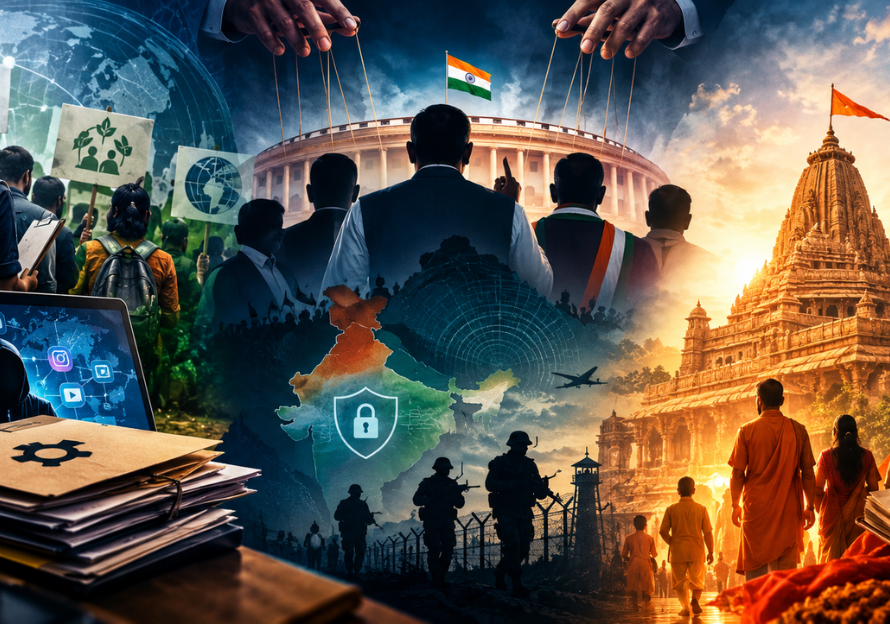
- Building Personal Political Futures: Often, the objective of such agitations is not national interest, but rather launching specific faces into politics, gaining views and popularity on social media, or maintaining personal political relevance.
- The Real Mathematics of Population: Even if a few hundred thousand people join a protest, they represent less than one percent of a country with a population of 1.5 billion. Portraying the noise of a handful of people as the voice of the entire nation makes a mockery of democratic norms.
- Language and Ideological Degradation: Using abusive and uncivilized language against the country’s Prime Minister or individuals holding constitutional posts in the name of political opposition demonstrates that the agitators suffer from a severe shortage of policies, issues, and logic.
3. Lessons from History: The Emergency and the True Power of the Judiciary
- The Dark Truth of the 1975 Emergency: When today’s politicians spin false narratives of artificial emergency or dictatorship, they must remember the era of June 25, 1975, when freedom of the press was crushed, opposition leaders were crammed into jails without trial, and citizens’ fundamental rights were stripped away.
- Respect for Judicial Verdicts vs. Dictatorship: History bears witness that when the election of a powerful Prime Minister like Indira Gandhi was set aside by the Allahabad High Court, she chose to impose an emergency on the country rather than face the law. Despite this, the public delivered such a decisive verdict via the ballot box in the 1977 elections that major political heavyweights were voted out of power.
- The True Power of Democracy: The ultimate court in a democracy is the court of the people. If anyone has grievances with the system, remedies must be sought through constitutional and legal avenues (such as court petitions) rather than tarnishing the country’s image on the streets.
4. The Politics of Alternatives and the True Democratic Path
- Absence of a Better Alternative: Governments cannot be replaced merely because the opposition hungers for power. A genuine transfer of power requires presenting a robust, progressive, and transparent ideological alternative to the public.
- Maturity of the Electorate: The Indian voter has now become entirely mature. Instead of falling into the trap of misleading advertisements, false narratives, and baseless allegations, the voter prioritizes concrete development and nation-first actions.
- Respect for Democratic Processes: Baseless attacks questioning independent constitutional institutions like the Election Commission to mask electoral defeats must stop. If leadership is to be changed, the trust of the people must be won, not institutions defamed.
5. Democratic Rejection of Those Opposing Sanatan and the Nation
- Assault on Cultural Identity: Political parties and leaders who mock or challenge Sanatan Dharma, its culture, and the integrity of the nation must be decisively sidelined by society.
- Political, Social, and Economic Boycott: Elements supporting anti-national and anti-Sanatan activities or insulting cultural traditions must receive a stern response through their ballot in all upcoming elections so they witness the consequences of their actions in history.
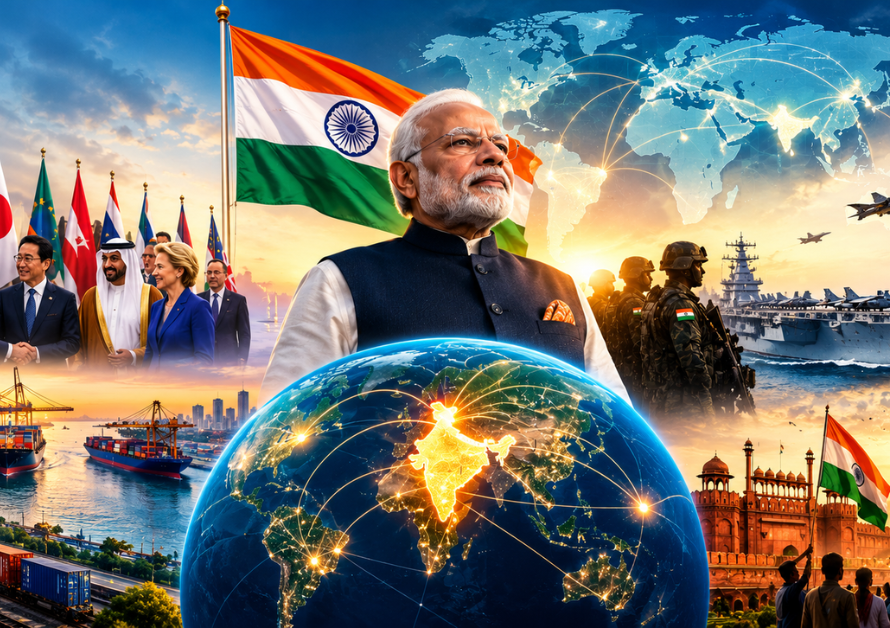
- Support for Strong Leadership: Ensuring cultural restoration, economic progress, and internal security requires backing nationalist forces such as Prime Minister Narendra Modi, the Bharatiya Janata Party (BJP), and the National Democratic Alliance (NDA), which remains the foremost imperative today.
Conclusion
- The coming and going of governments in a democracy depends entirely on the mandate of the people. The country cannot benefit from baseless allegations, sensationalist agitations, and pressure tactics directed at institutions.
- Campaigns that fail the test of logic serve only narrow political self-interests.
- True democratic loyalty lies in respecting constitutional boundaries, rejecting anti-national elements, and earning a place among the people through superior governance and policies.
🇮🇳Jai Bharat, Vandematram 🇮🇳
Read our previous blogs 👉 Click here
Join us on Arattai 👉 Click here
👉Join Our Channels👈
Reads & Views: 25