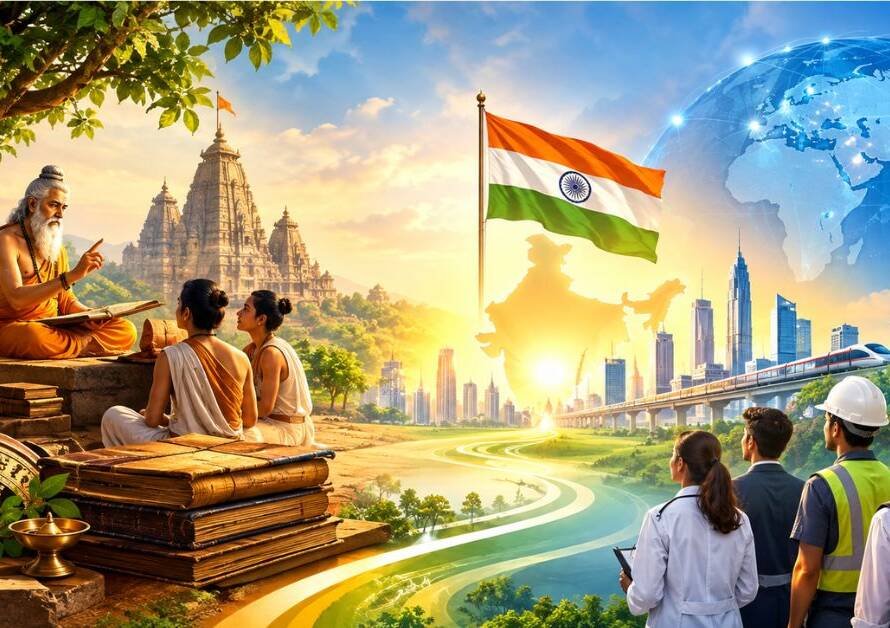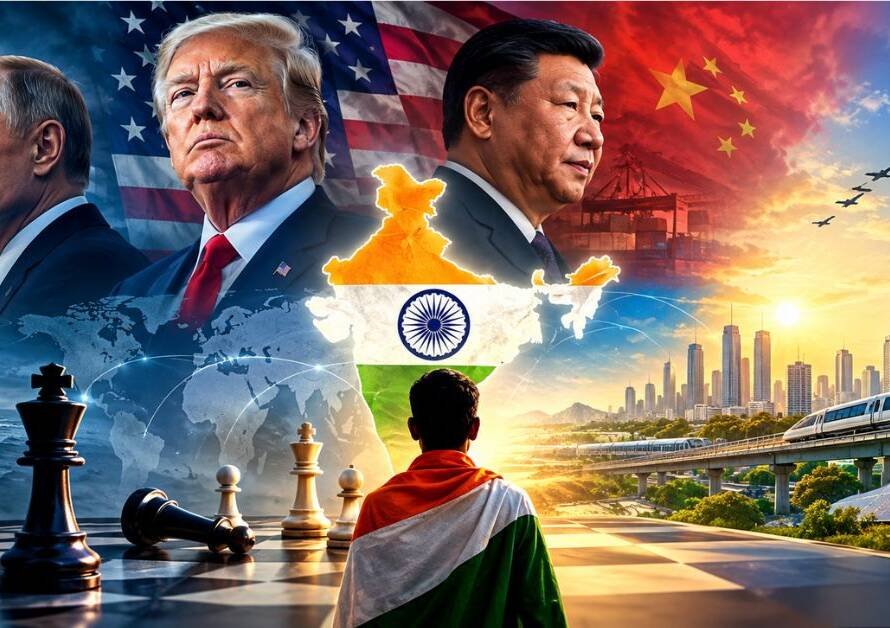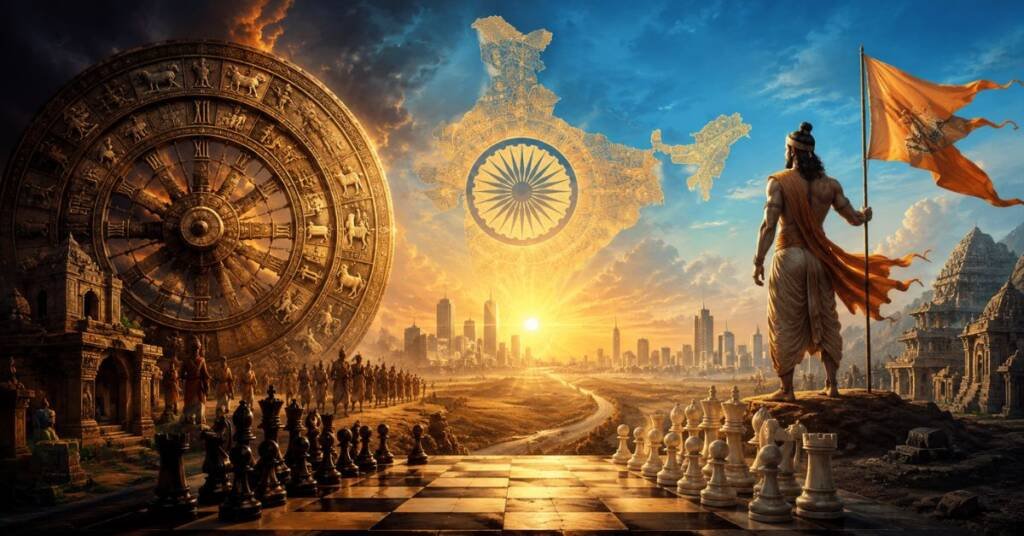
Summary
- This article presents a deep historical analysis of India’s political consciousness, power balance, and civilizational resurgence.
- It reviews the historical significance of the throne of Delhi, the major strategic misstep post-Independence—selecting Nehru over Sardar Patel—and the resulting seven decades of cultural neglect and economic fragility.
- The piece highlights the post-2014 Sanatani resurgence under Narendra Modi, India’s rise among top global economies, and the necessity for continued nationalist leadership under figures like Yogi Adityanath.
- The core takeaway is that political parties are merely instruments; the ultimate goal remains a unified, prosperous, and globally leading India (Vishwaguru).
The Principle of Time Cycle: Why Does History Repeat Itself?
1. Introduction: Individuals vs. Ideas and the Permanence of Power
“Dharmendra departed, Prahlad arrived…”
It is a universal rule of politics, history, and sociology that individuals are mortal, but ideas and civilizational values are eternal. When leadership changes with the turning wheel of time, it should represent a change of faces, not a deviation from the core purpose for which a nation and its society exist.
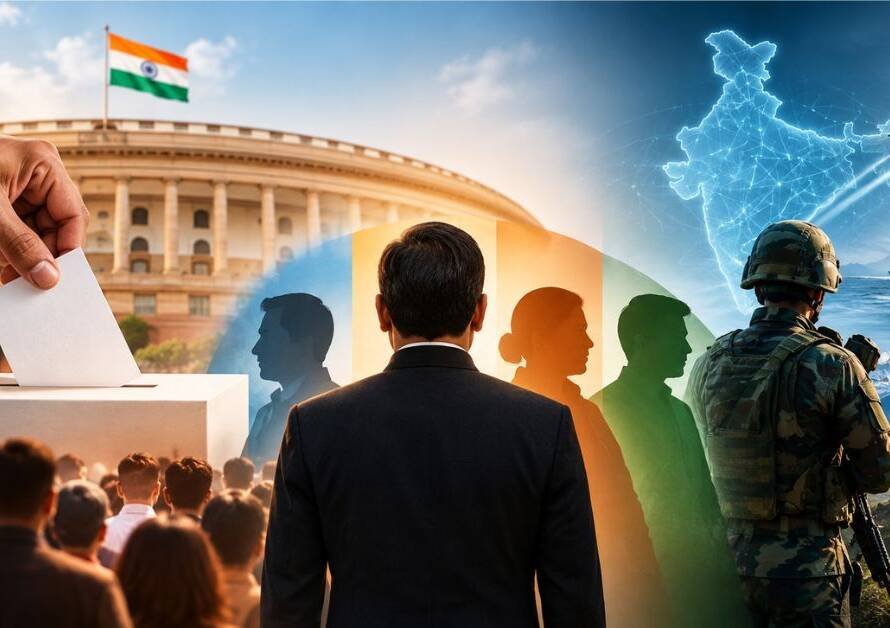
Delhi has never been just a geographic point or an administrative capital; it has served as the central symbol of India’s national soul, sovereignty, and balance of power:
- Indraprastha of the Pandava Era: The foundations of Delhi were laid as a realm of righteousness (Dharmarajya), where governance was anchored in morality, justice, and Sanatana Dharma.
- The Tomar and Chauhan Dynasties: From King Anangpal Tomar to Emperor Prithviraj Chauhan, Delhi acted as an impenetrable cultural and military shield against foreign invaders entering from the northwestern frontiers.
- Dominance of the Maratha Empire: In the 18th century, fulfilling Chhatrapati Shivaji Maharaj’s vision of Hindavi Swarajya, the Peshwas and Mahadji Shinde re-hoisted the flag of Indian consciousness over Delhi.
Core Lesson: As citizens, the lineage or party of a ruler may change, but the core loyalty of the power seated on the throne of Delhi must always remain dedicated to “Nation First” and the native Sanatana cultural values of this land. Whenever control of Delhi slipped into the hands of elements detached from Indian consciousness, the entire nation paid a heavy civilizational price.
2. The Post-Independence Historical Misstep and Seven Decades of Crisis
Upon gaining independence in 1947, India had a historic opportunity to build a nation rooted in its ancient traditions, economic capability, and cultural identity. However, the greatest strategic and historical mistake of modern India occurred at that very junction.
- The Disregard for Sardar Patel: The majority of Provincial Congress Committees and public sentiment clearly favored the ‘swadeshi patriot’ Sardar Vallabhbhai Patel. Despite this, at Mahatma Gandhi’s personal insistence, Jawaharlal Nehru—who was heavily influenced by Western thought and a colonial mindset—was chosen as the first Prime Minister.
- An Unfulfilled Superpower Vision: Had Sardar Patel become the first Prime Minister, India would have integrated not only the princely states but would have emerged as a global superpower economically, administratively, and militarily in the early decades of independence itself.
- Continuation of Destructive Policies: The Nehruvian model perpetuated the British ‘divide and rule’ tactics, appeasement politics, and a colonial administrative structure. Consequently, Sanatana traditions were marginalized, and national security was repeatedly compromised.
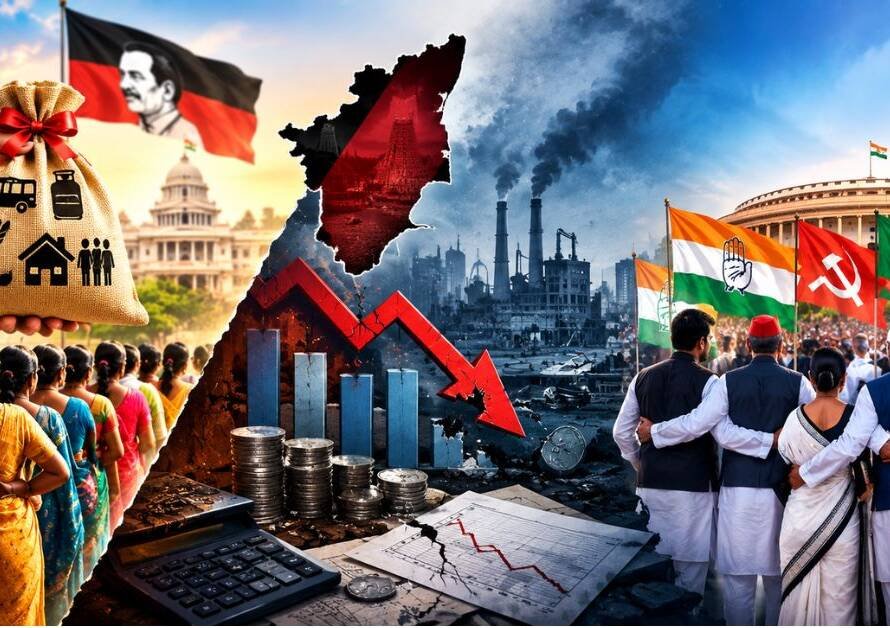
- The 2014 Economic and Moral Crisis: Seven decades of dynastic politics, policy paralysis, institutional plunder, scams, and appeasement relegated India to the ‘Fragile Five’ group of global economies by 2014.
3. The ‘Bounce Back’ and the Post-2014 Sanatani Resurgence
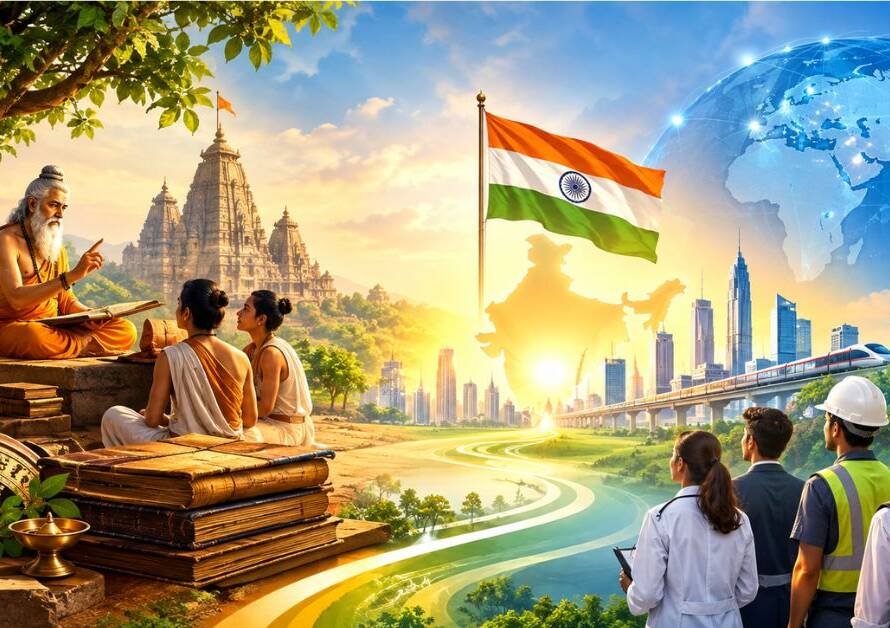
The greatest vitality of Sanatana culture lies in its capacity to bounce back with full force during its most challenging moments rather than facing extinction. In 2014, under the leadership of the Sanatani nationalist Narendra Modi, the political tide turned, initiating an epochal journey of national resurgence:
- Emergence as an Economic Superpower: Shedding the stigma of being among the ‘Fragile Five’, India firmly placed itself among the top four global economies and continues to grow at a rapid pace.
- Awakening of Sanatana Dharma and Cultural Consciousness: Cultural symbols, magnificent temple complexes, and long-neglected civilizational heritage sites have witnessed an unprecedented revival.
- Global Influence: India has asserted its sovereignty across defense, diplomacy, and technology, steering the nation back toward its ancient glory—unified, prosperous, and leading as a Vishwaguru.
4. Civilizational Defense Mechanisms and the Ideological Ecosystem
A political and cultural struggle is not confined to winning or losing a single election. It is a broad, multi-dimensional, and long-term civilizational movement.
- Game Over Doesn’t Come with One Piece: Opponents often fall into the illusion that targeting a single leader or a temporary policy will halt the momentum of Sanatana. They overlook the centuries of civilizational experience and the deep conviction of millions of Indians standing behind it.
- Institutional and Ideological Strength: The current nationalist leadership has not merely secured electoral victories; it has built a resilient cultural, administrative, and diplomatic ecosystem capable of thwarting external narratives and internal subversion.
- Deep Cadre Capability (Bench Strength): Behind the frontline leadership stands a fully trained, nation-dedicated line of future leaders ready to step up and hold the mantle during any crisis.
5. The Lineup of Future Leadership and the Imperative of Power Balance
This cultural and political journey must not be restricted to a few years or terms; it must ensure that nationalist and Sanatani leadership guides the country for decades and centuries to come.
- The Natural Progression of Leadership: “Dharmendra departed, Prahlad arrived…” Narendra Modi is mortal, as is any leader. In the future, capable and uncompromising nationalist leaders like Yogi Adityanath will take the helm. India today is nurturing an entire pipeline of future-ready leaders.
- The Danger of Opposition Coalitions: It is vital to ensure that dynastic, opportunistic, or radical political alliances are never allowed to regain power by mistake. Should such forces return, they risk plundering the nation once more—much like colonial powers and historical invaders—potentially pushing India into a destabilized state similar to its troubled neighbors within a couple of decades.
- Distinguishing Means from the Goal: In the current context, political parties like the Bharatiya Janata Party (BJP) serve as a “means” (Sadhan), not the ultimate “goal” (Sadhya). The ultimate goal is the integrity, sovereignty, Sanatani self-respect, and welfare of the people of India.
6. The Ultimate Resolve of “Krinvanto Vishwam Aryam”
- The immortal call of the Vedic seers was “Krinvanto Vishwam Aryam” (Let us make the entire world noble). This resolve is not meant to remain locked in ancient texts; it must serve as the active foundation of realpolitik, national security, and social governance.
- Among the current political options available, supporting the vehicle that enables this civilizational resurgence and Sanatani self-respect is not blind adherence to an individual—it is strategic prudence exercised by conscious citizens.
- Until a more committed alternative emerges, strengthening a Sanatani and nationalist leadership remains the only pragmatic path toward national interest, civilizational defense, and a bright future for coming generations.
🇮🇳Jai Bharat, Vandematram 🇮🇳
Read our previous blogs 👉 Click here
Join us on Arattai 👉 Click here
👉Join Our Channels👈