Executive Summary
- This analysis evaluates the cultural resurgence, strategic foreign policy, and infrastructure development of the ‘Modi Era.’
- It features an in-depth assessment of official Wholesale Price Index (WPI) and Consumer Price Index (CPI) inflation metrics across the tenures of key Prime Ministers, from Nehru to Modi.
- Crafted using scannable paragraphs and detailed bullet points, this narrative is optimized for immediate professional use or social media sharing.
The Strategy of Atmanirbhar Bharat in the Modi Era
Introduction: The Difference Between Running a Government and Shaping an Era
- History shows that while many politicians merely manage contemporary systems, rare leaders alter the course of time to forge a distinct era. Prime Minister Narendra Modi belongs to this exceptional category.
- He is not just running an administrative apparatus; he is the architect of a new epoch—the ‘Modi Era.’
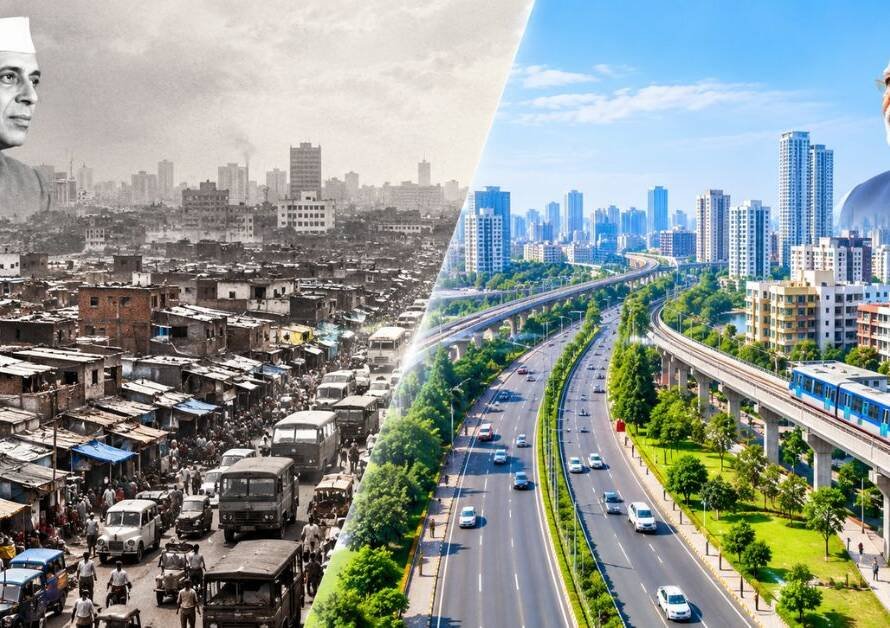
- This period serves as the foundation for the golden age of a new India, spanning the restoration of its cultural roots to robust, technology-driven economic management.
- Stripping away political bias to examine the historical, hard data of WPI and CPI inflation reveals the true extent of economic sovereignty and fiscal governance under his leadership.
Historical Comparison: Prime Ministerial Tenures and the Reality of Inflation
An objective look at official data across various tenures highlights how inflation fared during different leadership periods, revealing how effectively each administration maintained fiscal control:
- Narendra Modi (2014–2025): While the global economy battled severe recessionary pressures and runaway inflation, India maintained an exceptionally stable domestic environment. Despite massive global disruptions, average wholesale inflation (WPI) stood at a mere 2.84%, and average retail inflation (CPI) was kept at a low of 4.78%. This reflects a precise balance between public welfare and fiscal discipline.
- Manmohan Singh (2004–2014): Hampered by policy paralysis and institutional inertia, the economy suffered significant stagnation. Consequently, average wholesale inflation climbed to 6.54%, while retail inflation hit a distressing 8.16%, severely straining the middle class and lower-income demographics.
- Atal Bihari Vajपेयी (1998–2004): Operating under harsh international economic sanctions following the Pokhran nuclear tests, astute economic management kept average WPI at 4.81% and CPI at 5.37%, while simultaneously delivering massive structural infrastructure like the Golden Quadrilateral.
- P.V. Narasimha Rao (1991–1996): During this transitional phase of economic liberalization, the country navigated a severe balance of payments crisis. Over these five years, inflation remained in dangerous double digits, with average WPI at 9.92% and CPI at 10.06%.
- Charan Singh, V.P. Singh, and Chandra Shekhar (1979–1991): Marked by intense political instability and short-lived coalitions, inflation during these periods frequently spiraled out of control. Wholesale inflation reached a historic high of 19.58% under Charan Singh, while retail inflation hit a daunting 13.57% during Chandra Shekhar’s tenure, a period when India had to pledge its gold reserves.
- Indira Gandhi and Rajiv Gandhi (1966–1989): Despite massive parliamentary majorities, socialist-leaning economic policies and the ‘License Raj’ stifled growth. Excessive state control resulted in an average retail inflation of 8.64% under Indira Gandhi and 7.88% under Rajiv Gandhi.
- Jawaharlal Nehru and Lal Bahadur Shastri (1947–1966): During early nation-building, compounded by wars and severe droughts, retail inflation spiked to 11.53% under Shastri, prompting the call for self-reliance. Under Nehru, focus on heavy foundational infrastructure saw an average wholesale inflation of 4.13% (with official retail CPI data unavailable for that period).
Unprecedented Global Challenges and Indian Resilience
The true measure of economic stewardship lies in the global context under which it operates. Unlike prior decades marked by relatively stable global conditions, the last ten years forced the current administration to navigate an unbroken chain of international crises:
- Global Trade Wars: The intense tariff and economic standoff between the US and China disrupted international supply lines and volatile currency fluctuations early on.
- The Century’s Worst Pandemic (COVID-19): Severe lockdowns halted global production lines. India successfully protected over 800 million citizens with free food security programs and executed the world’s largest indigenous vaccination campaign to avert an economic collapse.
- Geopolitical Conflicts and Energy Crises: The Russia-Ukraine war and subsequent Middle East crises drove global crude oil and fertilizer prices to unprecedented highs. While advanced economies like the US, UK, and Germany hit 40-year inflation highs, India insulated its domestic market through pragmatic strategic sourcing.
- Supply Chain Collapses: Security crises in the Red Sea and critical maritime straits multiplied global logistics and shipping freight costs, creating a persistent threat to import-dependent supply lines.
- Strategic Border Standoffs: Alongside economic pressures, India faced severe military challenges on its Northern and Western borders. From Doklam to Ladakh, the nation maintained absolute national sovereignty and funded critical defense requirements without destabilizing domestic fiscal health.
Managing to keep domestic inflation below the 5% threshold under these combined conditions stands out as a remarkable feat in modern macroeconomic history.
Report Card: Performance-Based Assessment (10 out of 10)
The impact of the Modi era extends far beyond inflation control, driven by structural transformations across every major facet of governance:
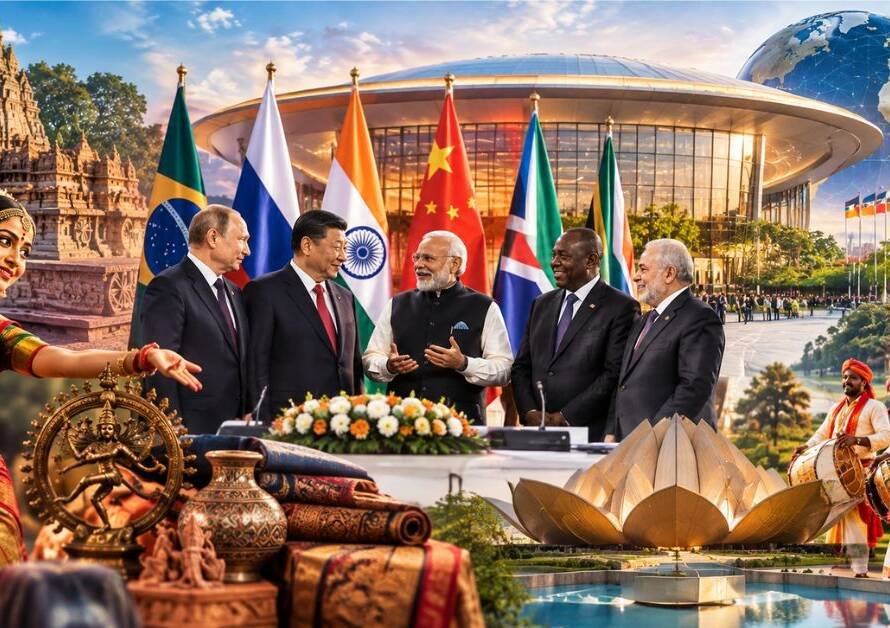
- Cultural Resurgence: Indian civilizational pride has been brought directly into mainstream discourse. The construction of the grand Shri Ram Janmabhoomi Mandir in Ayodhya and the rejuvenation of the Kashi Vishwanath Dham and Mahakal Lok reflect an India embracing its heritage on the global stage.
- Strategic Autonomy in Foreign Policy: Moving past traditional non-alignment, India’s foreign policy firmly prioritizes national interest. Resisting intense Western pressure during global energy crises, India secured discounted crude oil supplies, establishing itself as a confident global actor.
- Unprecedented Infrastructure Development: Infrastructure construction has accelerated exponentially. The rapid expansion of national highway networks, world-class expressways, the rollout of Vande Bharat trains, airport modernization in Tier-2/3 cities, and strategic defense corridors have reshaped national connectivity.
- Self-Reliance (Atmanirbhar Bharat): From defense manufacturing to electronics and semiconductor chips, India has systematically reduced its import dependence. The nation now builds its own fighter jets, naval vessels, and missile systems, transforming into a notable defense exporter.
- Historic Poverty Alleviation: Official data from NITI Aayog and the global Multidimensional Poverty Index (MPI) confirm that targeted, transparent welfare schemes lifted over 250 million individuals out of multidimensional poverty over the past decade.
- Transparency and Anti-Corruption via DBT: The institutionalization of the Jan Dhan-Aadhaar-Mobile (JAM) trinity and Direct Benefit Transfer (DBT) dismantled historical leakages. Welfare funds are now routed directly into beneficiary bank accounts without intermediary corruption.
- Digital India & Financial Inclusion: Driven by the Unified Payments Interface (UPI), India built the world’s most successful public digital payments architecture, making everyday economic transactions seamless, secure, and entirely formal.
- Universal Access to Basic Amenities: Basic necessities were scaled nationally. This includes universal rural electrification, clean tap water via the ‘Jal Jeevan Mission,’ nationwide sanitation infrastructure, free healthcare up to ₹5 Lakhs under ‘Ayushman Bharat,’ and permanent housing via the PM Awas Yojana.
- Legislative Decisiveness: The administration demonstrated immense political will by resolving long-standing, complex legal and constitutional matters. The abrogation of Article 370, the abolition of Triple Talaq, the implementation of the Citizenship Amendment Act (CAA), and replacing colonial-era criminal laws with the Bharatiya Nyaya Sanhita highlight this resolve.
- Robust Internal Security: The era of coordinated serial bomb blasts in major metropolitan centers has been neutralized. Insurgency in the Northeast and Left-Wing Extremism have dropped to historic lows, supported by direct, regular public communication from the leadership to foster a unified national identity.
The Golden Age of Civilizational Resurgence
- The convergence of verified economic metrics, global comparisons, and tangible ground realities confirms that the ‘Modi Era’ represents a structural turning point for India.
- Moving decisively past colonial-era policy inertia, the nation has consolidated its position as a self-respecting, self-reliant, and economically sovereign global power.
- Balancing macroeconomic stability through unprecedented global disruptions while revitalizing its cultural identity defines this period as a genuine civilizational renaissance.
🇮🇳Jai Bharat, Vandematram 🇮🇳
Read our previous blogs 👉 Click here
Join us on Arattai 👉 Click here
👉Join Our Channels👈