Summary
- This narrative evaluates how Bharat’s high-table diplomacy leverages cultural heritage, ancient aesthetics, and sovereign authority to project civilizational pride on the world stage.
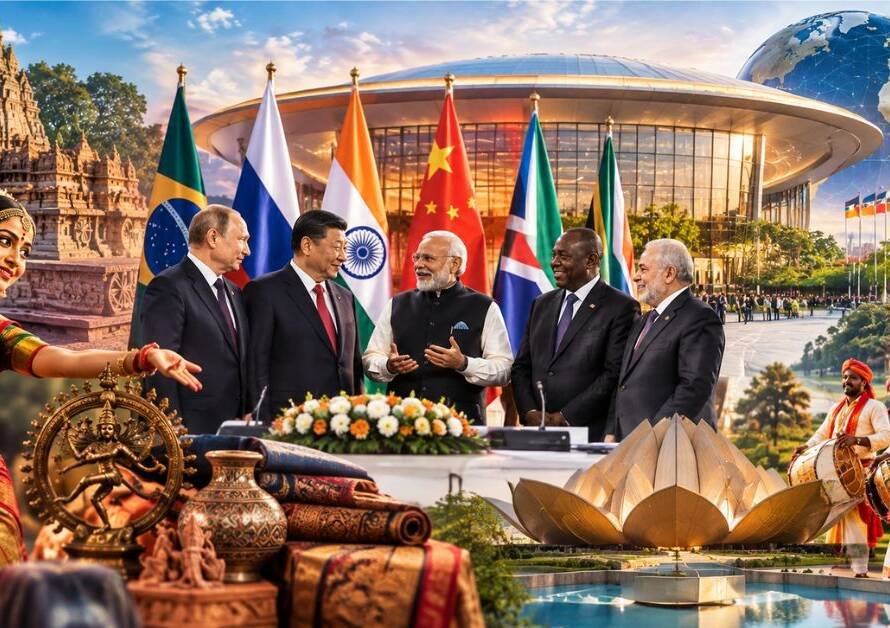
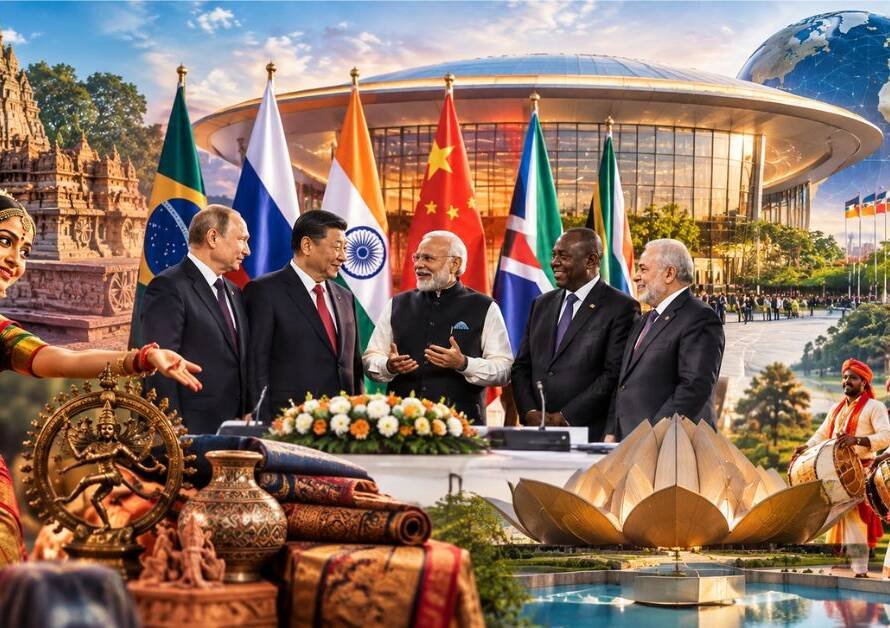
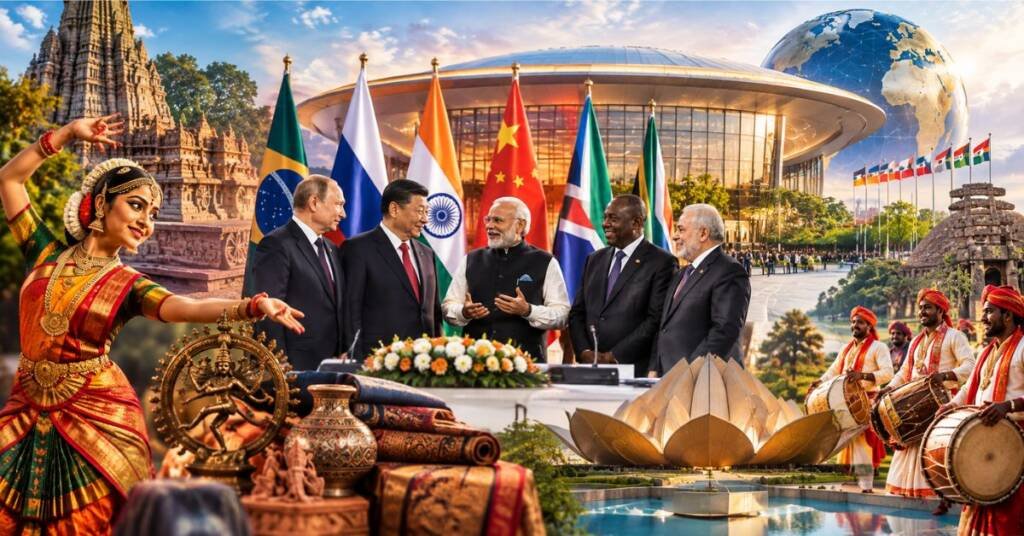
- Grounded in the hosting of global leaders at Bharat Mandapam—under the shadow of the monumental 28-foot Ashtadhatu Nataraja statue—the text details the strategic, symbolic, and spiritual assertion behind serving a 100% pure vegetarian, Sanatana-inspired banquet to international heads of state.
- It details the metallurgical history of Chola-style lost-wax casting, the symbolism of gifting classical sacred texts over conventional armaments, and the ongoing political pushback from political alliances (“Thugbandhan”) seeking to undermine India’s growing global stature.
- Ultimately, the essay frames this diplomatic shift as a historic transition from post-colonial hesitation to unapologetic civilizational confidence under the leadership of Prime Minister Narendra Modi.
Cultural Role of Bharat Mandapam at the BRICS Summit
I. Culinary Diplomacy: Redefining Global High-Table Power Dynamics
The official state dinner hosted for global heads of state at Bharat Mandapam marked a paradigm shift in international diplomatic protocol. Departing from the decades-long practice of adopting Westernized banquet standards, Bharat defined hospitality entirely on its own cultural terms.
- Asserting Sovereign Terms: Serving an entirely vegetarian, Sanatana-inspired culinary spread to leaders of major world economies—countries accounting for nearly 40% of global GDP and predominantly meat-consuming populations—was a calculated demonstration of soft-power dominance. It communicated a clear geopolitical message: guests were dining at Bharat’s table under Bharat’s cultural rules.
- The “Tradition to Table” Architecture: Curated around regional heritage recipes, the menu showcased the culinary landscape of India. From North Indian Himalayan delicacies like Gucchi Marmik to South Indian Thakkali Belle Saaru, traditional Gujarati Khandvi Mille-Feuille, and ancient millets (Shree Anna), the spread served as an edible map of Indian civilizational biodiversity.
- Challenging Monopolistic Dietary Frameworks: By elevating sacred Indian vegetarianism to the peak of international diplomacy, Prime Minister Narendra Modi established an alternative to globalized dietary monopolies, positioning Sanatana culinary traditions as the global benchmark for health, sustainability, and ethical living.
- Exposing Cultural Sceptics: The diplomatic success exposed local critics and commercial interests who long argued that traditional Indian vegetarian gastronomy could not satisfy international diplomatic standards, proving that authentic cultural roots command greater respect than artificial accommodation.
II. Iconography and Engineering: The 28-Foot Ashtadhatu Nataraja
Standing as an eternal witness in front of Bharat Mandapam is the world’s largest Nataraja bronze sculpture—an iconic representation of Lord Shiva performing the cosmic Tandava, signifying the eternal cycle of creation, preservation, and dissolution.
- Chola Metallurgical Lineage: Executed by a team led by master sculptor Radhakrishnan Sthapati of Swamimalai, Tamil Nadu, the statue upholds the sacred principles of Shilpa Shastras preserved since the 9th-century Chola Empire.
- Ancient Lost-Wax Casting (Madhuchchhishta Vidhana): Constructed using the ancient Madhuchchhishta Vidhana (lost-wax technique)—the same technique used to cast the Mohenjo-Daro Dancing Girl and classical Chola bronzes—the original wax model melts away during casting. This guarantees that every sculpture produced is an irreplaceable, one-of-a-kind masterpiece.
- Dimensional and Proportional Brilliance: Totaling 28 feet in height—comprising a 22-foot central icon set upon a 6-foot pedestal—and weighing over 18 tonnes, the sculpture was engineered to maintain mathematical harmony and grandeur when viewed against the sprawling architecture of Bharat Mandapam.
- The Alchemy of Ashtadhatu: The masterpiece was cast using a sacred eight-metal alloy comprising copper (87%), zinc (10%), lead (3%), along with precise trace amounts of gold, silver, tin, mercury, and an internal iron framework. This combination fuses ancient spiritual symbolism with structural resilience.
III. Knowledge Over Weaponry: The Geopolitical Gift Strategy
In classical Indian statecraft (Rajdharma), influence is asserted through wisdom, moral duty (Dharma), and enlightened discourse rather than transactional materialism or military intimidation.
- Presenting Sacred Wisdom: In lieu of conventional industrial gifts or defense paraphernalia, visiting heads of state were presented with classical Indian scriptures, including the Bhagavad Gita and the Tirukkural.
- Reaffirming Vishwa Guru Stature: The distribution of timeless philosophical texts projected Bharat’s civilizational role as a spiritual teacher (Vishwa Guru) to the world, offering universal guidance on ethics, duty, governance, and human harmony.
- The Universal Philosophy of Vasudhaiva Kutumbakam: Gifting sacred knowledge reinforced the principle that while Bharat possesses the sovereign strength to defend its borders, its global mission remains anchored in peace, truth, and the collective welfare of humanity.
IV. Breaking the Slave Mentality: Reclaiming National Self-Respect
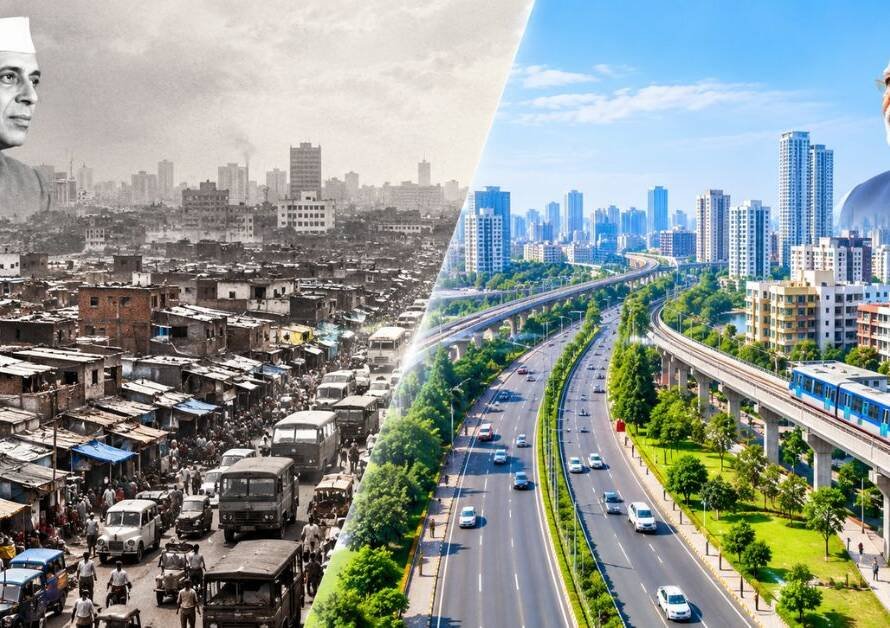
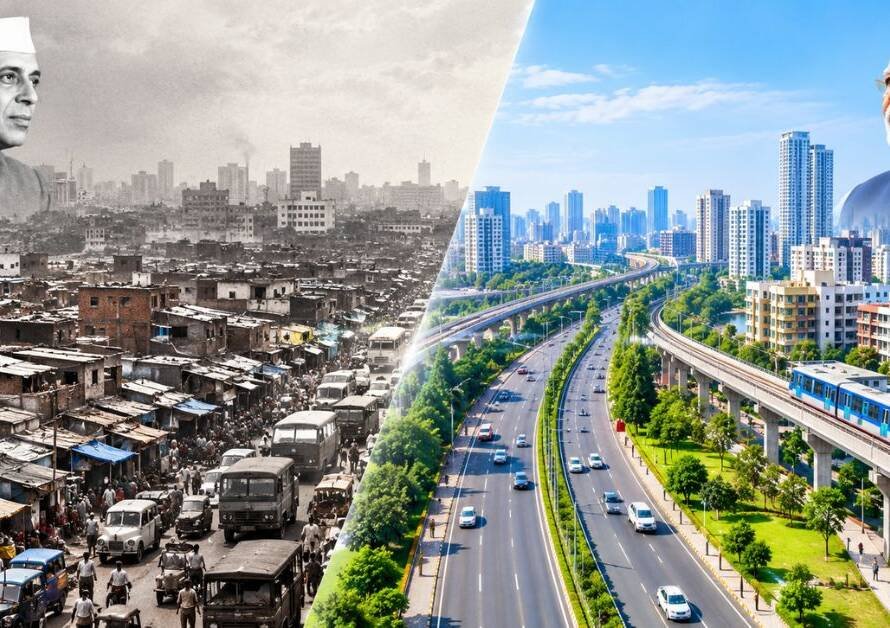
For decades following independence, political elites cultivated a post-colonial submissive mindset, encouraging citizens to apologize for or obscure their Hindu identity in public, official, and international spaces.
- From Apology to Unapologetic Civilizational Pride: The contrast between past political declarations expressing embarrassment over Hindu identity and Prime Minister Modi proudly declaring his faith on the global stage marks a fundamental psychological shift in national self-worth.
- Dismantling “Thugbandhan” Scepticism: The public execution of high-table civilizational diplomacy directly dismantles the cynical narratives pushed by political alliances (“Thugbandhan”) and Left-leaning cultural establishments. These opposition groups—disgruntled since losing administrative control over a decade ago—persistently oppose India’s cultural resurrection and global achievements out of political desperation.
- Deterring Political Interference: Opposition figures who criticize the official serving of Sanatana cuisine or the integration of sacred iconography at global summits are reminded that authority is conferred by 140 crore citizens, and executive governance belongs solely to the elected leadership.
- Setting a Standard for Society: By hosting foreign heads of state with 100% vegetarian fare under the gaze of Lord Nataraja, the central leadership sets an example for everyday citizens to shed social anxiety and proudly celebrate their cultural traditions at weddings, family ceremonies, and public functions.
- Restoring the Wounded Psyche: By breaking the psychological chains of post-colonial servitude, this assertive posture restores the self-respect of the global Hindu community, affirming that Sanatana Dharma stands as an ancient, uninterrupted fountainhead of world civilization.
🇮🇳Jai Bharat, Vandematram 🇮🇳
Read our previous blogs 👉 Click here
Join us on Arattai 👉 Click here
👉Join Our Channels👈