Summary:
- This analysis provides a review of India’s political, social, and legal landscape. It addresses the street protests and caste-based campaigns engineered over the past 12 years to challenge the democratic mandate, the actual legislative history of the SC/ST (Prevention of Atrocities) Act (Rajiv Gandhi administration, 1989), the propaganda surrounding NEET and UGC regulations, and the facts regarding the institutional representation of the general category (Savarna) in the current administration.
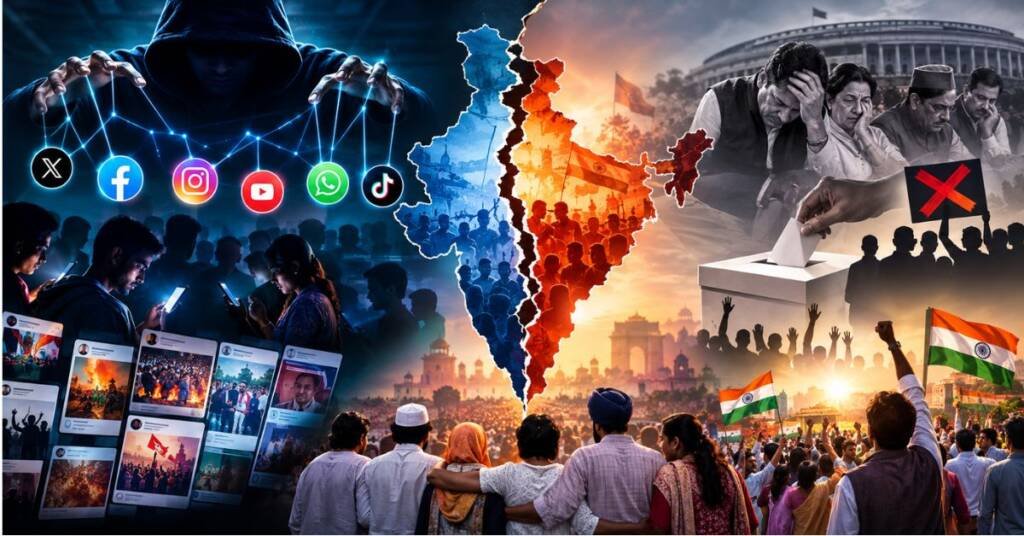
- It highlights how anti-national elements and traitors embedded across all sections of society and belonging to opposition parties, acting at the behest of their political handlers, attempt to create digital rhetoric to destabilize the nation, yet fail as the ground electoral reality proves otherwise.
- This text calls upon Hindu society to rise above sub-caste identities, unite under a Sanatan national identity, boycott anti-national ecosystems, and stand with nationalist leadership to build India into a global superpower (Vishwaguru).
How Traitors Are Trying to Divide Us And Why They’re Failing Miserably
1. Political Agenda of Democratic Failure, Anti-National Elements, and Creating Instability
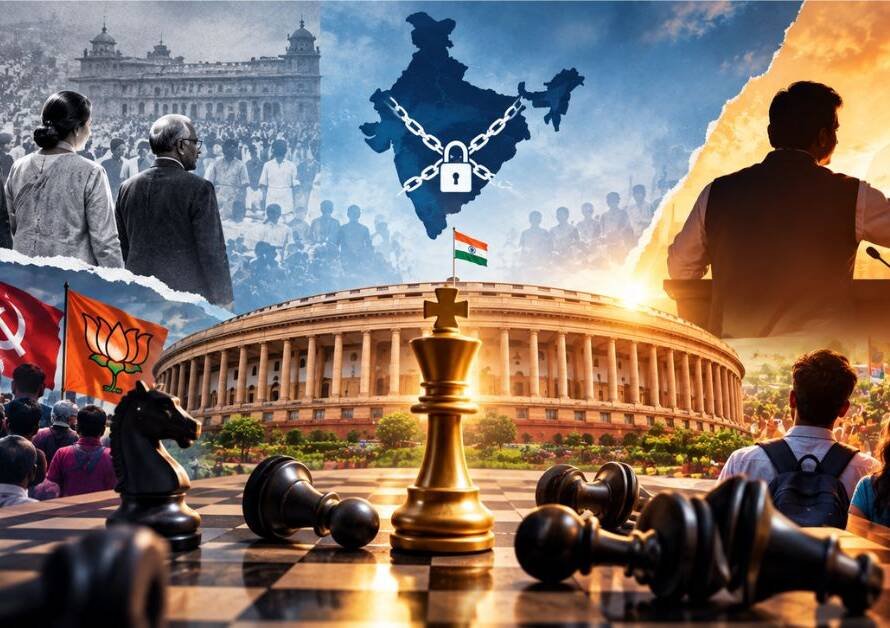
A shift has been observed in Indian politics over the past 12+ years. After failing to defeat the nationalist government through democratic elections and popular mandates, opposition coalitions and the anti-national ecosystem changed their strategy. When political change through elections became unviable, efforts were accelerated to create unrest and instability within the country.
- Challenging the Democratic Mandate: In the frustration of electoral defeat, political opponents began fueling divisive forces within society instead of focusing on policy debates.
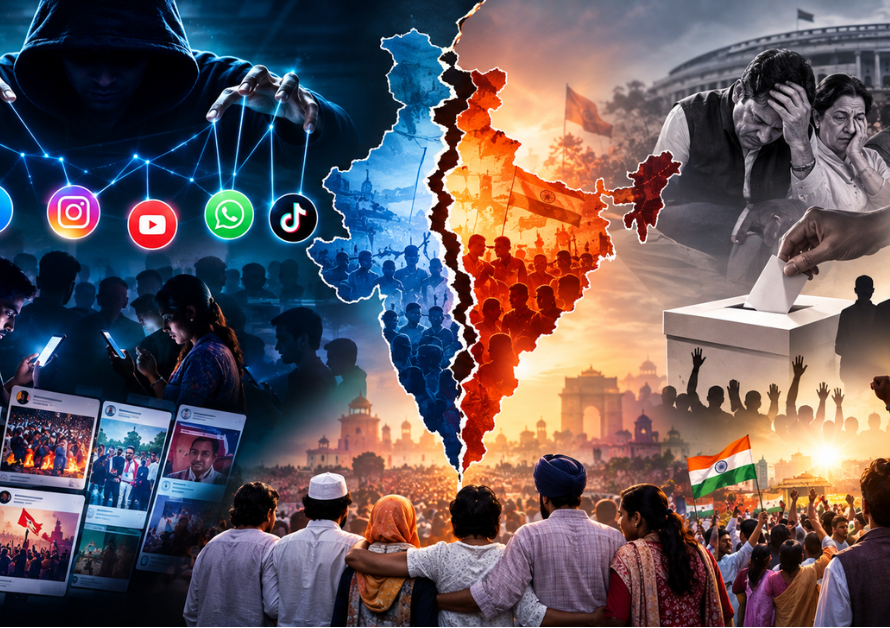
- Infiltration Across All Sections: Traitors and anti-national elements belonging to opposition parties operate across all sections of society—from academia to digital networks—and are deployed by their handlers to manufacture social media rhetoric to confuse the people.
- Resorting to Street Protests: To bypass democratic processes, attempts are being made to mislead youth and Gen Z on emerging issues and mobilize them onto the streets.
- Conspiracy to Shatter Hindu Unity: Following elections in states like Bengal and Bihar, the primary objective of opponents has been to break the growing cultural and political unity of Hindus.
- Resurgence of the Caste Card: To divert the discourse away from national issues and development, deliberate attempts are being made to deepen historical caste faultlines.
- Miserable Failure Against Ground Reality: Despite relentless digital campaigns aimed at causing chaos, these nefarious elements fail miserably, as ground reality demonstrates that citizens consistently prioritize national security, stability, and development over artificial unrest.
2. Politicization of Administrative and Educational Issues
After failing in Parliament and at the ballot box, conspiracies are being hatched to incite the youth by weaponizing examinations of national importance and administrative regulations:
- NEET Exam and Youth Discontent: Instead of addressing administrative and technical challenges in exam execution, the opposition directly attributes them to government failure to provoke students and build a mass youth movement.
- The UGC Regulation Misinformation: University Grants Commission rules were distorted on social media to create animosity between general category (Savarna) and SC/ST/OBC students, despite being a non-existent or misconstrued issue subject to judicial oversight.
- Demands for Reservations and Caste Census: Pushing aside development, merit, and national security agendas, continuous efforts are made toward caste-based polarization to keep society permanently fragmented.
- Gen Z and Social Media Manipulation: Disconnecting the new generation from the nation’s history and constitutional reforms, bots and fake social media accounts managed by anti-national actors are deployed to drag them into anti-Modi and anti-BJP campaigns.
3. Legal History of the SC/ST Act: ‘Modi Act’ vs. ‘Rajiv Gandhi Act’
The opposition ecosystem has labeled the SC/ST (Prevention of Atrocities) Act as the “Modi Act,” which is a misleading and politically motivated term. The actual legislative history of this law is as follows:
- Original Framework (1989): This stringent law was enacted in 1989 under the Congress government led by Rajiv Gandhi.
- Compensation Mechanism (1995): Provisions for financial relief and compensation under this Act were implemented in 1995 during a non-BJP government.
- Supreme Court Order (March 2018): In Dr. Subhash Kashinath Mahajan v. State of Maharashtra, the Supreme Court introduced protective safeguards such as a Preliminary Enquiry and prior approval before arrest to prevent misuse.
- Parliamentary Amendment of 2018 (Section 18A): To prevent social disharmony and political pressure, the Union Government inserted Section 18A to restore the law to its original 1989 status. The Modi government added no new draconian provisions, maintaining the law as created by Rajiv Gandhi.
- Key 2020 Judgment (Prithvi Raj Chauhan Case): A three-judge bench of the Supreme Court upheld the validity of the 2018 amendment, but clarified that if a case is prima facie false, courts retain the power to grant anticipatory bail and High Courts can quash the FIR.
4. Judiciary’s Stand and Concerns Over Misuse of Law
While the law’s intent is to protect victims, the judiciary has repeatedly expressed concern over its growing misuse and commercial exploitation:
- Public View and Caste Intent: The judiciary established that the Act applies only if the insult occurred in a public view and was specifically driven by caste-based harassment; it cannot be applied to ordinary personal disputes.
- Allahabad High Court’s Stern Remarks: In a case from Jhansi where a single family received over ₹23 lakh in relief funds, the High Court ordered an impartial investigation.
- Statewide Review of Fake Claims: The Allahabad High Court directed the Uttar Pradesh government and administration to conduct a statewide review of suspicious repeat compensation claims.
- Action Against False Complainants: If it is proven in court that an FIR was false and filed maliciously, the acquitted individual can file criminal and civil defamation charges against the complainant under relevant BNS sections.
5. Exposing the False Narrative of an “Anti-Savarna Government”
Social media campaigns run by anti-national actors claim that the present government works against the interests of the general category (Savarna). However, administrative and institutional metrics completely debunk this assertion:
- Representation in State Governments: Out of the 16 states governed by the BJP, 10 Chief Ministers belong to the General (Savarna) category.
- Key Union Cabinet Portfolios: Crucial ministries such as Defence, Finance, External Affairs, Education, Health, Railways, Transport, IT, and Textiles are led by General category ministers.
- Armed Forces and Judiciary: The Chief of the Army Staff, the Chief Justice of India (CJI), and top legal jurisprudence feature significant participation from the General category.
- Education and Autonomous Institutions: Out of 45 central universities, approximately 38 Vice-Chancellors and the Chairman of the UGC belong to the General category.
- The Reality: This false narrative is propagated primarily by disgruntled elements who failed to manipulate the government for personal political ambitions or seats.
6. The Dark History of the Past: Threat of the Communal Violence Bill
Political parties that portray themselves as champions of justice today have a history of attempting to enact harsh laws targeted against the majority community:
- Prevention of Communal and Targeted Violence Bill (2011): Drafted by the National Advisory Council (NAC) during the UPA government, this proposed law presumed the majority (Hindu) community to be inherently guilty and aggressors in any conflict.
- Assault on Constitutional Rights: Had this bill been passed, state powers would have been eroded, and the majority community would have lost the freedom to celebrate their religious festivals peacefully.
- Historic Opposition by BJP: It was due to opposition by the BJP in Parliament that this bill was blocked, saving the nation from a major social crisis.
7. Sanatana Renaissance and Future Direction for Nation Building
To make India a global superpower (Vishwaguru) and a $5 trillion economy, Hindu society must erase internal differences and adopt a unified approach:
- Complete Boycott of Caste Division: Understand that fighting over sub-castes only strengthens the agenda of anti-India forces and their political handlers.
- Expose the Anti-National Ecosystem: Identify and expose traitors across all sections of society and opposition parties who generate fake online outrage to damage the country’s social fabric.
- Embrace the Sanatan Identity: Rise above regional, linguistic, and caste boundaries to accept a strong and unified ‘Sanatan Bharatiya’ identity.
- Economic and Social Boycott of Anti-National Networks: Completely boycott media houses, social media influencers, and political entities socially, politically, and economically if they promote riots, division, and disrespect toward national institutions.
- Support Nationalist and Progressive Leadership: Stand firmly with a nationalist government dedicated to border security, infrastructure development, self-reliant India (Atmanirbhar Bharat), and cultural renaissance.
🇮🇳Jai Bharat, Vandematram 🇮🇳
Read our previous blogs 👉 Click here
Join us on Arattai 👉 Click here
👉Join Our Channels👈