Summary
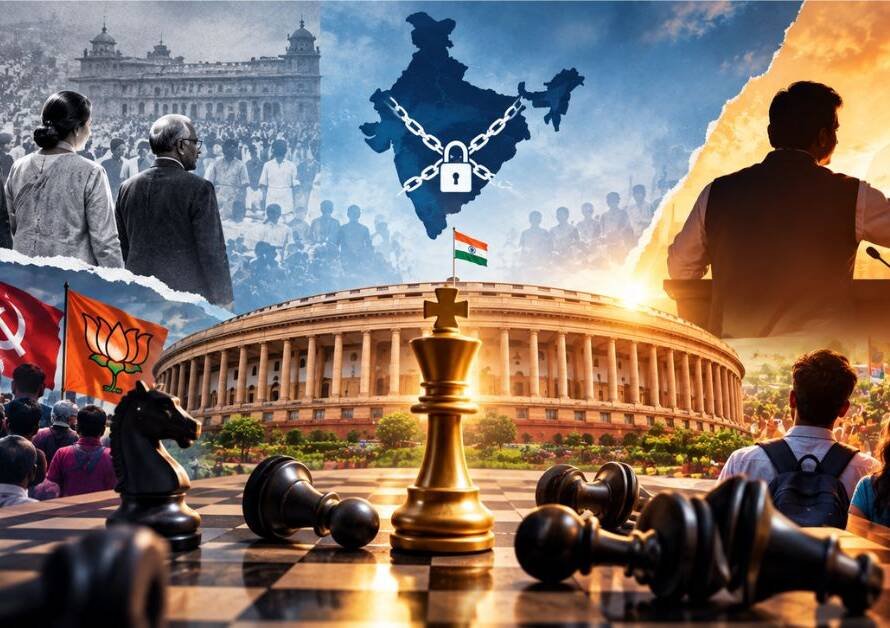
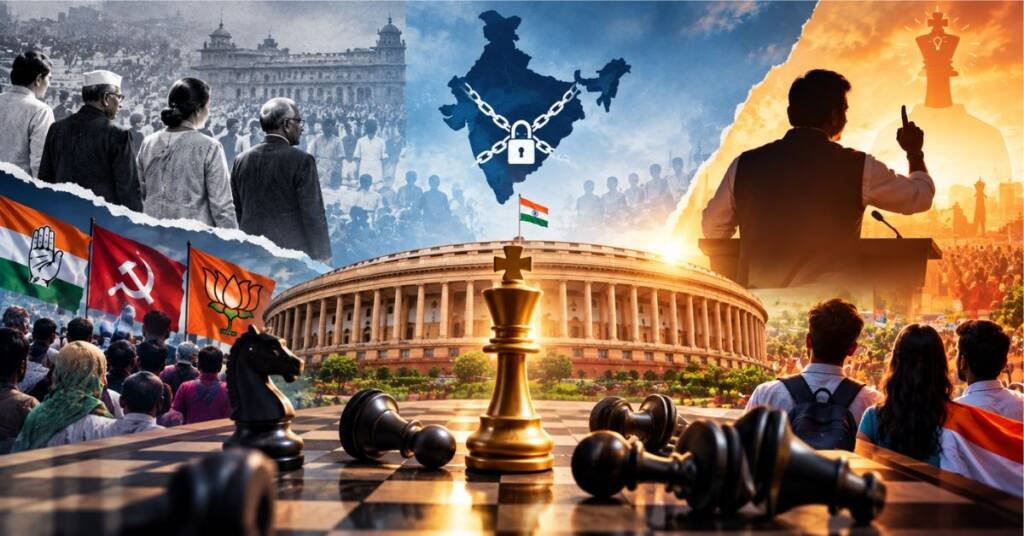
- This comprehensive political analysis critically examines the current state of Indian politics, the strategic and ideological directionlessness of the opposition, and the indirect advantages accruing to the ruling party (BJP).
- Beginning with the timeless wisdom of the adage “Poot kapoot toh kyon dhan sanchay…”, this piece highlights the limitations of the Nehru-Gandhi political legacy and the failures of the present ‘narrative-centric’ era.
- The article compares Amit Shah’s political model of ‘exploiting the adversary’s weakness’ with the present condition of the Congress party.
- It clarifies how the opposition’s tendency to cloak strategic defeats under labels like “masterstroke,” “new narrative,” or “building momentum”—rather than acknowledging them—is hollowing out its organizational core.
- Furthermore, it sheds light on the diverse priorities of Indian youth, the ground reality of campus politics, and the indispensability of a capable, self-correcting opposition in a vibrant democracy.
A Deep Political Analysis
1. Legacy, Merit, and the Paradox of Politics
“Poot kapoot toh kyon dhan sanchay, poot sapoot toh kyon dhan sanchay.”
(If a son is unworthy, why accumulate wealth? If a son is worthy, why accumulate wealth?)
This ancient proverb applies seamlessly to today’s Indian political landscape, particularly the legacy of the Nehru-Gandhi family. If the succeeding generation is competent and strategically astute, it does not require the crutches of inherited political capital; if it lacks direction, even vast political legacies and established voter bases accumulated over generations cannot save it from continuous decline.
- Corporate vs. Political Benchmarks: In the corporate or administrative sectors today, even an entry-level position demands strict benchmarks, proven merit, and a careful evaluation of past track records.
- Redefining Experience: Indian politics has become perhaps the only arena in the world where a leader’s merit is judged not by actual results, but by how skillfully their supporters defend their failures.
- The Pretense of Political Rhetoric:
- A grave strategic blunder is made: It is promptly branded a “masterstroke” or an “unprecedented experiment.”
- An unnecessary controversy erupts: It is called “setting a new agenda” or “building a fresh narrative.”
- Consecutive electoral defeats occur: A fictitious story is spun that “a groundswell for change is building up.”
- The Crisis of Self-Delusion: When an organization begins presenting its mistakes as achievements instead of learning from them, it closes off all avenues for self-improvement.
2. The ‘Amit Shah Model’ and the Arithmetic of Rival Weakness
A foundational and indisputable principle of Indian politics is that your victory is not always the result of your own strength; often, it is the natural byproduct of your opponent’s incompetence.
- The 1980s Student Politics Example: An episode often cited from Amit Shah’s early political days with the ABVP illustrates this principle well. He closely studied the internal factionalism, organizational inertia, and ideological contradictions of rival student groups—and leveraged those flaws to consolidate his position without needing a direct, high-risk confrontation.
- Congress: Past Strength vs. Present Crisis:
- Past Strength: There was a time when Congress possessed cadre-driven, grassroots leaders who gave the BJP a formidable fight on every front.
- Present Crisis: Today, while the party still has experienced faces, it lacks the organizational edge, consistency, and ideological clarity required to effectively pin down a ruling party.
- The BJP’s True Advantage: The BJP’s real strength lies not just in its massive organization, disciplined cadre, or Panna Pramukh model; its biggest edge is that the opposition wastes its energy justifying its mistakes rather than rectifying them.
- The Simple Rule of the Game: If a player insists on defending their past mistakes on the field rather than taking on the opponent, the rival player needs no extra effort—they simply wait for the right moment and win the match.
3. The Complexity of the Youth Vote: Uniform Slogans vs. Ground Realities
In politics, the ‘youth’ is considered the most dynamic and decisive voter segment. However, political parties often make the critical mistake of viewing youth as a monolith. The reality is that Indian youth are divided across distinct priorities and perspectives:
- The Cultural and Nationalist Youth: A significant segment feels a direct affinity toward national security, cultural pride, India’s rising global stature, and strong, decisive leadership.
- The Aspirational and Growth-Oriented Youth: For this group, quality infrastructure, a booming start-up ecosystem, global opportunities, and modern economic policies take top priority.
- The Disillusioned Youth: Another section is frustrated with uncertainties in government recruitment, paper leaks, exam delays, and the lack of job creation.
- Youth Caught in the Lack of Alternatives: Crucially, even the youth dissatisfied with the current government are not ready to blindly accept the opposition. They raise equal questions about the opposition’s intent and governance capability.
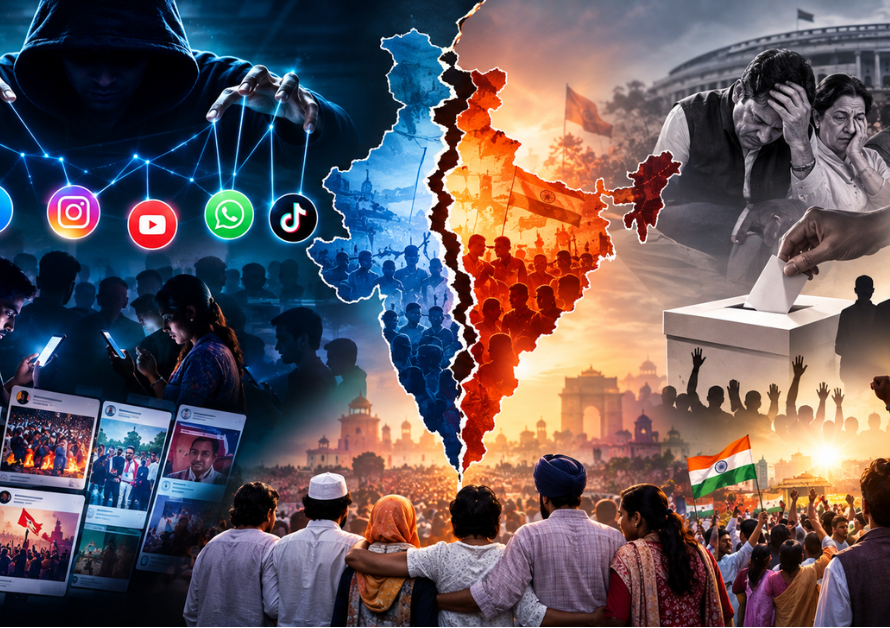
- The Reality of Campus Politics: Whether it is Rahul Gandhi’s outreach toward students or the BJP’s campus expansion drives, neither can be judged solely through slogans, rallies, or social media trends. The fundamental question remains: Which party is addressing the genuine and complex aspirations of the youth?
4. Honest Self-Introspection: The Real Power of the Opposition
An opposition’s true strength does not lie merely in leveling allegations against the ruling party. Its real power lies in looking inward and acknowledging its own shortcomings.
- The Role of Supporters and Advisors: Congress and its allies must decide whether they will remain content with the excuses spun by their strategists after every loss, or whether they will dare to ask where the strategic lapses actually occurred on the ground.
- Narratives vs. Ground Realities: Elections are not won on the ground simply by running trending campaigns on social media or winning intellectual debates.
- The Need for Organizational Overhaul: Until mistakes are acknowledged as mistakes, neither policies will evolve nor will new, capable leadership be allowed to emerge.
5. A Warning for the Ruling Party: The Danger of a Weak Opposition
This analysis is not limited to the flaws of the opposition; it also draws a crucial warning line for the ruling party (BJP):
- The Balance of Democracy: A weak, directionless, and fractured opposition may grant consecutive electoral victories to the ruling party, but it is not a sign of a healthy, ideal democracy.
- The Risk of Complacency: When there is no effective challenge in front, the risk of complacency, administrative lethargy, and indifference toward public grievances grows within the ruling party.
- The Scope of Accountability: Strong competition in a democracy does not just decide who wins an election; it dictates how much moral and strategic pressure rests upon the winner to deliver transparent, public-centric governance.
However, establishing India as a global superpower and Vishwaguru represents a vast national undertaking, with enough work and challenges to occupy the government for the next two decades. If the opposition rises above confrontation and obstruction and instead extends constructive cooperation in the national interest, India’s journey of development and transformation could move forward at a much faster pace, enabling the country to achieve its national aspirations sooner.
Key Takeaways
- The Limits of Legacy: Political lineage can grant an initial entry, but sustained success requires grassroots connection and strategic acumen.
- Self-Delusion Equals Decline: Treating strategic failures as ‘masterstrokes’ or ‘narratives’ corrodes an organization from within.
- Youth Autonomy: Young voters are not a captive vote bank for any single party; they evaluate policies and delivery before deciding their stance.
- The Condition for a Strong Democracy: A strong nation requires not just a powerful ruling party, but an equally self-aware, vigilant, and accountable opposition.
🇮🇳Jai Bharat, Vandematram 🇮🇳
Read our previous blogs 👉 Click here
Join us on Arattai 👉 Click here
👉Join Our Channels👈