Summary
- Inspired by the film ‘Governor’—which depicts the 1991 economic crisis—this article presents a deep and objective analysis of India’s economic and strategic journey over the last 35 years.
- The piece highlights the national helplessness of 1991, when India was forced to offer its vast population and “cheap labor” as its primary asset to secure loans. It examines the period between 1991 and 2014, marked by the ‘Fragile Five’ tag, vote-bank appeasement politics, and policy paralysis caused by institutional corruption.
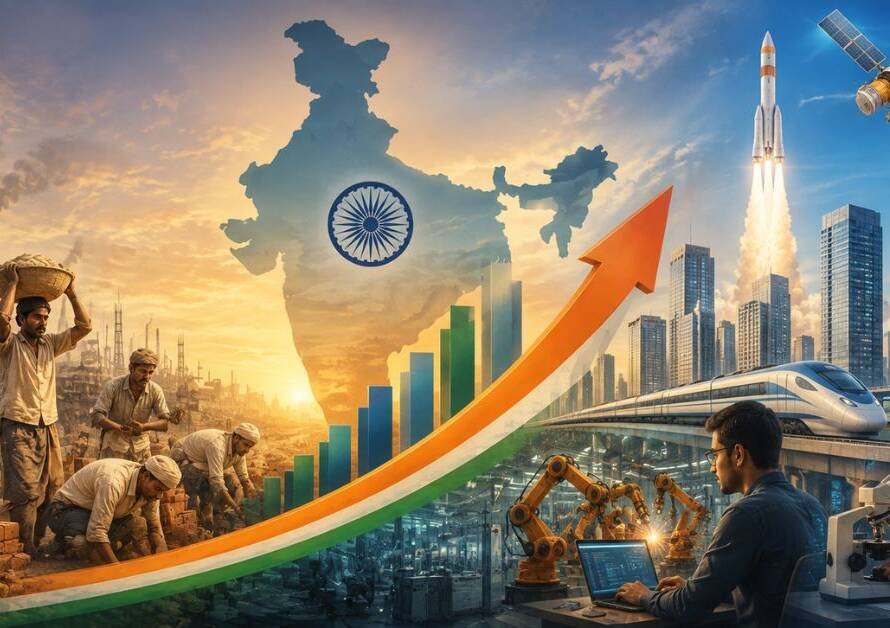
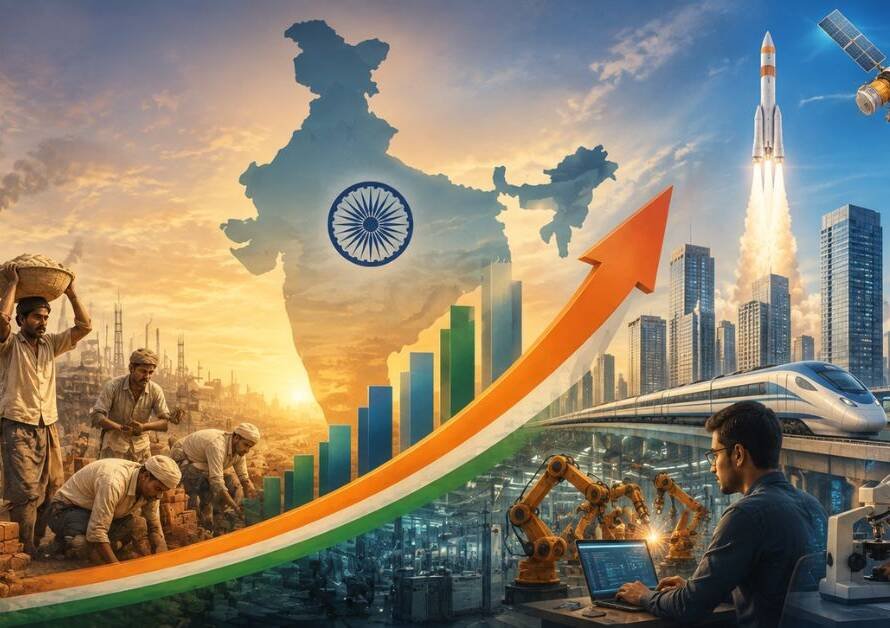
- Finally, it evaluates the post-2014 strategic shift under Prime Minister Narendra Modi, which transformed India from a mere exporter of manpower, doctors, and engineers into a global powerhouse of indigenous defense manufacturing, semiconductor technology, digital infrastructure, and global innovation.
An Unbiased Assessment of India’s Last 35 Years
1. The 1991 Economic Crisis: An Era of Helplessness and Vulnerability
The movie ‘Governor’ on Amazon Prime, featuring Manoj Bajpayee as the RBI Governor, confronts us with the sobering economic reality of 1991—a period often over-glorified under the label of historic liberalization.
- Economic Helplessness: In 1991, India resembled a struggling middle-class family running out of income, with no food in the kitchen by the 25th of the month, forcing the head of the family to beg neighbors for a loan. India had barely 1–2 weeks’ worth of foreign exchange reserves left to pay its import bills.
- Pledged Gold and Compromised Sovereignty: To save foreign exchange reserves and secure an emergency loan from the IMF, India had to pledge its gold reserves to the Bank of England and Swiss banks. In exchange for assistance from the US, India was forced to allow American fighter jets to refuel at Indian airports during the Gulf War.
- Political Dilemmas vs. Vote-Bank Politics: The establishment’s desperation was such that they were more worried about alienating pro-Iraq vote banks than the country’s economic collapse. The nation was out of basic sustenance, yet forced to hide the truth out of fear of public embarrassment and political fallout.
- Bidding the Manpower: When Indian representatives were traveling to capitalist nations and the IMF, the only asset they had to offer was: “Our vast manpower.” When your pockets are empty, both socialism and capitalism ask the exact same question: “Where is the money?”
2. 1991 to 2014: The ‘Fragile Five’ Crisis and the Era of Appeasement
While foreign capital arrived after the 1991 reforms, India’s core manufacturing capability and strategic framework remained unchanged. Between 2004 and 2014, India’s economic foundation destabilized significantly.
- The ‘Fragile Five’ Tag: Global economists and financial institutions categorized India among the world’s 5 weakest and most vulnerable economies (Fragile Five).
- Policy Paralysis: Decision-making was completely crippled. High inflation, a widening Current Account Deficit (CAD), and dwindling foreign reserves pushed the nation back to the brink of economic instability.
- Loot of National Resources and Scams: Through major scams—such as the 2G scam, Coal scam, and Commonwealth Games scam—national resources were siphoned into private pockets rather than utilized for strategic development.
- The Appeasement Model: To stay in power and cover up corruption, national interests were sacrificed in favor of ‘vote-bank’ and ‘appeasement’ politics. The helplessness of 1991 had transformed by 2014 into deep-seated institutional corruption and social instability.
3. The 2014 Turning Point: Long-Term Vision and Strategic Shift
With the arrival of the government under Prime Minister Narendra Modi in 2014, a massive strategic shift occurred in national priorities. Short-term political gains were set aside in favor of visionary planning focused on nation-building for the next 50 to 100 years.
- Self-Reliance in Defense Manufacturing:
- India, which was once the world’s largest importer of arms, is now domestically manufacturing and recording high exports of fighter aircraft (Tejas), aircraft carriers (INS Vikrant), and advanced missiles (BrahMos).
- Technology Development and Digital Public Infrastructure (DPI):
- Through the Semiconductor Mission, India is positioning itself as a global chip-manufacturing hub.
- Indigenous 5G/6G development, Digital India, and the UPI (Unified Payments Interface) network have proven India’s technological prowess worldwide. Developed nations are now studying India’s digital architecture.
- Exploration of Natural Resources:
- Systematic exploration and mining of critical minerals like lithium, Rare Earth Elements, and deep-sea oil and gas reserves were prioritized to eliminate reliance on foreign sources.
4. Transformation of Human Capital: From Cheap Labor to Innovation
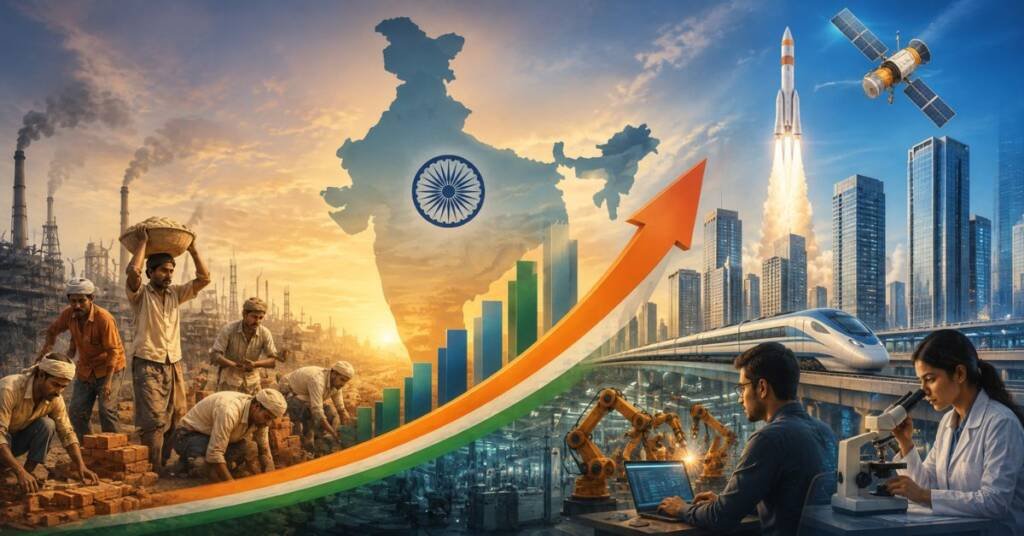
In 1991, India sold “cheap labor.” After 2014, human capital was actively developed into a core national strength.
- Skill Development: The ‘Skill India’ mission moved beyond conferring paper degrees to training youth for modern industries, automation, and Artificial Intelligence.
- Value-Based Education: The National Education Policy (NEP) balances Indian knowledge systems, moral values, and modern scientific temper to build value-driven citizens.
- Startup and Innovation Culture: India has emerged as the 3rd largest startup ecosystem in the world. Indian youth are no longer merely ‘job seekers,’ but ‘job creators’ and global innovators.
5. NRIs, Remittances, and a New Benchmark for Patriotism
An objective evaluation must also address the contributions of Non-Resident Indians (NRIs) and the misconceptions surrounding their patriotism.
- Migration vs. Global Success: When people move from villages or small towns to metro cities, it is termed ‘migration.’ When the same movement happens internationally, it is labeled ‘Global Indian Success.’ While the terminology changes, the underlying challenge remains the same.
- The Power of Remittances: India is the world’s top recipient of foreign remittances. The foreign currency sent home by NRIs strengthens India’s forex reserves, allowing the country to purchase crude oil and critical technologies.
- Redefining Patriotism: Working hard abroad to send foreign exchange back to India is a vital form of national service. Patriotism is not defined merely by geographic location, but by how one contributes to the nation’s progress.
6. Global Comparison: The Path of China, Germany, and India
Great industrial nations built their global identity through distinct strengths:
- China: Became the manufacturing hub and factory of the world.
- Germany: Became synonymous with engineering, automotive excellence, and heavy machinery.
- Japan & South Korea: Dominates electronics, robotics, and advanced tech.
- United States: Built global tech giants (Google, Apple, Microsoft) and financial leadership.
- India (1991–2014): Primarily exported doctors, engineers, drivers, and laborers.
The Post-2014 Paradigm: India is no longer just exporting human resources; it is manufacturing indigenous products, defense systems, digital frameworks, and global solutions that compel the world to come to India.
India Standing Before the Mirror
The film ‘Governor’ reminds us how grim the period of helplessness and policy paralysis in 1991 truly was. After a 35-year journey, we must ask ourselves an honest question:
- Have we fully emerged from the helplessness of a nation that once had to borrow every month?
- The answer is: Yes.
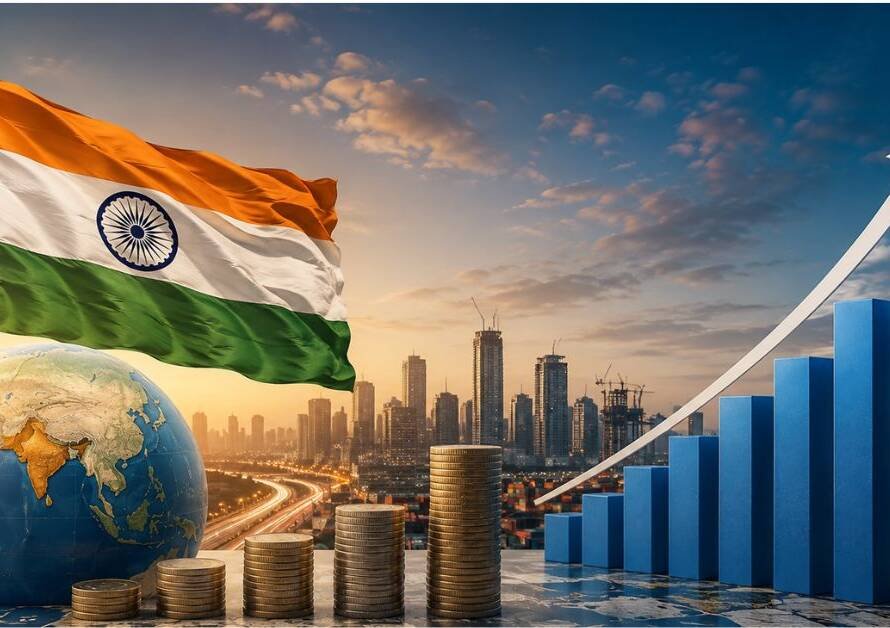
India has shed the tag of the ‘Fragile Five’ to become the 5th (and soon 3rd) largest economy in the world. The country has dismantled the politics of appeasement and institutional scams.
- The goal now is not just to take pride in a large population, but to build intellectual property, technology, and products within India that the world cannot operate without.
True transformation is reflected not just in bigger pockets, but in a nation that stands self-reliant, proud, and recognized as a Global Powerhouse.
🇮🇳Jai Bharat, Vandematram 🇮🇳
Join us on Arattai 👉 Click here
👉Join Our Channels👈