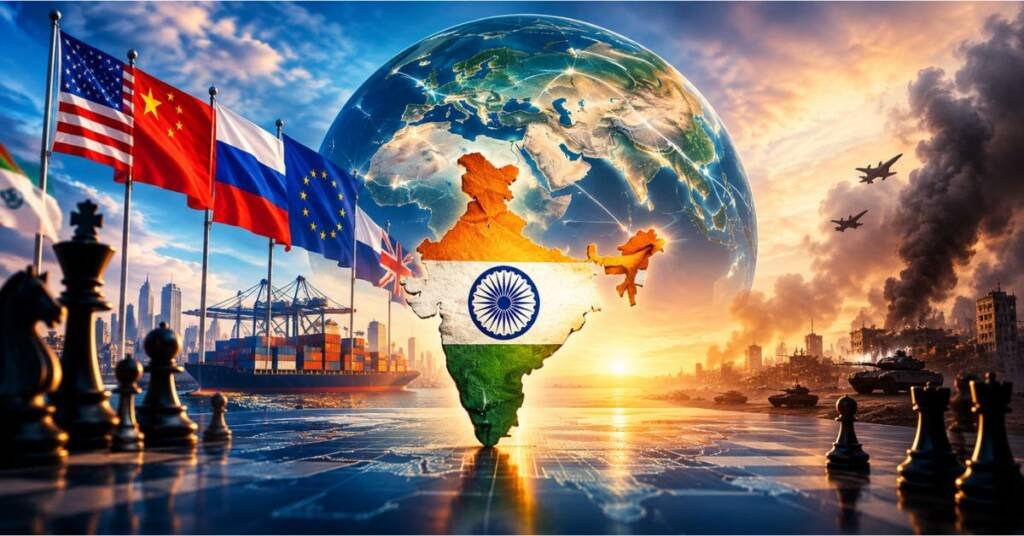
Summary
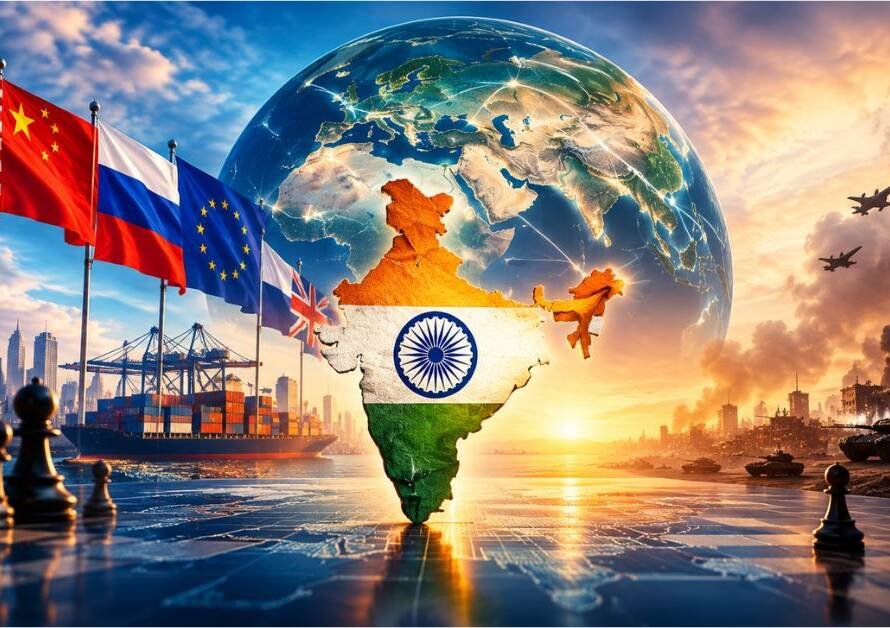
- The contemporary global landscape is undergoing a profound and accelerating structural transformation. Across continents, traditional institutional frameworks forged in the mid-20th century are fracturing under the weight of escalating military conflicts, economic fragmentation, and engineered societal polarization.
- Events such as the protracted Russia-Ukraine conflict, ongoing instability in West Asia, unremitting challenges of illegal migration across Europe, and sudden regime changes across neighboring South Asian states are frequently analyzed in isolation by mainstream media.
- However, a rigorous examination of modern geopolitics reveals that these occurrences are far from random or coincidental. Instead, they form integral components of a calculated, systemic transition—a global restructuring often termed the push toward a “New World Order.”
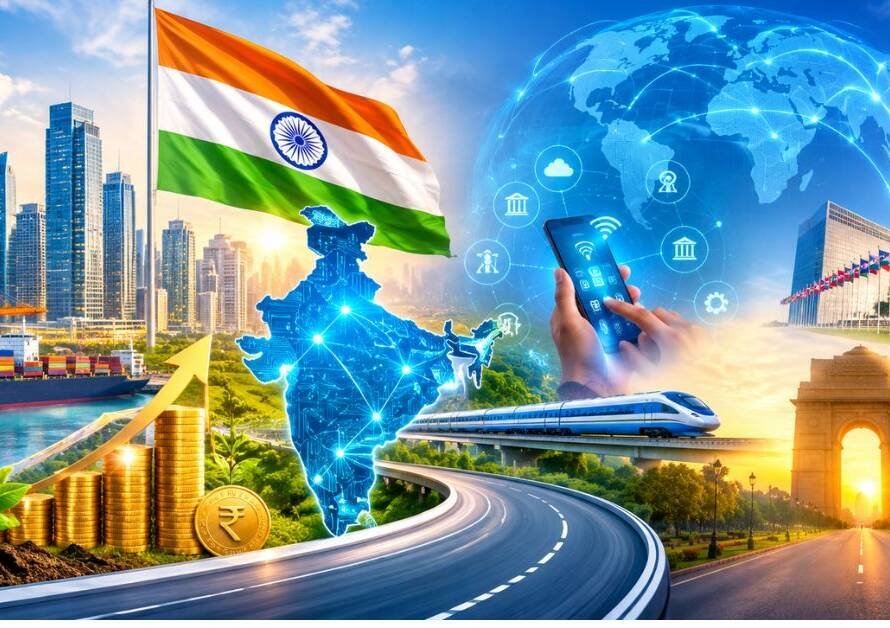
- Amidst this sweeping international turbulence, Bharat stands as a unique anchor of stability, economic momentum, and civilizational resilience. Having successfully weathered external and internal pressures, the nation’s current leadership has transformed Bharat into a formidable pillar of global balance.
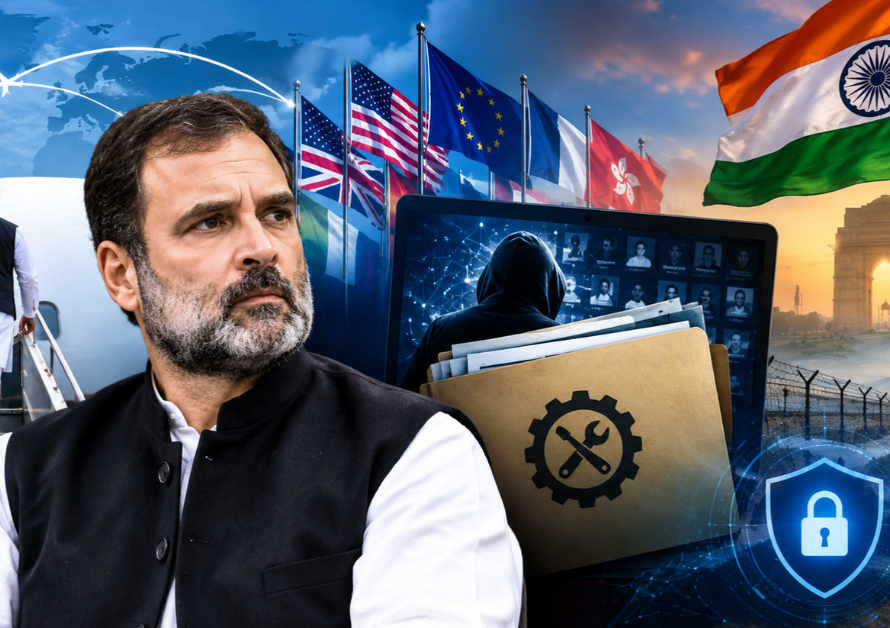
- Yet, this very rise has triggered an intense counter-strategy by global hegemonic powers and domestic vested interests. Utilizing internal subversion, social media manipulation, and engineered identity politics, these nefarious elements attempt to stall Bharat’s ascent.
- This comprehensive analysis explores the anatomy of global unrest, the mechanics of subversion, and the imperative for patriotic citizens to stand firmly behind a strong, visionary leadership to secure the nation’s destiny as a global superpower (Vishwaguru).
Global Upheaval and Bharat’s Changing Geopolitical Role
1. The Anatomy of Global Unrest: Dissecting the Geopolitical Crisis
To understand Bharat’s current strategic position, one must first evaluate the broader international theatre. A macroscopic view of global developments reveals a synchronized pattern of instability across multiple strategic zones:
- The Russia-Ukraine Conflict and the Breakdown of Eurasian Security: The ongoing military confrontation in Eastern Europe has permanently altered global energy architectures, severed long-standing supply chains, and exposed the fragility of Western-dominated financial institutions. Beyond the immediate regional devastation, this conflict serves as a catalyst for a multipolar realignment, forcing nations to recalibrate their strategic autonomies.
- The West Asian Crisis and Maritime Disruption: The protracted conflict involving Israel, coupled with asymmetric disruptions in the Red Sea shipping lanes by non-state actors like the Houthis, demonstrates how vulnerable global commerce remains. These choke points are frequently exploited to apply economic pressure, inflate commodity prices, and test the resilience of emerging economies.
- The Internal Transformation and Social Turmoil of Europe: Nations such as France, Spain, and Italy face unprecedented internal challenges driven by mass illegal migration, porous borders, and ideological friction. This unmitigated demographic shift has strained public infrastructure, triggered civil unrest, and fractured the traditional social fabric of Western Europe.
- UK Demographic Realities and Cultural Shifts: The United Kingdom is navigating complex structural transformations marked by rapid cultural shifts, intensifying ideological polarization, and mounting pressures on internal security and civic cohesion.
- US-Iran Tensions and West Asian Volatility: The perpetual friction between Washington and Tehran, punctuated by proxy conflicts and clandestine operations, maintains a constant state of high alert across the Persian Gulf, directly impacting global crude oil stability.
- Geopolitical Volatility in Bharat’s Immediate Neighborhood: The geopolitical arc surrounding Bharat has witnessed sudden, engineered disruptions. From political upheavals and sudden regime changes in nations like Nepal, Sri Lanka, and Bangladesh to the profound economic and structural decay of Pakistan—which now stands fractured under the weight of state-sponsored terrorism and institutional failure—South Asia is being aggressively reshaped by external and internal machinations.
When viewed collectively, these crises cannot be dismissed as localized or accidental anomalies. They represent systemic stress points designed to weaken sovereign nation-states and concentrate leverage among select transnational centers of power.
2. The ‘New World Order’ and the Engineered Architecture of Chaos
International relations theorists and geopolitical analysts have long noted that history moves in epochs of consolidation and fracture. The post-World War II international order—anchored by Bretton Woods institutions, the United Nations, and Western-led security alliances—is experiencing a terminal decline of moral and economic legitimacy.
- The Impending Collapse of Hegemonic Control: As emerging economies rise and alternative financial frameworks (such as regional currency settlements and indigenous digital payment architectures) gain traction, traditional hegemonic powers face the erosion of their unipolar dominance.
- The Strategy of Managed Chaos: To counteract this historical shift, a concerted effort is underway to destabilize independent nation-states. By fomenting managed crises—whether through economic sanctions, engineered migration waves, or ideological subversion—architects of the “New World Order” seek to erode national sovereignty.
- Erosion of Nation-State Autonomy: The overarching objective is to subordinate domestic policy, resource management, and cultural identity to transnational governance bodies and global corporate conglomerates. In this environment of orchestrated uncertainty, chaos is not a byproduct of policy failure; it is the policy itself, deployed to reshape global power equations.
3. Bharat in the Labyrinth: Surviving the Global Matrix
As one of the world’s oldest continuous civilizations and its fastest-growing major economy, Bharat occupies a pivotal position in this global power struggle. Naturally, the nation has become the primary target for external subversion and internal destabilization campaigns.
- The Domestic Subversion Playbook: Having failed for over a decade to defeat the current nationalist administration through democratic mandates at the ballot box, opposition coalitions and radical ecosystems have shifted focus toward societal disruption. Utilizing digital platforms, foreign funding networks, and compromised institutional channels, these actors manufacture continuous artificial controversies.
- The Wall of Strong Leadership: Bharat’s ability to withstand these multi-frontal assaults is anchored entirely in its strong, decisive, and visionary leadership. By refusing to bow to external diplomatic dictat, maintaining strict strategic autonomy, and prioritizing national interest above all else, the current administration has insulated the nation from the worst impacts of global economic and security shocks.
- The Core Obstacle to Global Hegemony: Bharat’s insistence on civilizational self-awareness (Virasat Bhi, Vikas Bhi), economic self-reliance (Atmanirbhar Bharat), and independent foreign policy (Vijigeesu) directly threatens the ambitions of external powers who prefer a compliant, dependent nation. Consequently, the relentless attacks directed at Bharat’s leadership are a direct symptom of its growing geopolitical strength.
4. The Internal Threat Matrix: Traitors, Ecosystems, and Manufactured Grievances
The most insidious threat to Bharat’s progress does not originate solely across international borders; it is deeply embedded within the domestic socio-political fabric.
- Infiltration Across Sectors: Across academia, media, the legal fraternity, and political opposition parties, anti-national elements and ideological subversives operate at the behest of foreign handlers. Their explicit mission is to manufacture false narratives, amplify social grievances, and engineer internal riots.
- Weaponizing Identity and Fault Lines: Recognizing that direct political confrontation yields no electoral dividends, these networks exploit historical fault lines. They deliberately pit general category communities against reserved groups through distorted interpretations of institutional guidelines, misattribute foundational historical legislation (such as weaponizing the 1989 Rajiv Gandhi-era SC/ST Act framework as a tool of division), and manipulate youth anxiety surrounding competitive examinations.
- The Strategy of Social Fragmentation: By actively promoting sub-casteism, linguistic divisions, and regional friction, these nefarious actors attempt to dissolve the overarching Sanatan civilizational identity into warring factions, thereby undermining national security from within.
5. The Civilizational Imperative: Civic Vigilance and Total Rejection
The extraordinary administrative, economic, and strategic achievements of the past decade—ranging from massive infrastructure expansion and digital public infrastructure integration to robust defense modernization and global diplomatic leadership—prove that the government is executing its duties with exceptional precision. However, state machinery alone cannot neutralize subversion rooted in societal manipulation.
- The Patriotic Shield: The silent majority of patriotic citizens and Sanatani society must transition from passive observers to active guardians of the republic. We must stand tall as an unyielding shield behind the nationalist leadership, absorbing and dismantling the wave of digital and psychological warfare directed against the nation.
- Rejecting Manipulation: Citizens must exercise extreme discernment, refusing to fall prey to engineered outrage over administrative hurdles or identity-based provocations designed to compromise long-term national security for short-term political posturing.
- The Call for Total Boycott: To safeguard the social fabric and ensure that Bharat’s march toward Vision 2047 remains uninterrupted, society must adopt a zero-tolerance policy toward subversion.
- A comprehensive, multi-dimensional response—encompassing the absolute social, political, and economic boycott of anti-national elements, complicit media platforms, and divisive political operators—is the ultimate prerequisite for national survival and ultimate civilizational triumph.
🇮🇳Jai Bharat, Vandematram 🇮🇳
Read our previous blogs 👉 Click here
Join us on Arattai 👉 Click here
👉Join Our Channels👈