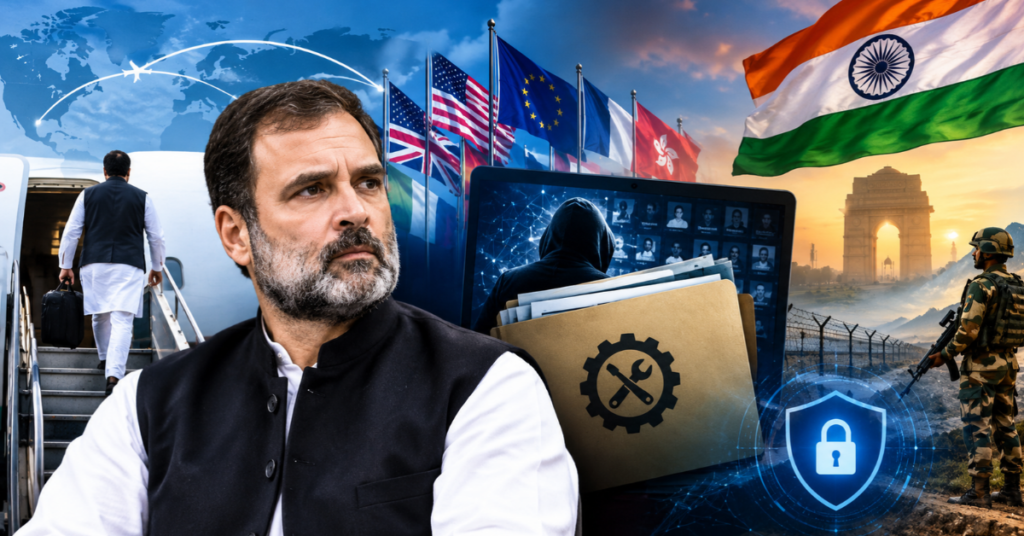
Summary
- In the contemporary history of Indian politics, the operational style, secret and frequent foreign visits, and activities connected to international platforms of the top opposition leadership have consistently remained at the center of serious concern and national debate.
- Recently exposed facts by Open-Source Intelligence (OSINT) and warnings from political analysts have once again raised a critical question before the nation: Which international forces are truly behind the sudden political controversies, attacks on constitutional institutions, and planned anarchy that erupt immediately upon return from foreign trips?
- The timing of mysterious visits right before crucial parliamentary sessions, closed-door meetings with foreign diplomats, and the global network associated with George Soros’s Open Society Foundations (OSF) directly challenge India’s sovereignty, internal security, and democratic stability.
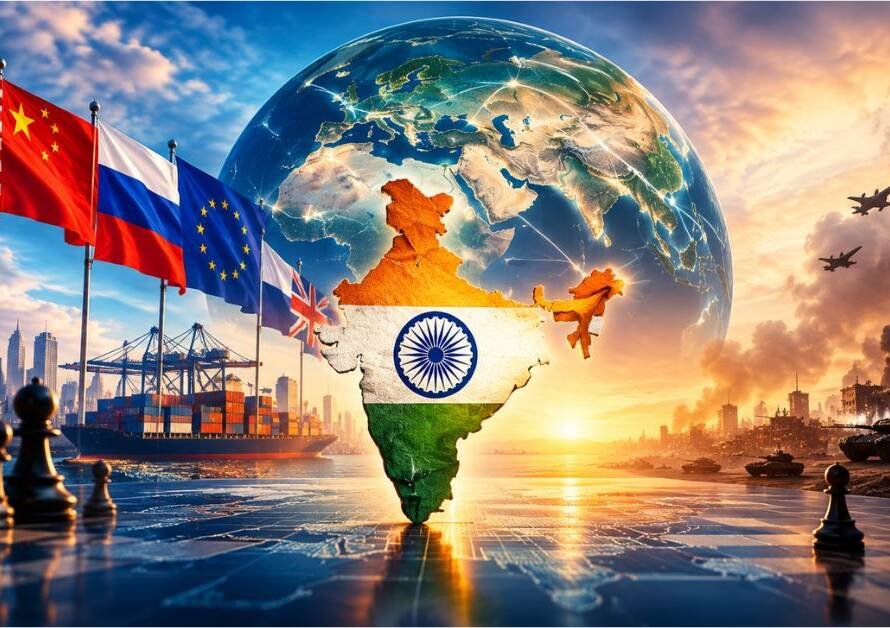
- From the seven-decade history of post-independence appeasement, weak security policies, and institutional corruption to the new era of ‘Nation First’ and ‘Zero Tolerance’ that emerged after 2014, this detailed article deeply analyzes the web of the international ‘toolkit’ and the security challenges arising from it.
Rahul Gandhi’s Foreign Visits and Their Political Significance
1. The Systematic Pattern of Foreign Visits and Political Instability in India
Rahul Gandhi’s continuous foreign visits and his return to India have now taken the shape of a highly systematic and predictable political pattern. While it is not improper for any citizen or public representative to undertake personal foreign trips, when these visits are made secretly at critical junctures of national politics, they become a matter of public suspicion.
- A Diplomatic Agenda Under the Garb of Personal Vacations: Being the heir to an extremely wealthy and influential political family, spending time abroad, taking vacations, or attending to personal work may be his personal right. However, the problem arises when the objective of these trips is not merely rest, but meeting suspicious international figures and returning home to target India’s internal setup.
- Scripted Protests and Institutional Attacks Upon Return: Whenever Rahul Gandhi returns from Vietnam, Thailand, Colombia, the United States, or Europe, a new political turmoil begins in the country. Questions are raised about the valor of the Indian Armed Forces and strategies in Doklam/Galwan; the credibility of the Election Commission and Electronic Voting Machines (EVMs) is attacked; and the judiciary as well as the National Security Advisor (NSA) are placed in the dock.
- Lack of a Constructive Opposition: To run India’s democratic framework smoothly, a responsible, mature, and constructive opposition is essential. However, constantly disrupting parliamentary proceedings instead of raising genuine public issues and going to foreign platforms to demean India severely damages the broader interests of the nation.
2. The Vietnam Visit and the Major OSINT Exposure: Unmasking a Deep Nexus
Three key facts recently exposed by Open-Source Intelligence (OSINT) have unraveled the layers behind Rahul Gandhi’s Vietnam visit and his contacts with foreign organizations:
Fact 1: Suspicious Timing and Covert Departure
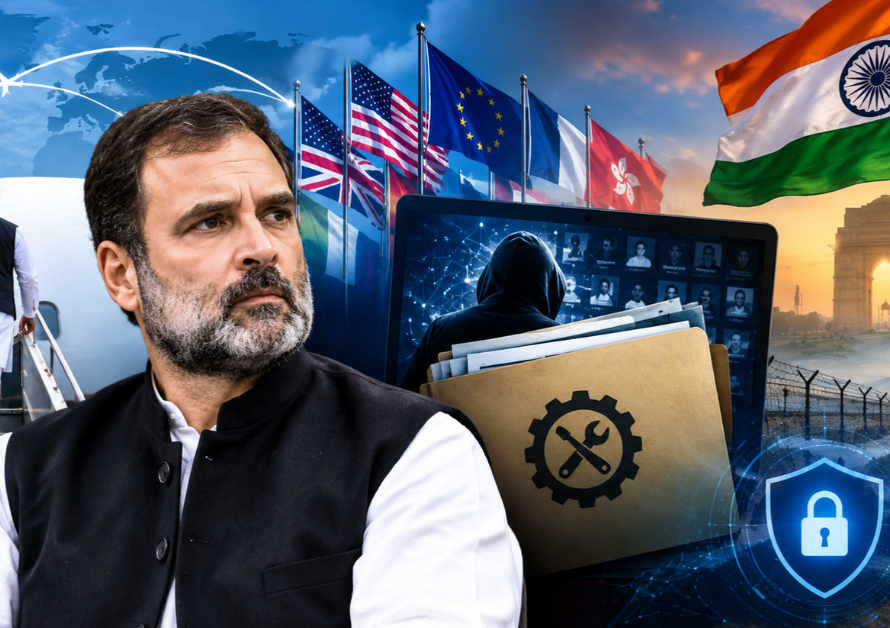
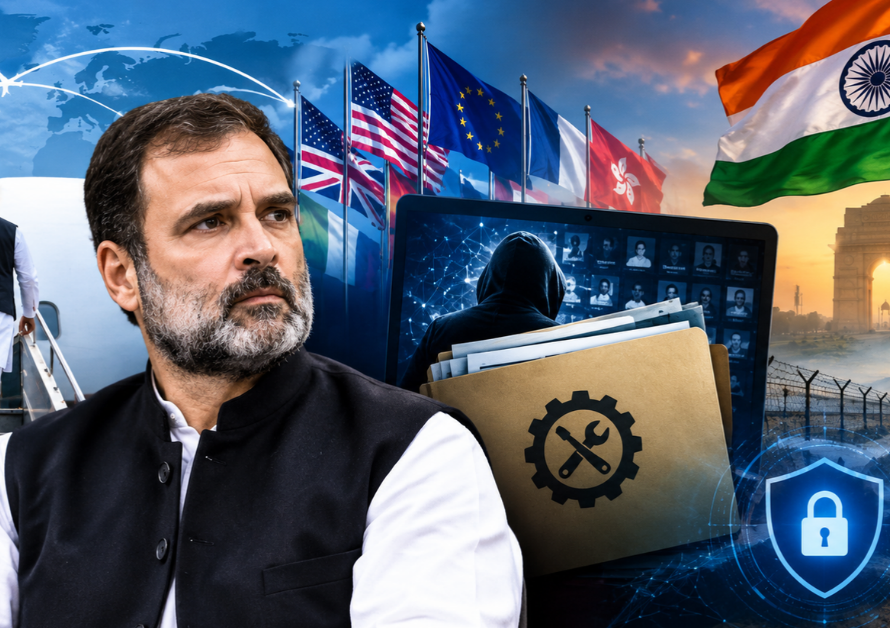
On October 18, Leader of the Opposition Rahul Gandhi secretly departed from Delhi’s IGI Airport for Hanoi (Vietnam) without any prior public announcement. Exactly at that time, a high-level EFTA (European Free Trade Association) delegation—comprising Norway, Switzerland, Iceland, and Liechtenstein—arrived in Hanoi to sign the ‘Vietnam-EFTA Trade Agreement’. Such timing alignment cannot be a mere coincidence; rather, it points toward deep behind-the-scenes diplomatic and political consultations.
Fact 2: Continuous Contact with the Norwegian Foreign Minister
Rahul Gandhi shares long-standing and close ties with Norway’s Minister of Foreign Affairs, Espen Barth Eide. Prior to this, on March 19, Rahul Gandhi held a long, confidential closed-door meeting with Espen Barth Eide at 10 Janpath in New Delhi. The purpose of such unprotocolled, secret meetings with foreign government ministers always remains under a cloud of suspicion.
Fact 3: Direct Links with George Soros (OSF), WEF, and ECFR
The career and profile of Norwegian Foreign Minister Espen Barth Eide are deeply intertwined with controversial global institutions:
- World Economic Forum (WEF): Eide served as the Managing Director of the World Economic Forum from 2014 to 2016.
- Open Society Foundations (OSF) Link: He served as the President of the ‘Centre for Humanitarian Dialogue’ from 2019 to 2021. This organization is directly funded and operated by American billionaire George Soros’s ‘Open Society Foundations’.
- European Council on Foreign Relations (ECFR): Eide has been a regular contributor and key strategist for the ECFR, a think-tank established and funded by Soros.
The International ‘Toolkit Ecosystem’
Connecting all these dots makes it clear that a global ‘toolkit ecosystem’ is actively working to influence Indian democracy, its independent foreign policy, and its rapidly growing economy. Rahul Gandhi’s repeated meetings with such figures raise the critical question: Is foreign interference being invited into India’s internal affairs?
3. Parliamentary Sessions, the ‘Regime Change’ Agenda, and Potential Anarchy
Such foreign visits by opposition leaders right before parliamentary winter or budget sessions appear to be part of a strategy to create planned unrest and discontent within the country:
- The ‘Regime Change’ Formula: These secret meetings held in various cities across Vietnam, the United States, or Europe attempt to apply global principles of ‘regime change’ in India rather than winning elections through democratic processes. Under this, attempts are made to fuel confusion, distrust, and protest among the public.
- Disruption of Parliamentary Proceedings: Returning from abroad to raise slogans in Parliament, stage chaotic protests with placards, and stall the House by questioning national security issues without solid facts has become an established strategy.
- Vigilance of National Security Agencies: Whenever a leader returns from a foreign trip and begins making uncontrolled political statements, there is a risk of law and order deteriorating within the country. Therefore, the Government of India, the Ministry of Home Affairs, and national security agencies must stay fully alert and prepared—keeping their eyes, ears, and nose open—to tackle any sponsored anarchy.
4. Historical Background: Seven Decades of Appeasement, Corruption, and Security Compromises
Comparing today’s political landscape with the past makes it evident that for decades, policies were pursued that severely harmed national security and the interests of the majority community:
- Compromises with National Security (1989–1991): The history of bowing to terrorist demands is clearly visible in the kidnapping cases of Rubaiya Sayeed (1989), Nahida Soz (1991), and Tasadduq (1990), where dozens of hardened terrorists were released, fueling insurgency in Kashmir.
- The Era of Institutional Corruption (2004–2014): Scandals like 2G Spectrum (₹1.76 lakh crore), Coal Block Allocation (₹1.86 lakh crore), Commonwealth Games (₹70,000 crore), and Waqf Board Land Scams (₹1.5–2 lakh crore) caused severe damage to the nation’s economy and resources.
- Legislative Asymmetry and Appeasement: Laws such as the Waqf Act of 1995, the Places of Worship Act of 1991, and the 1986 legislation overturning the Supreme Court’s verdict in the Shah Bano case created a one-sided legal system that restricted the rights of the majority community.
- Subversion of the Constitution: Political parties that preach democracy invoked Article 356 (President’s Rule) 84 times during their rule to dismiss elected state governments and imposed a dark Emergency on the nation in 1975.
5. New India Post-2014: ‘Nation First’ and ‘Zero Tolerance’
Since 2014, a far-reaching, revolutionary, and welcome transformation has taken place in India’s governance system, laying the foundation of a strong nation while addressing the vulnerabilities of the past:
- The Principle of Nation First: India’s internal and external policies are no longer framed under the pressure of appeasement or vote-bank politics, but solely keeping ‘National Interest’ at the forefront.
- Zero Tolerance for Terrorism: Through surgical strikes and air strikes, India has made it clear that any misadventure from across the border will be met with a fitting response. Instead of being defensive, the country now delivers aggressive and decisive responses.
- Neutralizing Anti-National Networks: Ecosystems, NGO networks, and fake narratives working within the country to hollow out its roots are being systematically brought under the purview of law and neutralized.
Conclusion
- If foreign visits by Rahul Gandhi or any public representative cease to be merely personal and become part of an international toolkit and anti-national conspiracies, it is the duty of conscious citizens to recognize and neutralize such attempts.
- India today stands at a juncture in history where it is moving toward becoming a global leader on the strength of its rich cultural roots and modern capabilities. No foreign-sponsored anarchy can be accepted.
🇮🇳Jai Bharat, Vandematram 🇮🇳
Read our previous blogs 👉 Click here
Join us on Arattai 👉 Click here
👉Join Our Channels👈